30 秒でわかる
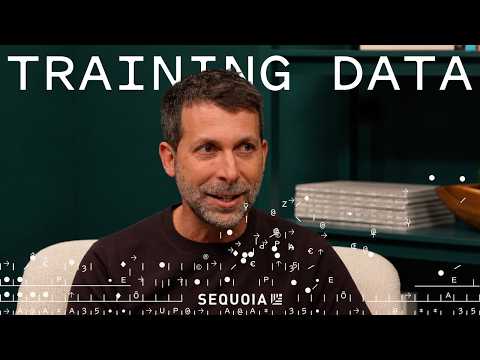
On Sequoia's Training Data, Box cofounder and CEO Aaron Levie tells Sonya Huang that roughly a trillion dollars has been bet on whether the bridge from a model's raw capability to an actual workflow is narrow or vast. He is long the application layer: token subsidies will not last, you do not want the seller of the token choosing the token, and a harness tuned to Box's own files, permissions, and search already beats handing the raw API to Claude or ChatGPT. Coding agents exploded because code is text, GitHub is a single plug, and engineers debug themselves; knowledge work has none of that, which is why he thinks Silicon Valley should prepare for slower diffusion — and why getting the technology to lawyers, sales reps, and researchers is the opportunity.
- 1Levie wants to send college students an emergency alert to join Twitter and follow twenty accounts, because you are either a year ahead or a year behind simply based on your feed.
- 2He frames the last two years as roughly a trillion dollars bet on whether the bridge from model to workflow is limited or vast — and he is long the application side of that bet.
- 3Labs can discount their own tokens for a while, but Levie thinks subsidization has to be a temporary phenomenon once public markets enforce ordinary gross-margin math.
- 4Open-weight adoption inside Box's customers is higher than people think, lower than enterprises actually want, and far below where it will be in five years.
- 5His five-year bet: 90% of enterprise tokens will be work a user never kicked off, showing up as a result or a task to review.
- 6Coding agents could launch with "give us your GitHub." Knowledge work has no equivalent plug, which is why the rest of the economy will diffuse much more slowly.
チャプターごとに全文を読む
A year ahead or behind can come down to your information feed
Aaron Levie wants to send an emergency alert to every college sophomore and junior in America: join Twitter, follow these twenty accounts, and do it now. The Box cofounder and CEO tells Sonya Huang on Sequoia's *Training Data* that you are either a year ahead or a year behind simply based on your feed. He still runs into twenty-year-olds who say they "see some articles," and the phrase does not even parse for him. Do they just get lucky that somebody emailed them a link?
Huang introduces him as the founder of an enterprise collaboration and content platform that has taken on a new life with AI, and she wants to talk about how founders reinvent themselves for this wave. Levie, who says he religiously watches every episode, is happy to go there. What follows is his case that the real money in this cycle sits in the messy gap between a model's raw capability and the workflow inside a bank, a law firm, or a pharma company.
The bridge from model to workflow is a trillion-dollar bet
Two years ago, calling application companies the hottest "neolabs" would not have made much sense. Levie says the label now matches what the market is doing, and it is working out mostly because of open source. The old insult of being an LLM wrapper is landing as a business, because people underappreciated how much of a bridge the enterprise actually needs between a model's capability and a real workflow.
He frames the last two years as roughly a trillion dollars bet on a binary outcome: either that bridge is limited, and value accrues almost entirely to the model, or the bridge is vast and has to take on real depth inside organizations. One side of the bet is being long the model and superintelligence. The other is being long the application tier. He is very bullish on the second, and he thinks it opens multiple layers for startups — you can be the applied company itself, or the infrastructure underneath the neolab.
What the research-pilled Valley misses, he says, is everything that still sits around even a superintelligent model. The workflow still has to connect to other data systems, pause for a human in the loop, sit idle through delays, survive change management of the business process, and talk to legacy systems that were never modernized. Those five or ten operational jobs are the last things a classic research organization wants to attack.
History already ran this play. AWS, GCP, and Azure created trillions in infrastructure market cap, and yet if you had looked at early versions of those clouds ten years ago you would not have predicted Snowflake or Databricks — you would have assumed the infrastructure already did that work. Models will be insanely valuable, Levie says, but bringing them into banking, life sciences, healthcare, and government will take a lot of software. Box already has a quiet labs effort; the present focus is making the agent excellent on any model, then peeling certain use cases onto specialized ones over time.
Token subsidies are temporary, and the fox should not guard the henhouse
The strategic tension for the next two to five years, Levie says, is how far the model providers need to move up that stack. They want to be closer to the customer, and they also want an ecosystem that trusts them. Huang says Sequoia wrestles with the question every day. Levie can sense the "existential dread" of a VC deciding whether to put another billion dollars into Anthropic or to see what plays out at the applied layer — a choice that is even harder for the entrepreneur.
He is obviously biased, with a concentrated bet on buying technology that understands your workflow and can reach core enterprise data. He just does not see a different outcome than the rest of software history. A universal chatbot can be horizontal; the moment the workflow needs to ping someone at the right time, or reach data the chatbot cannot natively see, somebody has to go into the organization, set it up, and supply domain expertise. Unless you underwrite the big labs at a hundred thousand employees, the diffusion economy — including the army of people who do that implementation — will be massive.
Then there is the fox-guarding-the-henhouse problem, which he thinks may be the single biggest reason the application layer has to exist. Even under complete benevolence, if you hand a task to an agentic system you want it cost-optimized at constant accuracy. The company that can do that is the one that does not care which of ten models performs the task. Huang objects that the labs can subsidize their own tokens. Levie does not think that lasts: once those companies are public they will be held to the same gross-margin laws of capitalism as everyone else, and tens of billions of dollars of capital may already have exceeded the threshold where subsidization works, especially once training runs have to be paid for.
There is also an equilibrium problem. If the high-margin API is what funds the subsidy, moving customers onto first-party applied products kills the API revenue that paid for it. Meanwhile players with a different game theory — Meta, SpaceX, China, even Nvidia — do not need Anthropic's or OpenAI's inference margin structure and might accept ten percent just to fill massive compute clusters. If that happens, like-for-like token costs fall and more value accrues to the application layer. Levie would not bet on one or two labs capturing ninety-five percent of the value, and he thinks the labs themselves should prefer a competitive ecosystem: if you are the only intelligence that exists, you eventually get nationalized.
Enterprises sit on hundreds of billions of files they have never actually read
Box started as a way to store and share data securely in the cloud, then pivoted hard into the enterprise as companies moved off on-premises systems. The job became storing, sharing, collaborating on, and managing unstructured data — corporate documents, financial files, marketing assets, research materials — in the cloud. The company had been flirting with AI products since about 2015, in that early modern AI winter when image classification and OCR looked useful and then proved insanely expensive, with a hyper-trained model required for every workflow. They shelved it.
A few years later came GPT hackathons and early text detection for security. Then the ChatGPT moment arrived, and the form factor — ask a question, get an answer of increasing complexity — exploded people's sense of what these systems could be. Box jumped in with a full-company pivot: a carved-out team, the best people, daily updates, and eventually an AI stack and a Box agent. The use case is straightforward. The company sits on hundreds of billions of files, every one of them holding critical information, and enterprises rarely know what is actually inside.
The easiest hero use case, Levie says, is almost embarrassingly simple: you have a million contracts, so find out what is in them. Pull the structured data into a database, then query, analyze, and automate. It knocks it out of the park every time because human labor was always too expensive to read every contract and every research file at that scale. He is at least as excited by the long-running version — a bank onboarding flow where every automatable step is automated and a person is pulled in only for review, so a one- or two-week back-and-forth happens in an hour. Huang calls it the year of the long-running agent. "It is," Levie says.
Workslop is a trust problem, not just a quality problem
Huang draws a contrast that Levie takes seriously. In coding, using AI is not only accepted, it is embraced. In the content that lives in Box, there is almost an allergic reaction — Pangram debates on Twitter, the new complaint of "work slop." She gets board decks these days that are entirely written by AI, and it kills her. Levie takes off the Box hat and riffs as a consumer of that work.
For most of the world, he argues, code is a utility. You are trying to automate something or put up an interface so someone can press a button and move to the next step. Taste in front-end design and fear of vulnerabilities will keep the word "slop" around for a while, but if an agent can generate your entire backend or frontend, that is not only acceptable, it is preferable — that was the thing blocking you from moving. A presentation works differently. You are still trying to decide whether you can trust that person to execute, deliver, or understand the topic.
Workslop breaks that signal. You lose the ability to know how much of the thought process was them versus the model, and you are not sure how much you should even care, because you are doing the same thing in your own brainstorms. The result is a collective bind: I am using AI on my side of the table, and when I get it from somebody else I wonder whether I should trust them. You do not flinch at a financial model generated by a spreadsheet. Why can't the same exist for a strategy deck? He thinks society is in a messy three-to-five-year stretch of deciding what a person's role is, and what the content is a proxy for — how much they know, or what they can go execute.
Huang offers a counterexample: a Stan Druckenmiller *Wall Street Journal* piece that Pangram flags as 100% AI, which she loved and did not have an allergic reaction to. Levie finds the psychology strange. He now does twice the work reading articles on X — once for the substance, and once to calculate whether he is reading the person or a Claude prompt — and then has to decide whether that should upweight or downweight his judgment. He would hate to be a college professor. He would quit, because he would no longer know what the student did. The calculator analogy is close, Huang suggests, except these systems are doing at least ten tasks at once.
A harness tuned to Box beats handing the raw API to Claude
Back at the applied layer, Box has built an agentic harness around things it knows about its own file system, permission structures, and search engine. Levie says the company would happily give the labs as much data as they want about how the system works, because better external agents would help everyone. In the meantime, Box has depth on how people search, how they pick among ten files, and what heuristic they use to decide which document is relevant. The harness has tools for pulling full text, chunks, and on-the-fly embeddings, and it is built for asking questions of a large data set.
His own Box account holds on the order of tens of millions of files, twenty years of accumulation. He can ask any question of that corpus; the agent runs multiple searches, reranks, pulls the most relevant information quickly, and sometimes reads the full document. Compared with simply giving Claude or OpenAI the API, Levie says they see meaningfully better accuracy and latency, because they know how to tune the loop for Box workflows.
Evals are how they keep score. They run hundreds of tests on every model, including a "complex work" eval of document-centric tasks in life sciences, financial services, the public sector, and tech — given these five documents and this set of problems, what are your answers? — and a holdout eval based on how Box employees actually use their own instance. They can see when a model moves by half a point. Defaults roll out against different cost and accuracy thresholds, and customers can still pick any model from the garden.
On their use cases, model quality more or less correlates with coding ability, with one exception: Gemini is disproportionately better than its coding reputation would suggest, possibly because of stronger tool use. Fable 5.1 was clearly state of the art at the time of the taping, with Grok, Muse, the Fable class, and whatever OpenAI is building next in a total race. By volume, end users take the default. The heavy token volume sits in workflow agents and data extraction, where customers will bring in an FTE, test five models, and demand something like 98% accuracy at a given cost.
Open and closed models will grow exponentially at the same time
Huang asks what Box is seeing in open-weight adoption. Levie's formula is that it is higher than people think, lower than what enterprises actually want, and much, much lower than what it will be in five years. Cost is part of the story, but he attributes thirty percent-plus of the current drive to the sexiness of wanting to try GLM. He has heard Fortune 500 CIOs say they are "playing with open source" on workloads where Gemini or Muse would have been fine at that cost profile. They want to be a little hedged.
Over time, he thinks you will peel off workloads that only make sense at the ground-down cost of inference, and that is where open weights get the economic advantage. Right now the models can be more token-inefficient, and he has heard stories of them randomly speaking Chinese mid-chain — a weird look for a bank. Those kinks get worked out. The more interesting frame, which he takes from Jesse at Decagon, is a paradox: closed models keep going exponential, and every use case that matures can be peeled off to open source.
Once a use case is stable, it starts to make sense to veer it toward an open-weights model if it is actually cheaper, or if post-training buys you some extra points of performance. The press will find the duality confusing: Anthropic and OpenAI revenue off the charts, and open weights also growing exponentially. The pie is growing that fast, but it is not just a rising tide. One pattern is using Fable or GPT-5.6 for orchestration and farming long-tail tasks to a cheaper model. The opposite also works: a cheap default that pops the too-hard cases out to a heavier model.
You might spend fifty percent of the dollars on each side and still run ten times the tokens on the open-weights model. Everybody wins, Levie says, but they win because of the interplay, not because the layers are independent.
Continual learning collides with how enterprises actually set permissions
Huang turns to memory. Today's dominant architecture is still fancy RAG: context lookup, not weights that change as the system gets to know you. Lab people talk about continual learning, and Engram is working with customers to bake some of that context into the weights. Levie is about to get on a call with Dan and does not want to pretend he already has the eloquent answer. He is extremely fascinated by the approach. He has no reason not to want it to work.
Box, though, lives in a world of vicious permission complexity, and that is the rub on a lot of these ideas. A researcher imagines a model trained on their world because they have access to everything. Then you introduce a lawyer whose window is five projects, because the person one door over is working a competitive matter that cannot overlap by a single document. Hard barriers, not soft ones. You could still train a model for that one user, but what happens when they are added to or removed from something important every day?
He wants a T-chart for the decision of what goes in context and what goes in the weights. The interesting case is when the data does not change that fast and baking it in dramatically changes accuracy. Huang cites Andrej Karpathy's magic-wand version: strip memorized information out of the model, keep the reasoning style — the ethos of how a firm like Sequoia works — and look up the actual content. Levie's question is how different enterprises really are at the level of execution style, versus how much of the value is literal IP about this legal case applied to that project.
At a firm level he is a fan of what Trajectory, Applied Computer, and Prime Intellect are doing, because if you are Eli Lilly you want a model for how you do drug discovery, deeper than off-the-shelf, and those workflows do not have the same church-and-state problems. The outcomes, he thinks, will be domain-specific, depending on the vertical and where the firewalls have to sit.
Systems of record have to ship their own agent and go headless
Box Labs, capital L or not, is the applied AI team. The research-bent cluster spends its time on another ten points of agent accuracy given a problem: mapping the problem set against a customer's data so the task actually executes. One group is doing harness-level "auto research," hill-climbing the accuracy of answers on a client's corpus. For a bank, the difference between seventy percent accuracy on a hundred-page loan document and ninety-seven percent is whether you can automate the process at all.
Huang asks about the role of systems of record in a world of agents — the Twitter complaint that every software company is trying to sell you its own agent, when you just want the system of record to work with yours. Levie's answer is that a SaaS company has to do two things, and anyone who picks one over the other is going to lose. First, build an agent that is insanely great at your product, provably ten or twenty points better than an off-the-shelf agent, not because you hobbled the other side but because you are eval-maxed and tuned to the workflow.
That in-product agent also surfaces use cases nobody else has thought to productize, because you talk to customers every day. Levie speaks with a couple hundred customers a year and has had at least two dozen breakthrough moments. One client wanted a background agent watching whether documents met governance policy — archive this, legal-hold that. Huang's polite "oh, cool" is exactly the reaction he feared, but the point is serious: a head of compliance can oversee the enterprise, and has never been able to sit next to every employee and say you are about to break the policy. Only a company with an agent inside the product finds that job first.
Second, you have to go headless. Expose deterministic APIs to Claude and ChatGPT, via MCP or otherwise, or at least make your own agent callable from those systems. Levie uses Salesforce an order of magnitude more than he used to because he MCPs into it and keeps asking questions of the CRM. He does not love the word "toll booth," but you do need a volume-oriented business model on the other side of that access. The data in these systems is worth a great deal, and customers will find a way to reward you if you are solving a real problem. He has told LinkedIn product managers he would probably pay ten times more if he could just MCP into it.
In five years, most enterprise tokens will never be kicked off by a user
Will a generic chatbot be the dominant UI for enterprise AI? Levie thinks universal chat is a mainstay, the way every product has a search box. Horizontal products will have it, vertical products will have it, everybody will have it. It is the right surface for one-off asks: find this, answer that, produce something on demand.
Most of the enterprise is not that. It is processes running behind the scenes — sometimes on computers, sometimes with people, sometimes work that should have been happening with people you could never afford to hire, so it never happened. That is a different metaphor from ask-and-answer. You want background agents reading every contract, looking at every log, triaging every security incident. Then you want a dashboard, a workflow, a queue, a task list. Chat is how you catch up, not how the work starts.
The risk for horizontal products is that they swallow every one of those components and the thing gets heavy, no longer simple or delightful. Vertical players who understand the process can put the right buttons, tabs, and names on that workflow. Legal already has Harvey and Legora. Security is starting to emerge. Long-running coding agents have Cognition and Factory. Levie's bet is that in five years, ninety percent of all tokens in the enterprise are things a user never kicked off. They just see a result, or a task showing up that they have to review.
Coding diffused overnight because knowledge work has no GitHub
Huang dates the coding-agent boom to January 1, 2026, and calls it the fastest diffusion of anything into the economy she has seen. The rest of AI into the rest of our jobs has been much slower. Levie says you have to compare coding with everything else to understand the dissimilarity. The utility of code is almost entirely represented by the text you can generate. If the world's greatest programmer never slept, never ate, and just sat at a computer typing good code, value creation would be a hundred percent correlated with those hours.
The models are hyper-trained on that text. Every AI lab treats coding as a competitive benchmark to beat, and they get to run their own evals every day because they are the ones writing the models. It is also the most technical audience of all time. When an MCP server comes back "connection invalid," they do not call IT. They know they forgot to open the port. Add a high-paying vertical where a ten or twenty percent productivity gain is automatically worth paying for, and you have a stack of properties almost no other knowledge work shares.
Legal sits closer on that histogram, because a lot of the value is someone at a computer reviewing and writing documents. A sales rep sits much farther down. Their value creation is convincing an external customer to buy software — or a Caterpillar truck. Give them the world's best automation and they are still rate-limited by whether the customer responded, wants to meet, can do Tuesday or today, and has budget. That continuum, from a person boxed in by outside factors to a person who can type all day, is the map of what you can automate.
There is also no "give us your GitHub" for knowledge work. Coding agents launched by plugging into a repo. Box customers have an easier time, Levie notes, but Box is a $1.3 billion revenue run rate, which means a lot of people are not on it. Their data lives in on-premises systems, legacy file shares, and environments that do not talk to agents particularly well. Access control is different too: in coding you can reach most of what your job needs, and in knowledge work you are asking Sally to open the file share. Silicon Valley has to prepare for diffusion taking a lot longer than it thinks. The good news, for him, is that this is the applied layer's opportunity — a trillion dollars in getting the technology to the lawyer, the sales rep, the life-sciences researcher, and the person who runs customer support.
The winners will be the companies that can get the technology into the enterprise
Huang closes on advice. How did Levie get himself into the middle of the AI conversation? Twenty years of unstructured data meant he could see the benefit of agents instantly; Box bet the company on it, and customers confirmed that reading every document would be powerful. The other half is fascination. About ninety-five percent of his learning, unfortunately for brain cells, is Twitter, plus this podcast and Dwarkesh's. That is the same emergency alert he opened with. On a typical day he asks five different AI systems twenty to thirty questions — research, talent, competitors, markets.
Making a twenty-year-old company AI-first was easier because of how Box already ran information. Any question you would ask about the business that was ever documented as unstructured data — meeting notes, project plans, roadmaps, presentations, financials — is a hundred percent in Box. They did not let people use anything else, so the corpus is workable at scale, and core systems like Salesforce are in decent hygiene. From there the practice is targeting the highest-leverage workflows, with an AI-pilled CIO, a center of excellence, and internal AI FTEs to help.
They do not token-max. They do keep a list of people by token count, mostly to inspect whether the usage is useful and whether there is a learning to take to another function. In the top three AI users, Levie figures one is wasting half the tokens and two are doing something the whole company should be trained on. Two weeks before the taping he told a team to get everyone in a room and have the best user do a full demo; six hours later they were in the room. Shout-out to Mick. Some parts of the stack are shipping two or three times more customer-facing product, which is the metric he cares about — not lines of code. They will not drop code review. Customers trust Box with data security and compliance, so there will always be a discount on raw productivity.
He is jealous of young founders who can design a company from scratch around AI. A week and a half before the conversation he watched two people demo a product that would have been a forty-person project five years ago, with working tabs that were not fake. He is less jealous of the other half of the new world: every great idea instantly has five competitors. In a world where AI builds things much faster, the shift moves to whoever can actually get the product to the customer. Founders like Scott or Matan, he says, already have the mandate — this is an enterprise diffusion play. Anyone who mistakes that mandate loses. There are trillions up for grabs at the applied layer, and the companies that know how to build the teams and get into the enterprise are the ones that win.
同じチャンネルの記事
 1:08:02EN
 Sequoia Capital· 2026年10月13日ポッドキャストAlphaGo Took Two Years. AlphaZero Took Hours. Silver Is Making the Same Bet on SuperintelligenceDavid Silver and Lasse Espeholt left DeepMind to build Ineffable Intelligence, a twenty-person lab that wants a superlearner to discover science, math, and language from experience rather than from a pre-training run.
 1:04:26ENSequoia Capital· 2026年10月6日ポッドキャストAt 100,000 Accelerators, Something Fails Every HourGoogle AI infrastructure chief Amin Vahdat tells Sequoia's Sonya Huang why FLOPS is a vanity metric, why the TPU line split in two, and why he would rather wait on a utility than build his own gigawatt.
 52:27ENSequoia Capital· 2026年9月1日ポッドキャストAfter Two Dozen Police Departments Said No, They Built an Anti-Network-Effect AI CompanyA Wisconsin county had 300 gigabytes sitting on a cold case—and Peregrine's founders still refuse to take the credit.
 55:19ENSequoia Capital· 2026年8月25日ポッドキャストHuman Click Data Is a Bug: Rebuilding Search for a Web of AgentsParag Agrawal, former Twitter CEO and founder of Parallel Web Systems, argues that agents will query the web a thousand times more than people, and that both search infrastructure and the ad-supported internet have to be rebuilt for that customer.
 53:44ENSequoia Capital· 2026年8月18日ポッドキャストThe Biggest Bug in Today’s Models Is That the Weights Never ChangeTuring Award winner Rich Sutton and Khurram Javed founded Oak Lab to build agents that keep learning after they ship — and they call synthetic data a big mistake.
 47:22ENSequoia Capital· 2026年8月4日ポッドキャストFrom One in a Thousand to 15 Percent: Chai Discovery Treats Drug Design as a Scaling ProblemJoshua Meier and Matthew McPartlon tell Sequoia’s Training Data why antibody design is an engineering problem, not a bespoke science, and why they sell a molecular CAD suite instead of their own drugs.