30 秒でわかる
At a 2018 Boring Company event, Elon Musk presents a demonstration tunnel and proposes an underground Loop to relieve congestion. He describes guide wheels, autonomous electric vehicles, frequent stations and a planned increase in tunneling speed, while saying the company built the demonstration tunnel for about $10 million. The network’s speeds, safety and cost savings are goals and claims presented at the event, not results established by the demonstration.
- 1The demonstration tunnel was an early, rough rideMusk says the test car had reached around 110 mph, while guests would likely travel at 40–50 mph.
- 2Faster tunneling is central to the proposalHe says automation, simultaneous reinforcement and more cutting power could theoretically increase tunneling speed fifteenfold.
- 3Musk cites a $10 million demonstration tunnelHe presents the figure as evidence that less expensive tunneling might be possible, without a detailed cost breakdown.
- 4Loop combines autonomous vehicles, guide wheels and many stationsHe outlines a proposed system with entrances distributed through the city and high-speed underground routes.
- 5The plan includes riders without carsMusk says continuously operating vehicles would serve pedestrians and cyclists and that other autonomous EVs could use guide wheels.
ポイント
- Musk proposes layered tunnel networks as an additional way to address urban congestion.
- He says the demonstration tunnel cost about $10 million and that guests would ride through it at lower speeds than the proposed system’s target.
- His proposed tunneling machine combines simultaneous excavation and reinforcement with increased cutting power; the cited 15-fold speed increase was a target.
- The proposed Loop uses autonomous electric vehicles, retractable guide wheels and many small entrances connected to high-speed trunk tunnels.
- Musk says vehicles for pedestrians and cyclists would operate continuously and other autonomous electric cars could use the system.
チャプターごとに整えた全文を読む
Opening and demonstration tunnel
After introductory music, Musk welcomes guests and explains his motivation for underground transport.
The webcast opens with several minutes of music before Elon Musk welcomes attendees to The Boring Company’s demonstration tunnel. He says everyone will have an opportunity to ride through it.
Musk warns that the first ride will be somewhat bumpy. He says a car has reached about 110 miles per hour in testing, while guests will probably travel at 40–50 mph. The proposed system, he says, is designed for speeds above 150 mph.
He frames the project as an attempt to reduce the time people lose to urban traffic. Asked why tunnels instead of flying cars or mass transit, he says he supports trying multiple forms of transportation.
His argument for tunnels is that cities have tall, three-dimensional buildings but largely two-dimensional road networks. He proposes adding transport capacity underground, while arguing that flying cars face noise, weather and safety challenges.
Musk says tunnels are shielded from weather and argues that construction can be unobtrusive. He recounts a neighbor watching television as a boring machine broke through nearby and says tunnels need not divide neighborhoods the way surface infrastructure can.
Making tunnels faster and cheaper
He discusses tunneling machines, reinforcement, excavated material and the demonstration cost.
The main obstacles, Musk says, are the time and cost of tunneling. He cites expensive subway projects and compares conventional machine progress with the speed of a snail. A snail named Gary becomes the presentation’s benchmark.
He says a tunneling machine spends much of its time on reinforcement, rails and logistics rather than cutting. Automating segment placement and addressing logistics, he argues, could significantly improve progress.
Musk proposes excavating and reinforcing simultaneously instead of alternating between them. Combined with more cutting power, he gives a theoretical target of roughly fifteen times the speed of the best existing machines.
He describes continuous spoil removal, changes to the cutter and on-site construction of concrete reinforcing segments. He proposes using excavated soil in those segments instead of trucking material away and importing replacement aggregate.
Other cost ideas include a narrower tunnel sized for vehicles, an electric locomotive for tunnel work and making bricks from excavated material. Musk says selling bricks could offset disposal costs, with free bricks proposed for affordable housing.
He names the first machine Godot, says a second machine called Line-storm is planned, and describes a future Prufrock machine with the larger speed target. These are engineering plans and targets as presented at the event.
Musk says the demonstration tunnel cost about $10 million and contrasts it with much higher figures he gives for conventional projects. He presents the tunnel as a proof of concept but does not provide a detailed accounting in this talk.
Designing the Loop network
Musk describes vehicles, stations, layered tunnels and express routes.
He describes Los Angeles as a challenging place to tunnel because of geology, seismic activity and regulation. He also suggests tunnels could be useful for utility lines, making repairs possible without opening a major street.
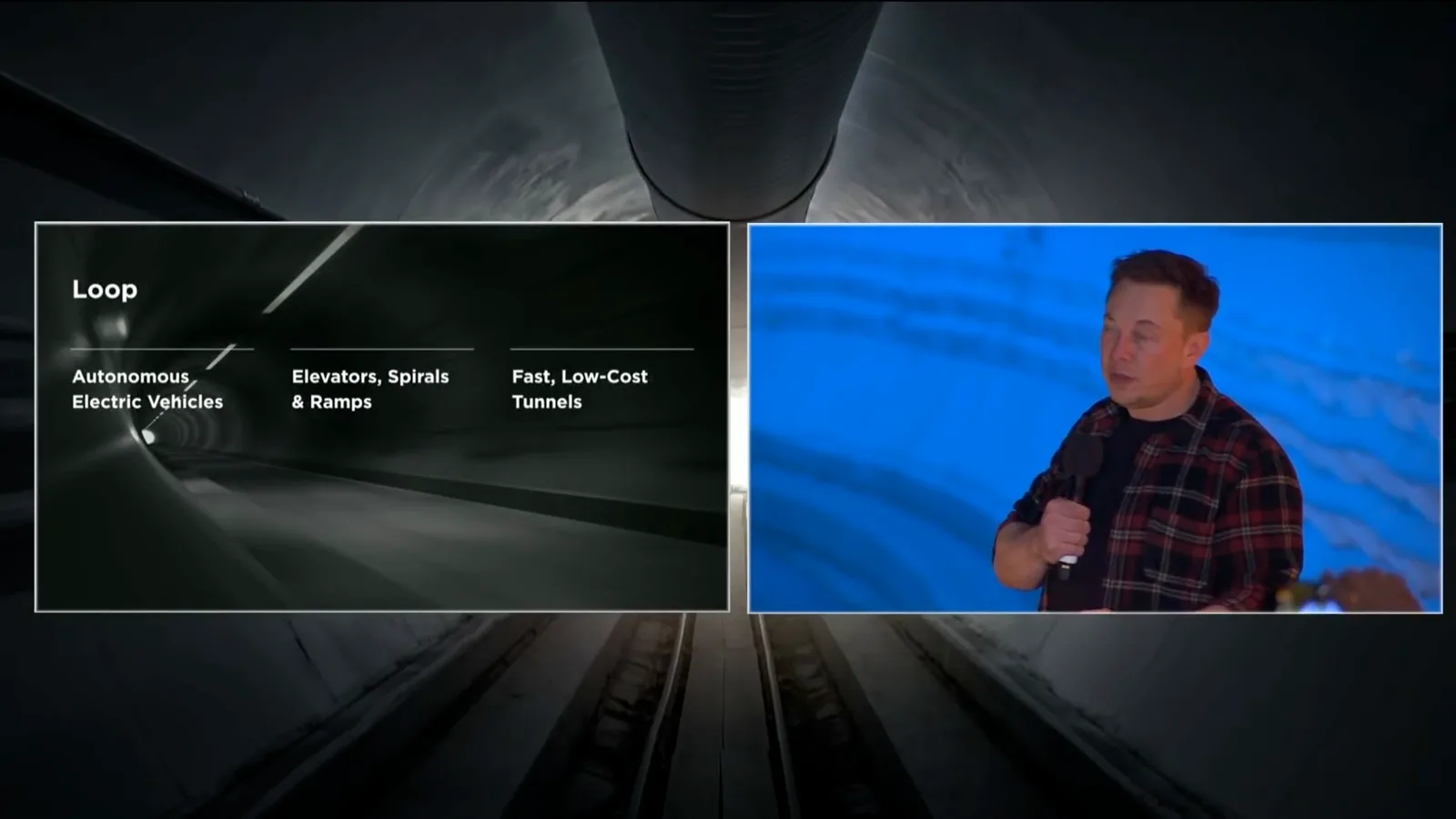
The proposed Loop combines autonomous electric vehicles with deployable guide wheels, elevators or ramps, and fast, low-cost tunnels. Musk says the wheels would keep vehicles centered in a narrow tunnel.
He proposes many more stations than a typical subway, distributed through a city so passengers can enter or exit closer to their destinations. Depending on available space, an entrance might use an elevator, a spiral or a longer ramp.
Musk anticipates the objection that an added lane can fill with traffic. His answer is to build additional tunnel layers and parallel routes. He presents this as a scalable solution, although the demonstration does not establish how an entire city network would perform.
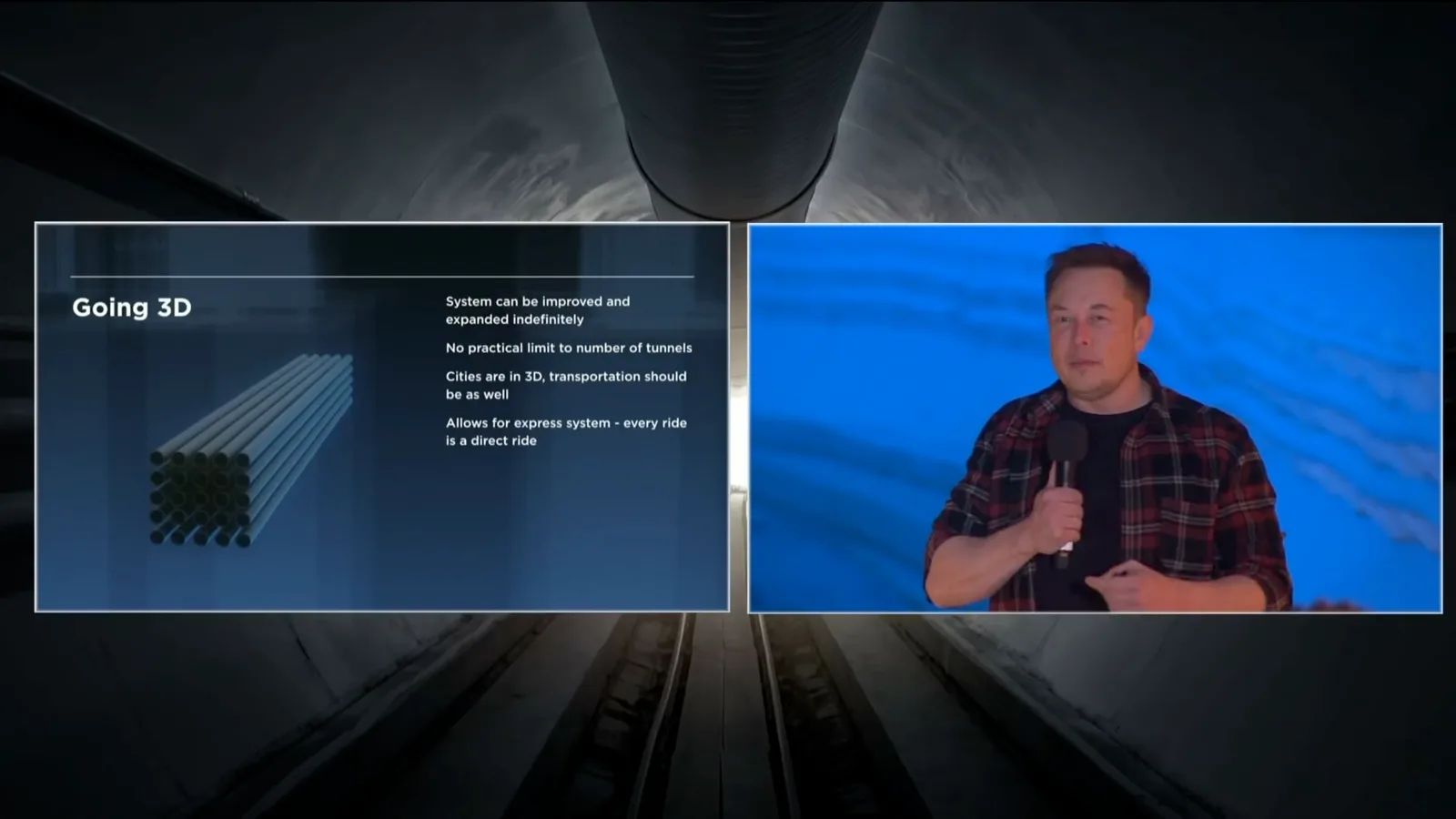
He describes a main underground artery designed for 150 mph, with vehicles leaving via ramps only when they approach their destination. A video then illustrates the proposed experience.
Access, guide wheels and the vision
He discusses pedestrian access, retractable wheels, proposed capacity and future expansion.
After the video, Musk describes prefabricated elevators that could be assembled in a shaft. He says the intention is to reduce disruption at station construction sites.
Musk reiterates that he does not oppose other public transportation. He says vehicles would circulate continuously for people without cars, with priority for pedestrians and cyclists.
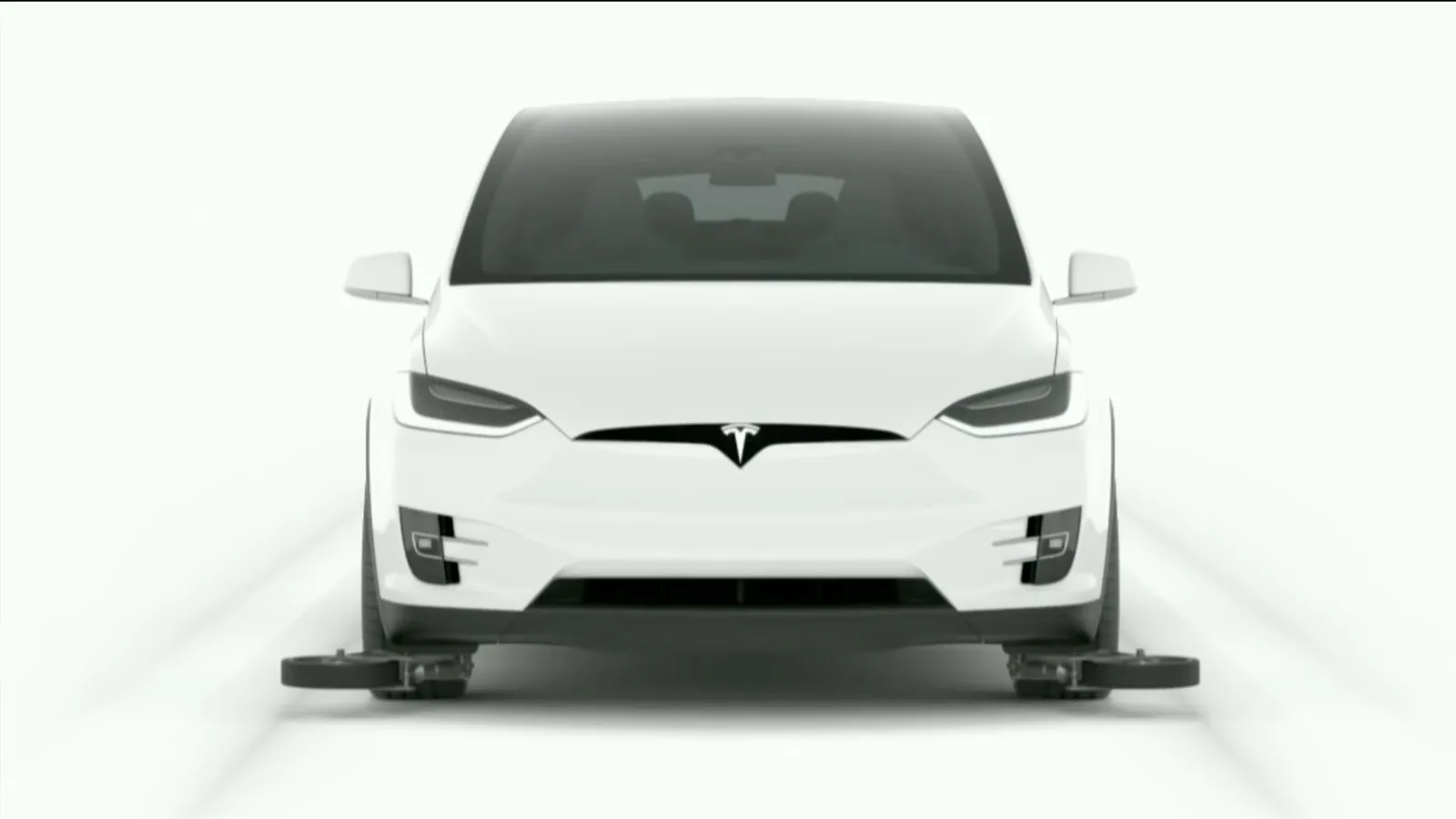
A demonstration shows retractable guide wheels on an electric vehicle. Musk says the wheels would be hidden during ordinary road driving and deployed inside a tunnel; he says the concept is not intended to be exclusive to Tesla vehicles.
He argues that autonomous control could allow closely spaced vehicles and quick braking, estimating a throughput of one vehicle per second. This is a proposed operating rate, not a measured result from the demonstration.
He compares tunnel entrances to shortcuts across a city and says stations could fit in parking lots, garages or small spaces. He reiterates that low-cost tunneling is essential to the economics.
Musk suggests the network could eventually connect with Hyperloop, then closes by presenting the demonstration as the first step toward a wider system intended to give people back time spent in traffic.