30 秒でわかる
In this August 2023 news roundup, Matthew Berman discusses model and product launches, copyright litigation, AI in entertainment, NVIDIA earnings, employment forecasts and social-platform controls. His opinions and the forecasts are presented in their historical context, with later clarification where the original description could mislead.
- 1Image editing and spreadsheet codeMidjourney added inpainting, and Microsoft previewed Python calculations in Excel using its cloud.
- 2Fine-tuning and translationOpenAI announced API fine-tuning for GPT-3.5 Turbo, while Meta released SeamlessM4T under a research license.
- 3Copyright disputesBerman discusses allegations against AI developers and a then-potential New York Times lawsuit; neither allegations nor speculative remedies are established findings.
- 4AI art and authorshipThe Thaler ruling concerned an application naming a machine as sole author, rather than every work involving AI.
- 5AI business and jobsNVIDIA reported rapidly growing revenue; Berman discusses surveys and forecasts about jobs and investment.
- 6Meta's feed choiceMeta announced non-personalized options for certain Facebook and Instagram surfaces in Europe; this was not a universal AI kill switch.
ポイント
- Midjourney introduced inpainting, while Microsoft previewed cloud-executed Python in Excel and OpenAI introduced GPT-3.5 Turbo fine-tuning through its API.
- Meta released SeamlessM4T under a research license and Code Llama under the Llama 2 community license; their permissions and language coverage differ.
- The copyright lawsuits described allegations, not findings of infringement, and the New York Times suit was filed months after this video.
- The AI-art ruling concerned a specific work attributed solely to a machine; it did not declare all AI-assisted works ineligible for copyright.
- Meta's EU feed option concerned non-personalized ranking, not a switch that disables all AI across its services.
- Surveys and investment forecasts measure expectations, not proven future employment or spending outcomes.
チャプターごとに整えた全文を読む
Product and model launches
Berman covers Midjourney inpainting, Python in Excel, OpenAI fine-tuning and Meta models. He also discusses medical imaging and a car-free neighborhood.
This week in AI news brings product launches, a surge in NVIDIA's stock, questions about jobs and AI safety, and continued conflict over creative work. I'll also share an AI video of the week.
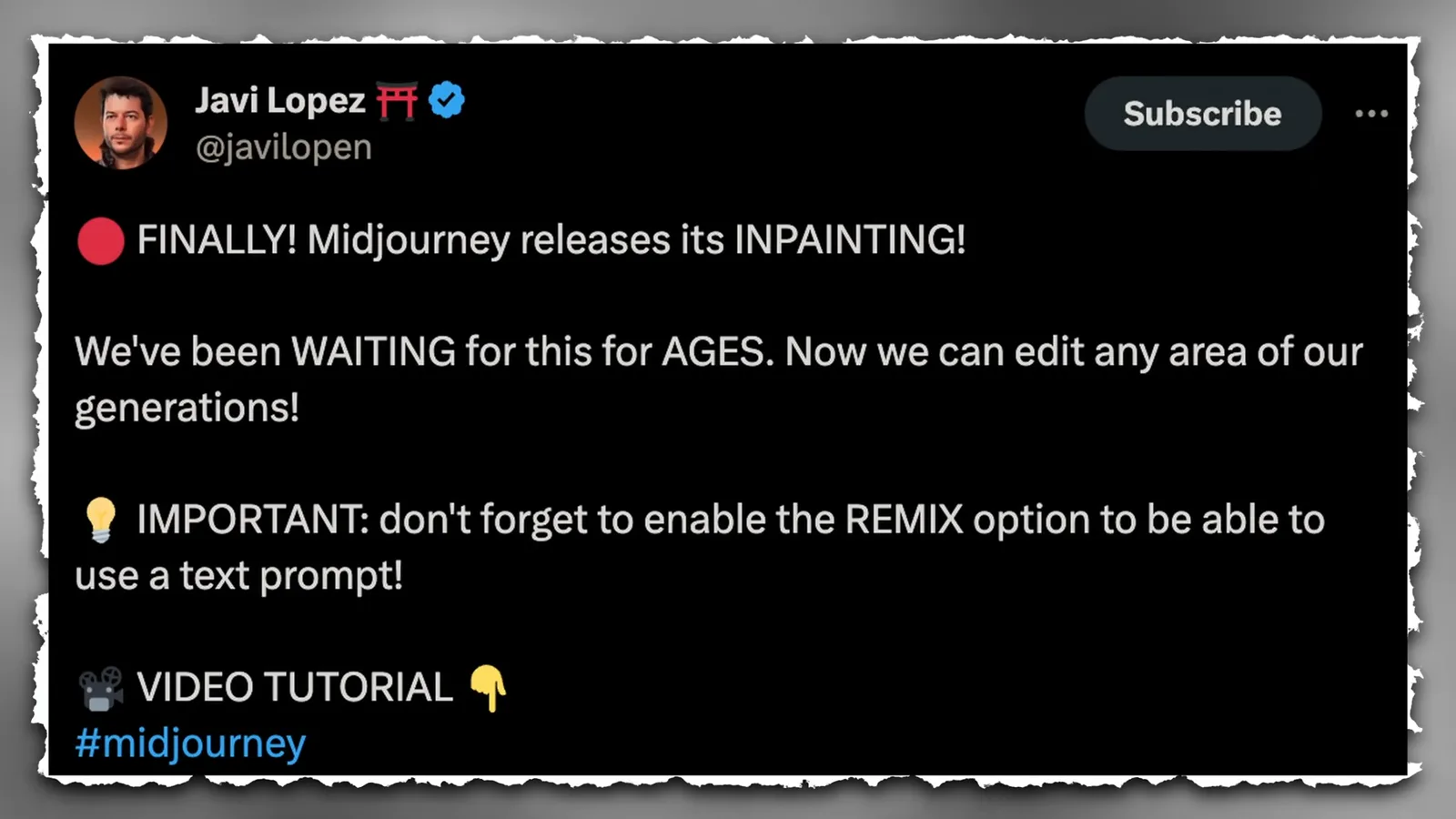
Midjourney launched inpainting, letting users select part of an image and prompt a change just in that region. One example swaps a lightsaber for a banana. I see this as competition for Adobe Firefly, and features such as Remix can help refine the edit.
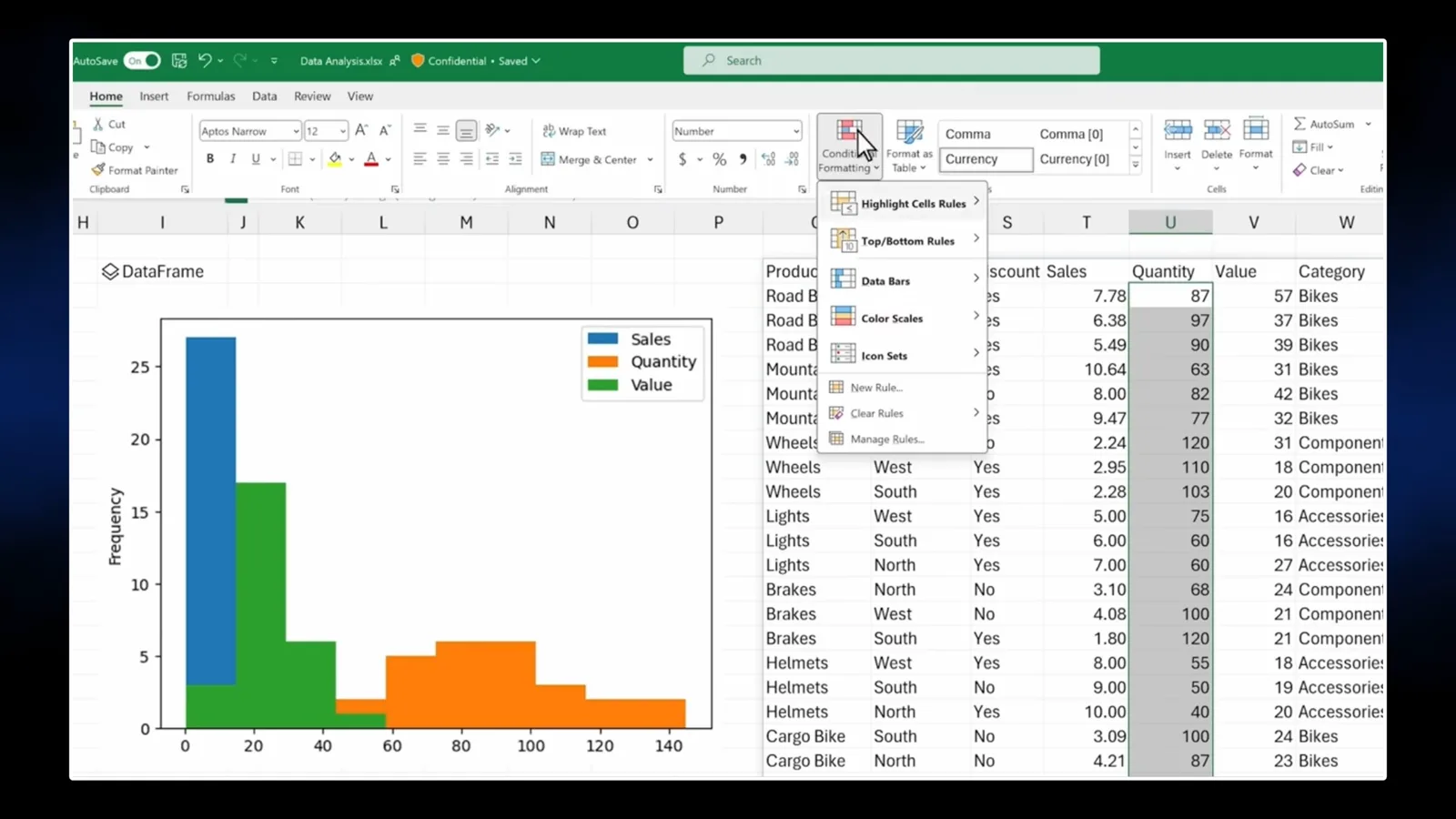
Microsoft's Python in Excel preview excites me: Python libraries can analyze spreadsheet data and produce graphs directly in a workbook. Microsoft partnered with Anaconda to provide a standardized environment, reducing the setup burden. One tradeoff is that the Python calculations run in Microsoft's cloud rather than on the user's machine. Microsoft's [preview announcement](https://techcommunity.microsoft.com/blog/excelblog/announcing-python-in-excel-combining-the-power-of-python-and-the-flexibility-of-/3893439) described the initial rollout.
OpenAI introduced fine-tuning for GPT-3.5 Turbo and said GPT-4 fine-tuning was planned for later in 2023. This was a developer API feature, not a way for every ChatGPT user to retrain the app. The [announcement](https://openai.com/index/gpt-3-5-turbo-fine-tuning-and-api-updates/) described possible gains in instruction following, output formatting and custom tone; preparing a good dataset remains a substantial part of the work. Availability is historical: OpenAI's [model page](https://developers.openai.com/api/docs/models/gpt-3.5-turbo) says GPT-3.5 Turbo was shut down in October 2026.
Meta released SeamlessM4T for translation across speech and text. It supports up to around 100 languages depending on the task; speech output covers fewer languages. It was published under a research license, so commercial use is not simply unrestricted. See [Meta's announcement](https://about.fb.com/news/2023/08/seamlessm4t-ai-translation-model/).
I also discuss a rumored coding model based on Llama 2 and view Meta's model releases as a way to commoditize competitors' offerings. [Meta announced Code Llama on August 24, 2023](https://about.fb.com/news/2023/08/code-llama-ai-for-coding/), under the Llama 2 community license for research and commercial use subject to its terms.
Another story concerns FDA clearance of software that flags suspicious findings on chest X-rays. I hope AI and doctors can check each other's work, improve radiologists' performance and reduce burnout and costs. Those are potential benefits, not outcomes established by clearance; performance and clinical deployment still need evaluation.
Outside AI, I highlight Culdesac in Tempe, Arizona, a car-free residential neighborhood designed around walking and alternatives such as public transit, scooters and bikes. It is a neighborhood rather than a new independent city. Restaurants, shops, exercise facilities and open space are part of the vision; as someone raised in Los Angeles, I appreciate the walkability.
Copyright, Hollywood and music
He discusses pending and potential copyright disputes, a study of model outputs and a ruling on machine authorship. Entertainment spending and YouTube's music partnership follow.
Copyright disputes are mounting around AI training. At the time of the video, a New York Times lawsuit against OpenAI was being discussed as a possibility, and commentators speculated about remedies including dataset destruction and statutory damages. Those were possible legal outcomes, not court orders. The Times later sued OpenAI and Microsoft in December 2023; its claims are contested, as the [court's 2025 opinion](https://caselaw.findlaw.com/court/us-dis-crt-sd-new-yor/117126751.html) describes.
Sarah Silverman and other authors sued OpenAI and Meta, alleging unauthorized use of copyrighted books. Other lawsuits challenge GitHub Copilot and image generators including those from Stability AI, Midjourney and DeviantArt. Berman discusses claims involving books from shadow libraries and expects the cases to be contested; those claims are allegations, and training on a copyrighted work is not automatically an established infringement.
Berman returns to the speculative risk of a court ordering data to be rebuilt and compares creators' concerns to his own experience of videos reposted without permission. A separate paper observed changes in how ChatGPT responded to attempts to extract copyrighted text and speculated about detection mechanisms. That observation does not establish OpenAI's intent or prove a particular source was in the training set; Berman also notes that quotations elsewhere online complicate such inferences.
A federal judge upheld the Copyright Office's refusal to register a work presented as autonomously created by AI. I disagree with a broad reading that ignores people who create models and guide outputs, and compare the model to an artist's paintbrush. The specific [Thaler case](https://law.justia.com/cases/federal/appellate-courts/cadc/23-5233/23-5233-2025-03-18.html), affirmed on appeal in 2025, named a machine as sole author; it did not decide that every AI-assisted work lacks protectable human authorship.
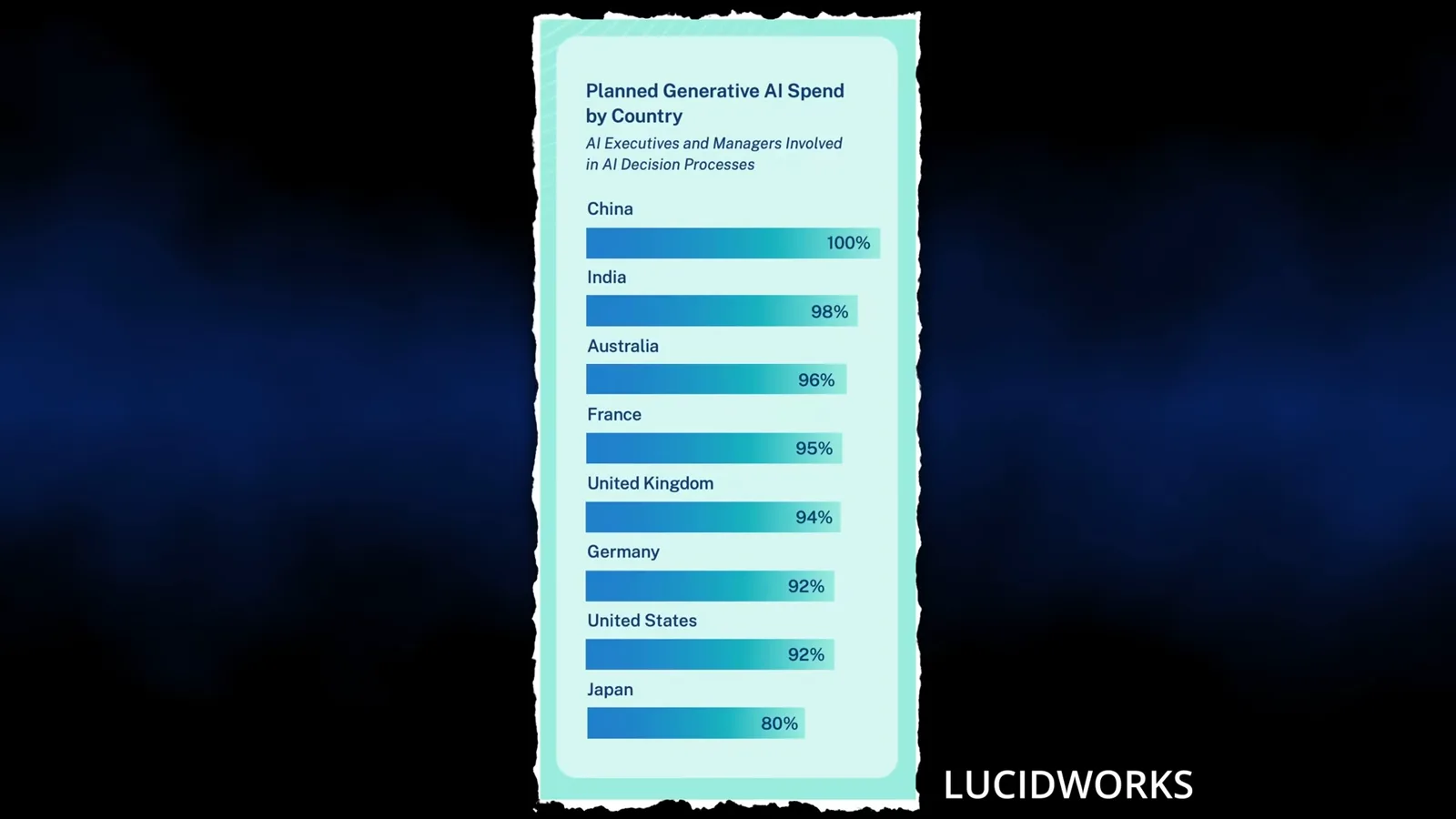
During the Hollywood writers' strike, AI's effect on writing work is a major concern. Berman cites a survey about planned generative-AI spending in entertainment and across countries and shows charts about occupations and industries. These figures describe respondents' plans and risk assessments, not realized spending or certain job losses.
YouTube announced work with Universal Music Group on an AI music framework. The stated principles emphasize responsible adoption with music partners, protections and opportunities for participants, and adapting trust and safety policies. I welcome an effort to work with new technology rather than only fighting it.
Social apps and AI business
A Snapchat glitch and BeFake lead into NVIDIA earnings and forecasts about employment and investment. Berman also selects an AI video.
Snapchat's My AI briefly posted a story and stopped responding to users. Snap described the episode as a technical glitch; it is not evidence that the bot independently decided to go rogue. Berman then introduces BeFake, an AI-based social app associated with former Machine Zone CEO Kristen Garcia Dumont.
I like BeFake's premise: instead of pretending that highly curated social posts are pure reality, the app makes artificial transformation part of creative expression. Its promotional clip presents AI edits as a way to turn ordinary moments into imaginative posts with less pressure to capture a perfect scene.
NVIDIA's AI-chip demand helped drive a strong earnings report and an after-hours stock rise. For its fiscal second quarter ended July 30, 2023, the company [reported](https://investor.nvidia.com/news/press-release-details/2023/NVIDIA-Announces-Financial-Results-for-Second-Quarter-Fiscal-2024/default.aspx) $13.51 billion in revenue, up 101% year over year. Its market ranking and stock valuation are snapshots of that period, not current investment guidance.
LinkedIn reported a 21-fold increase in ChatGPT-related job postings since November 2022, a comparison from a low starting point because ChatGPT had just launched. I expect technology to eliminate some jobs and create others, although whether new jobs will outnumber lost ones is a forecast rather than a settled outcome.
Berman cites an IBM survey estimating that 40% of workers would need to reskill over three years and reporting that 87% of surveyed executives expected generative AI to augment roles rather than replace them. The 1.4 billion estimate extrapolates a survey-based expectation to a global workforce; it is not a count of people already reskilled. He also cites a Goldman Sachs forecast of AI investment approaching $200 billion globally by 2025, which is a projection, not a measured result.
The video of the week is a frightening AI creation credited to Javi Lopez. Berman praises the work and jokes about needing time to recover after watching it.
Feed choice and bots
The final stories concern Meta's EU non-personalized recommendations and the bot problem on X. Berman discusses subscription and identity checks as proposed responses.
For the EU Digital Services Act, Meta announced options for viewing some content without personalized ranking. [Meta explained](https://about.fb.com/news/2023/08/new-features-and-additional-transparency-measures-as-the-digital-services-act-comes-into-effect/) that Stories and Reels from followed accounts could be shown chronologically. This is a choice about certain recommendation surfaces, not a switch to disable all AI or all algorithms. I suspect some people may prefer the personalized feed after trying the alternative; that is my prediction.
Finally, X continues to face bot networks, including accounts used in crypto scams. Berman discusses Elon Musk's suggestion that subscriptions could raise the cost of operating bots and reports work on ID-and-selfie verification. These were proposed approaches, not proof that subscriptions or identity checks solve the bot problem.
同じチャンネルの記事
 14:45EN
 Matthew Berman· 2026年10月29日Matthew Berman Examines Google’s Gemini 4 Carbon AnnouncementMatthew Berman · Forward FutureMatthew Berman reviews Google’s reported benchmark results, staged rollout and pricing for Gemini 4 Carbon, while noting he has not yet used the model.
 34:21ENMatthew Berman· 2026年10月27日Matthew Berman Examines Anthropic’s IPO Filing, AI Growth and GovernanceMatthew Berman, Sam Altman · Forward FutureThe presenter reviews the S-1’s financial metrics, compute strategy and voting structure while questioning the tension between rapid AI development and safety.
 0:26ENMatthew Berman· 2026年10月25日Sam Altman on Human Values and Problem-Solving in an AI WorldSam Altman · OpenAIIn a short interview excerpt, Altman considers the enjoyment of solving hard problems and the human role in interpreting results.
 0:36ENMatthew Berman· 2026年10月25日Kimi K3.1 and a Rubik’s Cube Solver DemonstrationMatthew Berman · Forward FutureMatthew Berman shows a scrambled virtual cube being solved and gives the Kimi K3.1 test a favorable assessment.
 0:21ENMatthew Berman· 2026年10月24日An AI-Generated Kimi Benchmark Chart Used Invented ScoresMatthew Berman · Forward FutureMatthew Berman asks for a graph of Kimi K3.1 Pro benchmarks, then discovers that the displayed figures are illustrative placeholders.
 25:50ENMatthew Berman· 2026年10月24日Kimi K3.1 Pro Tested: Strong 3D Demos, Uneven Results and Competitive PricingMatthew Berman · Forward FutureMatthew Berman tests the open-weight model on coding, 3D rendering and visual explanations, then compares benchmark results and prices.