30 秒でわかる
In June 2024, Matthew Berman discusses OpenWorm, an open-science effort to model the nematode C. elegans, and connects it to Nick Bostrom’s simulation argument. The worm’s mapped connectome is valuable research data, but OpenWorm’s whole-organism simulation is a goal rather than an exact completed replica. Neither its models nor the possibility of future human simulation establishes that our universe is simulated or that a simulation is conscious.
- 1A research goal, not an exact replicaOpenWorm models aspects of a nematode, but its documentation does not claim an exact completed organism or perfect prediction in every environment.
- 2The C. elegans connectomeThe adult hermaphrodite has 302 neurons and a mapped nervous system; mapping connections is different from determining every biological parameter.
- 3The simulation argumentBostrom’s trilemma sets out alternatives under assumptions rather than proving that our reality is simulated.
- 4Biology and reproductionThe project describes a focus on simple crawling and says its FAQ does not address egg-laying or development.
- 5Modeling neural activityA neuronal simulator computes changes in modeled membrane potentials, with results dependent on equations, parameters and experimental validation.
- 6Scaling is speculativeA local simulation and the difference between worm and human neuron counts do not establish feasibility of human consciousness or universe simulation.
ポイント
- OpenWorm aims to build a computational model of C. elegans; its documentation describes incomplete biological knowledge and validation as ongoing challenges.
- The adult hermaphrodite has 302 neurons, while the male has 385; a connectivity map does not specify all neural dynamics or predict every behavior.
- Worm Browser is an anatomical visualization, distinct from proof of a complete, behaviorally faithful living simulation.
- Bostrom’s argument presents three conditional alternatives and does not establish that we are almost certainly simulated.
- Whether conscious experience can be simulated, whether other civilizations exist, and whether quantum computing could simulate a universe remain open questions.
- Berman’s reported local runtime applies to his particular setup and model, not a general benchmark for whole-organism simulation.
チャプターごとに整えた全文を読む
OpenWorm and the nematode
Berman introduces the open-source project and explores an anatomical browser. A connectome and a visualization are not complete simulations of a living animal.
I introduce OpenWorm and ask whether a simulated worm could suggest we live in a computer simulation. The project is real and open source, but my claim that the organism is already 100% simulated is too strong: its documentation describes an ambitious whole-organism goal and unresolved modeling and validation work. A biological model does not prove the simulation hypothesis.
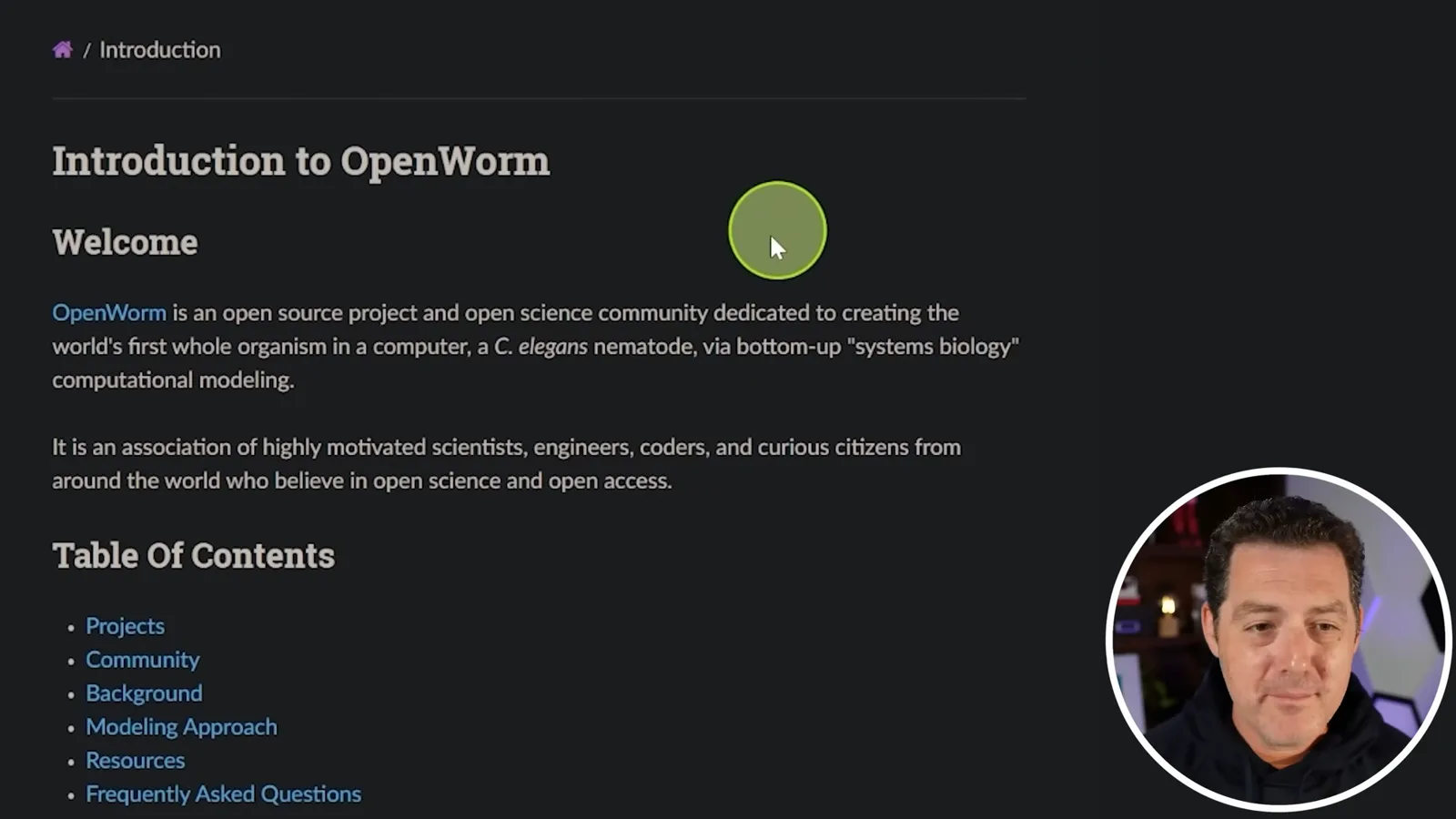
OpenWorm describes a bottom-up systems-biology effort to model C. elegans and understand cellular mechanisms. I say that mapping every neuron lets us predict exactly how the animal reacts in any environment, but a wiring map alone does not determine all synaptic strengths, dynamics, body mechanics or environmental interactions. Models must be tested against observed behavior.
C. elegans is a small, transparent nematode roughly one millimeter long and an important laboratory organism. The adult hermaphrodite has 302 neurons; the adult male has 385. The species was the first multicellular organism to have its genome sequenced, and researchers have reconstructed nervous-system connectivity, but those achievements are not a complete dynamic model of every cell.
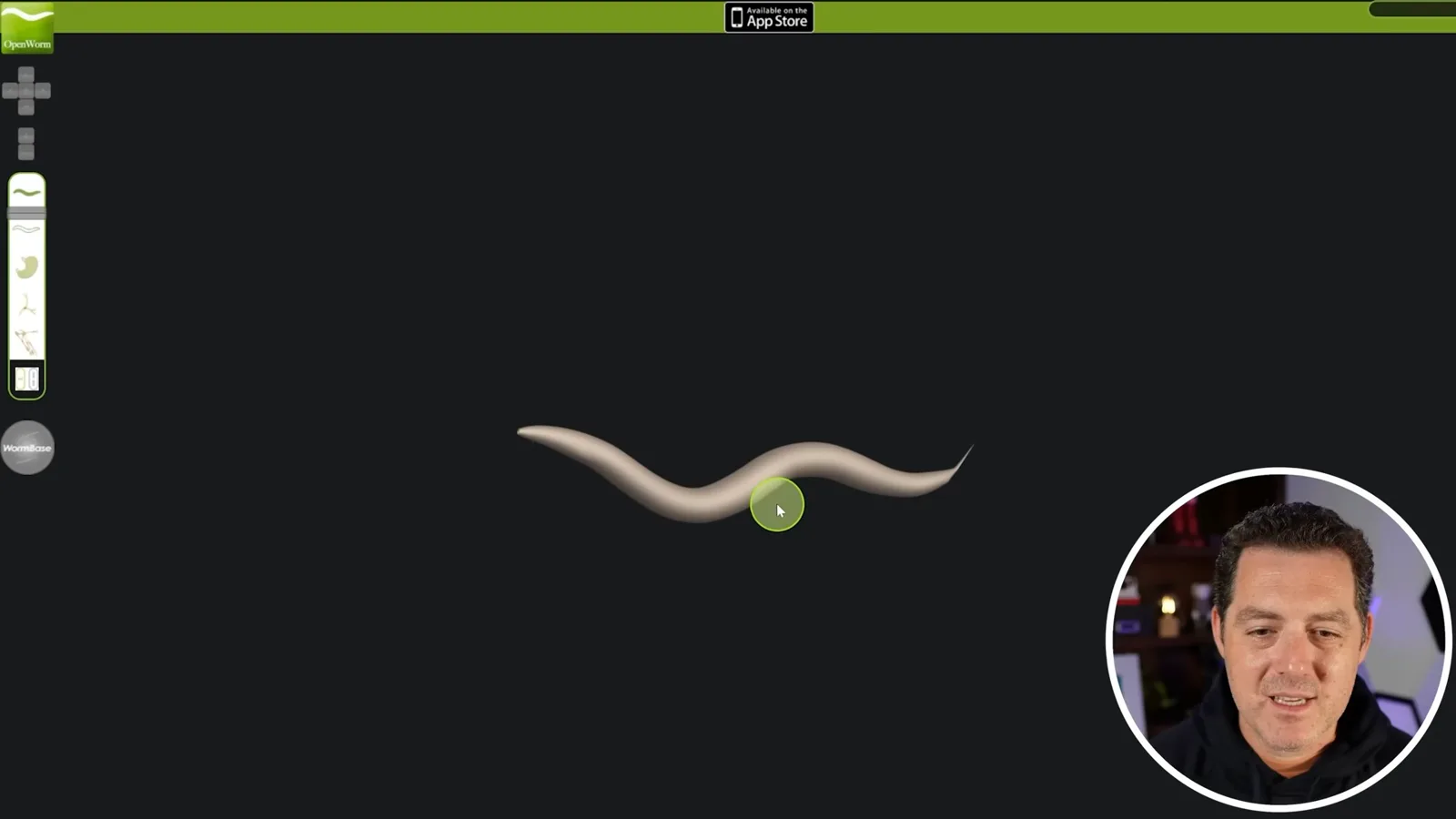
I show Worm Browser, an interactive anatomical visualization that lets users explore structures in the animal. I speculate about one visible structure, but do not identify it with certainty. The browser is an atlas-like visualization; seeing a structure there does not establish that its biological function has been fully simulated.
Simulation arguments and objections
He discusses Bostrom’s argument, objections and the possible role of future technology. The underlying philosophical and empirical assumptions remain unsettled.
I turn to philosopher Nick Bostrom’s simulation argument and imagine future virtual worlds so convincing that their inhabitants cannot distinguish them from reality. Bostrom’s original argument is a trilemma: roughly, civilizations may rarely reach technological maturity, rarely run many ancestor simulations, or simulated observers may predominate. It does not establish which alternative is true or simply prove that we are simulated.
I speculate that rapid advances in AI and virtual reality could someday make detailed simulations possible, and wonder whether that might already have happened. The ability to model a system in the future would not by itself show that our universe is such a model. I also recall a fictional conversation about whether the distinction between real and simulated worlds matters to their inhabitants.
I read a critique of the hypothesis that questions its assumptions about civilizations creating many simulations and about simulated beings having conscious experience. Such objections challenge the argument; they do not alone conclusively disprove every possible simulation hypothesis. Public figures’ personal probability estimates are opinions, not measurements.
I suggest an infinite universe would guarantee other civilizations and at least one interested in simulation. That conclusion does not follow merely from infinity: the physical conditions, possibilities and distribution of life are not established by the claim. Whether consciousness can be implemented in a simulation is also unresolved; current AI scaling does not demonstrate or guarantee human-level consciousness.
Modeling behavior and the cost of scale
He examines biological behavior, neural dynamics and a local run. He closes by speculating about humans and quantum computers, without demonstrating those possibilities.
Returning to the worm, I list real C. elegans behaviors including finding food, mating, avoiding threats, laying eggs and crawling. These are behaviors of the biological animal, not all demonstrated capabilities of the virtual model. OpenWorm’s FAQ describes starting with simple crawling and says egg-laying and development were not being addressed in the described work.
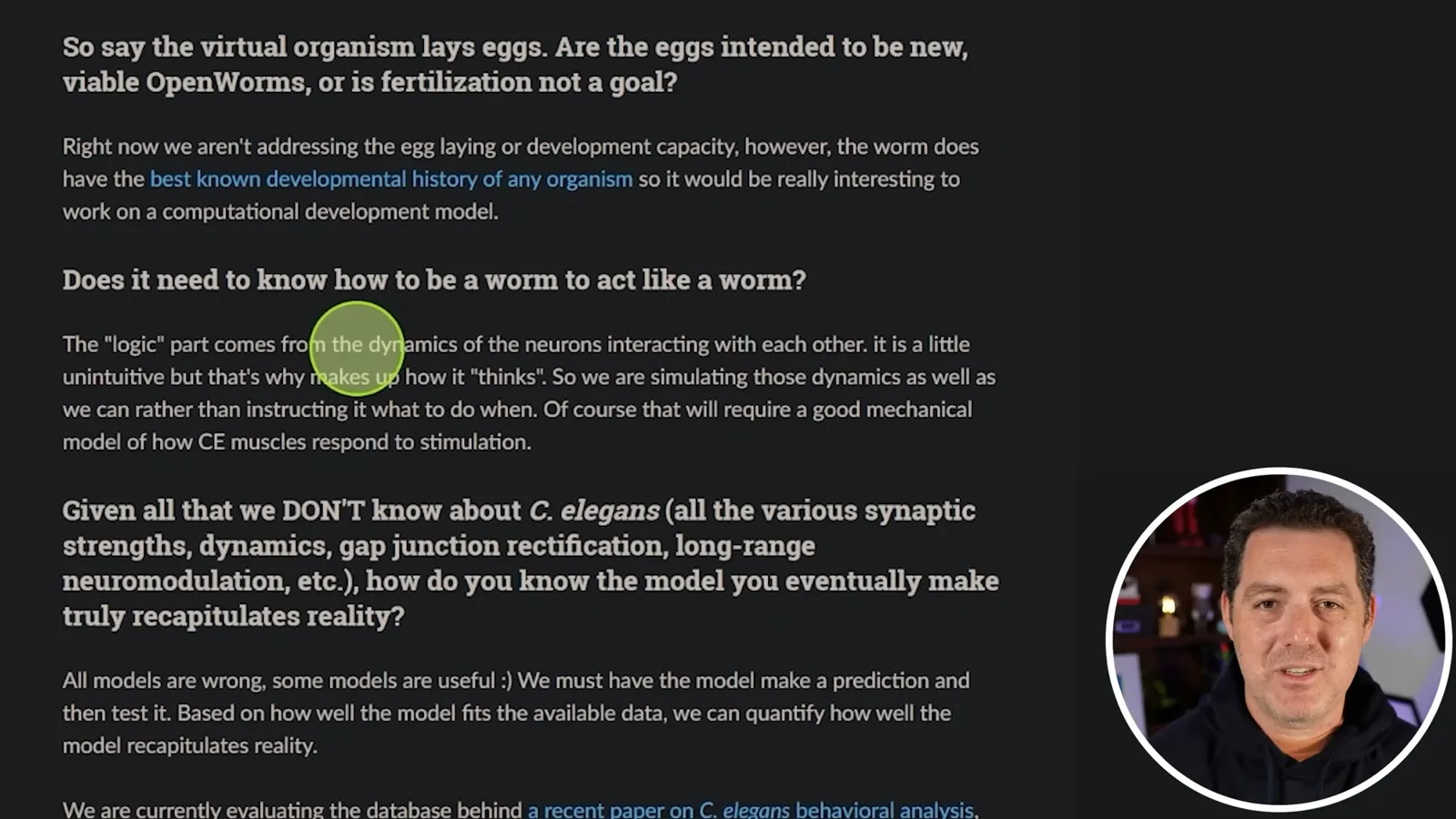
I ask whether simulated offspring might someday form a population of virtual worms. That is a hypothetical future extension, not a feature established by the demonstration. The project aims to model interacting neurons and mechanics so that aspects of behavior emerge; it also notes that unknown biological parameters require assumptions and validation against experiments.
A neuronal simulator can solve equations for how modeled membrane potential changes over time. Depending on the simulator, models may include ion-channel dynamics and spatial compartments. I describe this as inputs producing outputs, but the fidelity of those outputs depends on model choices, measured parameters and comparison with real animals.
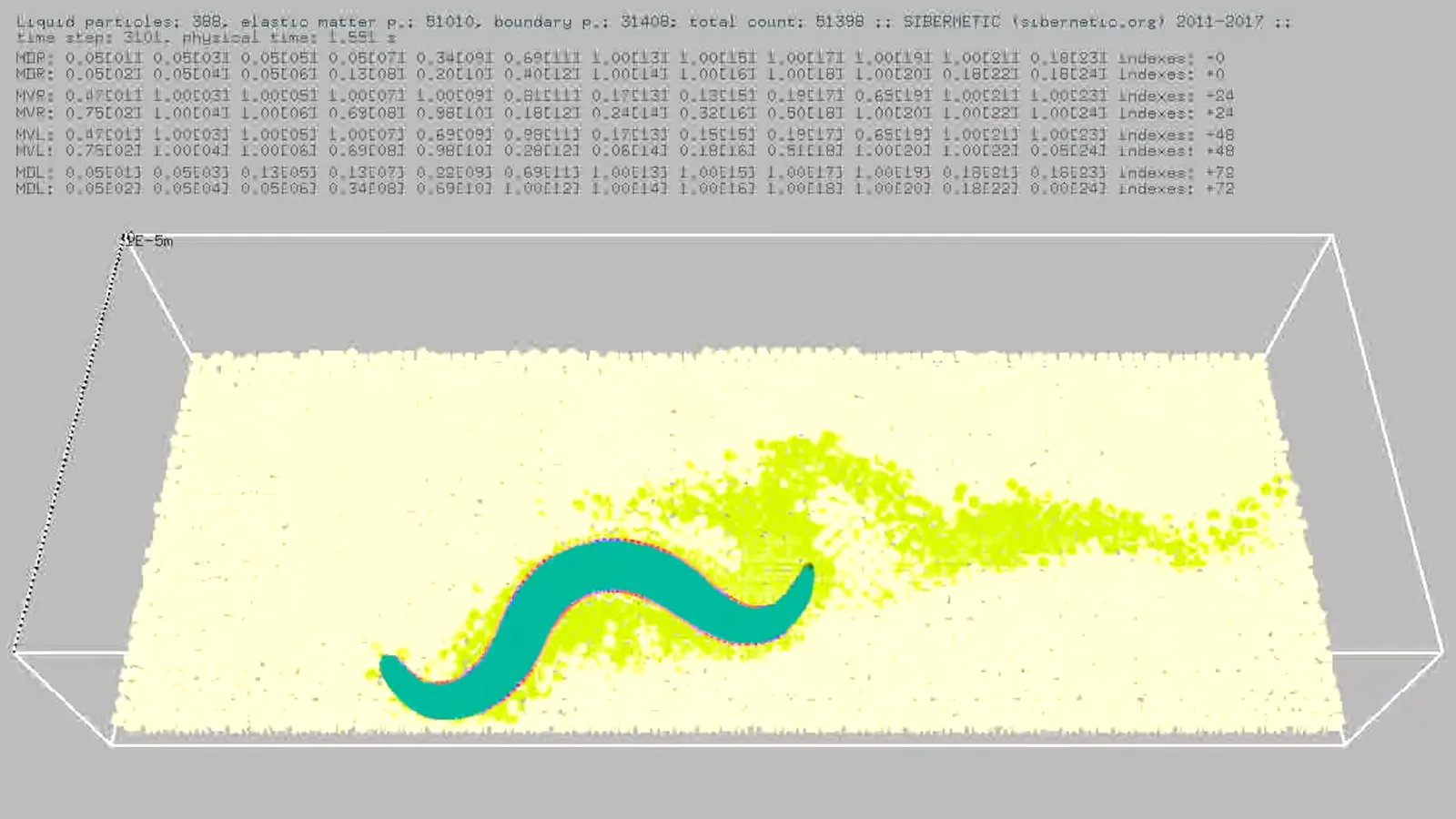
I report that a run on my own powerful PC took a couple of hours for about 23 seconds of simulated activity. That is my account of one setup and does not establish a standard runtime or a complete biological reproduction. I compare the worm’s 302 hermaphrodite neurons with roughly 86 billion human neurons, but neuron counts alone cannot determine the computational requirements for a faithful human simulation.
I speculate about future quantum computing and the possibility of simulating a world or universe, and recommend the fictional series Devs for viewers interested in the idea. Quantum computers do not automatically make that possible; the required algorithms, resources and fidelity are unknown. I close by saying the open-source code ran locally and offering a future tutorial.
同じチャンネルの記事
 34:21EN
 Matthew Berman· 2026年10月27日Matthew Berman Examines Anthropic’s IPO Filing, AI Growth and GovernanceMatthew Berman, Sam Altman · Forward FutureThe presenter reviews the S-1’s financial metrics, compute strategy and voting structure while questioning the tension between rapid AI development and safety.
 0:26ENMatthew Berman· 2026年10月25日Sam Altman on Human Values and Problem-Solving in an AI WorldSam Altman · OpenAIIn a short interview excerpt, Altman considers the enjoyment of solving hard problems and the human role in interpreting results.
 0:36ENMatthew Berman· 2026年10月25日Kimi K3.1 and a Rubik’s Cube Solver DemonstrationMatthew Berman · Forward FutureMatthew Berman shows a scrambled virtual cube being solved and gives the Kimi K3.1 test a favorable assessment.
 0:21ENMatthew Berman· 2026年10月24日An AI-Generated Kimi Benchmark Chart Used Invented ScoresMatthew Berman · Forward FutureMatthew Berman asks for a graph of Kimi K3.1 Pro benchmarks, then discovers that the displayed figures are illustrative placeholders.
 25:50ENMatthew Berman· 2026年10月24日Kimi K3.1 Pro Tested: Strong 3D Demos, Uneven Results and Competitive PricingMatthew Berman · Forward FutureMatthew Berman tests the open-weight model on coding, 3D rendering and visual explanations, then compares benchmark results and prices.
 32:20ENMatthew Berman· 2026年10月23日Who Is Local AI For? The Costs, Trade-offs and a Hybrid FutureMatthew Berman · Forward FutureMatthew Berman weighs data control and independence against hardware cost, setup complexity and inference speed.