30 秒でわかる
Peter Yang tests Claude Opus 5.5 with a Blender bridge flyover, a browser ride, drawing apps, fitness-app design and video editing. He reports stronger results with specific feedback than with an open-ended design prompt, dislikes both portraits in a small computer-use comparison, and prefers the newer model’s response to a personal reflection prompt. His judgments are based on his own examples.
- 1A bridge flyover used BlenderYang reports roughly 30 minutes of generation plus 30 minutes of rendering and compares the result with Astra.
- 2A browser ride combines multiple scenesThe artifact presents several landmarks and generated music after feedback on its birds.
- 3The computer-use drawing test disappointed himYang disliked both the Claude and Astra portraits in this small comparison.
- 4Specific design direction helpedGeneric fitness-app variations felt crowded, while a focused onboarding simplification worked better for him.
- 5Editing relied on tools and feedbackAn existing skill and HyperFrames helped add captions, effects and blurs; the output merits human review.
- 6The personality verdict is subjectiveYang preferred one newer-model answer to the same self-reflection prompt, based on clarity and tone.
ポイント
- The Golden Gate Bridge scene used Blender and required separate generation and rendering time.
- A browser ride and drawing apps show creative possibilities alongside visible imperfections.
- In Yang’s test, specific onboarding feedback worked better than an unconstrained request for app-design alternatives.
- Video editing combined an existing skill, HyperFrames and iterative human feedback.
- His favorable assessment of conversational style is a subjective comparison of individual responses.
チャプターごとに整えた全文を読む
Testing the new model
Yang introduces his demonstrations and personal assessment.
Peter Yang tests Claude Opus 5.5 across 3D scenes, drawing, app design, video editing and conversational style. He says the model feels more useful and pleasant to talk to than its predecessor, while showing several results he considers imperfect. These are personal demonstrations rather than a systematic benchmark.
3D bridge and browser ride
Blender and a browser artifact create landmark scenes.
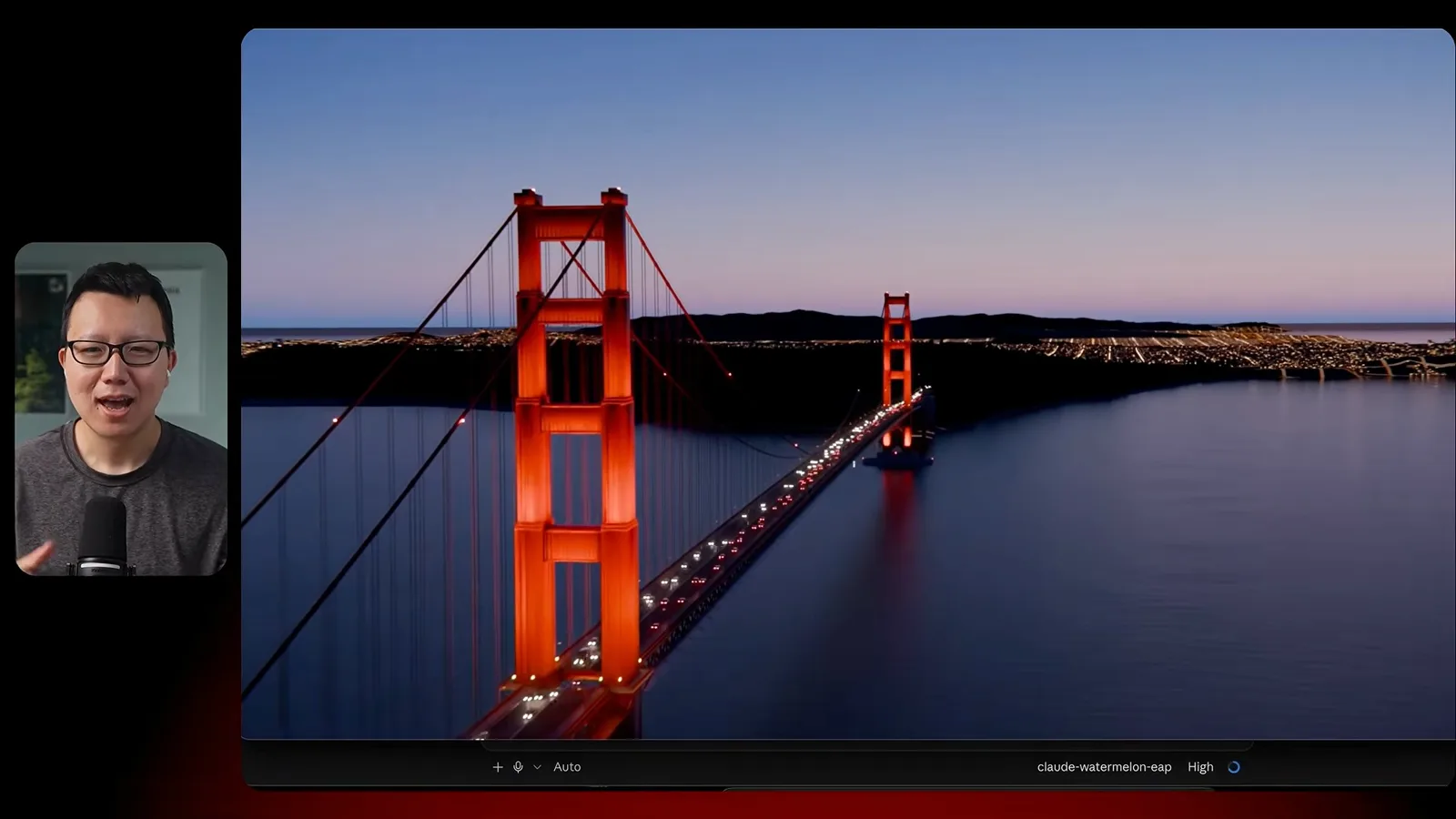
Inspired by another creator’s 3D scene, Yang asks Claude to create a Golden Gate Bridge flyover using Blender. He says it works through lighting and key frames; generation takes roughly half an hour and rendering another half hour. He also shows a GPT Astra scene made from the same prompt and finds both impressive.
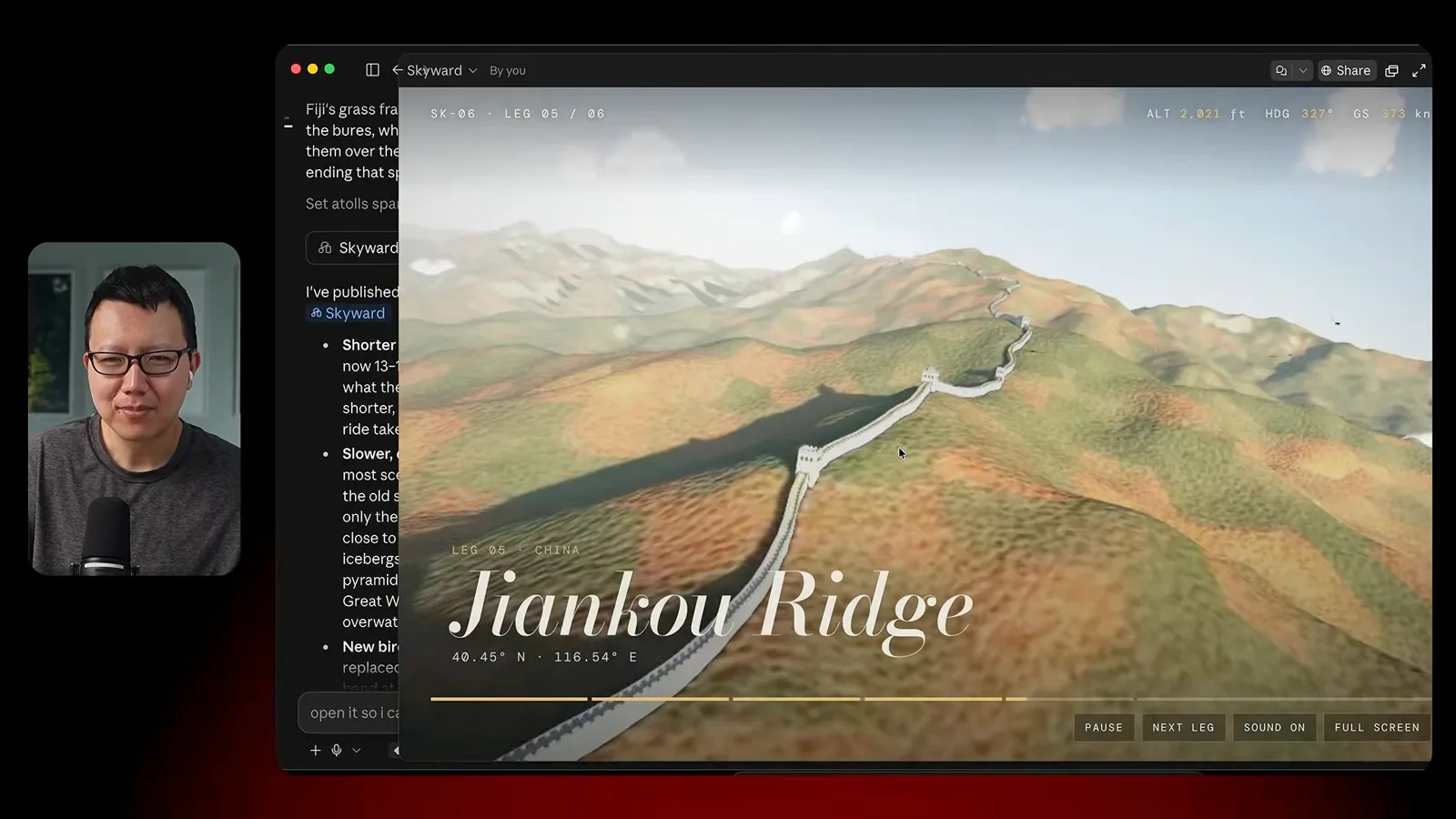
Next he asks for a browser experience inspired by the Soaring ride, with scenes from around the world. After feedback on the birds, the artifact shows places including the Swiss Alps, the pyramids, Fiji, the Great Wall and Paris, with generated music. Yang says the project took about an hour and likely used substantial tokens.
Painting, anime and computer use
Two drawing apps and a browser-based portrait test reveal both strengths and flaws.
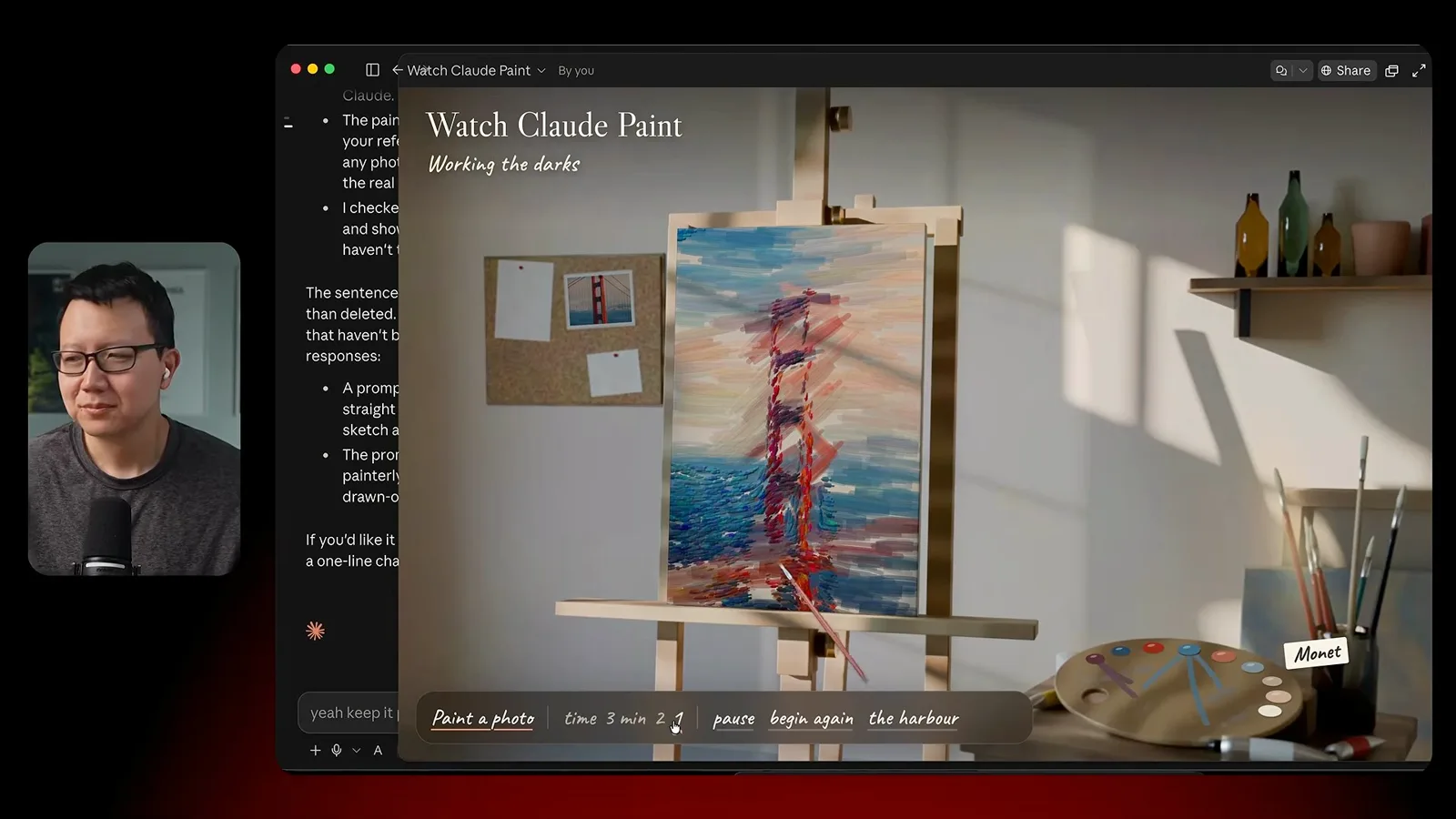
For a painting app, Yang provides a photo and asks the program to recreate it stroke by stroke in an impressionist style. The result lets him select artistic styles and watch the picture develop. He calls the outcome a promising start rather than a masterpiece.
A second artifact draws images in an anime-like style, first a bridge and then a person with an umbrella. Yang enjoys watching the stages but notices duplicated hair in the finished portrait. He sees creative potential while acknowledging the limits of the examples.
To test computer use, he asks Claude to draw his profile picture using basic shapes in an online Paint-style app. He compares it with a drawing by Astra and dislikes both. This small experiment does not establish a general ranking of browser-use capabilities.
Redesigning a fitness app
A broad exploration and a focused onboarding request yield different results.
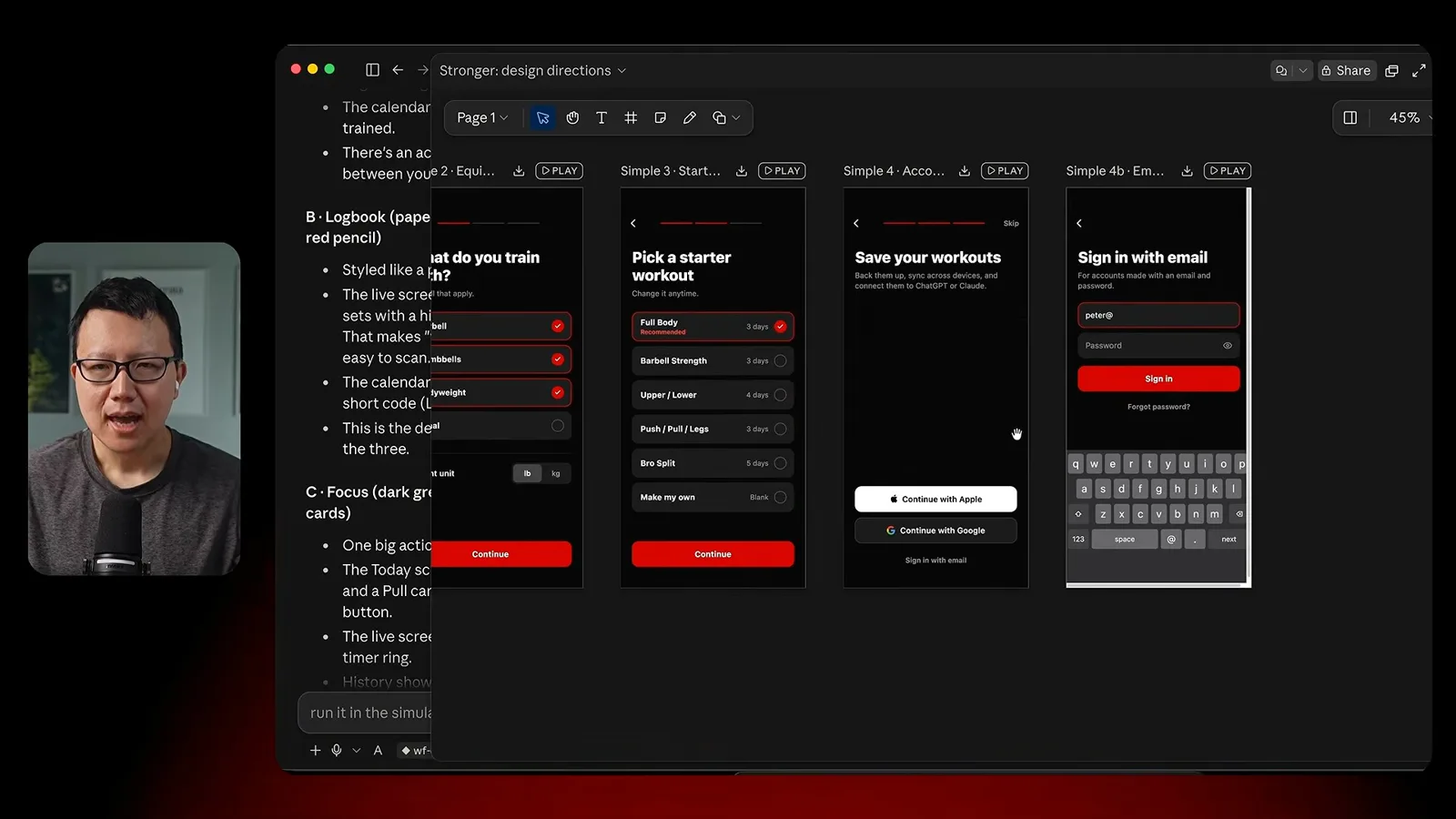
Yang asks Claude Design in Claude Code to propose alternative screens for his fitness app. He finds several generic variations crowded, although he likes one bolder direction. He concludes that a design system and reference images could provide useful constraints.
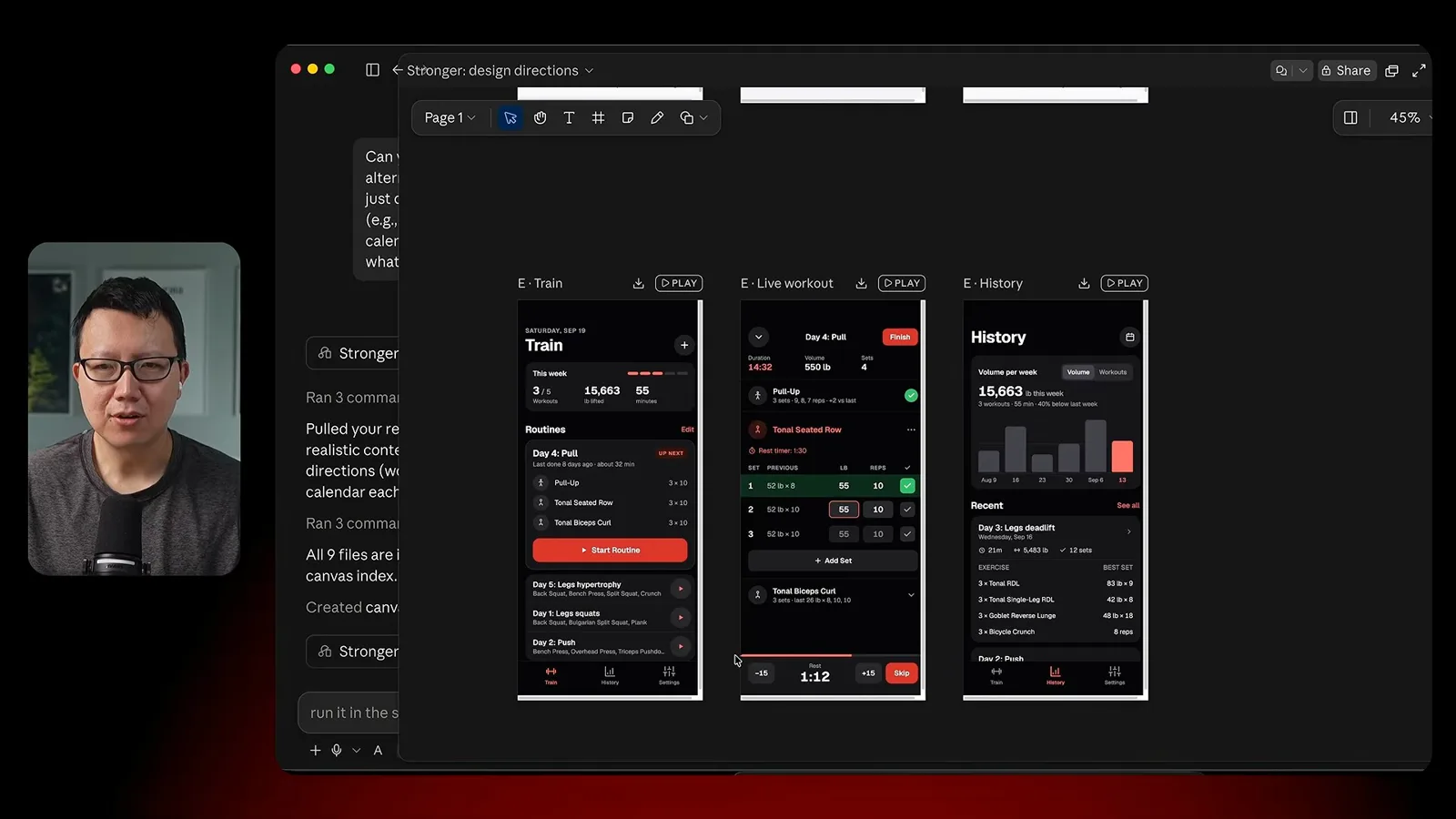
A more specific request—to simplify a complicated onboarding flow—works better for him. He shows a cleaner sign-in screen and says he can refer to the design canvas when asking for implementation. Yang also says that in his workflow he uses another image generator when he needs a new generated image.
Video editing and conversational style
Yang discusses an editing workflow and compares answers to a personal prompt.
For video editing, Yang improves an existing intro skill using a reference video and applies it to a tutorial. The edit adds captions, zooms, animations and a replacement clip after feedback. He says the agent also blurred sensitive details frame by frame; the result still requires inspection before use.
Yang recommends the open-source HyperFrames project for HTML-based overlays and mentions other editing tools. His demonstration combines a model, an existing skill, an editing framework and his own feedback, rather than showing an autonomous one-step production process.
Finally, he asks an older and a newer model the same self-reflection prompt using his available chats and memory. He prefers the newer answer because he finds it clearer and more actionable, and less judgmental. This is one subjective comparison, not an objective measure of personality or factual accuracy.
Yang’s verdict is positive on creative 3D work, editing and the model’s conversational style, while he wants further improvements to browser and computer use and agent interaction patterns. He invites viewers to try the model in their own workflows.
同じチャンネルの記事
 46:40EN
 Peter Yang· 2026年11月8日ポッドキャスト · 2 人Ashley Alexander: How AI Helps Me Care for My Parents With Cancerゲスト Ashley Alexander · ホスト Peter YangA caregiver uses AI to prepare for appointments, organize records and ask better questions—while keeping doctors at the center of treatment.
 17:50ENPeter Yang· 2026年11月4日ポッドキャストPeter Yang’s Five Steps for Using AI to Help Care for His MotherYang uses a shared care brief and organized records to navigate appointments, while making time for family.
 15:03ENPeter Yang· 2026年11月3日ポッドキャストHow Peter Yang Used an AI Phone Agent to Negotiate His Internet BillAn AI call negotiated a lower price and faster service, but Yang still had to approve the change himself.
 33:09ENPeter Yang· 2026年11月1日ポッドキャスト · 2 人Jaclyn Konzelmann: When AI Can Build More, Choose What Deserves to Existゲスト Jaclyn Konzelmann · ホスト Peter YangGoogle Labs pairs short strategy documents with prototypes, user co-creation and lessons from experiments that end.
 13:05ENPeter Yang· 2026年10月28日ポッドキャストPeter Yang Tests Genie 4: Convincing Worlds, Unfinished GameplayFive live demonstrations show scenes that respond to prompts and sound, alongside inconsistent actions and limited game mechanics.
 1:06ENPeter Yang· 2026年10月26日ポッドキャストPeter Yang on Setting Up Payroll for a One-Person BusinessIn a paid partnership, Yang describes the paperwork he encountered and a payroll product integrated with a business account.