30 秒でわかる
In June 2024, Matthew Berman informally tests Microsoft Phi-3 Vision, an XTuner LLaVA fine-tune built on Meta’s Llama 3, and GPT-4o in ChatGPT. He prefers Phi-3 overall in this small session, while GPT-4o performs better on several examples; different interfaces, tools and refusals limit the comparison.
- 1Three different setupsPhi-3 runs through Azure, XTuner LLaVA-Llama 3 runs locally, and GPT-4o is accessed in ChatGPT.
- 2Identifying a personThe systems do not name the person; Phi-3 explicitly refuses identification, which is not the same as a capability test.
- 3Reading a storage screenshotPhi-3 and GPT-4o calculate 8.3 GB free in the shown example; the local setup struggles with follow-up questions.
- 4Interpreting a memeGPT-4o captures the intended contrast in this run, while the other responses miss it or describe the image.
- 5Table to CSVPhi-3 outputs a CSV, while ChatGPT supplies a downloadable file using its analysis workflow.
ポイント
- The local model is an XTuner LLaVA fine-tune using Meta’s Llama 3, not a Meta-released vision variant.
- The three setups all produce broadly useful descriptions of an animal image, with differing labels and detail.
- A refusal to identify a person in a photograph does not establish that a system lacks recognition capability.
- Phi-3 and GPT-4o handle the storage screenshot more successfully than the local LLaVA setup in this run.
- The meme and CSV examples yield different results across the three products, with ChatGPT using additional analysis tools.
- A handful of prompts across different interfaces cannot establish a controlled or present-day ranking.
チャプターごとに整えた全文を読む
Models and initial image tests
Berman sets up Phi-3 Vision, local LLaVA-Llama 3 and GPT-4o. He tries an animal image, a person-identification request and text in an image.
In June 2024, I compare three vision-capable systems on a handful of images: Microsoft’s Phi-3 Vision, an XTuner LLaVA model built on Meta’s Llama 3, and GPT-4o in ChatGPT. These are informal demonstrations using different interfaces and settings, not a controlled benchmark or a current ranking.
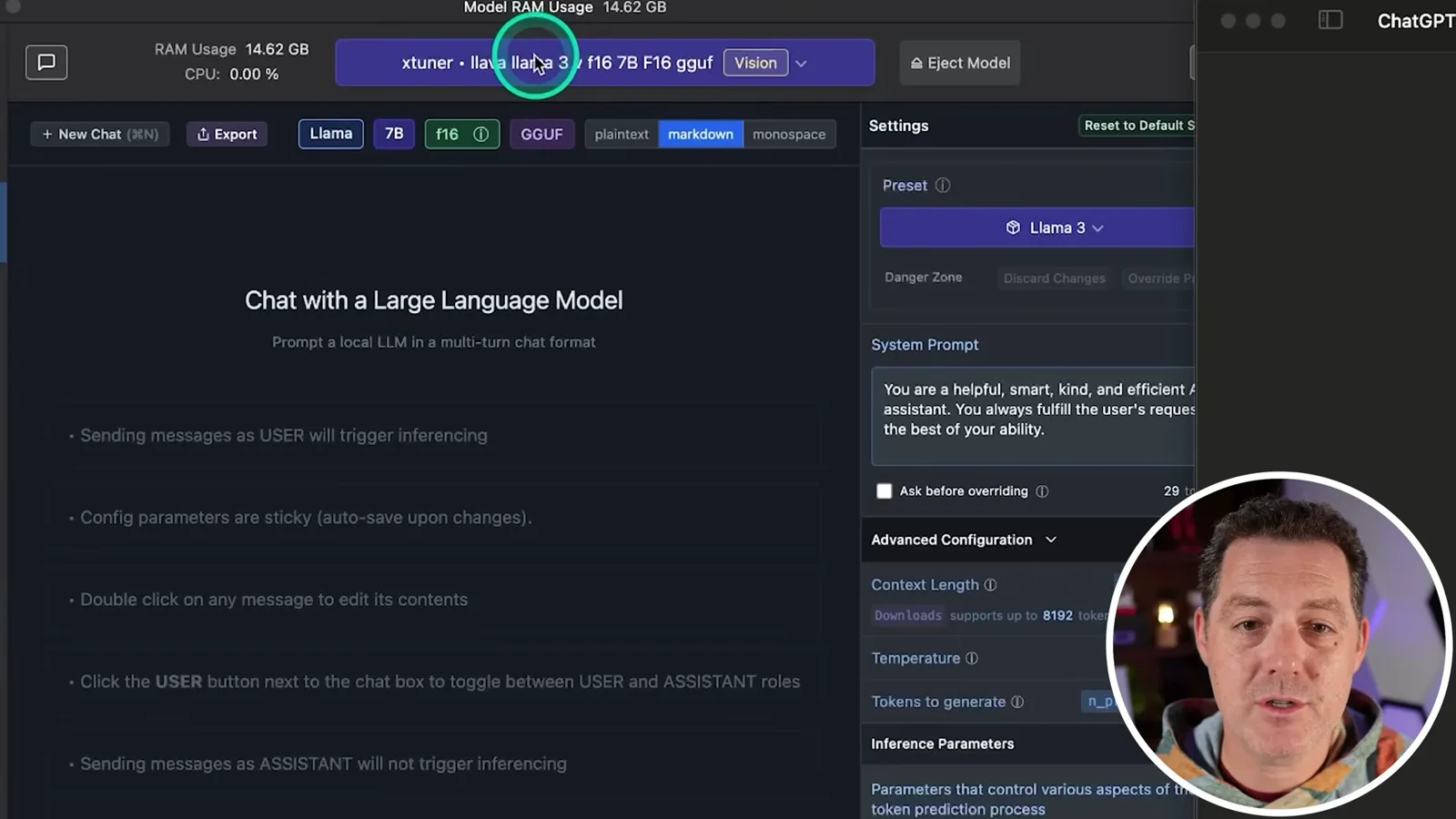
I run Phi-3-Vision-128K-Instruct through Azure, the LLaVA-Llama-3 model locally in LM Studio using an F16 file, and GPT-4o in ChatGPT. XTuner’s LLaVA fine-tune uses Meta’s Llama language model, but it is not a vision model released by Meta itself. I disclose that I am an investor in LM Studio.
The first image shows a white camelid resting in a field. Phi-3 and the local model describe it as an alpaca, while GPT-4o calls it a llama and adds details about its surroundings. I consider all three descriptions broadly useful; this single example does not establish which species identification is correct.
Next I ask the systems to identify a photograph of Bill Gates. Phi-3 explicitly declines to identify a person, the local model describes the person without naming him, and GPT-4o says it does not know. A refusal or a decision not to name someone is not evidence that the system lacks face-recognition capability.
I then test an image containing a CAPTCHA. Phi-3 reads the visible text, the local model adds an extra line, and GPT-4o initially returns no answer before responding on a retry. The outcomes are tied to the particular image, prompts and product behavior, not a general measure of security or reliability.
Thumbnail and phone storage
The systems describe a thumbnail and answer questions about an iPhone storage screen. Their performance differs on follow-up questions.
For a video thumbnail, Phi-3 and the local model describe a man in an office scene and visible text. When I ask which movie the image is from, neither confidently identifies one; the person appears within a constructed thumbnail, so the question itself may not specify the intended task clearly.
GPT-4o also describes the thumbnail. I subjectively prefer the other answers for this image, but the descriptions differ in detail and the result is not an independently scored comparison. I also comment that LM Studio is my preferred interface.
Next is an iPhone storage screenshot. Phi-3 reads that 119.7 GB of 128 GB is used and, after a follow-up, calculates 8.3 GB free. It also answers a question about app storage. The result demonstrates a combination of image reading and arithmetic on this specific screenshot.
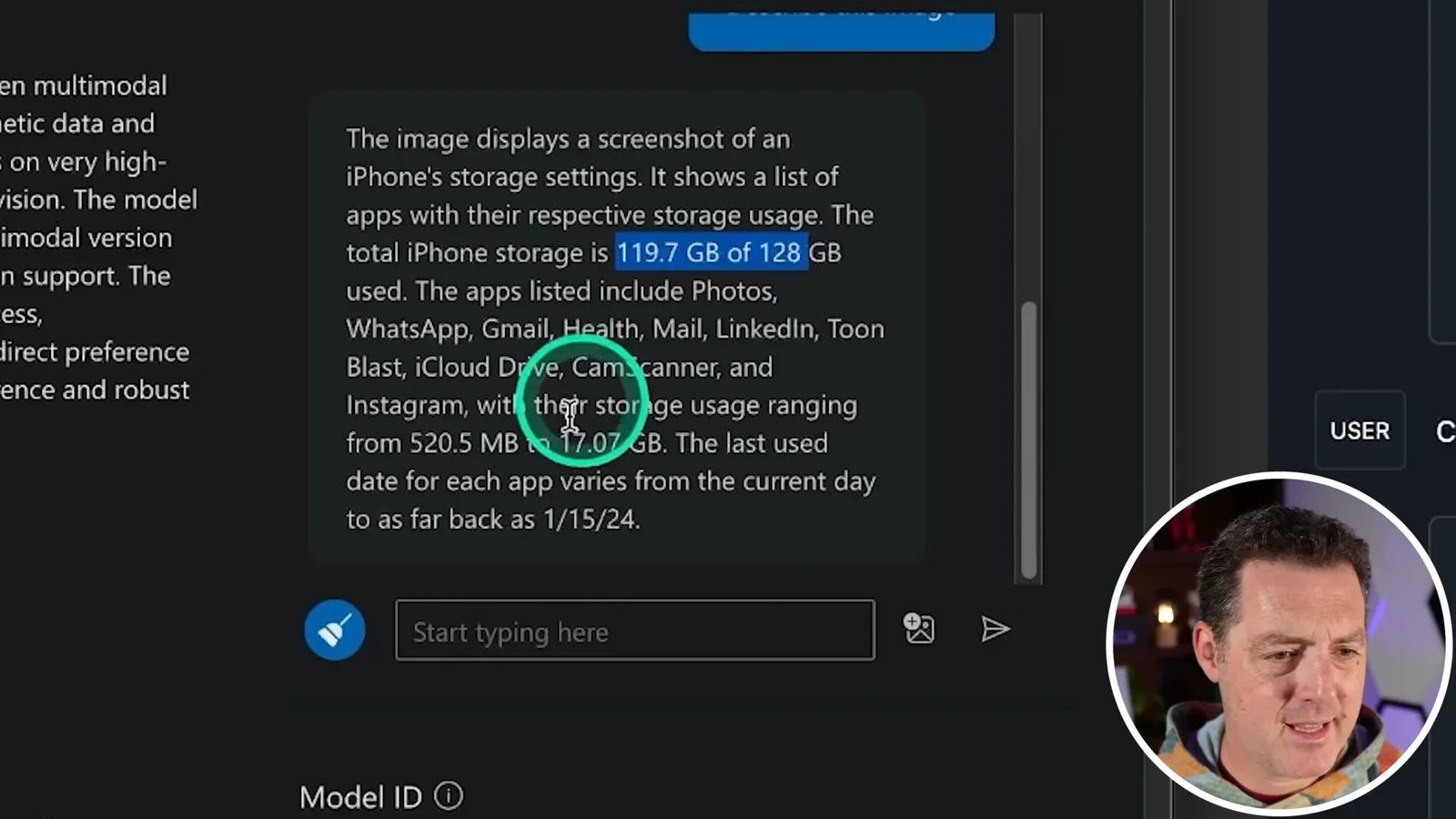
The local LLaVA model describes the storage screen but struggles to answer the follow-up about free space, even after I re-upload the image and start a new chat. It also gives an incorrect value for an app’s storage. I note that prompting or the local setup could be part of the problem.
GPT-4o provides a detailed description of the storage screen, calculates 8.3 GB free and gives the app’s storage as 162.5 MB. I judge it the strongest result for this example. That judgment concerns the observed run, not every task involving screenshots.
QR code, meme and table
Berman tries a QR-code destination, a visual joke and conversion of a table to CSV. He gives his subjective conclusion for this small 2024 session.
I ask all three systems for the destination of a QR code. Phi-3 declines, the local model describes the image rather than answering, and GPT-4o attempts analysis but ultimately suggests using a QR scanner. None produces the expected destination in this run; tool availability and refusal behavior differ between products.
A meme compares startups and large companies using groups of people digging. Phi-3 gives a general description but misses the intended contrast; the local model describes the panels without explaining the joke. GPT-4o captures the intended contrast between everyone working and one worker being observed by others.
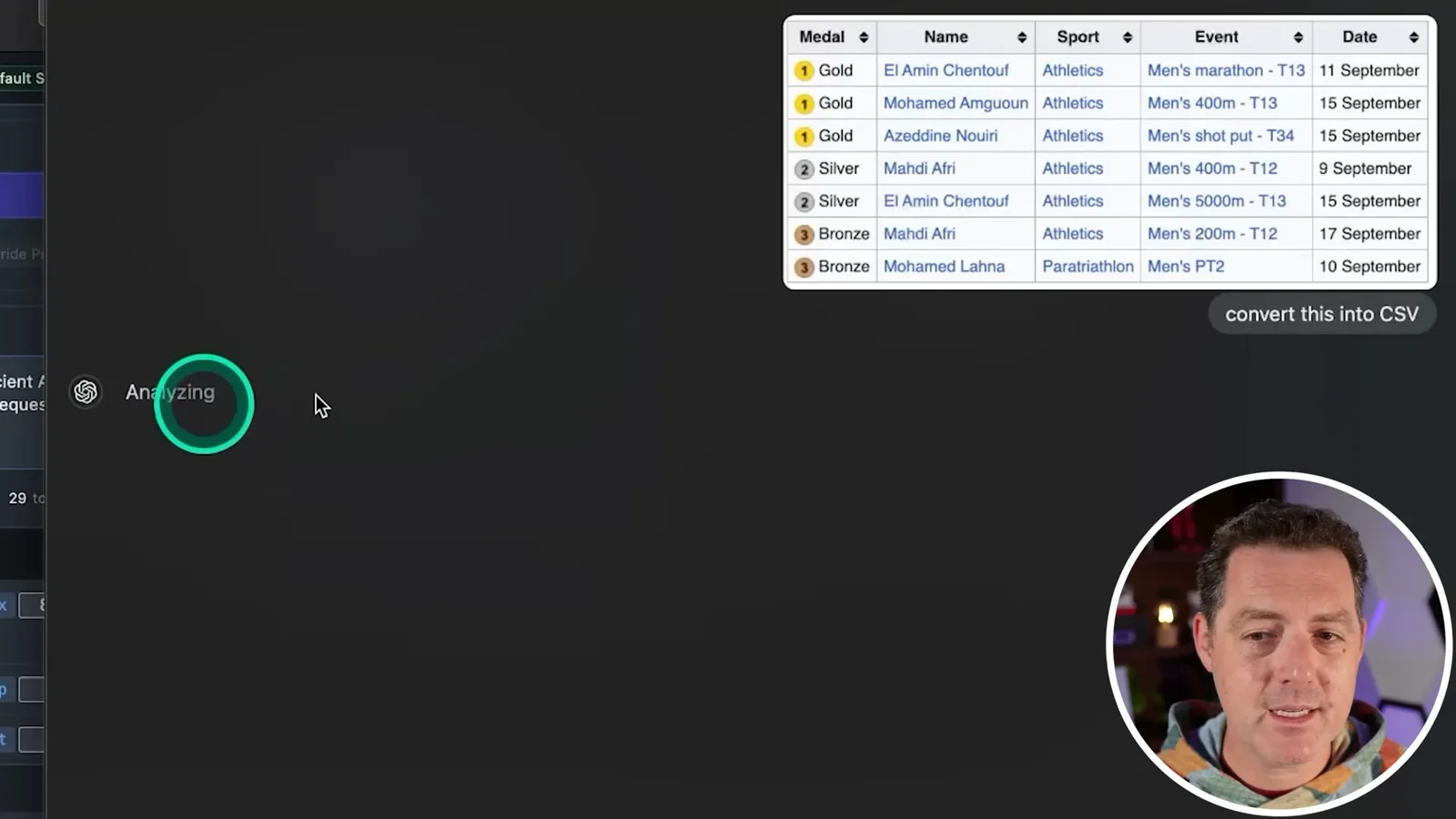
For a screenshot of a table, Phi-3 produces a CSV representation. The local model instead describes the table, and GPT-4o uses its analysis interface and supplies a downloadable CSV. I find Phi-3’s response especially quick, while the ChatGPT result includes a file; these are different product workflows.
My conclusion from this brief test is that Phi-3 Vision is especially impressive, GPT-4o performs well on several harder examples, and the local LLaVA setup is often limited to descriptions. I choose Phi-3 as my favorite in this particular session. The sample is small, prompts and tools vary, and the conclusion should not be treated as a present-day model ranking.
同じチャンネルの記事
 34:21EN
 Matthew Berman· 2026年10月27日Matthew Berman Examines Anthropic’s IPO Filing, AI Growth and GovernanceMatthew Berman, Sam Altman · Forward FutureThe presenter reviews the S-1’s financial metrics, compute strategy and voting structure while questioning the tension between rapid AI development and safety.
 0:36ENMatthew Berman· 2026年10月25日Kimi K3.1 and a Rubik’s Cube Solver DemonstrationMatthew Berman · Forward FutureMatthew Berman shows a scrambled virtual cube being solved and gives the Kimi K3.1 test a favorable assessment.
 25:50ENMatthew Berman· 2026年10月24日Kimi K3.1 Pro Tested: Strong 3D Demos, Uneven Results and Competitive PricingMatthew Berman · Forward FutureMatthew Berman tests the open-weight model on coding, 3D rendering and visual explanations, then compares benchmark results and prices.
 32:20ENMatthew Berman· 2026年10月23日Who Is Local AI For? The Costs, Trade-offs and a Hybrid FutureMatthew Berman · Forward FutureMatthew Berman weighs data control and independence against hardware cost, setup complexity and inference speed.
 1:03:37ENMatthew Berman· 2026年10月23日Matthew Berman’s Team Tests Kimi K3.1 on Animation, Games, and ChartsMatthew Berman, Alex, Brian · Forward FutureA live team AMA turns into an informal test of Kimi K3.1, from personal-agent workflows to motion graphics, a browser game, and a benchmark chart.
 0:53ENMatthew Berman· 2026年10月22日Sam Altman on AI and the Discovery of New KnowledgeSam Altman · OpenAIAltman expects progress in mathematical discovery to extend to biology, materials and energy.