30 秒でわかる
In this August 2024 roundup, Matthew Berman discusses Unitree robots, an Iranian-linked influence operation, AI companionship, model fine-tuning and local tools. He also examines then-pending California legislation, image generation, Waymo, Neuralink and model releases. Berman discloses that he is an LM Studio investor.
- 1Influence operationOpenAI described accounts linked to Storm-2035 and reported no evidence of meaningful audience reach.
- 2AI companionsBerman discusses potential emotional reliance, data privacy and effects on human relationships.
- 3Fine-tuning and retrievalGPT-4o fine-tuning was announced in 2024; he compares it with retrieval for external knowledge.
- 4SB 1047Berman critiques a draft California AI bill, which was subsequently vetoed.
- 5Waymo milestoneThe host’s revenue calculation is based on assumed fares rather than company financial results.
ポイント
- OpenAI reported disrupting Storm-2035 and finding no evidence that its content reached a meaningful audience.
- AI companionship raises questions about emotional reliance and privacy, while predicted effects on birth rates remain speculative.
- Fine-tuning and retrieval address different needs, and the quoted GPT-4o prices were historical.
- California Governor Gavin Newsom vetoed SB 1047 after the video was recorded.
- Waymo revenue estimates in the video are illustrative calculations, not reported financial results.
- Jamba 1.5 combines Transformer and Mamba components and was released under a specific model license.
チャプターごとに整えた全文を読む
Robots and influence operations
Berman reviews Unitree demonstrations and OpenAI’s report on Storm-2035. He argues that synthetic media makes critical scrutiny more important.
Unitree released a video of a humanoid robot jumping, moving and balancing. I was impressed by its agility and the company's description of deep reinforcement learning, and thought relatively affordable hardware could bring household robots closer. A demonstration does not establish the robot's reliability across everyday household tasks.
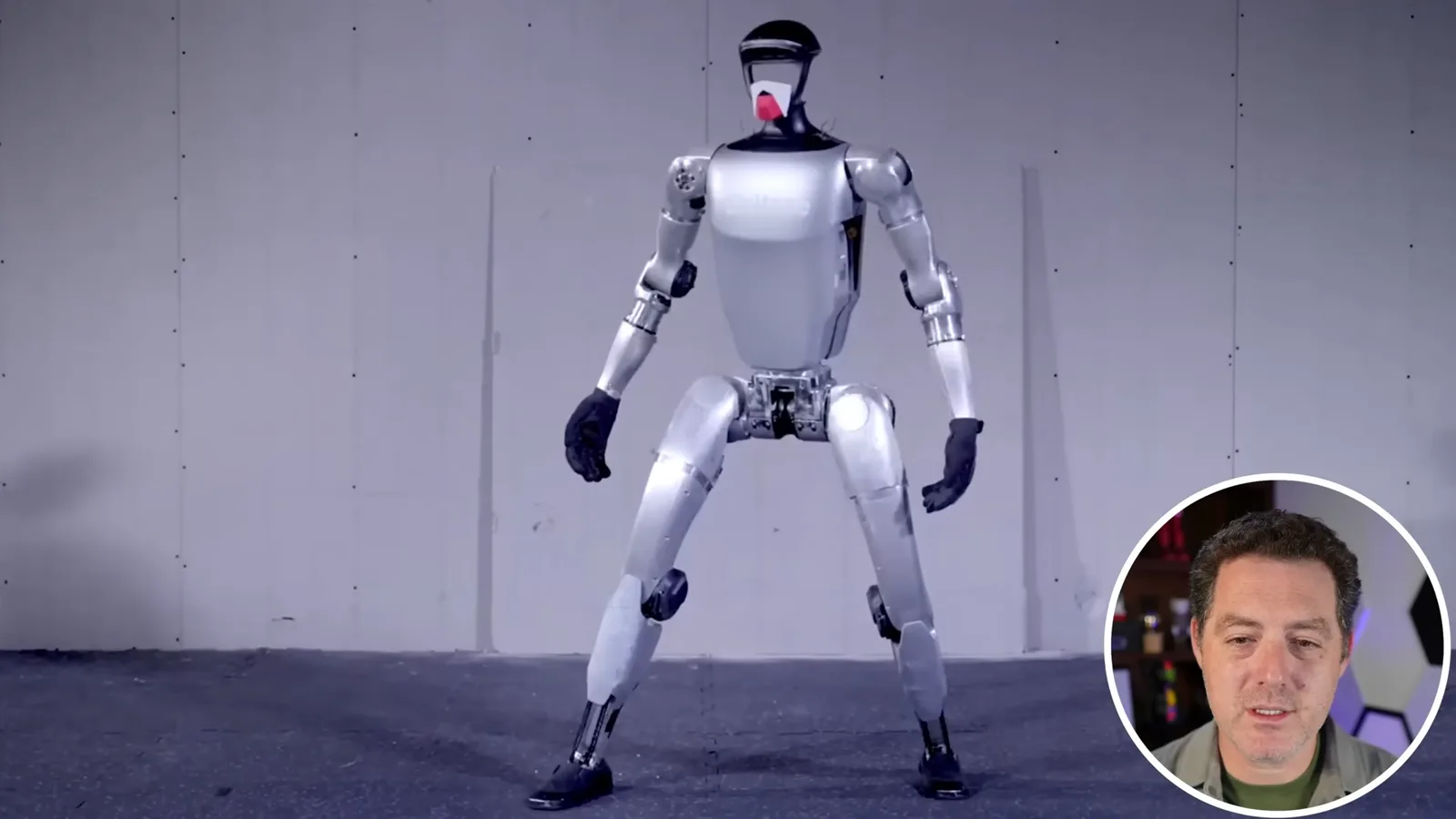
Unitree also showed a quadruped and the Go2-W, a wheeled version designed to navigate rough terrain. The video shows it rolling, stepping over obstacles and moving through a skate park. I would love to try one at home, though the footage is a selected product demonstration.
OpenAI reported banning ChatGPT accounts linked to Storm-2035, an Iranian influence operation. According to the company, the accounts generated content about the US election and other issues, but OpenAI saw no indication that it reached a meaningful audience. I worry that synthetic content can make influence operations easier to scale.
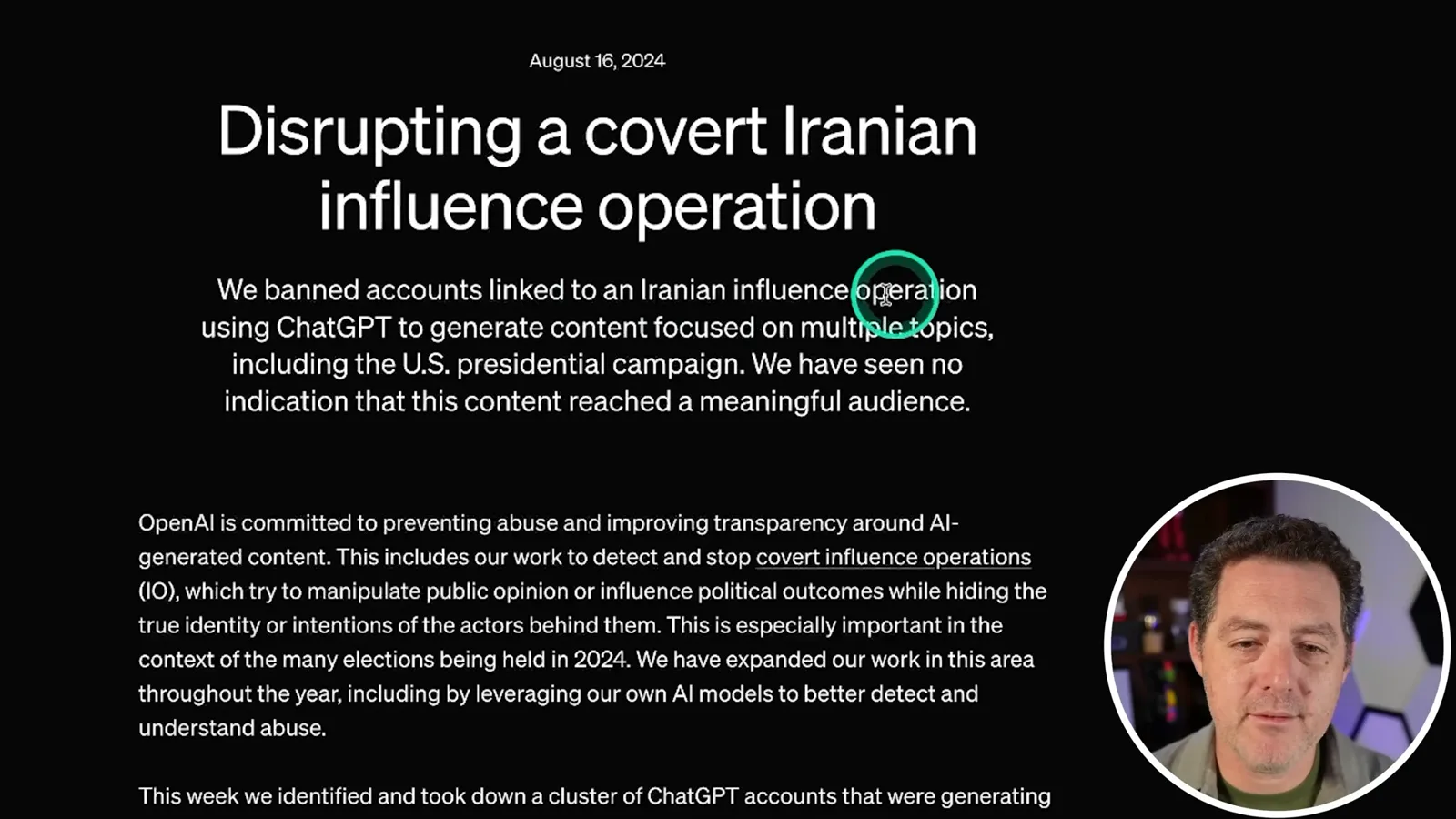
I think critical thinking and education about manipulated material are essential, and hope AI can assist detection. Automated detection is not infallible, however, and the operation's reach should be judged on the evidence OpenAI reported, not assumed from the volume of generated material.
OpenAI described long articles published on five sites posing as progressive and conservative outlets, and shorter English- and Spanish-language comments on social platforms. Topics included the US election and Gaza. I interpreted the content across political perspectives as an effort to create confusion, although the operators' full intentions are not established by those examples.
AI companionship and model customization
He discusses potential emotional and privacy concerns, then compares fine-tuning with retrieval. Prices and benchmark results are historical.
A Vox article raises concerns about people forming emotional attachments to AI voices and companions. OpenAI had also warned that naturalistic voice conversations could encourage users to anthropomorphize a system and develop emotional reliance. I worry especially about young users and whether time spent with a chatbot could displace human relationships.
I also worry about intimate information being entrusted to commercial services, and whether products are designed to encourage prolonged use. My claim that companionship will worsen birth rates is a prediction, not a conclusion established by this video; privacy and retention practices also vary by service and settings.
OpenAI made GPT-4o fine-tuning available to paid API developers. My rule of thumb is to consider fine-tuning for response style or task behavior and retrieval-augmented generation when a model needs access to external knowledge. The choice depends on the task; neither approach guarantees accurate answers or safety.
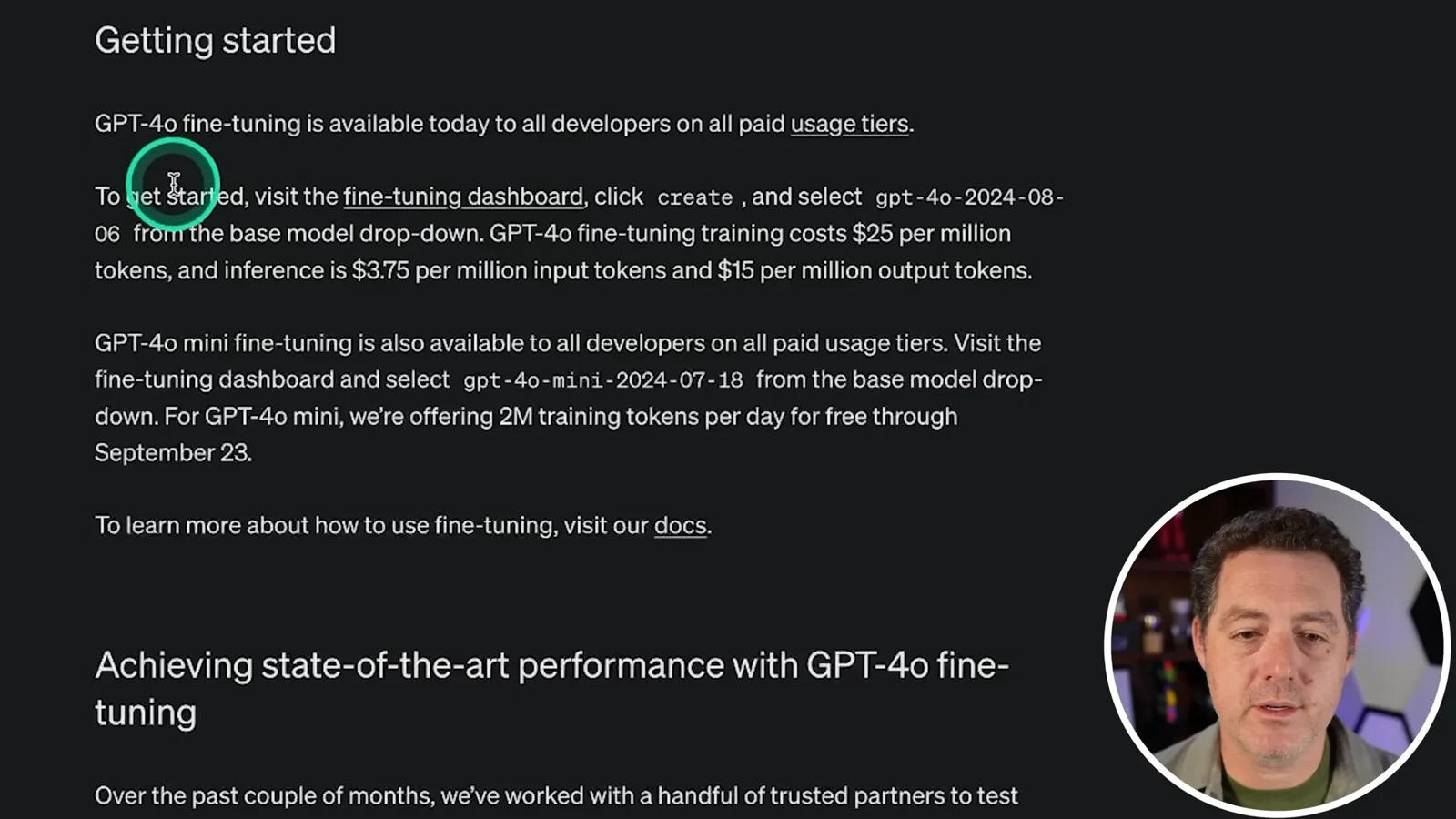
The announced 2024 prices were $25 per million training tokens, $3.75 per million input tokens and $15 per million output tokens for fine-tuned inference. OpenAI also cited Cosine's Genie achieving 43.8% on SWE-bench Verified using a fine-tuned GPT-4o model. These are historical prices and a reported benchmark result, not current pricing or a guarantee for every workflow.
Local tools and the future of coding
Berman reviews Grok and LM Studio and offers a prediction about software development. He discloses an investment in LM Studio.
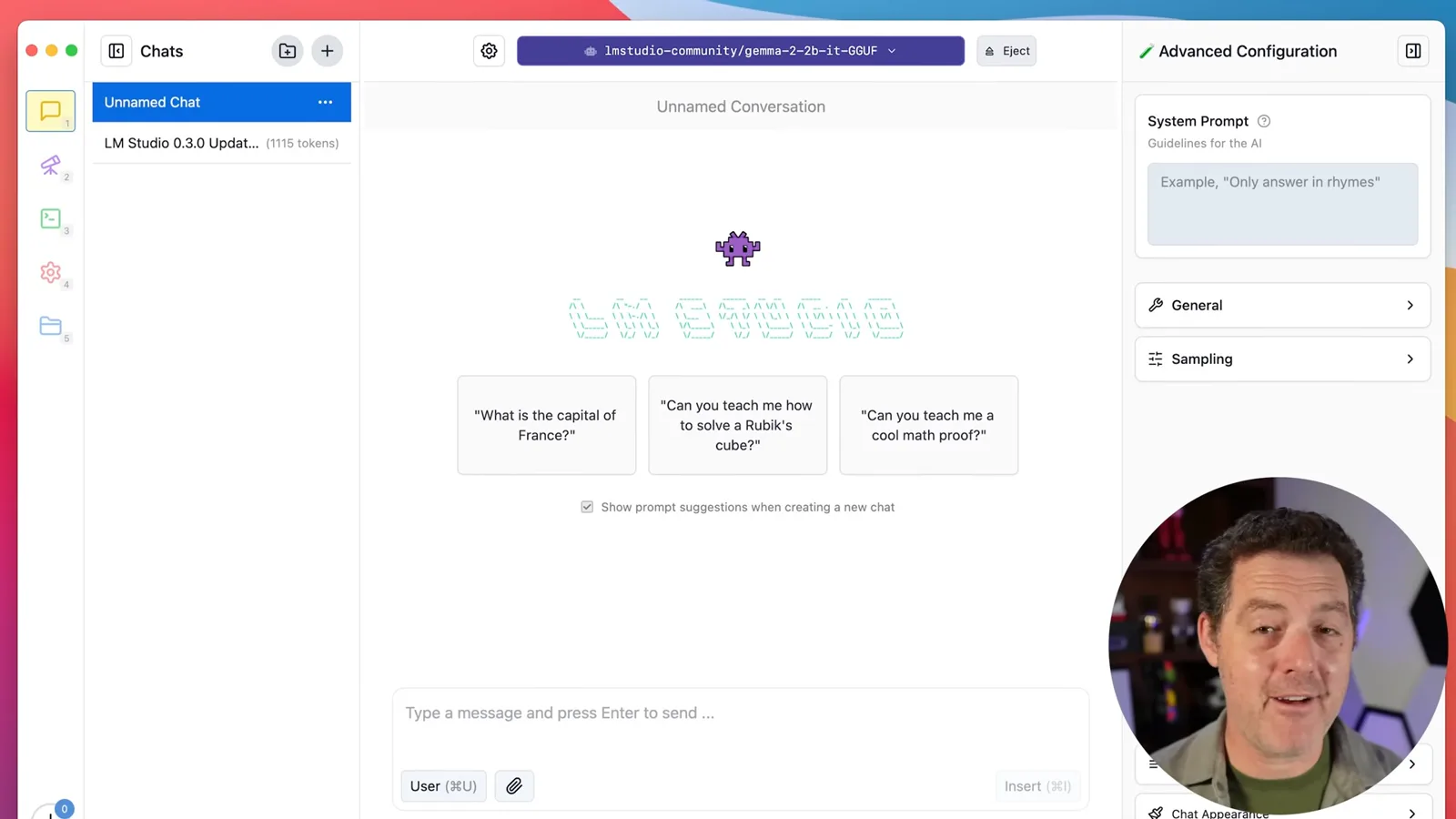
Grok 2 Large entered beta on X, alongside Grok 2 Mini, and I had recorded a test to share later. I also reviewed the planned LM Studio 0.3.0 redesign: local model chat, document retrieval, an OpenAI-compatible structured-output API and network serving. I disclose in the video description that I am an investor in LM Studio.
A leaked recording quoted AWS CEO Matt Garman suggesting that many developers might eventually spend less time coding and more time identifying useful things to build. My own stronger prediction is that users will eventually ask AI directly for what they need, reducing the need for conventional application layers. I could be wrong; it is a prediction rather than an established outcome.
California AI legislation and image tools
He critiques SB 1047 and shows Midjourney and Ideogram products. The California governor later vetoed the bill.
In August 2024, California was debating SB 1047, and OpenAI opposed the proposal, favoring federal regulation. I was skeptical of using fixed model size and training-cost thresholds as proxies for danger because technology and costs can change. The bill was still evolving when I discussed it; Governor Gavin Newsom vetoed it on September 29, 2024.
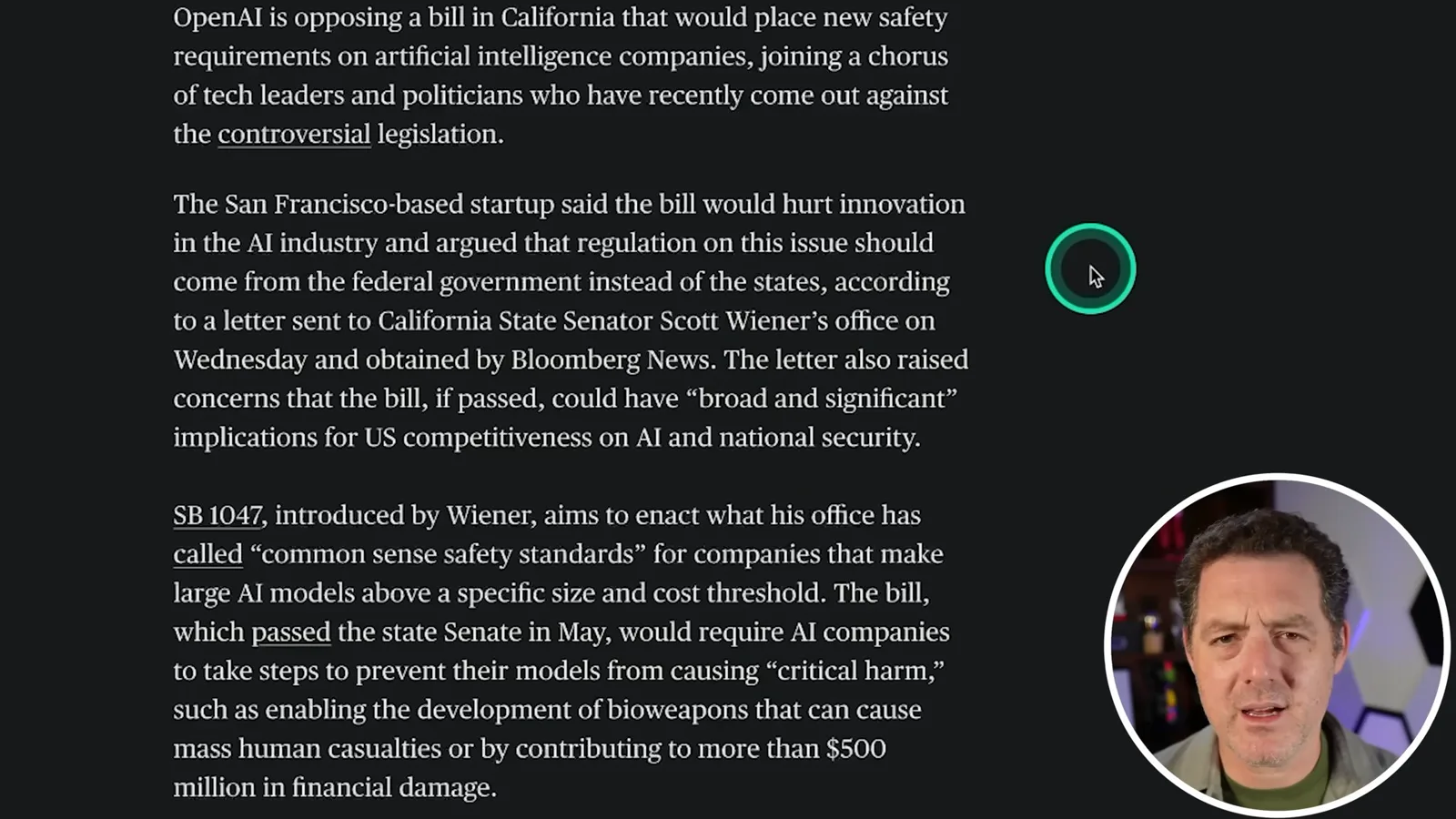
The proposal sought safeguards against severe harms from covered models, including catastrophic biological incidents and very large financial damage. I questioned whether its proposed thresholds would track actual risk. That was my policy judgment on a particular draft, not a legal interpretation of current obligations.
Midjourney introduced a website, which appealed to me because I had stopped using its Discord-based workflow. Ideogram 2.0 also launched with image styles including realistic, design, 3D and anime. I was particularly interested in examples of rendered text and graphic design.
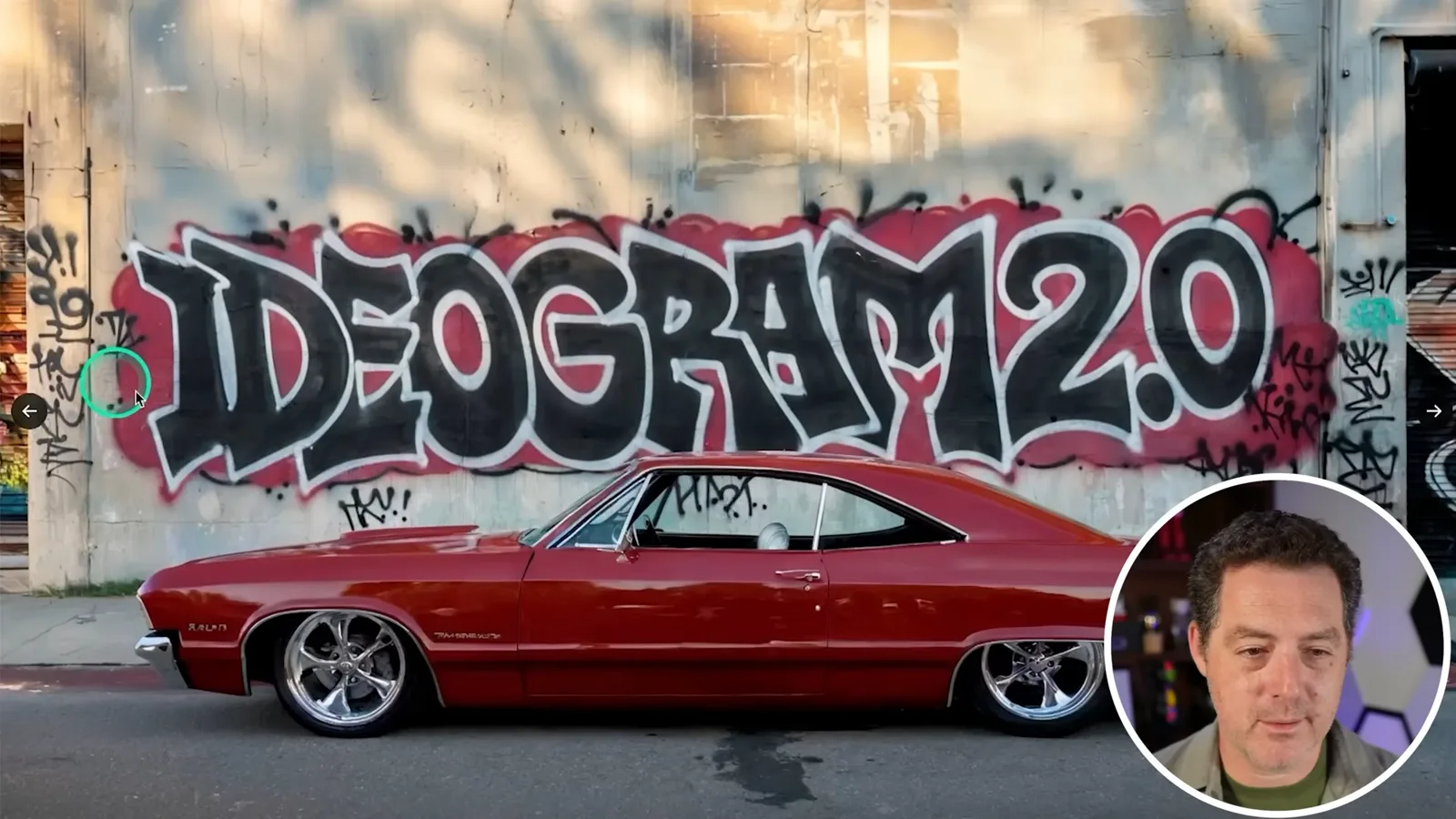
Ideogram claimed its image evaluations compared favorably with other models and offered search, an API and an iOS app. Those are company claims and product details from 2024, not an independent comparative test or a description of current availability.
Robotaxis, brain interfaces and new models
Berman considers Waymo’s reported trip volume, a Neuralink clip and Jamba 1.5. He closes with publisher controls for web crawling.
Waymo reported reaching 100,000 weekly autonomous trips. I made a rough revenue estimate by multiplying four weeks of rides by an assumed $25 fare, reaching $10 million per month. That is my illustrative calculation, not reported revenue: fares, ride mix and time periods could differ.
I was enthusiastic about trying a Waymo but noted a parking-lot incident in which vehicles honked and disturbed nearby residents. A ride-count milestone does not by itself establish safety or profitability.
An Andreessen Horowitz ranking placed Character.AI second among consumer generative-AI web products, behind ChatGPT and ahead of Perplexity. I found that consistent with its popularity, while recognizing that a ranking does not establish addiction or tell us the experience of individual users.
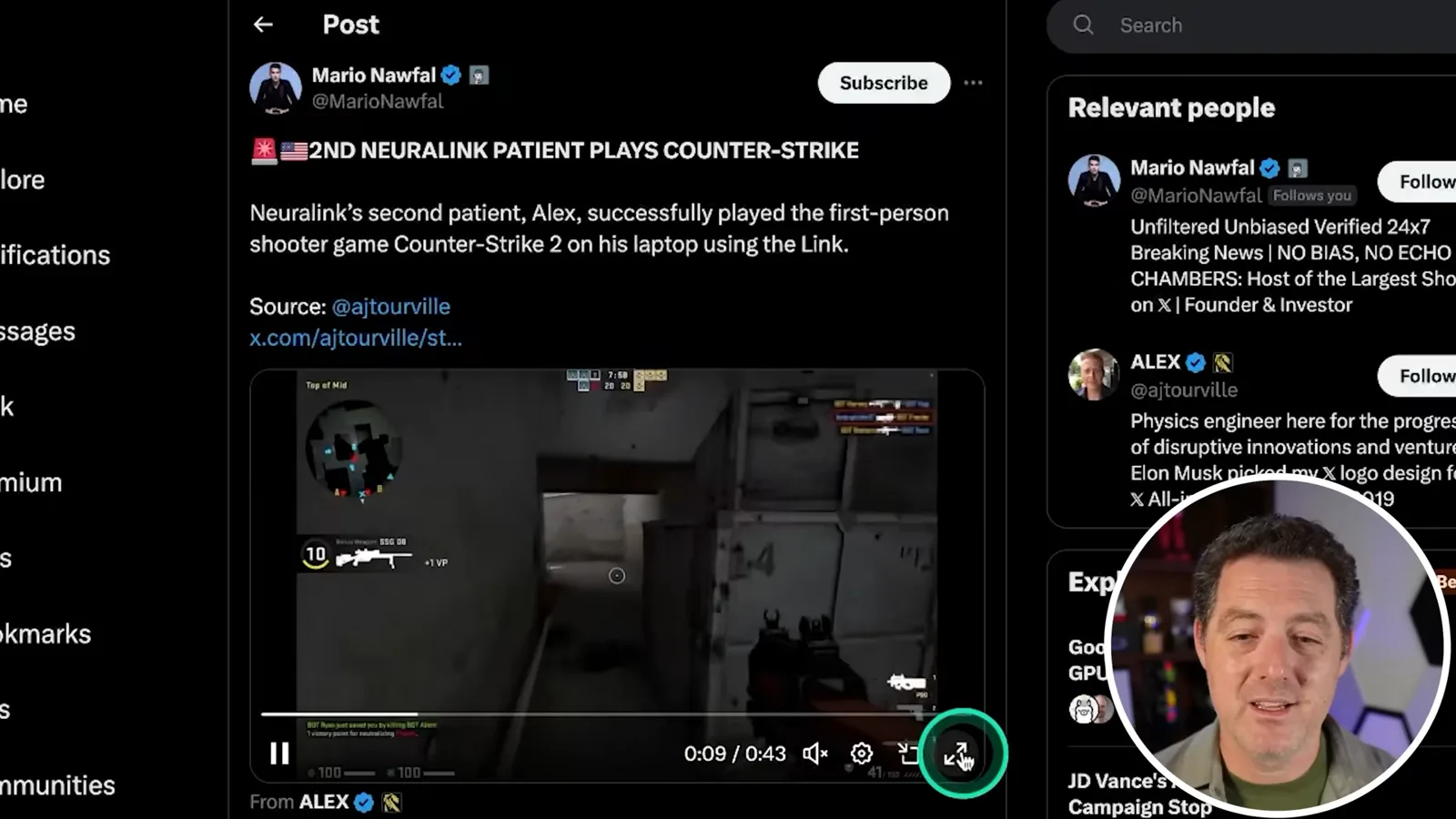
A video showed Neuralink's second participant, Alex, playing Counter-Strike 2 using the implant. I found the demonstration striking as an example of an interface that can support computer interaction. A clip alone does not establish broad clinical effectiveness or long-term safety.
AI21 introduced Jamba 1.5 Mini and Large. Unlike my shorthand suggesting an alternative to Transformers, Jamba combines Mamba and Transformer components in a mixture-of-experts architecture. Mini has 12 billion active and 52 billion total parameters; Large has 94 billion active and 398 billion total parameters.
I showed reported benchmark scores and noted that model weights were available on Hugging Face. Availability of weights does not automatically mean an unrestricted open-source license; AI21 distributed these models under its own open-model license, and comparisons depend on the benchmark and conditions.
Finally, Meta introduced an AI-related web crawler and described ways publishers could exclude it. I favor giving publishers a choice, such as through robots.txt, although technical opt-outs depend on a crawler respecting those rules and are not themselves a complete legal resolution. That concludes the August 2024 news roundup.
同じチャンネルの記事
 34:21EN
 Matthew Berman· 2026年10月27日Matthew Berman Examines Anthropic’s IPO Filing, AI Growth and GovernanceMatthew Berman, Sam Altman · Forward FutureThe presenter reviews the S-1’s financial metrics, compute strategy and voting structure while questioning the tension between rapid AI development and safety.
 0:26ENMatthew Berman· 2026年10月25日Sam Altman on Human Values and Problem-Solving in an AI WorldSam Altman · OpenAIIn a short interview excerpt, Altman considers the enjoyment of solving hard problems and the human role in interpreting results.
 0:36ENMatthew Berman· 2026年10月25日Kimi K3.1 and a Rubik’s Cube Solver DemonstrationMatthew Berman · Forward FutureMatthew Berman shows a scrambled virtual cube being solved and gives the Kimi K3.1 test a favorable assessment.
 0:21ENMatthew Berman· 2026年10月24日An AI-Generated Kimi Benchmark Chart Used Invented ScoresMatthew Berman · Forward FutureMatthew Berman asks for a graph of Kimi K3.1 Pro benchmarks, then discovers that the displayed figures are illustrative placeholders.
 25:50ENMatthew Berman· 2026年10月24日Kimi K3.1 Pro Tested: Strong 3D Demos, Uneven Results and Competitive PricingMatthew Berman · Forward FutureMatthew Berman tests the open-weight model on coding, 3D rendering and visual explanations, then compares benchmark results and prices.
 32:20ENMatthew Berman· 2026年10月23日Who Is Local AI For? The Costs, Trade-offs and a Hybrid FutureMatthew Berman · Forward FutureMatthew Berman weighs data control and independence against hardware cost, setup complexity and inference speed.