30 秒でわかる
Matthew Berman presents a Figure 01 demonstration combining conversation with tabletop manipulation, followed by clips of robots moving, navigating tight spaces, and working in a factory. The demonstrations show particular tasks; they do not establish that a robot has achieved artificial general intelligence. A garage robotics team discusses rapid prototyping, and Yann LeCun tells Lex Fridman why he believes more capable world models will be important for general-purpose robots.
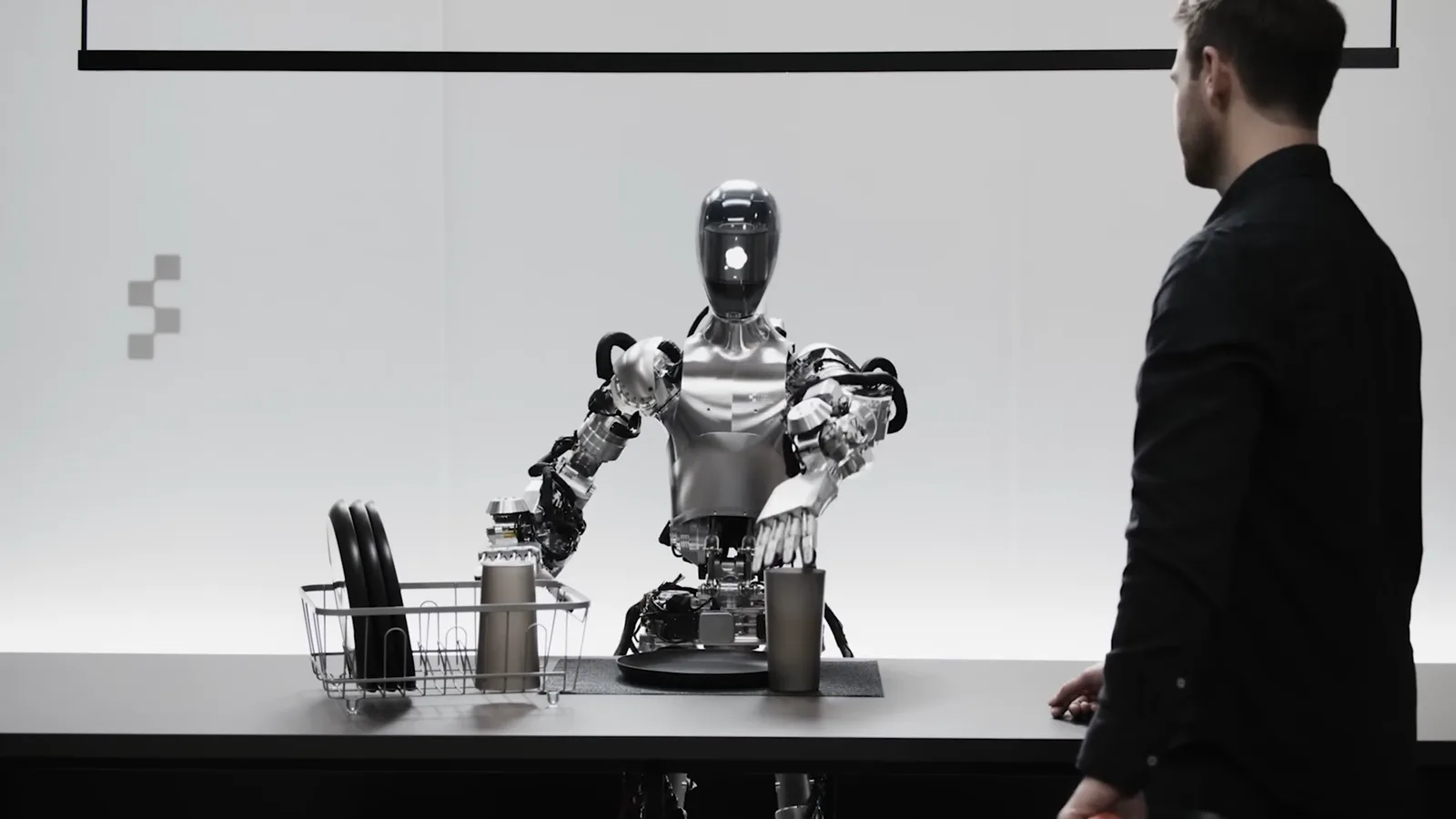
- 1A tabletop conversationFigure 01 describes the scene, gives a person an apple, and handles trash and dishes in a demonstration. The clip illustrates particular tasks rather than proof of general intelligence.
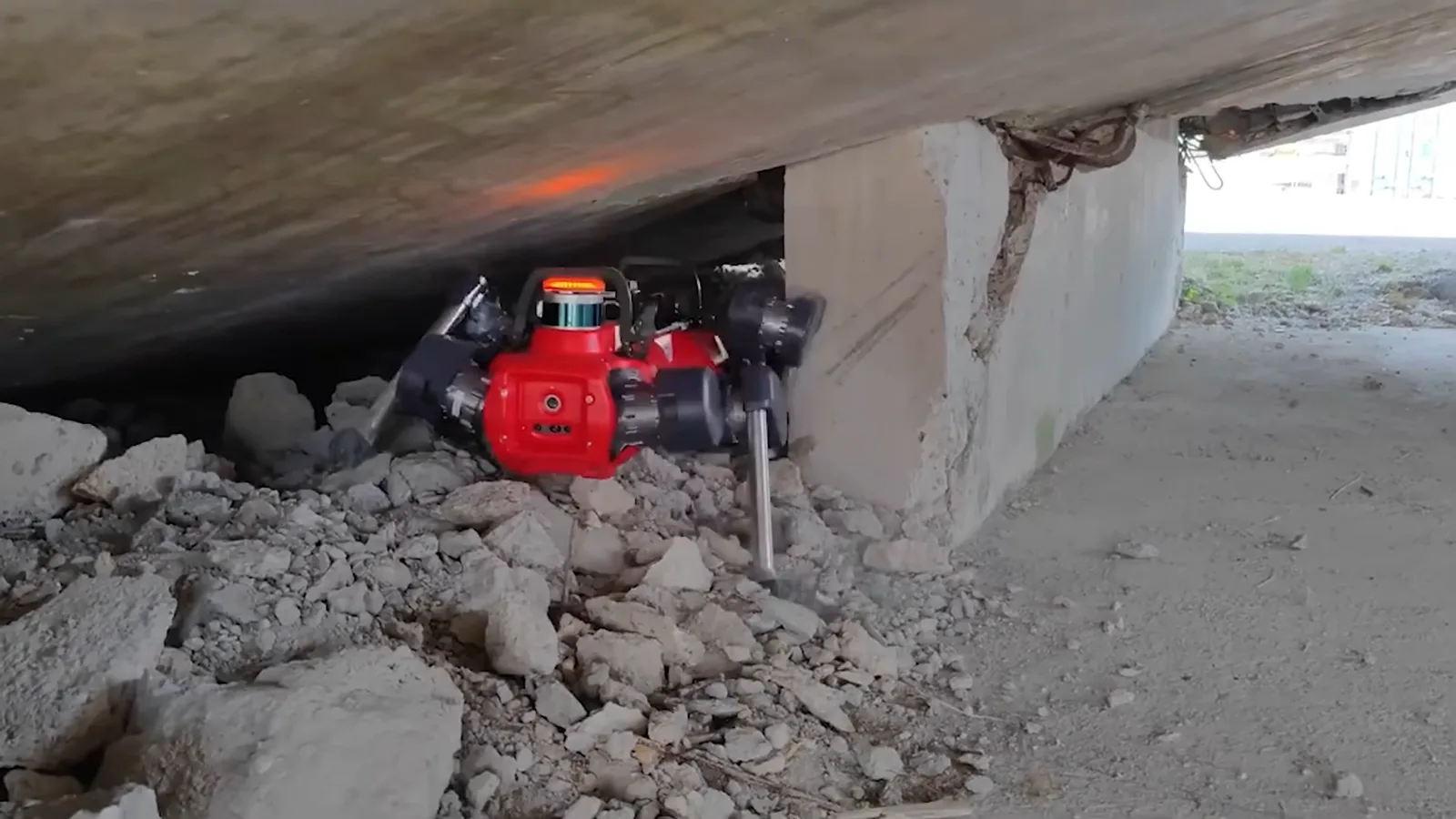
- 2Different robots, different tasksBerman shows locomotion, heavy-object manipulation, tight-space navigation, and a Vision Pro control demonstration.
- 3A garage prototypeA robotics team describes using 3D printing to rapidly revise a prototype that can stand without falling over.
- 4LeCun on the robotics gapLeCun expects the coming decade to be interesting, while arguing that better world models are needed for systems to understand and plan in the physical world.
- 5From navigation to household workLeCun describes a robot-dog demonstration that can navigate to a fridge and retrieve a recognized object, while noting that general tasks like clearing a table remain harder.
ポイント
- In a Figure 01 demonstration, a robot describes a tabletop scene, hands over an apple, clears trash, and moves dishes.
- Other clips show specialized locomotion, manipulation, tight-space navigation, remote control, and factory tasks.
- A garage team uses 3D printing to iterate rapidly on an early robot prototype.
- LeCun expects robotics progress but argues that systems still need better world models to understand environments and plan actions.
- Household tasks combine navigation, perception, and manipulation in varied, uncertain settings.
チャプターごとに整えた全文を読む
Figure 01 talks and handles objects
Berman introduces a Figure AI demonstration using OpenAI technology. The robot describes a scene, responds to requests, and moves objects on a table.
I am sick, so I cloned my voice rather than miss this week’s AI news. First is a Figure AI demonstration in which Figure 01 uses OpenAI technology to converse while interacting with objects on a table. This is a demonstration of specific capabilities, not evidence that the robot has achieved AGI.
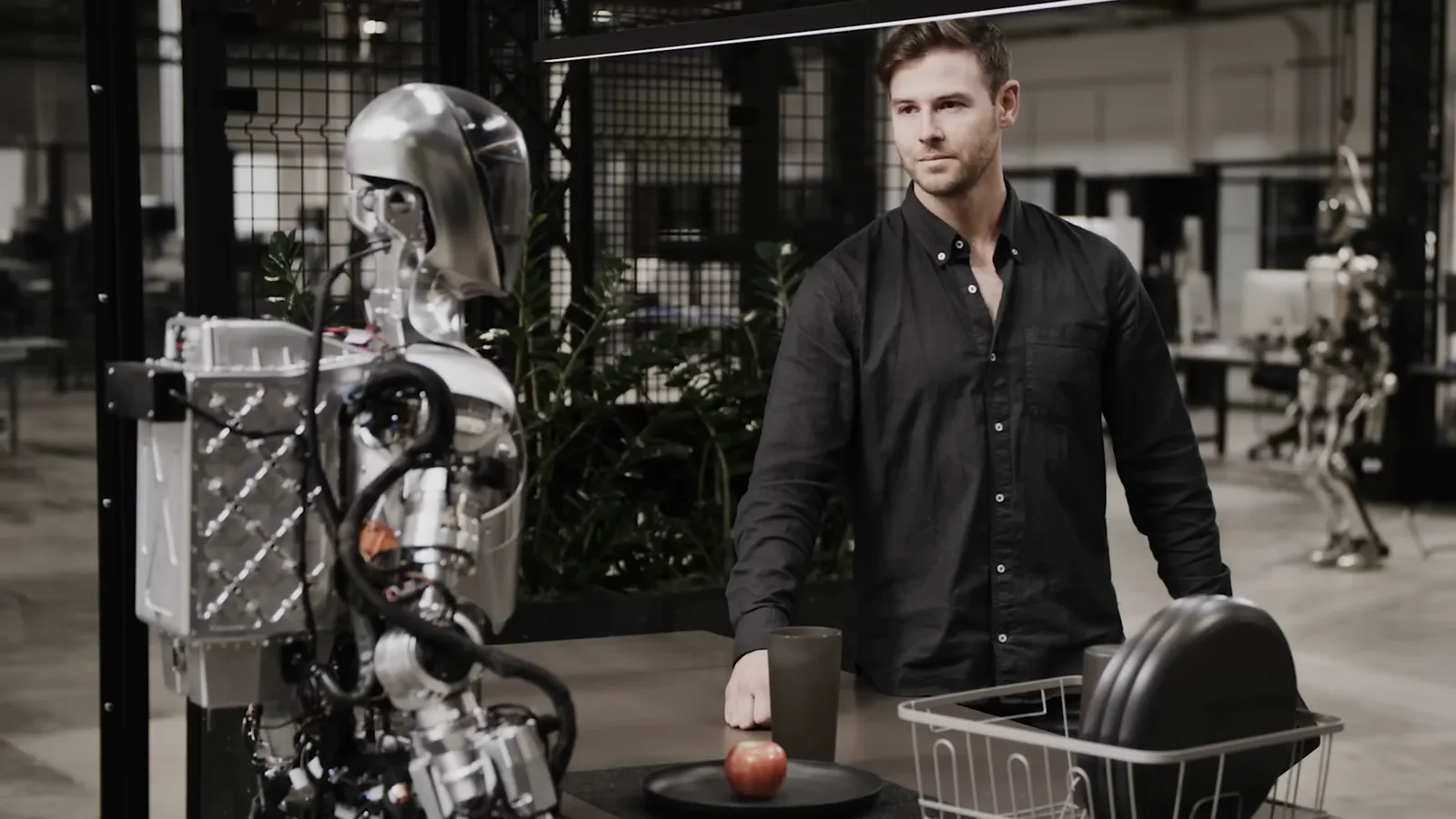
In the Figure clip, a person asks what the robot sees. Figure 01 identifies a red apple on a plate, a drying rack with dishes, and the person nearby. Asked for something to eat, it hands over the apple. While handling trash, it explains that the apple was the only edible item it could provide from the table.
The person then asks where the dishes should go. Figure 01 says the plate and cup should go into the drying rack and proceeds to move them there. Asked to assess the task afterward, the robot says the apple has a new owner, the trash is gone, and the tableware is where it belongs. This is a presented tabletop demonstration; the clip alone does not establish how reliably it performs outside that setting.
A tour of robotics demonstrations
Clips show humanoid movement, manipulation, tight-space navigation, and headset-based control. A garage team then describes its early prototype.
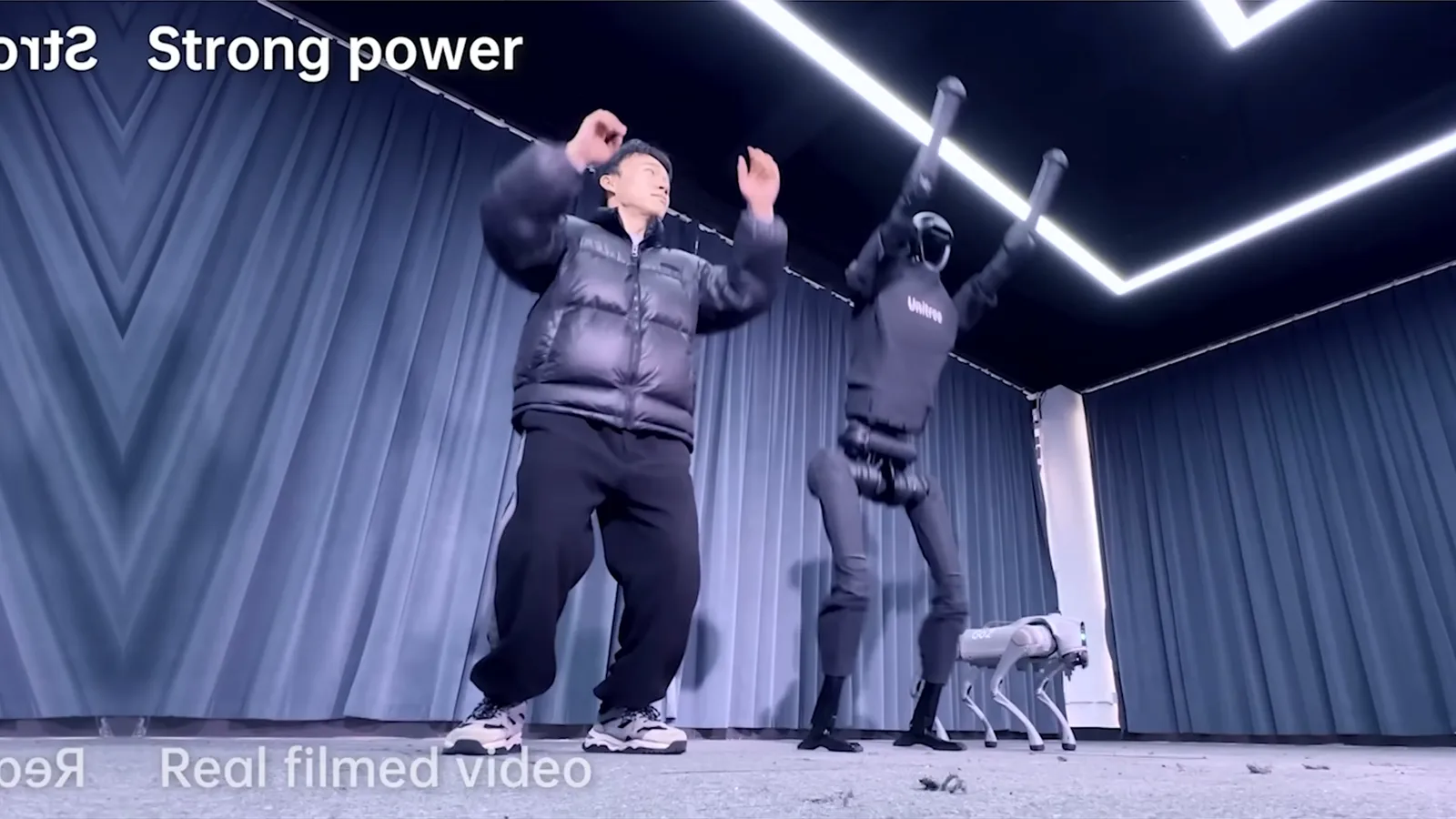
Next I show a Unitree humanoid moving quickly; I describe it as a humanoid speed record, although the clip does not independently establish that claim. A Boston Dynamics robot follows, moving heavy objects with precision. To me, Boston Dynamics still looks ahead in physical ability.
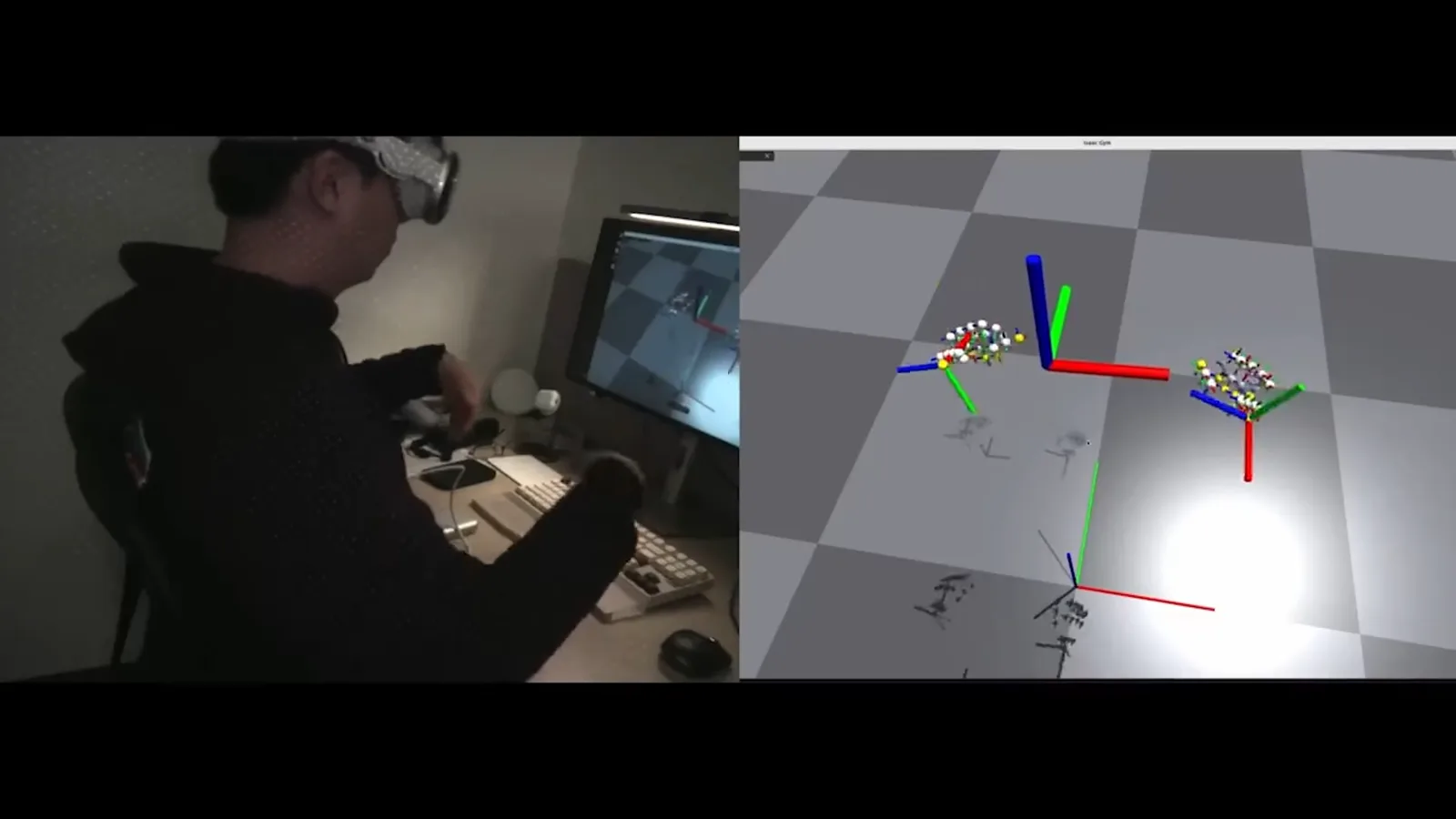
Another clip shows a robot navigating very tight spaces and uneven rubble. I can imagine such a machine being useful for a cave rescue or other confined work, although the video is a demonstration rather than proof of a completed rescue. Another demonstration shows a person using an Apple Vision Pro headset as a robot controller.
A separate clip visits a robotics startup in a Palo Alto garage. An interviewer asks about its roughly two-month-old robot, and a team member says they are proud it can stand without falling over. The team is trying to iterate on hardware quickly with 3D printers: the machine shown is version three, and they say a fourth version could be made within days of finishing its design.
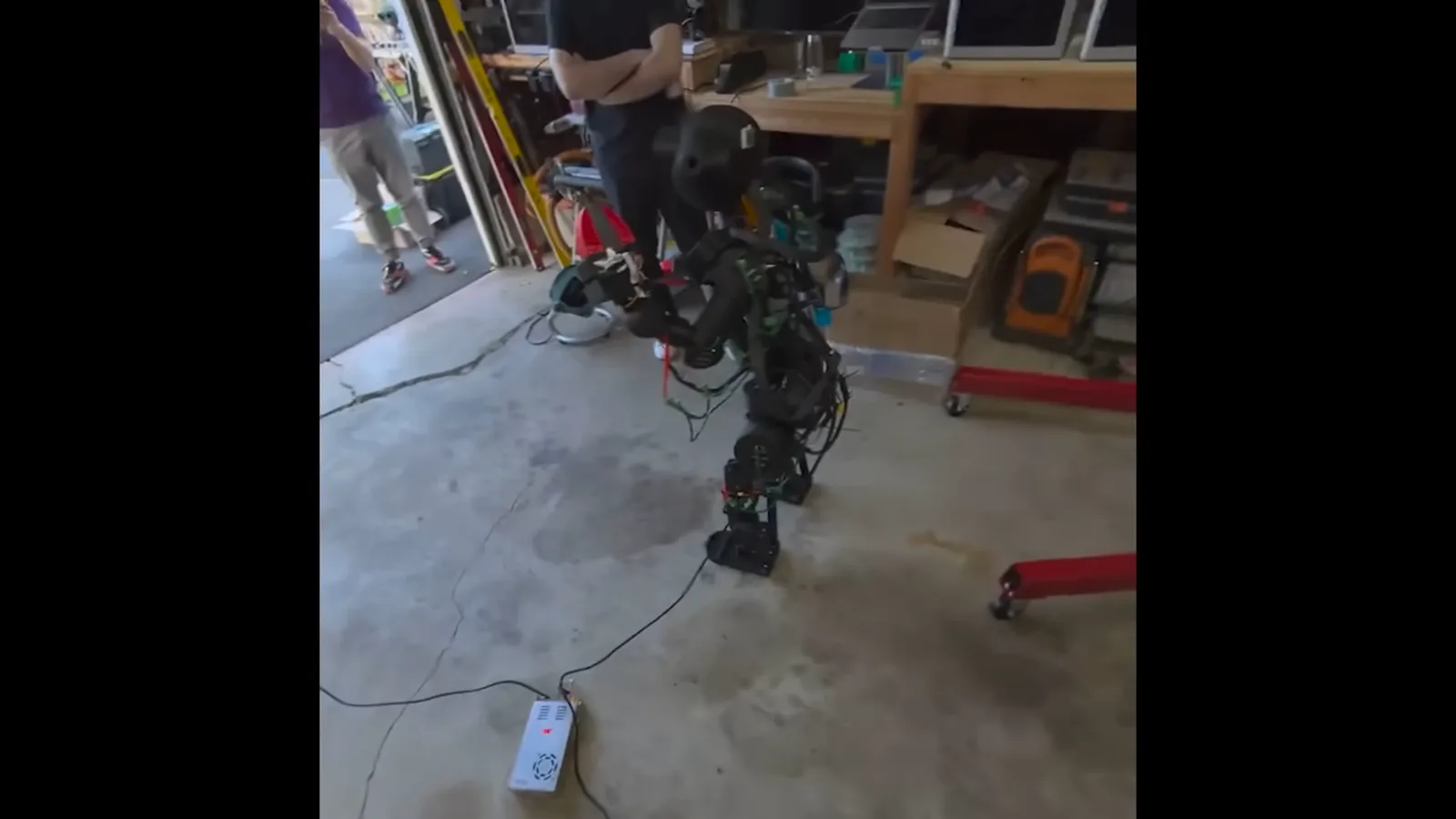
Asked when a robot like this might clean, do laundry, or wash dishes at home, the team member says the desire to have one personally motivated the project. For now, the robot is a test bed for implementing recent research, including the UMI paper; the timeline for doing so is still to be determined. I see this as part of a broader trend toward cheaper robot development.
Electric flight and factory robots
Berman shows a passenger-carrying electric aircraft and a factory robotics clip. The videos illustrate distinct applications rather than a single general-purpose system.
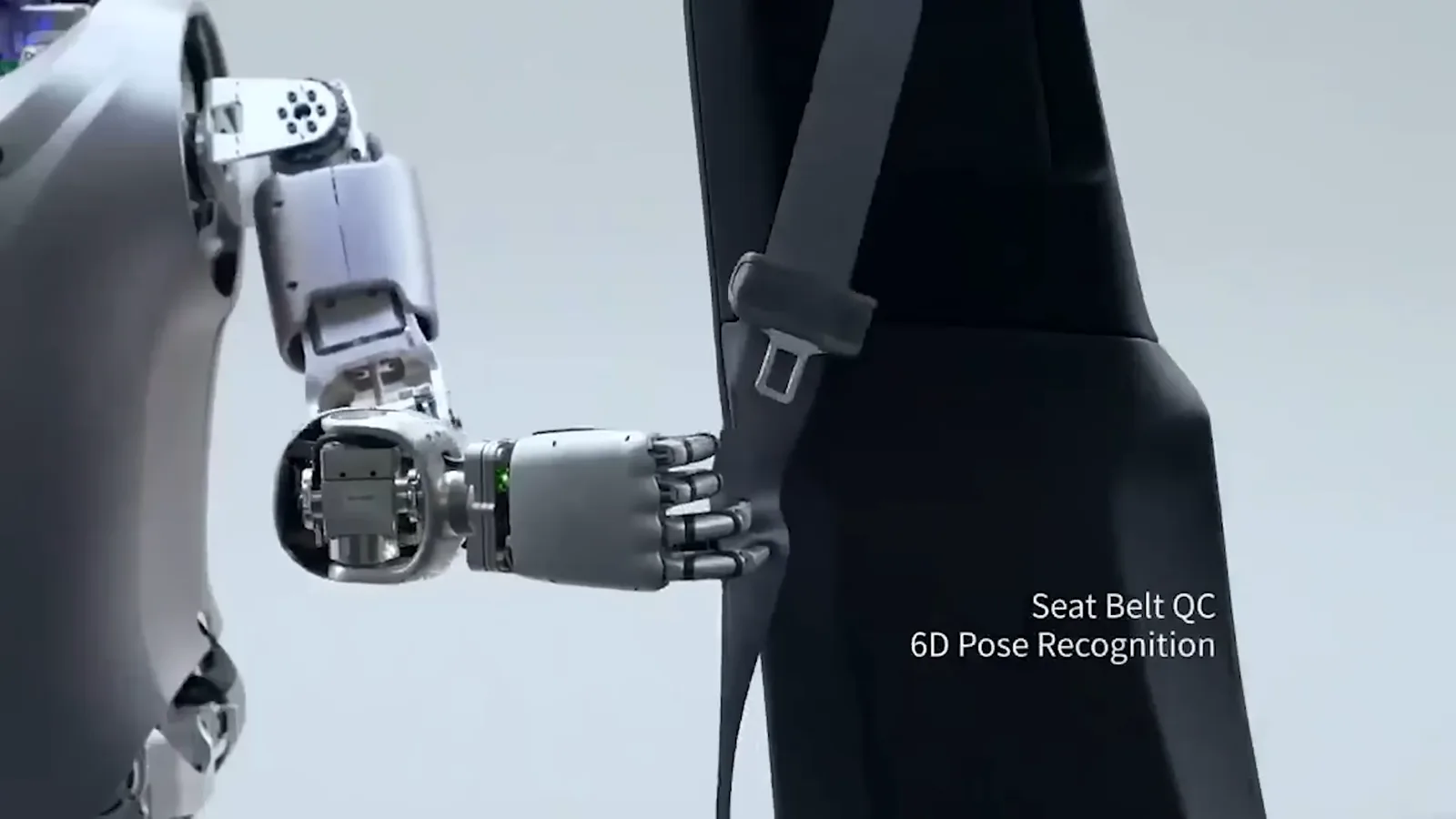
The next clip is not a robot: it shows an all-electric passenger-carrying aircraft in flight. After that I show footage associated with NIO, the Chinese electric-vehicle company, including robotic work in a factory. A short promotional clip does not by itself establish the level of autonomy across a factory.
LeCun on the limits of current robots
In an interview with Lex Fridman, Yann LeCun discusses planning, world models, safety, and the difficulty of household tasks. He contrasts demonstrations of specific abilities with a genuinely general robot.
Finally, I play part of an interview between Lex Fridman and Yann LeCun. Asked whether millions of humanoid robots will be walking around soon, LeCun says not soon, but expects the next decade to be interesting for robotics. In his view, a central problem is getting systems to understand how the world works and plan actions.
LeCun says specialized tasks can be tackled with carefully planned, handcrafted dynamical models, as in classical robotics, alongside innovation and perception. But he contrasts those achievements with building a domestic robot. He also argues that fully autonomous level-five driving remains difficult, especially if a system must learn with the limited driving experience a teenager might need.
LeCun believes significant progress in robotics depends on world models that systems can learn to understand how the world works. Hardware developers are betting that AI will progress enough to make useful products possible. Fridman suggests that before a very strong world model arrives, people may still find uses for a clumsy, imperfect robot.
Fridman raises factories as one possible setting, while LeCun cautions that safety requirements make factory deployment very difficult. They also discuss homes, where clearing a table, washing dishes, cleaning, and cooking are appealing targets. LeCun emphasizes that these apparently ordinary tasks are sophisticated and complicated.
Fridman asks about navigation in uncertain spaces. LeCun says basic navigation works to a degree, but navigating in a way humans find compelling is another matter. At Meta’s embodied AI group, researchers have used commercial robot dogs in demonstrations: a robot can navigate to a fridge, open it, and potentially retrieve a recognized can.
LeCun distinguishes these abilities from a general robot sophisticated enough to clear a dinner table. Fridman finds the prospect of robots in homes exciting because people could interact with AI physically and explore the psychological and philosophical dimensions of those relationships. LeCun says his team has worked on self-supervised learning from video for around a decade, with significant progress in the preceding two or three years.
同じチャンネルの記事
 34:21EN
 Matthew Berman· 2026年10月27日Matthew Berman Examines Anthropic’s IPO Filing, AI Growth and GovernanceMatthew Berman, Sam Altman · Forward FutureThe presenter reviews the S-1’s financial metrics, compute strategy and voting structure while questioning the tension between rapid AI development and safety.
 25:50ENMatthew Berman· 2026年10月24日Kimi K3.1 Pro Tested: Strong 3D Demos, Uneven Results and Competitive PricingMatthew Berman · Forward FutureMatthew Berman tests the open-weight model on coding, 3D rendering and visual explanations, then compares benchmark results and prices.
 32:20ENMatthew Berman· 2026年10月23日Who Is Local AI For? The Costs, Trade-offs and a Hybrid FutureMatthew Berman · Forward FutureMatthew Berman weighs data control and independence against hardware cost, setup complexity and inference speed.
 1:03:37ENMatthew Berman· 2026年10月23日Matthew Berman’s Team Tests Kimi K3.1 on Animation, Games, and ChartsMatthew Berman, Alex, Brian · Forward FutureA live team AMA turns into an informal test of Kimi K3.1, from personal-agent workflows to motion graphics, a browser game, and a benchmark chart.
 0:53ENMatthew Berman· 2026年10月22日Sam Altman on AI and the Discovery of New KnowledgeSam Altman · OpenAIAltman expects progress in mathematical discovery to extend to biology, materials and energy.
 0:22ENMatthew Berman· 2026年10月21日A Robot Bodyguard Video Shows Dramatic Rescue ScenariosMatthew Berman · Forward FutureMatthew Berman reacts to a short robot demonstration depicting fighting and vehicle-rescue scenarios.