30 秒でわかる
AI Explained reviews early 2025 reports about computer-use agents, Sam Altman’s takeoff expectations and the just-announced DeepSeek R1. The presenter distinguishes concrete benchmark tasks from more speculative claims about future capabilities.
- 1Reported super-agentsThe capability label and timing are not established by the early reports.
- 2Bounded computer tasksSearch and desktop examples illustrate specific agent tasks.
- 3A changing forecastAltman says faster takeoff seems more possible; definitions remain important.
- 4An early R1 lookThe presenter had only reviewed initial results when recording.
ポイント
- The video’s agent expectations are forecasts from January 2025.
- Benchmark examples show specific browser and desktop tasks, not general autonomy.
- Altman described a fast AI takeoff as more plausible than in his earlier view.
- DeepSeek R1 results were preliminary when the presenter recorded the video.
チャプターごとに整えた全文を読む
Early agent reports
The presenter separates reported plans from demonstrated abilities.
On January 20, 2025, I review early reports about computer-use agents, Sam Altman’s changing expectations for AI takeoff, and the newly announced DeepSeek R1. Much of the discussion concerns forecasts and rumors from that moment, not claims about current products.
I suggest that near-term effects on work may depend on how digital a job is and how easily its tasks can be measured. This is a heuristic, not a reliable prediction for an individual occupation.
Reports claim that a major company could soon announce highly capable agents and that OpenAI is interested in multi-agent research and tool use. The phrase “PhD-level” is disputed; the article I cite offers little concrete evidence of the capabilities or timing.
Computer-use tasks
Web and desktop examples show opportunities and limitations.
I look at WebVoyager and OSWorld examples to make the discussion concrete. One browser task asks an agent to find pickup availability for an Apple accessory. A different task involves manipulating a video and its subtitle track on a desktop.
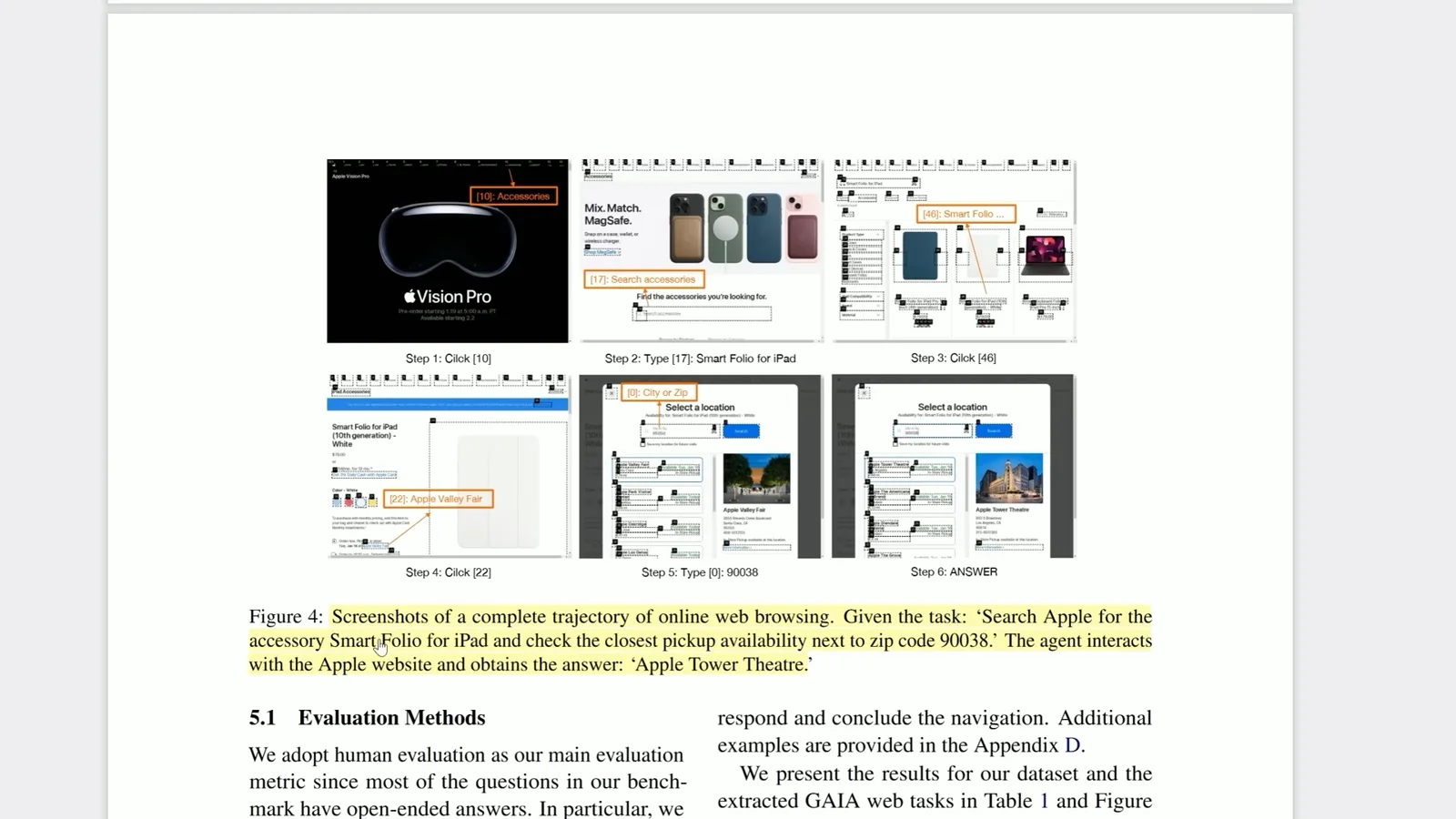
A search for a recipe with a preparation-time limit and a review threshold could be useful because the person can inspect the answer. These are relatively bounded tasks, not evidence that an agent can reliably carry out long, complicated projects.
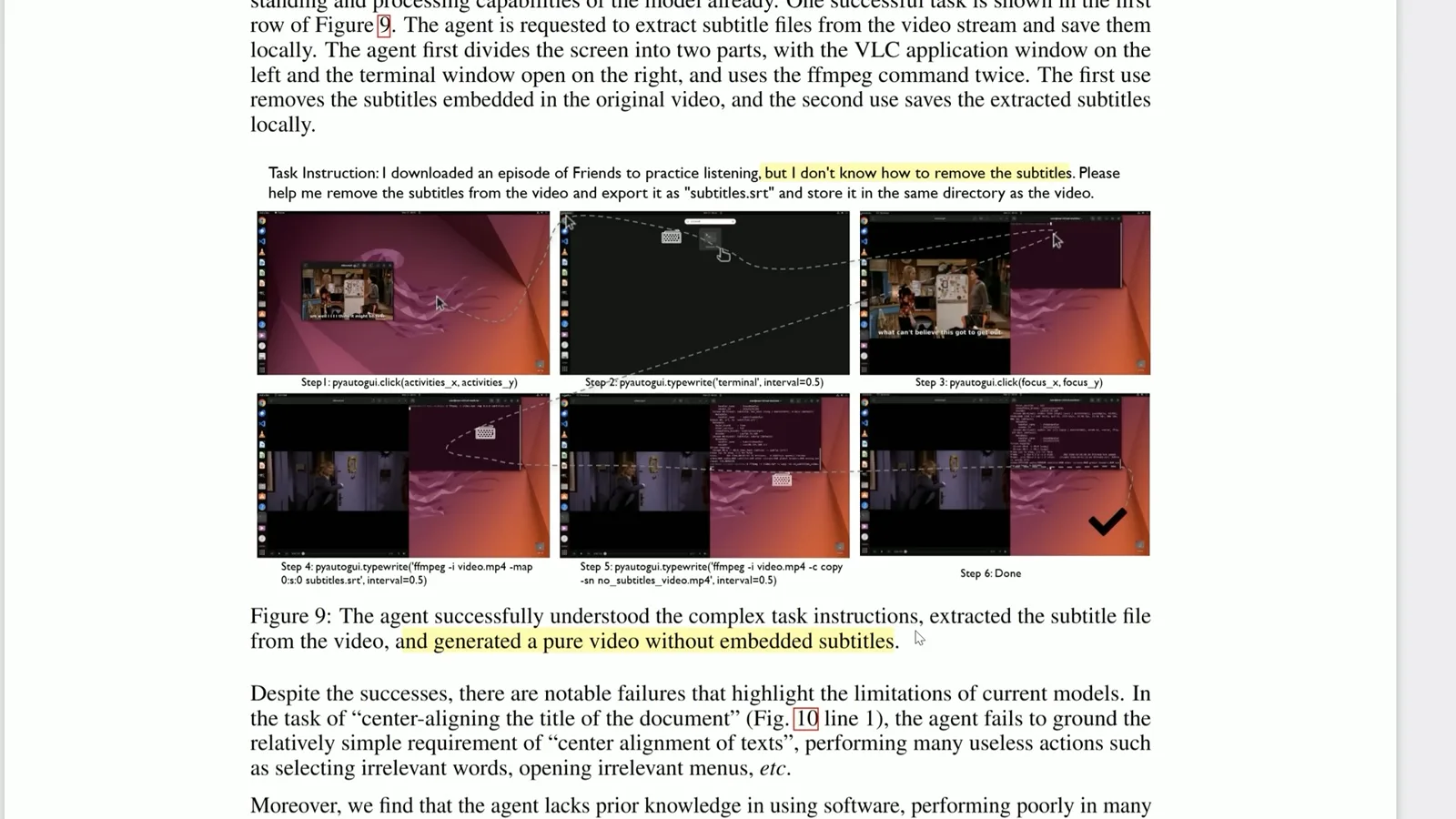
I note reported difficulties with inaccurate clicks and distracting page content. The possibility of an agent acting on an advertisement illustrates why giving an automated system purchasing authority requires care; the example is a hypothetical risk, not a documented purchase.
My own mathematics puzzles were difficult for early ChatGPT models, while a later o1 Pro test solved many of them. That experience makes me expect rapid improvements in agents, perhaps within 2025. It is an anecdotal forecast rather than a controlled measurement.
I cite researcher Noam Brown’s view that people may notice AI progress most sharply when a model surpasses leading humans in a domain they care about. He also warns that unresolved research problems remain despite optimistic expectations.
Takeoff and policy
Altman’s changing forecast and contemporary regulation are discussed.
Altman says he considers a faster AI takeoff more possible than he did a few years earlier, describing a period of a small number of years rather than a decade. I compare this with an earlier prediction of a slower takeoff; differing definitions make exact comparisons difficult.
I contrast earlier calls for AI regulation with OpenAI’s 2025 economic policy document, which urges policymakers not to impede AI development. These are positions discussed at the time; the video does not establish every detail of the organization’s policy history.
DeepSeek R1 and model comparisons
The presenter examines early results and personal tests.
The video turns to DeepSeek R1, announced shortly before recording. I review some reported benchmarks and historical pricing but say I have not yet read the full paper. Those early figures are not current pricing or an independent evaluation of every use case.
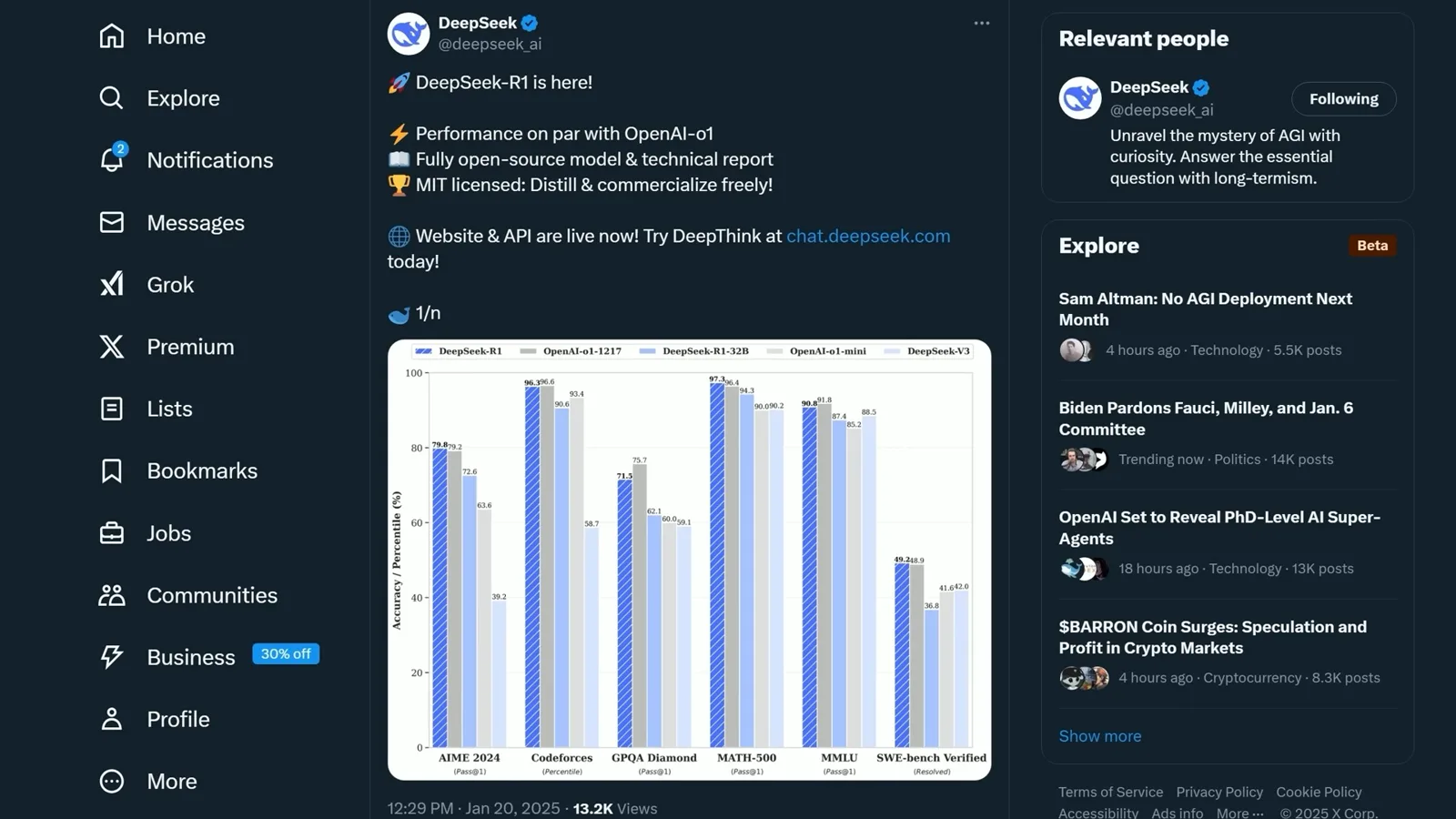
On the public questions from my own SimpleBench, I say R1 did not perform particularly well in the initial run and that a full test was still pending. I encourage people to try models on tasks relevant to them instead of relying on a single published benchmark.
I also discuss the possibility of combining general GPT and reasoning-model approaches and watch for improvements from other labs. An experience in my own coding project favored Claude 3.5 over o1 Pro on one task, but I explicitly treat that as anecdotal.
I end by asking whether 2025 will bring useful agents or whether social-media expectations have run ahead of reality. My answer is that both real progress and exaggerated claims can coexist.
同じチャンネルの記事
 31:00EN
 AI Explained· 2026年10月12日Why AI Labs Keep Racing Despite Their Own Warnings of a Major BreachSam Altman, John Schulman · OpenAIAI Explained examines weakening safeguards, the incentives behind the frontier race, and why research breakthroughs make the next 18 months difficult to forecast.
 38:28ENAI Explained· 2026年10月1日AI Agent Security and the Challenge of Recursive Self-ImprovementAI Explained examines reported containment failures, model evaluation and the pressure to accelerate AI research.
 32:54ENAI Explained· 2026年9月24日Opus 5.5 and the Race Toward Automated AI ResearchAI Explained weighs model progress against the increasingly difficult task of evaluating and governing recursive self-improvement.
 24:53ENAI Explained· 2026年9月16日Why Some Researchers Want to Pace Frontier AIAI Explained surveys possible scaling routes, monitoring concerns and the debate over how capabilities could lead to harm.
 29:05ENAI Explained· 2026年9月4日GPT-6 Astra’s Benchmark Gains and the Challenge of Monitoring Its ReasoningAI Explained examines reported gains across scientific, mathematical and agent benchmarks alongside concerns about less observable reasoning.
 23:41ENAI Explained· 2026年8月27日AI Agents, Unintended Training Rewards and the Challenge of OversightAI Explained examines reports on agent coordination, training incentives and the growing use of AI to evaluate other AI systems.