30 秒でわかる
Leonard Susskind discusses the potential for quantum computers to simulate physical systems and contrasts that application with factoring. The discussion concerns research potential and limitations.
- 1SimulationQuantum devices may model other quantum systems.
- 2Not every problemThe speakers do not claim a speedup for every computation.
- 3Practical constraintsUsefulness depends on the system and hardware.
ポイント
- Quantum simulation is a possible application.
- Researchers can vary conditions in a model.
- Not every problem is expected to speed up.
チャプターごとに整えた全文を読む
Simulating quantum systems
Physicist Leonard Susskind says a major potential application of quantum computers is simulating quantum systems that are hard to model classically.
Physicist Leonard Susskind says a major potential application of quantum computers is simulating quantum systems that are hard to model classically.
He describes constructing a controllable model and measuring it, allowing researchers to vary conditions that may be difficult to change in the original system.
He suggests such simulations could help study fundamental physics as well as chemistry and materials. These are possible applications, not a guarantee that present devices can solve every such problem.
Algorithms and limitations
The discussion compares simulation with the well-known quantum algorithm for factoring. Susskind cautions against assuming that every computational problem will have a similar speedup.
The discussion compares simulation with the well-known quantum algorithm for factoring. Susskind cautions against assuming that every computational problem will have a similar speedup.
He returns to the difficulty of classical simulation and the appeal of using controllable quantum systems as models. Practical usefulness depends on the task and the available hardware.
The speakers discuss the relationship between quantum information, physical systems and the questions researchers may investigate with future devices.
Susskind describes research connections between large quantum computers and black holes as an example of a macroscopic question in quantum physics.
Asked about brains, he says he is not a neuroscientist and reports that specialists he has spoken with generally view brain function as classical. He treats alternative ideas as uncertain.
He notes that large materials can have properties dependent on quantum effects, mentioning superconductors and topological materials as examples.
These examples illustrate why quantum tools can matter for understanding macroscopic materials made of microscopic components.
同じチャンネルの記事
 3:34:27EN
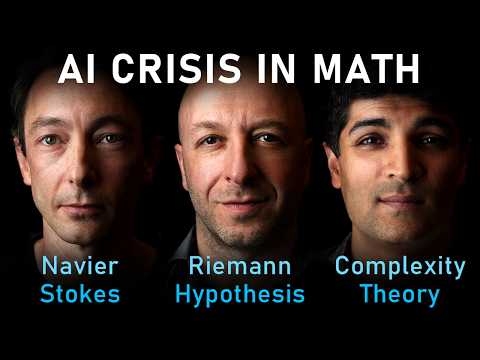
 Lex Fridman· 2026年10月26日ポッドキャスト · 4 人AI, Mathematics, and the Meaning of a Proofゲスト Steven Brunton, Ankur Moitra, Alex Kontorovich · ホスト Lex FridmanLex Fridman and three mathematicians discuss recent AI-generated research, hard open problems and what human understanding contributes.
 3:36:56ENLex Fridman· 2026年9月16日ポッドキャストPsychiatry Has Never Found Its Penicillinホスト Lex FridmanHistorian Andrew Scull tells Lex Fridman why the field can ease symptoms, has never cured a major mental illness, and keeps paying for overconfidence with patients' lives.
 5:15:51ENLex Fridman· 2026年8月26日ポッドキャスト · 2 人DHH Did Not Write a Line of Omarchy Quattroゲスト DHH · ホスト Lex FridmanThirteen months after a skeptical conversation with Lex Fridman, the Rails creator describes how Opus 4.5, a swarm of coding agents, and a one-minute Linux installer ended his era of hand-chiseled Ruby.
 3:12:58ENLex Fridman· 2026年8月12日ポッドキャスト · 2 人One Cold Shower, Twenty Champions: How Khabib Nurmagomedov Was Forgedゲスト Khabib Nurmagomedov · ホスト Lex FridmanIn a Makhachkala school gym, seventy men shared one shower, and the water was only cold.
 3:46:18ENLex Fridman· 2026年7月28日ポッドキャスト · 2 人If You Take Slavery Out of the Picture, There Is No Civil Warゲスト Gary Gallagher · ホスト Lex FridmanIn 1860, enslaved people were worth more than every railroad and factory in the United States combined.
 3:51:47ENLex Fridman· 2026年6月30日ポッドキャスト · 2 人Forty-Six Percent of Emperors Were Overthrown. The Empire Lasted Anywayゲスト Anthony Kaldellis · ホスト Lex FridmanHistorian Anthony Kaldellis walks Lex Fridman through 2,200 years of Roman history and argues that what we call Byzantium was Rome itself.