






絞り込み結果
並び順
 1:33:01EN
 Cognitive Revolution "How AI Changes Everything"· 2025年1月15日ポッドキャストRare Diseases Are Common: How a Harvard Gene Hunter Uses o1-pro on the Cases Sequencing Already Missedホスト Nathan LabenzDr. Catherine Brownstein of Boston Children's Hospital explains why cheap genomes made her job harder, why data sharing still beats any model, and where ChatGPT Pro actually gives her hours back.
 14:50EN
 Matthew Berman· 2024年11月19日AI News in November 2024: Mistral, Gemini, Nuclear Safety and Medical AIMatthew Berman · Forward FutureMatthew Berman surveys Le Chat updates, model rankings, nuclear safeguards and a diagnostic reasoning study.
 1:32:45ENCognitive Revolution "How AI Changes Everything"· 2024年7月27日ポッドキャストHe doubled a company with AI — then asked the labs to pause hyperscalingホスト Nathan LabenzOn the Nick Halaris Show, Cognitive Revolution host Nathan Labenz argues for adopting today's models fast and slowing the race to systems more powerful than we are.
 1:37:07ENCognitive Revolution "How AI Changes Everything"· 2024年6月22日ポッドキャストA Text-Only AI Outdiagnosed GPs. Google Still Won't Ship It.ホスト Nathan LabenzGoogle researchers Vivek Natarajan and Khaled Saab walk Nathan Labenz through five medical-AI papers, from radiology reports to an AI doctor that still has to earn trust.
 1:01:55ENCognitive Revolution "How AI Changes Everything"· 2024年6月1日ポッドキャストA $9 AI nurse, an 86 on the medical boards, and a 10% extinction lineホスト Nathan LabenzNathan Labenz’s solo scouting report walks from medical state of the art through how models actually learn, then to live players, scaling trends, and a control plan that still does not exist.
 1:59:15ENCognitive Revolution "How AI Changes Everything"· 2024年5月25日ポッドキャストA Protein Backbone in a Minute: The Real Progress, Bottlenecks, and Risks of AI Biologyホスト Nathan LabenzThe White House set a thousand-fold lower reporting bar for biological models than for language models—and this conversation shows why that gap already looks prescient.
 3:04:52ENCognitive Revolution "How AI Changes Everything"· 2024年5月1日ポッドキャストDoctors Chose AI on Eight of Nine Dimensions: A GPT-4 Red-Teamer's Scouting Reportホスト Nathan LabenzNathan Labenz tells 80,000 Hours what late-2023 systems can already do, which thresholds still matter, and why a polarized policy fight is a gift to heavy-handed regulation.
 21:48ENMatthew Berman· 2024年4月22日Vinod Khosla’s 12 Predictions for Technology and AbundanceMatthew Berman · Forward FutureMatthew Berman responds to a venture capitalist’s vision for 2035–2049, from AI expertise and robots to transportation, energy and climate technology.
 18:17ENMatthew Berman· 2023年9月15日AI News in September 2023: Apple, Model Releases and InfrastructureMatthew Berman · Forward FutureMatthew Berman surveys a week of consumer products, autonomous-driving claims, safety policies and research, alongside an unverified extraterrestrial claim.
 39:02ENCognitive Revolution "How AI Changes Everything"· 2023年8月10日ポッドキャストAI’s product advantage is consistency. Its real weakness is getting conned.ホスト Nathan LabenzNathan Labenz updates the Cognitive Revolution scouting report: jailbreaks, resume automation, Med-PaLM’s 40% radiology win, and what might follow Transformers.
 1:18:18ENCognitive Revolution "How AI Changes Everything"· 2023年6月20日ポッドキャストFifteen Thousand Brain Numbers Were Enough to Reconstruct What Someone Sawホスト Nathan LabenzTanishq Mathew Abraham walks through MindEye, the fMRI-to-image system that maps a handful of voxel values onto CLIP and diffusion models.
 1:16:44EN
 20VC with Harry Stebbings· 2023年6月19日ポッドキャスト · 2 人Alex Lebrun on AI Assistants for Doctors, Model Limits and Building Nablaゲスト Alex Lebrun · ホスト Harry StebbingsThe Nabla co-founder explains his approach to healthcare AI, lessons from Facebook and his 2023 views on competition and regulation.
 1:25:35ENCognitive Revolution "How AI Changes Everything"· 2023年5月21日ポッドキャストTwo and a Half Years From 33.3% to 86.5%: Google Sent Foundation Models to Medical Schoolホスト Nathan LabenzVivek Natarajan walks Nathan Labenz through Med-PaLM and Med-PaLM 2: the data-light techniques, the nine-axis clinician evals, and why a high USMLE-style score is the wrong trophy.
 42:18EN
 No Priors: AI, Machine Learning, Tech, & Startups· 2023年5月18日ポッドキャスト · 2 人Ten Percent of Search Is Health — and the Doctor Is Googling Tooホスト Sarah Guo, Elad GilGoogle researcher Karan Singhal on Med-PaLM 2, the real bar for medical language models, and why medicine is a harder alignment lab than chatbots.
 1:11:11EN20VC with Harry Stebbings· 2023年5月17日ポッドキャスト · 2 人Emad Mostaque on Open AI Models, National Data and the Race to Deployゲスト Emad Mostaque · ホスト Harry StebbingsThe Stability AI co-founder describes his 2023 vision for open models, healthcare applications and AI businesses, alongside concerns about a speculative boom.
 1:28:43ENCognitive Revolution "How AI Changes Everything"· 2023年5月16日ポッドキャストClinical Guidelines Are 11% Evidence. Curai’s Founder Still Wants GPT-4 in the Exam Roomホスト Nathan LabenzNeal Khosla of Curai Health argues that large language models already match median U.S. physicians on today’s tests — and that the real work is scaffolding, supervision, and a doctor’s signature.
 58:24ENCognitive Revolution "How AI Changes Everything"· 2023年5月11日ポッドキャストAmong 100 Random Doctors, Zak Kohane Would Be Surprised If One Beat GPT-4ホスト Nathan LabenzHarvard's biomedical informatics chair on a rare newborn case, why drug-style trials will not certify a general medical model, and why the AI should still work for the patient.
 46:57ENNo Priors: AI, Machine Learning, Tech, & Startups· 2023年3月2日ポッドキャスト · 2 人95% of Drug Programs Fail. Daphne Koller Is Betting Machine Learning on the First Decisionホスト Sarah Guo, Elad GilA new medicine still takes more than a decade and well over a billion dollars — and Insitro's founder argues the expensive failures start with the wrong target, indication, or patient.
 50:12ENNo Priors: AI, Machine Learning, Tech, & Startups· 2023年2月20日ポッドキャスト · 2 人The Drone Is Only 15 Percent of the Problemホスト Sarah Guo, Elad GilZipline CEO Keller Rinaudo Cliffton on why blood delivery in Rwanda, not a cooler airplane, built the world's largest commercial autonomous system.
 2:43:51EN
 Lex Fridman· 2022年6月25日ポッドキャスト · 2 人Two Tubes, Millimeters Apart: Jonathan Reisman on the Honest Design of the Human Bodyゲスト Jonathan Reisman · ホスト Lex FridmanThe emergency physician and author of The Unseen Body walks Lex Fridman from the throat to the Arctic, arguing that anatomy is mostly brilliant, sometimes a near-miss, and always a story written in scars.
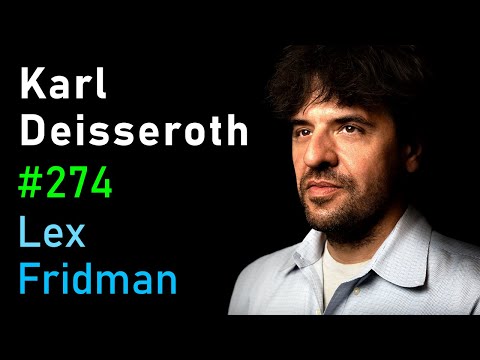 3:21:29ENLex Fridman· 2022年4月7日ポッドキャスト · 2 人When something in the mind breaks, you see what it was forゲスト Karl Deisseroth · ホスト Lex FridmanStanford psychiatrist Karl Deisseroth talks with Lex Fridman about depression, schizophrenia, optogenetics, and why you can treat one symptom without a theory of everything.
 1:41:34ENLex Fridman· 2021年6月6日ポッドキャスト · 2 人Aging Is a Scratched Disc. David Sinclair Thinks the Body Kept a Backupゲスト David Sinclair · ホスト Lex FridmanThe Harvard geneticist tells Lex Fridman why aging is information loss, how three genes gave a blind mouse its sight back, and why skipping meals may beat the perfect diet.
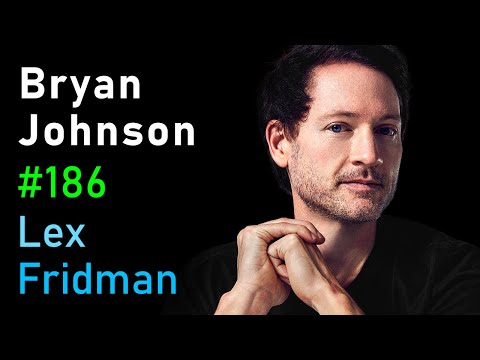 2:31:30ENLex Fridman· 2021年5月24日ポッドキャスト · 2 人The Brain Is the Last Unengineered System in Societyゲスト Bryan Johnson · ホスト Lex FridmanBryan Johnson demos Kernel Flow on Lex Fridman, then argues that cognition is society's largest unmeasured input and that numbers, not vibes, should run mental health, diet, and the next wave of brain interfaces.
 2:39:45ENLex Fridman· 2020年10月25日ポッドキャスト · 2 人The obesity gene was never the obesity geneゲスト Manolis Kellis · ホスト Lex FridmanManolis Kellis tells Lex Fridman how one nucleotide a million bases from FTO rewrote obesity biology, and why human genetics is now driving the study of disease.