En 30 secondes
Matthew Berman covers a reported delay to DeepSeek R2, Meta’s AI hiring and reported OpenAI–Microsoft negotiations, followed by a trademark dispute over the io name. He also discusses ElevenLabs, Replit, Thinking Machines Lab, Google releases, a copyright ruling and Anthropic’s study of emotional support use. The account preserves the June 2025 context and identifies later legal and partnership developments; HubSpot sponsored the video.
- 1DeepSeek R2 reportingThe Information reported performance concerns and chip constraints, while saying the release timing was not yet set.
- 2Meta’s talent pushReports named researchers moving from OpenAI to Meta; individual compensation and motives should not be assumed.
- 3The io trademark suitIYO alleged infringement; OpenAI disputed the complaint and temporarily removed a page after a court order.
- 4AlphaGenomeGoogle introduced a research model for predicting effects of DNA variants; forecasts do not themselves establish treatments.
- 5A split copyright rulingThe district court found training on the plaintiffs’ books fair use but separately rejected fair use for the pirated central library.
- 6Claude and emotional supportAnthropic estimated 2.9% of Claude.ai interactions were affective; changes in conversational tone did not establish lasting outcomes.
À retenir
- The DeepSeek R2 timeline and reasons came from reporting and people familiar with the matter, not an announced release date.
- Meta purchased a minority stake in Scale AI, not the whole company, while hiring several AI researchers.
- IYO’s trademark suit contains disputed allegations; the initial court order was not a final merits judgment.
- The Anthropic court ruling distinguished model training from its acquisition and retention of pirated books.
- Anthropic’s emotional-support study concerns a sample of Claude.ai conversations and does not establish lasting clinical benefits.
- Google’s pricing, quotas and research access described in the video are historical.
- HubSpot sponsored the video.
Lire le texte remanié, chapitre par chapitre
DeepSeek and AI hiring
Berman reviews reporting on DeepSeek R2 and Meta’s recruitment. He discusses the economics and strategic implications of the talent race.
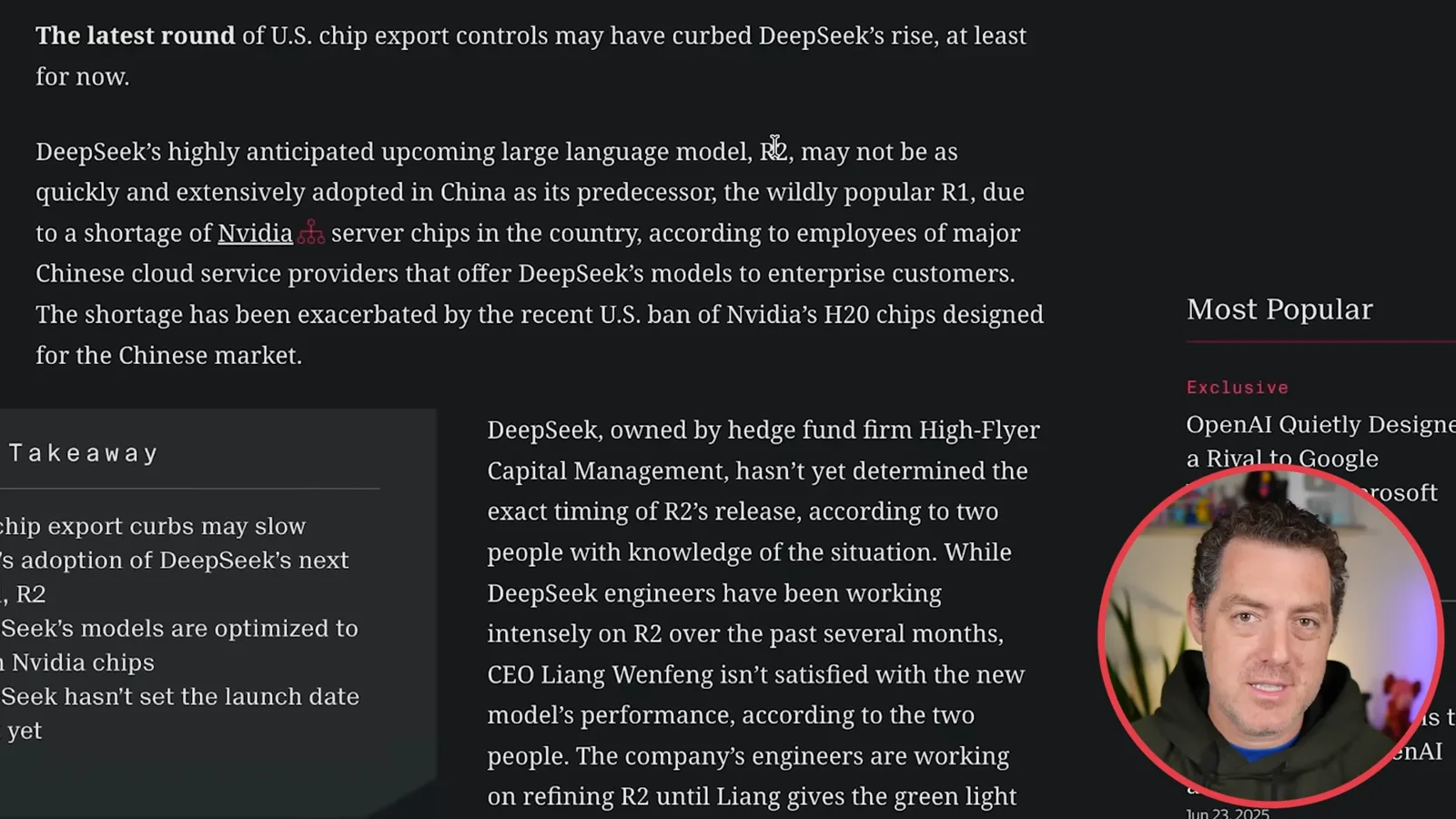
The Information reported that DeepSeek had not set a release date for its anticipated R2 model. People familiar with the situation said CEO Liang Wenfeng was not satisfied with performance, while employees of Chinese cloud providers described Nvidia chip shortages that could constrain deployment. These were reported concerns, not a company-confirmed release schedule or a demonstrated single cause of delay.
The report linked the shortage in part to US restrictions on Nvidia H20 exports to China. H20 was designed for that market under earlier restrictions, and its specifications differ from H100. I am surprised by the reported capacity constraint because DeepSeek R1 emphasized efficiency; that does not establish R2’s eventual efficiency or hardware requirements.
The Wall Street Journal reported that OpenAI researchers Lucas Beyer, Alexander Kolesnikov and Xiaohua Zhai were joining Meta after working in Zurich and previously at Google DeepMind. Sam Altman had spoken of large offers from Meta, but that does not establish the compensation or personal motives of these particular researchers.
I discuss Meta’s Scale AI investment and reported interest in talent from Safe Superintelligence. Meta acquired a roughly 49% non-voting stake in Scale AI, not the entire company; explanations of customer departures, acquisition motives and the value of individual offers are reported or my interpretations, not established facts about every contract.
After Llama 4 disappointed me, I hope Meta’s investment produces strong models with accessible weights, because I do not want all AI power concentrated in closed providers. I see large hiring expenditures as potentially rational relative to Meta’s market value and the possible AI market; that is a business judgment, not a forecast of returns.
Another report said Meta hired OpenAI researcher Trapit Bansal for its superintelligence effort. He had worked on reinforcement learning and was listed among contributors to OpenAI’s o1. I take the move as evidence that Meta’s recruiting campaign is attracting experienced people, not proof of any particular future model result.
OpenAI’s business and trademark disputes
He discusses reported Microsoft negotiations and IYO’s trademark complaint. HubSpot sponsors the episode.
I turn to reports of difficult negotiations between OpenAI and Microsoft over their partnership and OpenAI’s restructuring. The social-media summary I show gives figures for revenue share, intellectual property and funding consequences, but those claims do not establish every term of the private agreements or the outcome of negotiations.
The summary says Microsoft had model IP rights and a 20% revenue share and that OpenAI wanted different terms. I question the proposed incentives and discuss an AGI clause. These are historical reports and interpretations, not proof Microsoft owned all OpenAI intellectual property or received 20% of every possible revenue stream.
The post also speculates about antitrust pressure, convertible investments and SoftBank funding. I cannot verify each proposed consequence from the post. The companies later announced a revised agreement in [October 2025](https://openai.com/index/next-chapter-of-microsoft-openai-partnership/) and another amendment in [April 2026](https://openai.com/index/next-phase-of-microsoft-partnership/), so the 2025 discussion is not a description of current terms.
Sponsor disclosure: HubSpot sponsored this video. I describe its free guide to AI agents as an introduction to how agents work and how people might use them alongside human workers. The guide is promotional material from the sponsor.
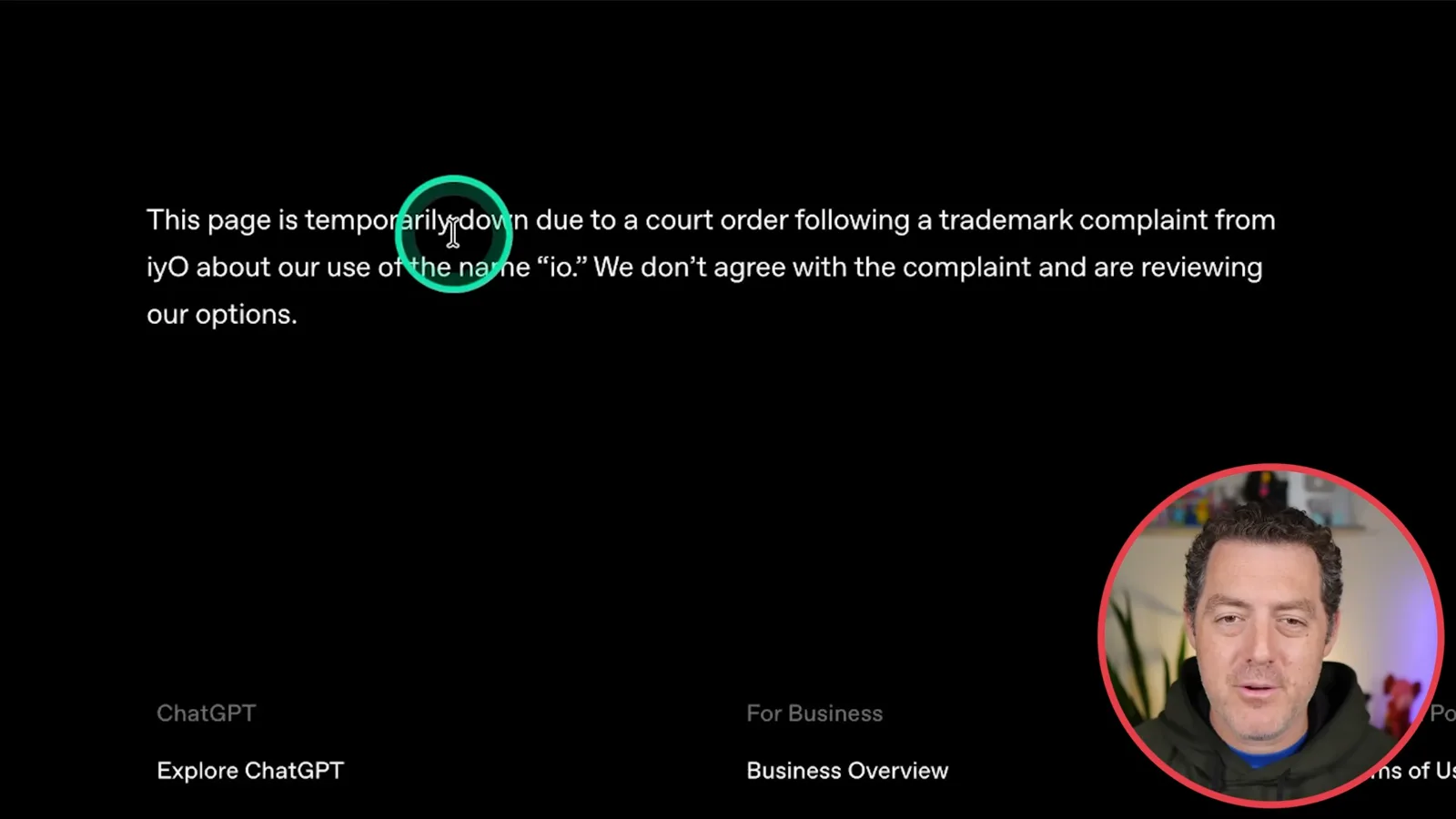
OpenAI’s page about its hardware venture io was temporarily removed after a court order in a trademark dispute brought by IYO, an audio-device company. OpenAI said it disagreed with the complaint. The temporary order addressed interim relief; it was not a final determination that all of IYO’s allegations were true.
IYO’s device is an ear-worn audio interface. I like the idea of a voice-first device because I do not want glasses indoors, although I would miss a camera for visual context. My preference and speculation about adding cameras are not proof of the capabilities or final design of OpenAI’s device.
IYO’s [complaint](https://casefilingsalert.com/wp-content/uploads/2025/06/OpenAI-Trademark-Suit.pdf) alleges that the defendants knew of its name and technology after prior discussions and that an io co-founder and another engineer obtained its product. Those are allegations in a disputed lawsuit, not findings that OpenAI copied technology or committed infringement.
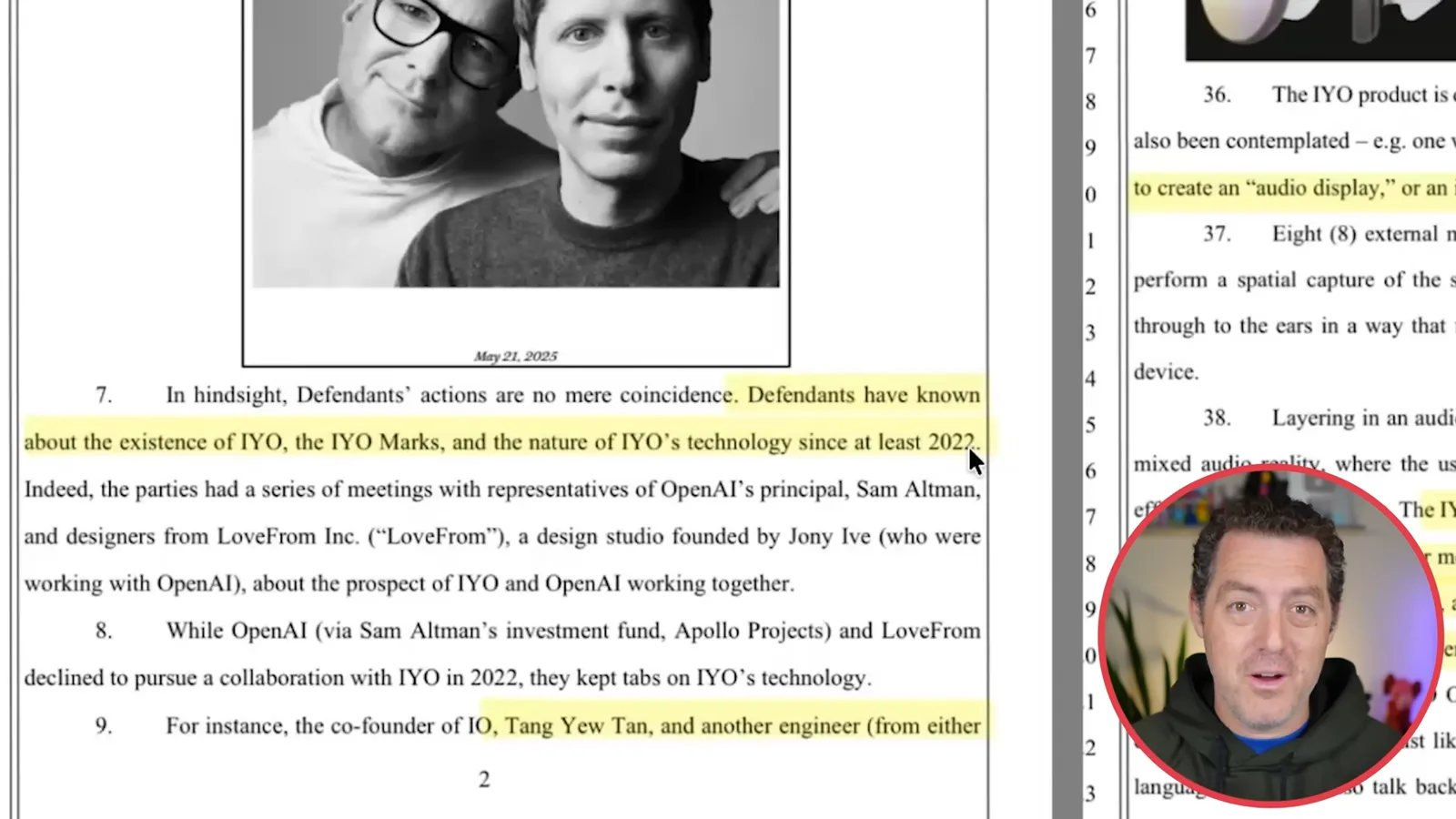
Sam Altman said IYO founder Jason Rugolo had sought investment or an acquisition, that OpenAI declined, and that he regarded the suit as wrong. I examine the emails he shared and question the decision to use a similar-sounding name. Both sides’ accounts need to be understood in the context of the ongoing litigation.
An email shown in the video describes the IYO device as different from the planned project and questions whether there was a fit. That is one participant’s assessment, not a judicial finding about either product. A later preliminary injunction barred certain uses of io branding, and an appeals court affirmed the order; the trademark allegations are not thereby finally adjudicated.
New assistants, startups and Google models
The roundup turns to ElevenLabs, Replit, Thinking Machines Lab, Imagen 4 and Gemma 3n. Product and valuation details are historical.
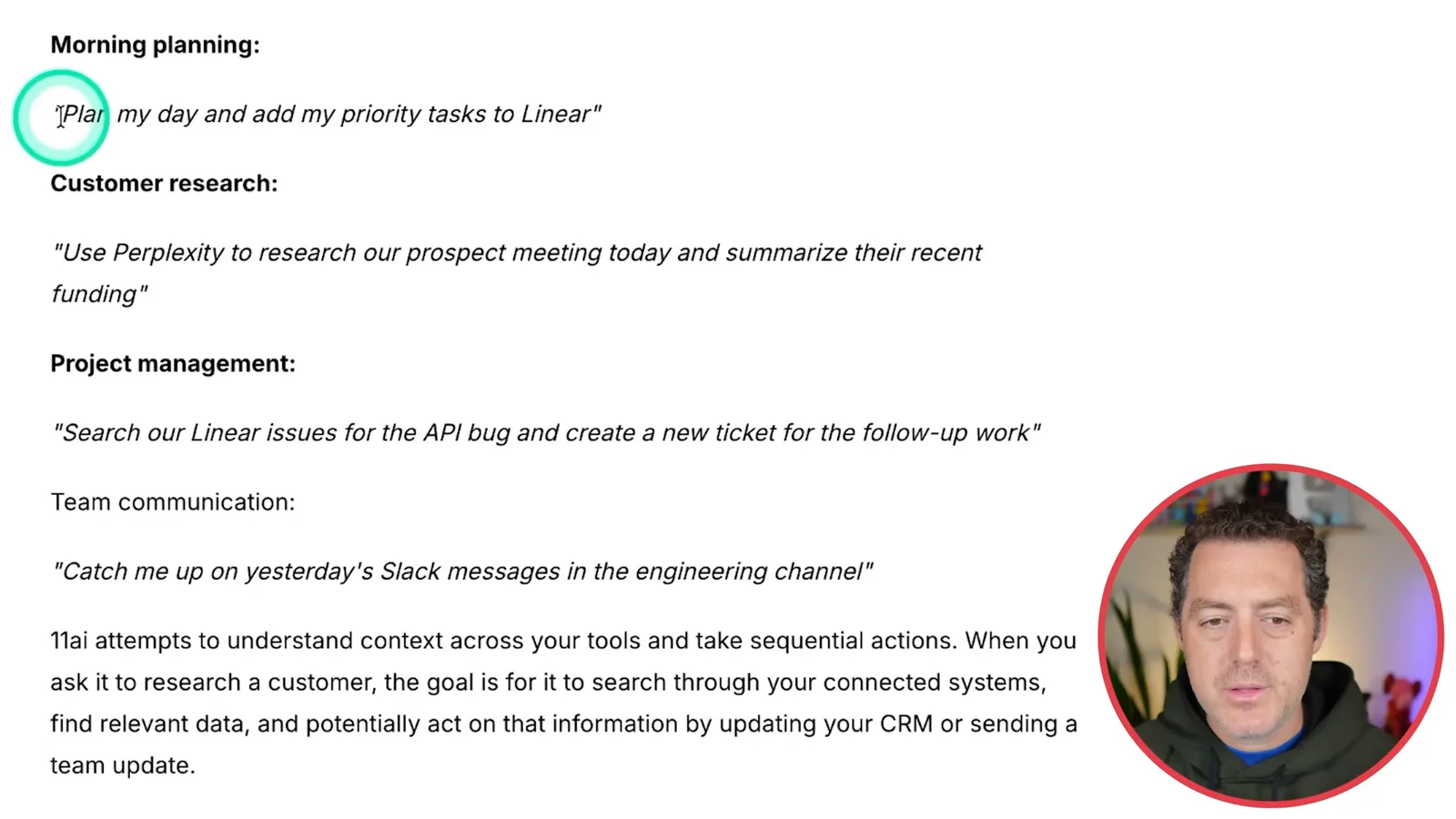
ElevenLabs introduced 11ai as an alpha voice assistant to explore its conversational technology. Its examples include planning tasks in Linear, researching prospects with Perplexity, following up on issues and summarizing Slack messages. The proposed integrations include MCP, Slack, Notion and other tools; I caution that demos can work better than real workflows.
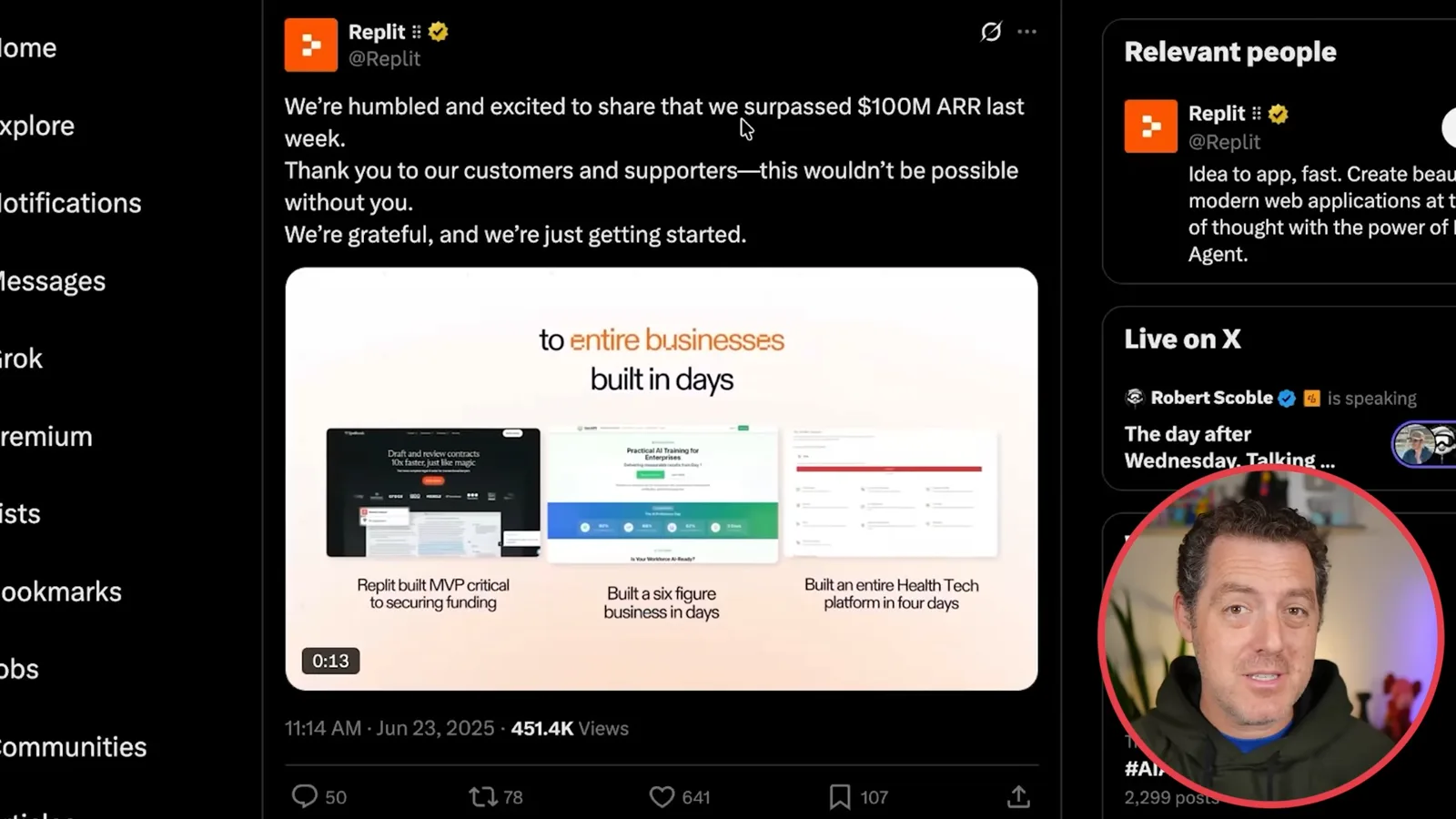
Replit said it had surpassed $100 million in annual recurring revenue, up from about $10 million six months earlier. ARR is a recurring-revenue run rate, not realized annual revenue or profit. I see the speed of growth alongside Cursor and Windsurf as a sign of changing demand for software creation tools.
Reports said Mira Murati’s Thinking Machines Lab was raising about $2 billion at a $10 billion pre-money valuation, with Andreessen Horowitz among the investors. The company subsequently announced a $2 billion seed round in July 2025 at a reported $12 billion post-money valuation; the figures should not be confused.
The Information reported plans to tailor models to business performance indicators using reinforcement learning, and to develop a consumer product. It also described an approach combining selected model layers. I compare that to model merging and see it as a possible way to accelerate development, but the report did not establish a finished product or measured customer gains.
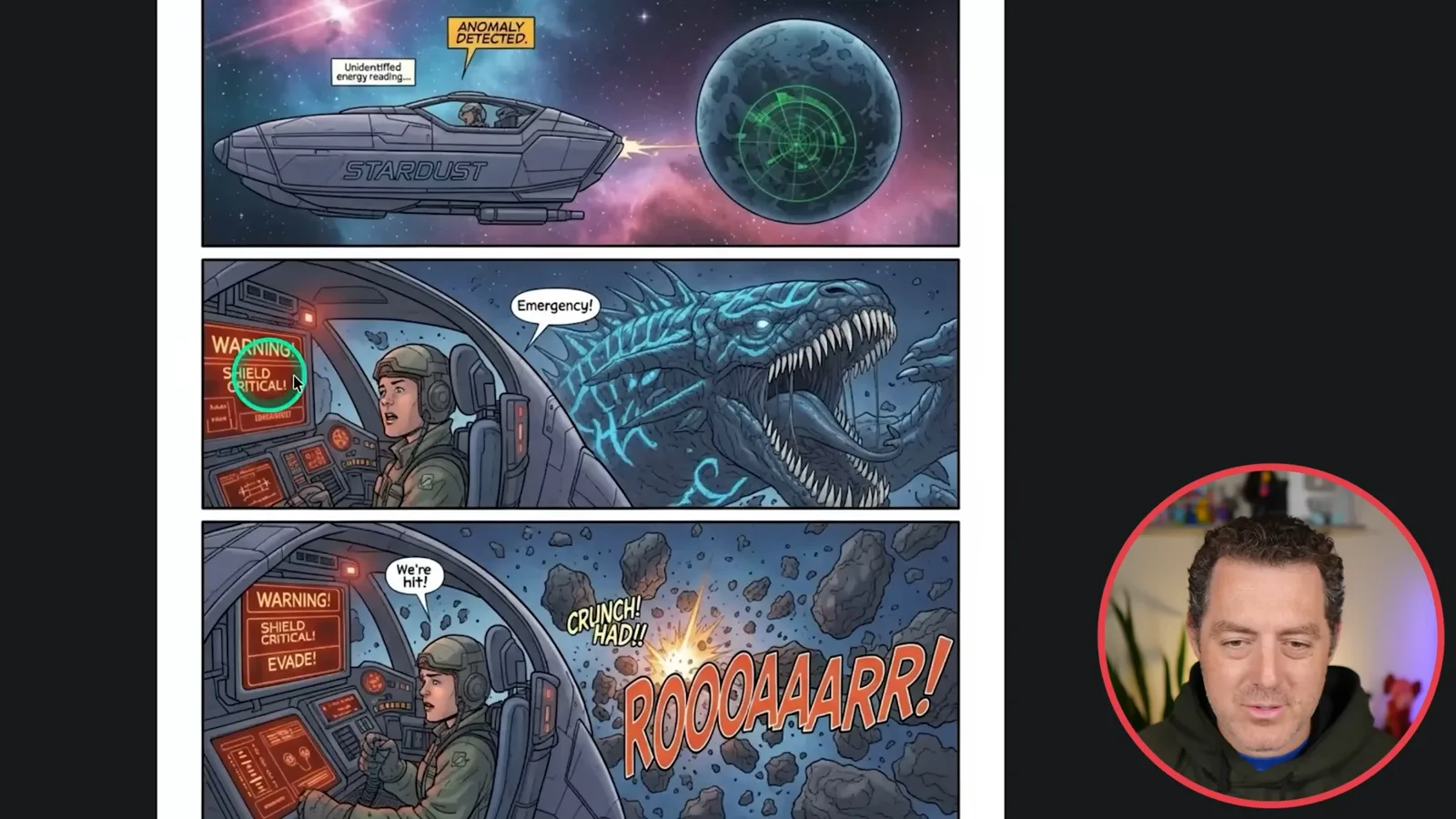
Google introduced Imagen 4 and Imagen 4 Ultra in the Gemini API and AI Studio; I quote the then-announced Ultra price of six cents per image. I examine a three-panel space comic and other generated examples, especially the handling of text. These are selected demonstrations and historical pricing, not a comprehensive quality test or current price.
Google also released Gemma 3n for on-device multimodal use with image, audio, video and text input and text output. Google described E2B and E4B effective sizes with raw parameter counts of 5B and 8B, and memory footprints as low as roughly 2 GB and 3 GB. Device support, licenses and practical memory needs depend on the implementation.
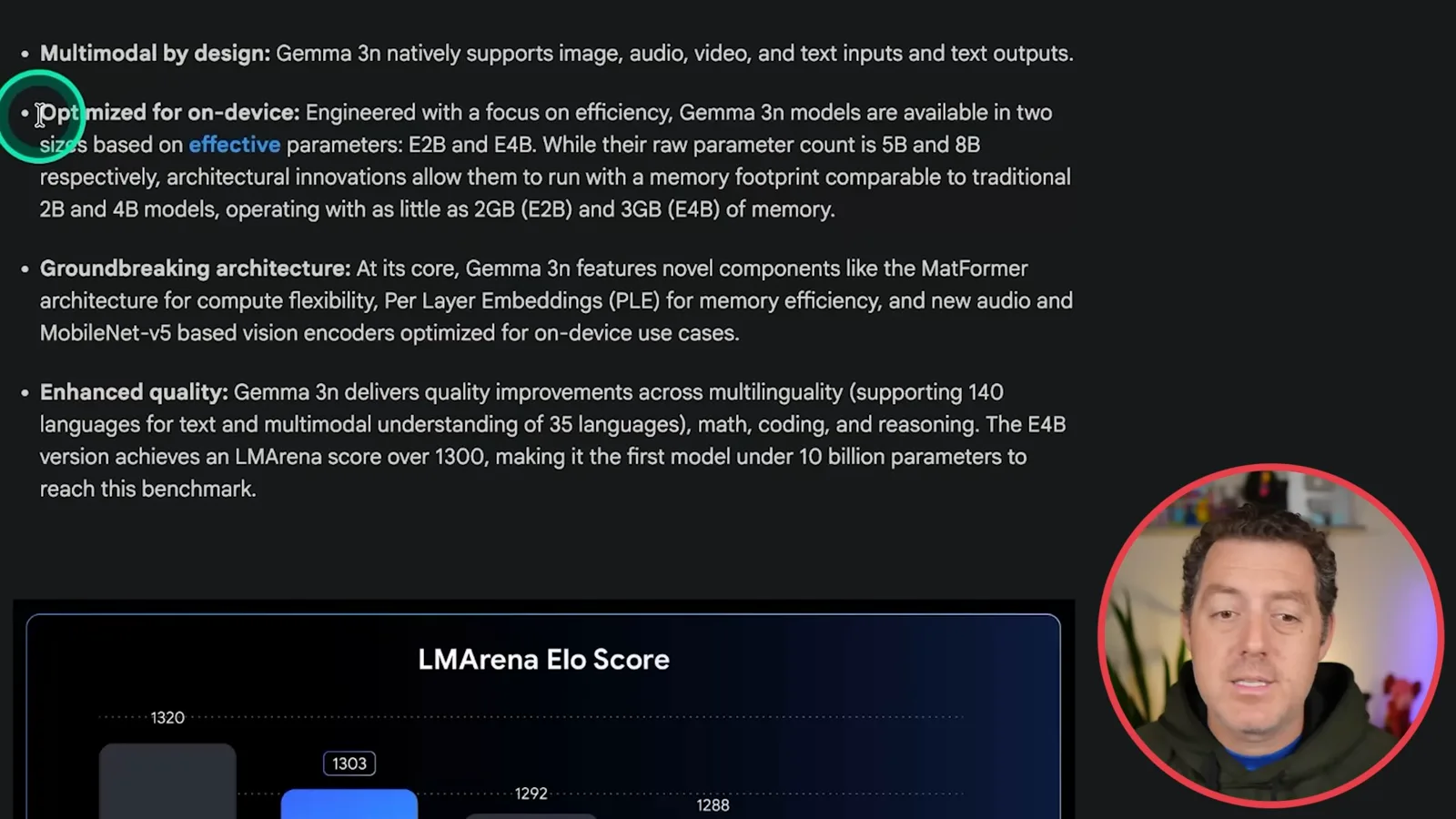
Google highlighted its MatFormer architecture and an E4B score above 1,300 on LMArena at the time. I call it an impressive small model, but the arena result is one historical evaluation, not evidence it is universally the best small model. It was available through tools such as Ollama and LM Studio.
Research, copyright and emotional support
Berman considers AlphaGenome, Gemini CLI, a ruling on Anthropic’s book use and research on Claude conversations. Each result has a specific scope.
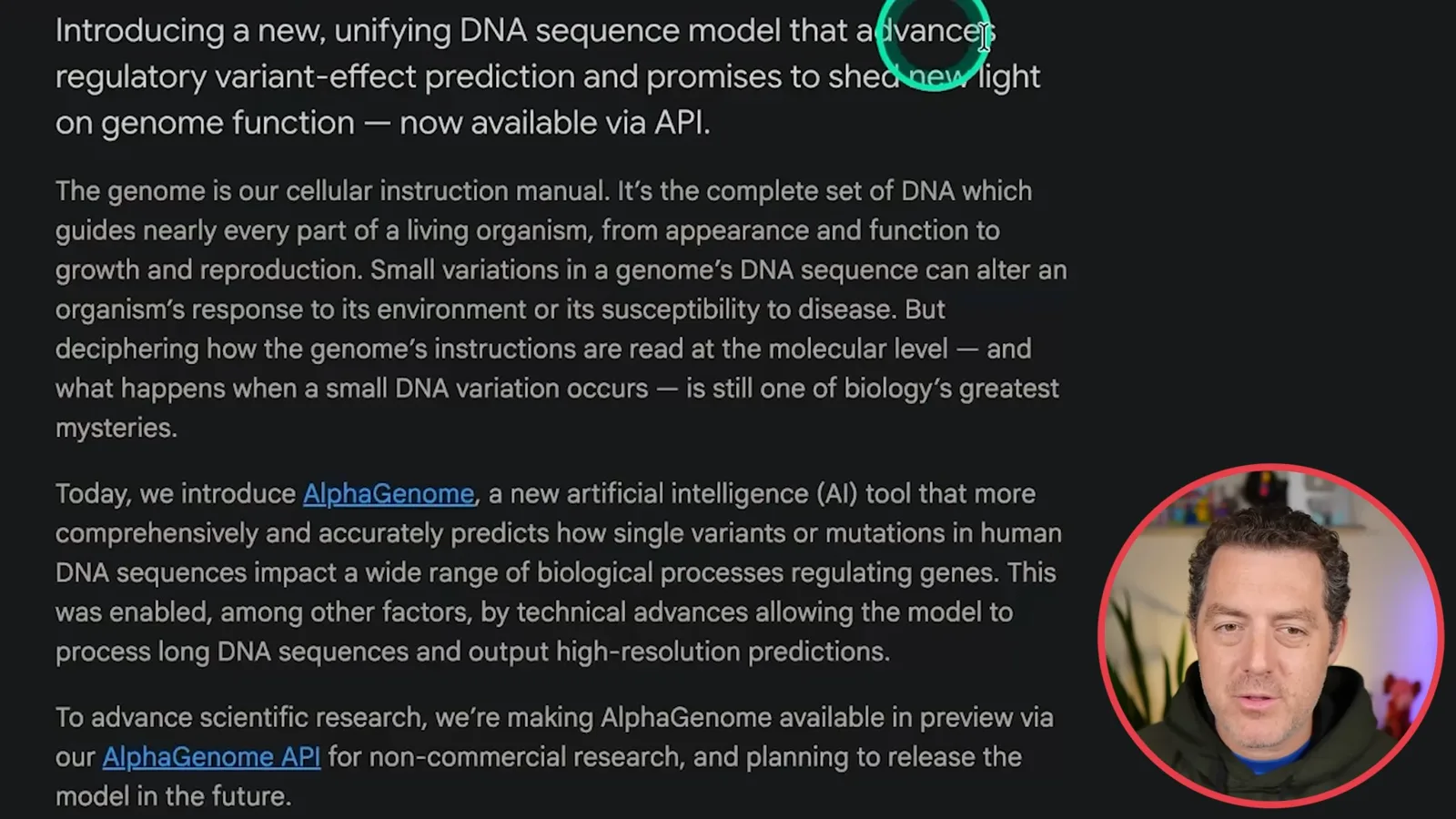
Google DeepMind introduced [AlphaGenome](https://deepmind.google/discover/blog/alphagenome-ai-for-better-understanding-the-genome/) to predict how variants in DNA may affect biological processes regulating genes. The initial preview API was for noncommercial research. I am excited about potential future applications in drug discovery, but predictions require experimental validation and do not themselves cure disease.
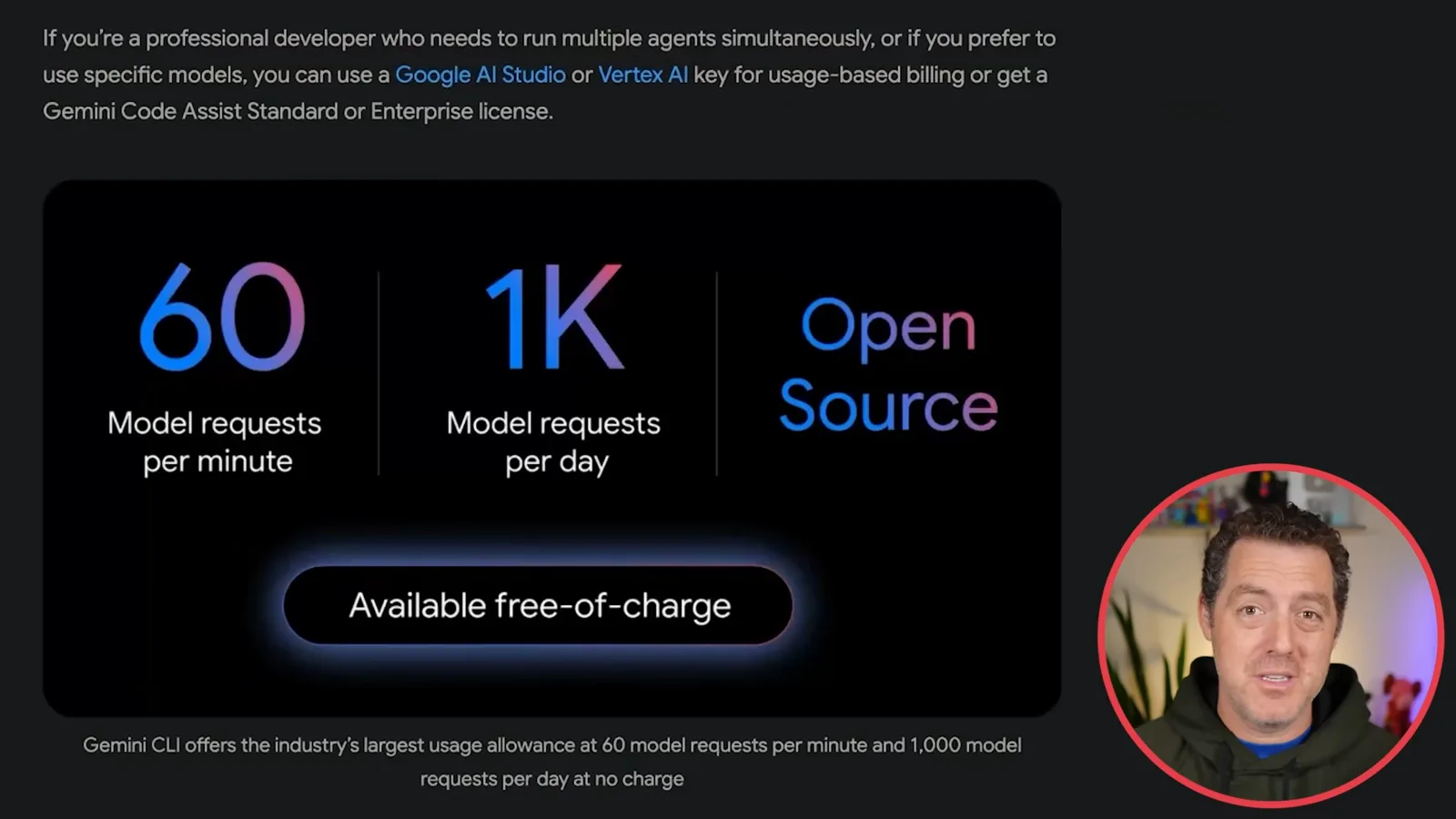
Gemini CLI brought an open-source AI agent to the terminal. Google’s launch described a free allowance of 60 model requests per minute and 1,000 per day, alongside paid options; these are June 2025 terms and may change. I mention its integration with developer tools and examples involving video generation.
In Bartz v. Anthropic, Judge William Alsup found that using the named authors’ books to train language models was fair use on the record before the court. The [June 2025 order](https://cases.justia.com/federal/district-courts/california/candce/3%3A2024cv05417/434709/231/0.pdf) separately rejected fair use for downloading and maintaining pirated copies in a central library. This was a case-specific district-court ruling, not a blanket declaration that every AI training or acquisition practice is lawful.
As a creator I would like the option to prevent training on my content, even though I might choose to allow it. Others argue that public material should be usable for training. Later in 2025 the court approved a $1.5 billion settlement of the piracy-related claims; that does not erase the distinction between training and acquisition in its ruling.
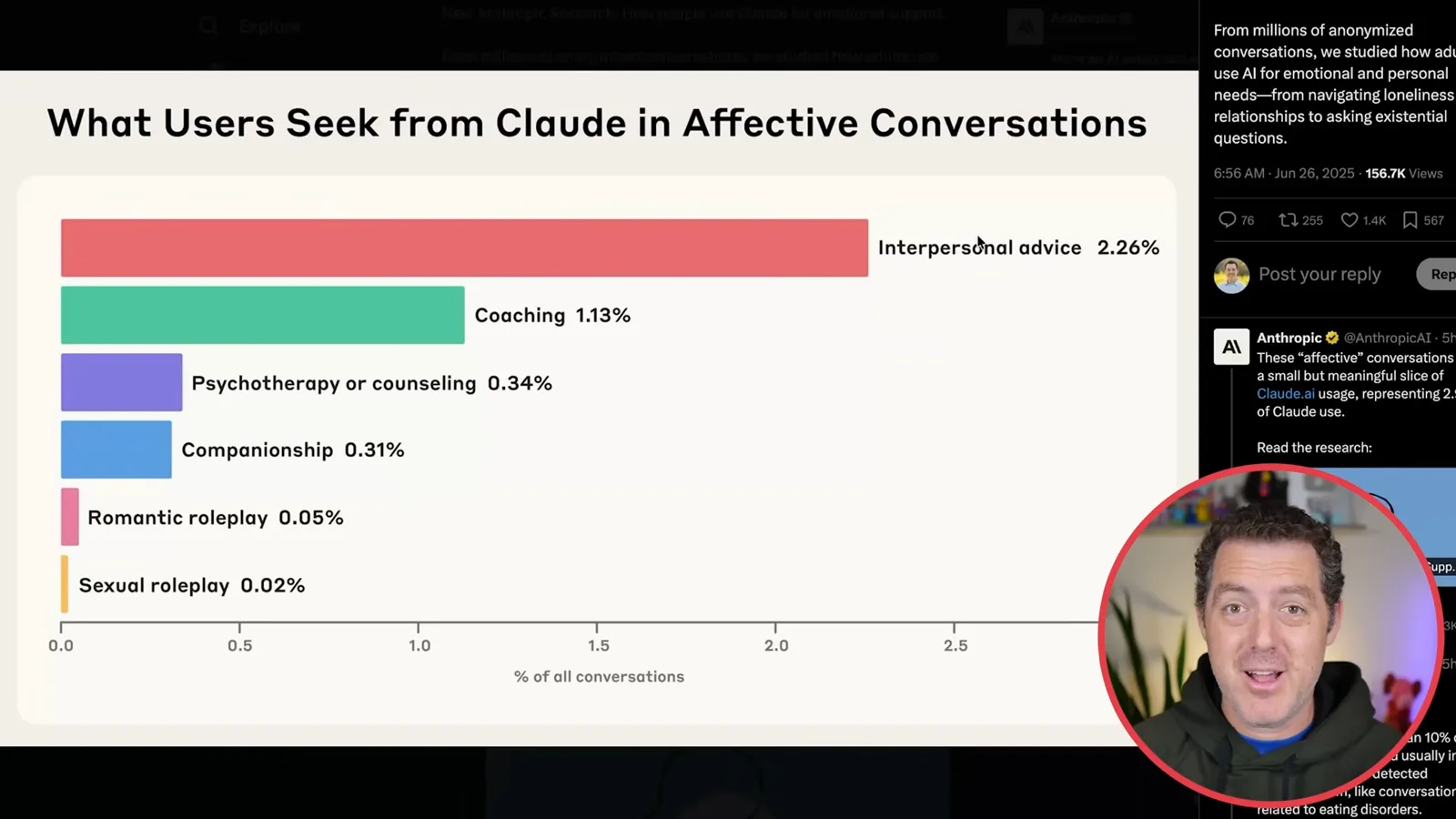
Anthropic studied how people use Claude for interpersonal advice, coaching, counseling, companionship and roleplay. I personally use AI for advice and some coaching. Its [research](https://www.anthropic.com/research/how-people-use-claude-for-support-advice-and-companionship) estimated affective conversations accounted for 2.9% of Claude.ai interactions in its analyzed sample, not all AI use or every Anthropic product.
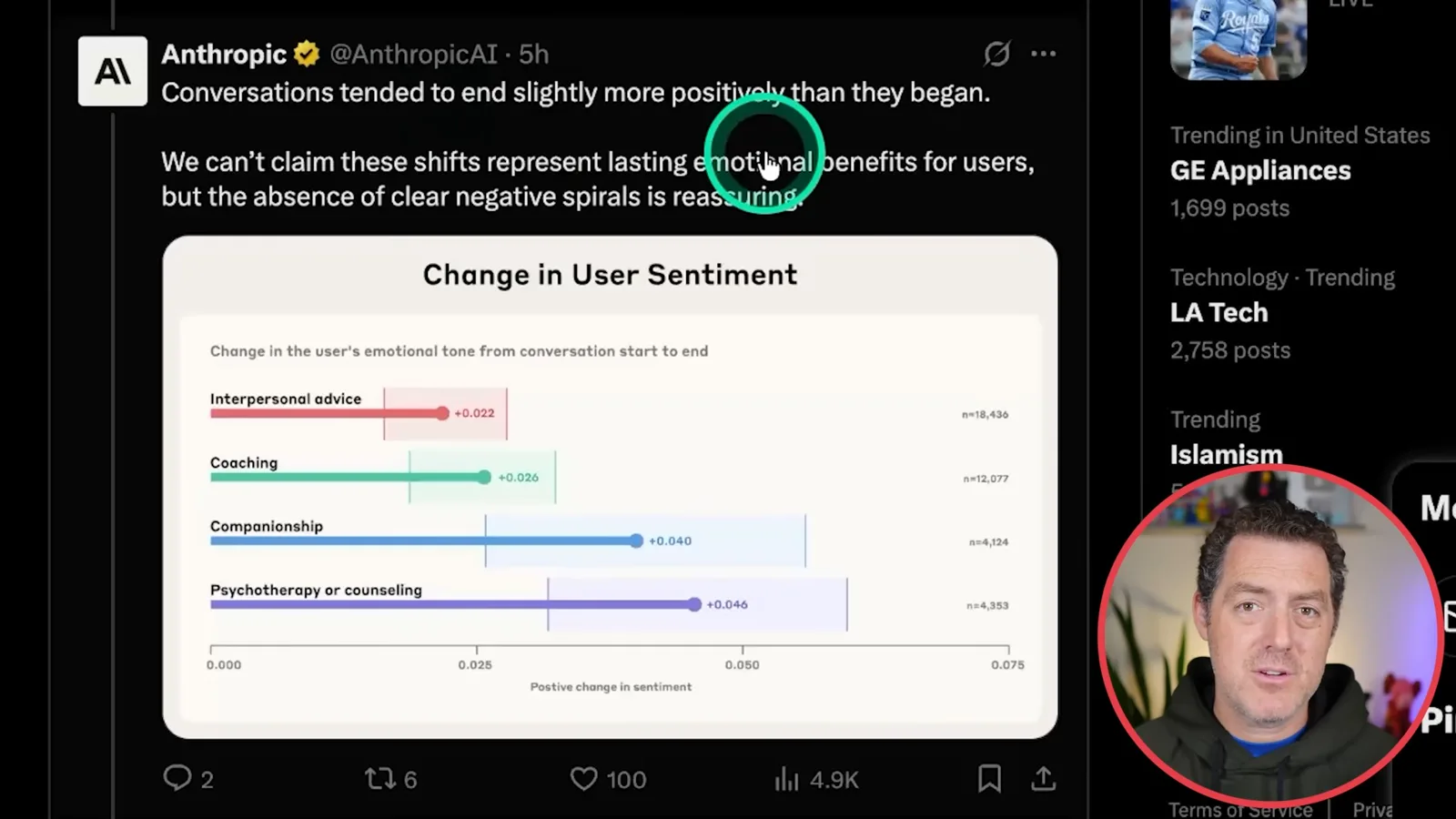
The researchers observed that selected longer conversations tended to end with slightly more positive emotional tone. That observation does not prove lasting mental-health benefits or clinical effectiveness. They reported pushback in fewer than 10% of conversations in several supportive categories; this is a share of those conversations, not a measure of refusals specifically when harm is detected.
Sur la même chaîne
 34:21EN
 Matthew Berman· 27 oct. 2026Matthew Berman Examines Anthropic’s IPO Filing, AI Growth and GovernanceMatthew Berman, Sam Altman · Forward FutureThe presenter reviews the S-1’s financial metrics, compute strategy and voting structure while questioning the tension between rapid AI development and safety.
 0:26ENMatthew Berman· 25 oct. 2026Sam Altman on Human Values and Problem-Solving in an AI WorldSam Altman · OpenAIIn a short interview excerpt, Altman considers the enjoyment of solving hard problems and the human role in interpreting results.
 0:36ENMatthew Berman· 25 oct. 2026Kimi K3.1 and a Rubik’s Cube Solver DemonstrationMatthew Berman · Forward FutureMatthew Berman shows a scrambled virtual cube being solved and gives the Kimi K3.1 test a favorable assessment.
 0:21ENMatthew Berman· 24 oct. 2026An AI-Generated Kimi Benchmark Chart Used Invented ScoresMatthew Berman · Forward FutureMatthew Berman asks for a graph of Kimi K3.1 Pro benchmarks, then discovers that the displayed figures are illustrative placeholders.
 25:50ENMatthew Berman· 24 oct. 2026Kimi K3.1 Pro Tested: Strong 3D Demos, Uneven Results and Competitive PricingMatthew Berman · Forward FutureMatthew Berman tests the open-weight model on coding, 3D rendering and visual explanations, then compares benchmark results and prices.
 32:20ENMatthew Berman· 23 oct. 2026Who Is Local AI For? The Costs, Trade-offs and a Hybrid FutureMatthew Berman · Forward FutureMatthew Berman weighs data control and independence against hardware cost, setup complexity and inference speed.