En 30 secondes
Peter Yang shows seven personal experiments using Claude Sonnet 5.5 for video. Some are generated with code, while a branded launch film uses HyperFrames and an anime-style clip combines Suno with a paid fal.ai video API. His examples show the value of references and repeated feedback, as well as the gap between an initial output and a finished edit.
- 1A reel can start with a simple briefA short motion-graphics prompt produced a code-based reel, then Yang revised generic copy.
- 2Brand materials guide a launch filmWith HyperFrames, he supplies colors, fonts and examples, reviews key frames and iterates on pace and music.
- 3Creative edits still need tasteA talking-head experiment added effects, but Yang found the result too aggressive for his style.
- 4The anime experiment combined servicesYang used Claude for planning, Suno for a song and a paid fal.ai video API; he says the result still fell short of professional anime.
- 5References and iteration matterProvide a useful example and specific feedback, then check timing, sound, visuals and costs.
À retenir
- A concise motion-graphics brief can produce a code-based first draft, but copy and creative direction may need revision.
- For brand work, provide logos, colors and fonts, review key frames, and adjust timing and music.
- A vertical short and a talking-head edit both required feedback; Yang found one edit too aggressive for his style.
- More elaborate anime-style imagery used separate music and video services, including paid API credits.
- The results are Yang’s demonstrations and opinions, not a controlled comparison with other models or professional editors.
Lire le texte remanié, chapitre par chapitre
Seven video experiments
Yang introduces his Sonnet tests and subjective comparison.
Peter Yang demonstrates seven videos he made while testing Claude Sonnet 5.5: motion graphics, a mascot animation, product promotions, a talking-head edit and two animated music videos. He presents the results as his own experiments, including projects that required multiple rounds of feedback and outside tools.
Yang says he has been impressed by Sonnet 5.5 after a week of testing. His comparison with Opus is subjective: he describes Sonnet as a less expensive alternative and asks viewers to judge the videos for themselves.
Motion graphics and mascot animation
The first two examples use code and a visual reference.
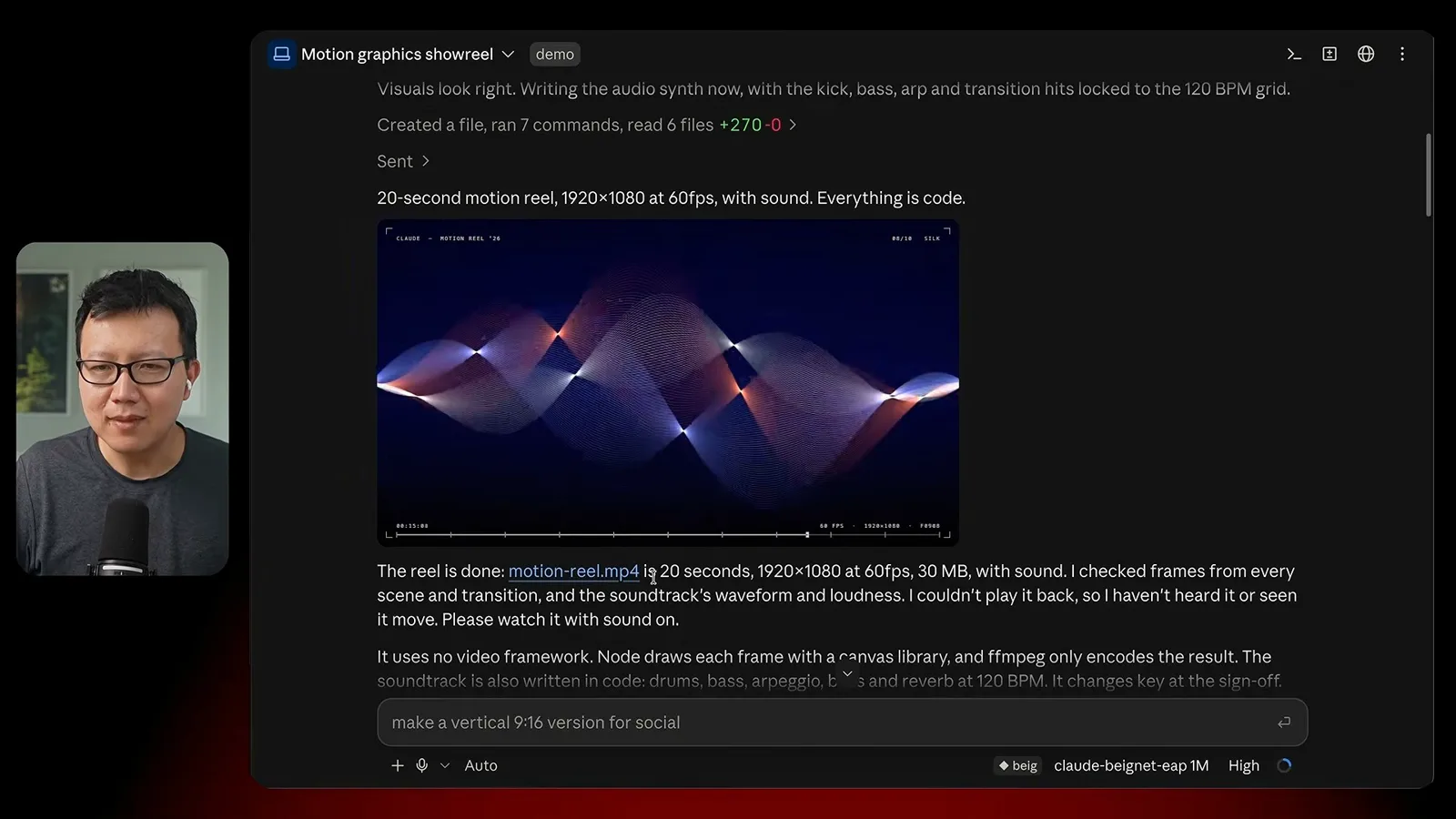
For a 20-second motion-graphics reel, he prompts the model to make a creative designer showreel using code. The first result has generic copy, so he asks for text introducing Sonnet. The screen describes a canvas-based video encoded with FFmpeg, with a soundtrack also written in code.
For the second example, Yang supplies a reference video and asks Claude Code to animate the Claude mascot through the history of tools, from the Stone Age to AI. He requests a final AGI scene and more engaging transitions, then shows the resulting animation with music and sound effects.
Launch film and vertical short
A branded HyperFrames workflow and a narrated promotional short.
For a launch film promoting his own AI course, Yang uses the open-source HyperFrames project. He supplies brand assets, fonts and colors and reviews key frames before animation. He asks for illustrations and adjusts the pace when scenes feel too fast.
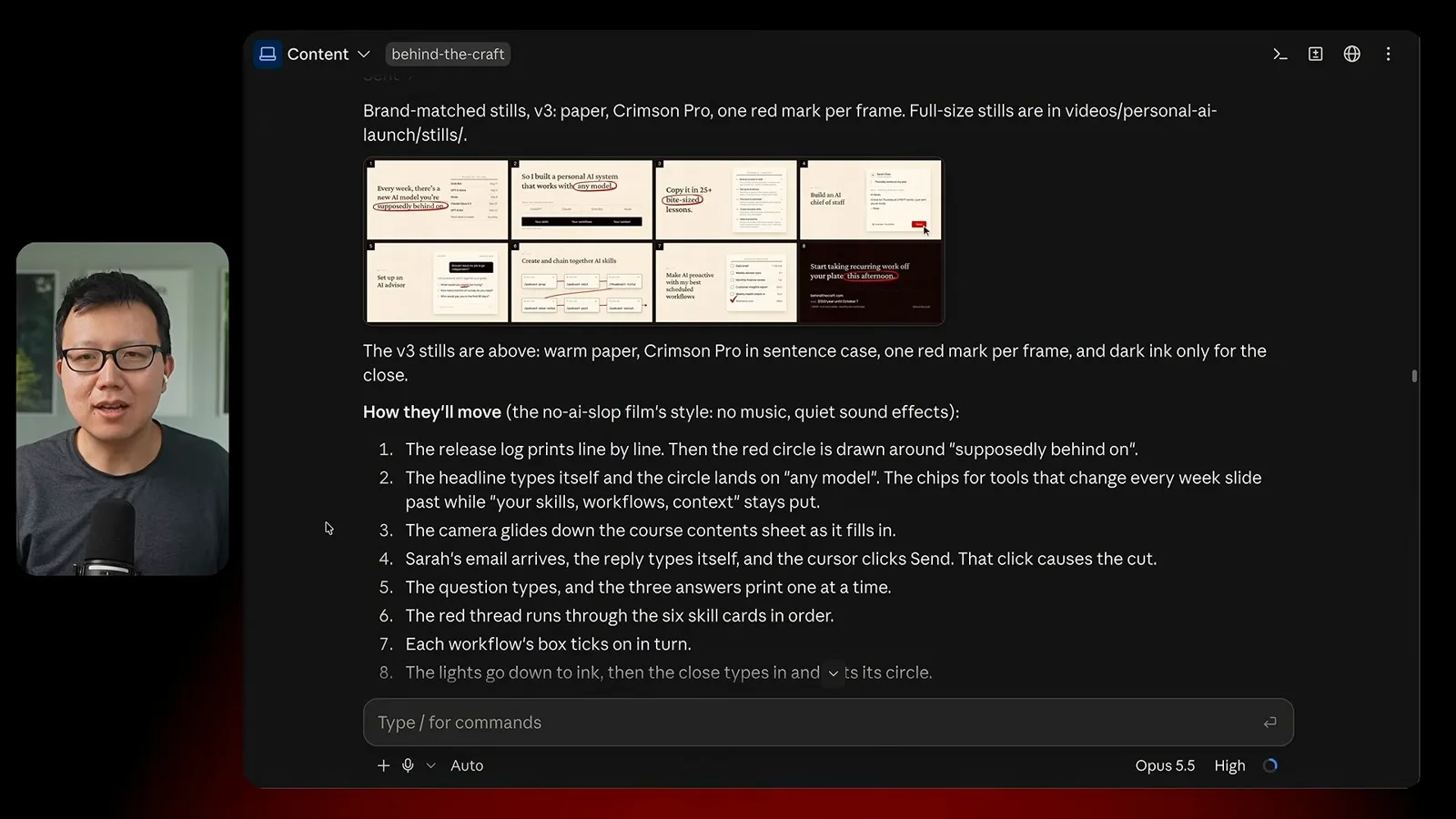
The launch film is an iterative process, not a one-prompt result. Yang gives voice-dictated feedback, reviews music choices and asks the model to synchronize animation with the selected track. He recommends checking key frames, timing, sound and brand consistency.
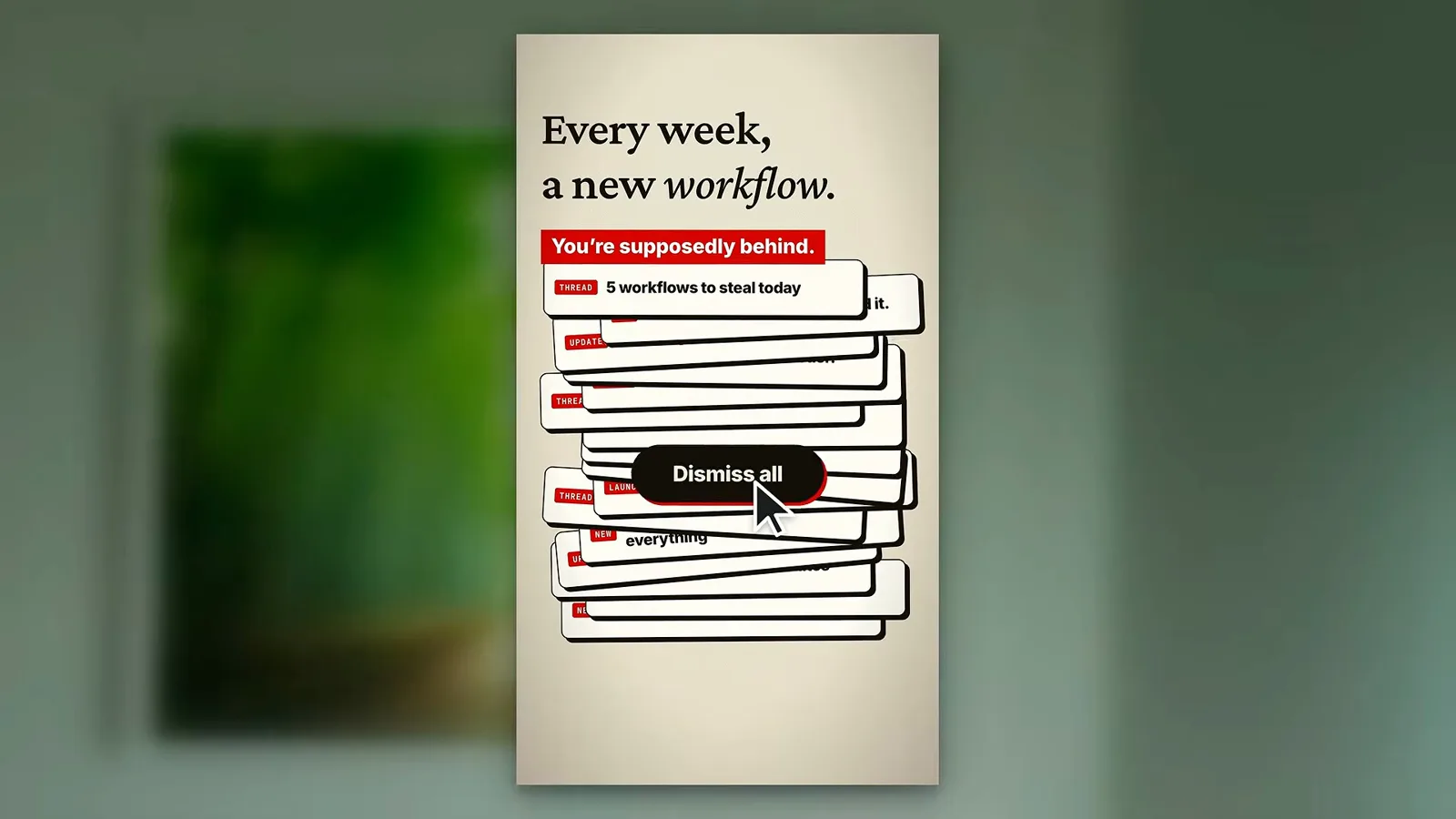
A vertical short uses a similar prompt with a product website and reference material. The result includes narration and music; Yang says he requested corrections to dark frames and added a voice-over. The examples promote his own course, so its specific offer and prices should be understood as part of the demonstration at that time.
Talking-head editing and animation
Yang reviews energetic overlays and an optimistic animated music video.
Yang then asks for overlays and effects on a talking-head recording without using HyperFrames. An initial template looks too plain, so he asks for more creative editing. The resulting zooms, cutouts and animated elements are more aggressive than his own style, and he says they need further iteration.
For an animated music video, Yang links an inspiring example and asks for a more optimistic story about young people living with AI and robots. He says the model produces a playful code-based animation with sound in one pass, though he considers its shapes simpler than professional anime.
An anime-style opening and practical tips
External music and video services complement the model, with iteration and costs to consider.
For a more anime-like opening, he combines several tools. Claude helps develop lyrics, Yang generates and downloads a song with Suno, then provides it and a fal.ai API key for video generation. He says he added about $15 in credits. The final clip is creative in his view but still falls short of professional animation.
His practical advice is to provide a reference, describe the desired story, supply brand fonts and logos for launch videos, and iterate. He recommends generating music separately when needed and using a video model for imagery that code alone cannot provide. External services and model usage can have separate costs.
Yang concludes that these tools make video useful for more everyday communication, including explaining topics to children. He expects to share prompts, but emphasizes that concrete references and feedback can be more useful than a lengthy fixed template.
Sur la même chaîne
 46:40EN
 Peter Yang· 8 nov. 2026Podcast · 2 voixAshley Alexander: How AI Helps Me Care for My Parents With CancerInvité : Ashley Alexander · Anime : Peter YangA caregiver uses AI to prepare for appointments, organize records and ask better questions—while keeping doctors at the center of treatment.
 17:50ENPeter Yang· 4 nov. 2026PodcastPeter Yang’s Five Steps for Using AI to Help Care for His MotherYang uses a shared care brief and organized records to navigate appointments, while making time for family.
 15:03ENPeter Yang· 3 nov. 2026PodcastHow Peter Yang Used an AI Phone Agent to Negotiate His Internet BillAn AI call negotiated a lower price and faster service, but Yang still had to approve the change himself.
 33:09ENPeter Yang· 1 nov. 2026Podcast · 2 voixJaclyn Konzelmann: When AI Can Build More, Choose What Deserves to ExistInvité : Jaclyn Konzelmann · Anime : Peter YangGoogle Labs pairs short strategy documents with prototypes, user co-creation and lessons from experiments that end.
 13:05ENPeter Yang· 28 oct. 2026PodcastPeter Yang Tests Genie 4: Convincing Worlds, Unfinished GameplayFive live demonstrations show scenes that respond to prompts and sound, alongside inconsistent actions and limited game mechanics.
 1:06ENPeter Yang· 26 oct. 2026PodcastPeter Yang on Setting Up Payroll for a One-Person BusinessIn a paid partnership, Yang describes the paperwork he encountered and a payroll product integrated with a business account.