En 30 secondes
In this March 2023 tutorial, Matthew Berman tries photographic prompts for portraits, food, nature and interior design. He reviews generated examples, experiments with style and lighting cues, and upscales selected images. These are subjective demonstrations using Midjourney v4, not controlled tests of individual keywords. Camera names, resolution labels and rendering-engine references in a prompt do not guarantee corresponding technical properties.
- 1Portrait cuesBerman uses studio lighting and a Kodak Gold 200 film reference, then experiments with photographers and cameras as style cues.
- 2Specify the subjectAn initial prompt produces camera images because it omits the person; naming the subject changes the intended direction.
- 3Food and detailA cake example combines detailed ingredients, setting and lighting, and Berman examines the resulting textures.
- 4Nature examplesAnt and parrot images show fine apparent detail but can contain anatomical errors.
- 5Interior designThe architecture examples progress from a broad description to a detailed room layout, furnishings and palette.
À retenir
- Name the subject clearly and describe the setting, light and visual qualities you want.
- Camera, film and photographer names serve as stylistic cues rather than proof of a real photographic process.
- Resolution labels such as 8K in a prompt do not guarantee the output dimensions.
- Detailed food and interior descriptions can guide composition, but results should be inspected and refined.
- Realistic-looking generated people and animals may still have anatomical or textural errors.
- These examples reflect the behavior of Midjourney v4 in 2023; later models may respond differently.
Lire le texte remanié, chapitre par chapitre
Portraits and photographic cues
Berman uses film, photographer, lighting and texture cues to create portraits. He examines imperfections and upscales selected images.
In this March 2023 tutorial I experiment with prompts for realistic-looking images in four categories: portraits, food, nature, and architecture. I use Midjourney version 4 and discuss techniques that might also be tried in Leonardo.ai. Model behavior and interface controls have changed since this recording, and the examples are artistic experiments rather than controlled comparisons.
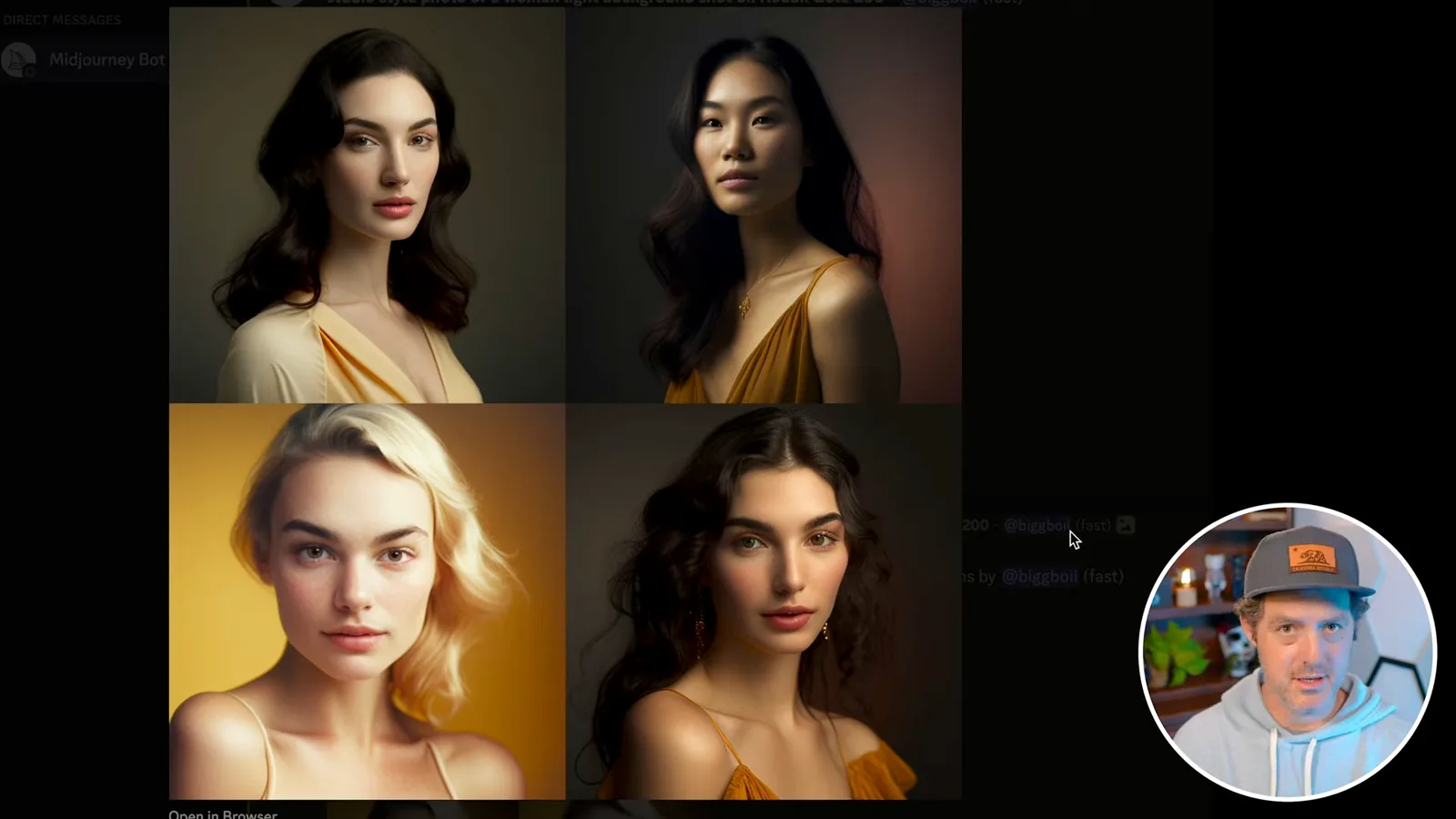
For portraits I start with a studio-style photograph of a woman, a light background, and a Kodak Gold 200 reference. The prompt gives the model cues about the setting and photographic look; Kodak Gold 200 is a film stock, not a camera. Naming a camera, lens, or film can suggest a style, but it does not mean a real camera was used or guarantee its optical characteristics.
Another approach is to reference a well-known photographer. I try prompts mentioning Annie Leibovitz and Richard Avedon, then inspect and upscale results. These names are style cues in the experiment, not evidence that the photographers created or endorsed the generated images.
I try descriptive terms such as photorealistic, hyper-detailed, sharp focus, and cinematic lighting, along with a Hasselblad camera reference. My first attempt produces pictures of a camera because I forgot to name the subject. Adding a woman in a blue dress makes the intended subject clear. Terms such as “8K” are cues; they do not guarantee a particular output resolution.
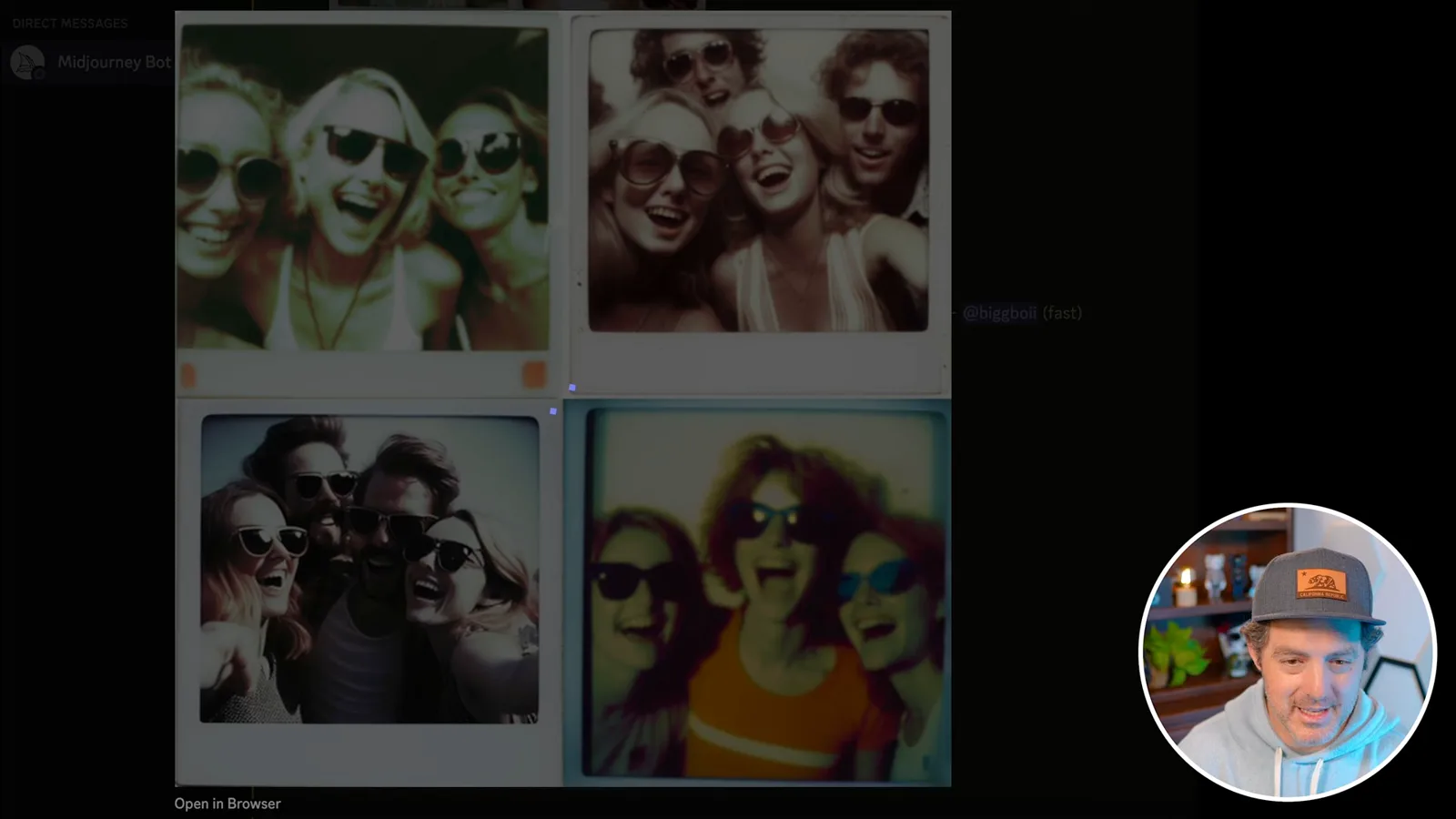
For a more natural portrait I add “natural skin texture” and look for wrinkles and texture instead of an oil-painting effect. I select a result to upscale. I also try a Polaroid look, inspired by another creator, and find that the blur and instant-film aesthetic make some examples seem more photographic.
I notice that sunglasses can hide unnatural-looking eyes in some generated portraits. I experiment with “straight teeth” and possible negative terms for unwanted teeth, although I cannot tell whether the wording is actually helping. Even the upscaled examples have imperfections, including areas that resemble paint or clay.
Food photography
A detailed cake prompt guides ingredients, composition and lighting. Berman explains the blurred-background effect he wants.
For food, one way to learn is to inspect public examples and the prompts behind images you like. I look at a detailed cake prompt describing layers, a plate, lighting, and texture. The generated cakes look convincing to me, though some areas look grainy. Borrowing ideas from a prompt and changing individual details can help explore their effects.
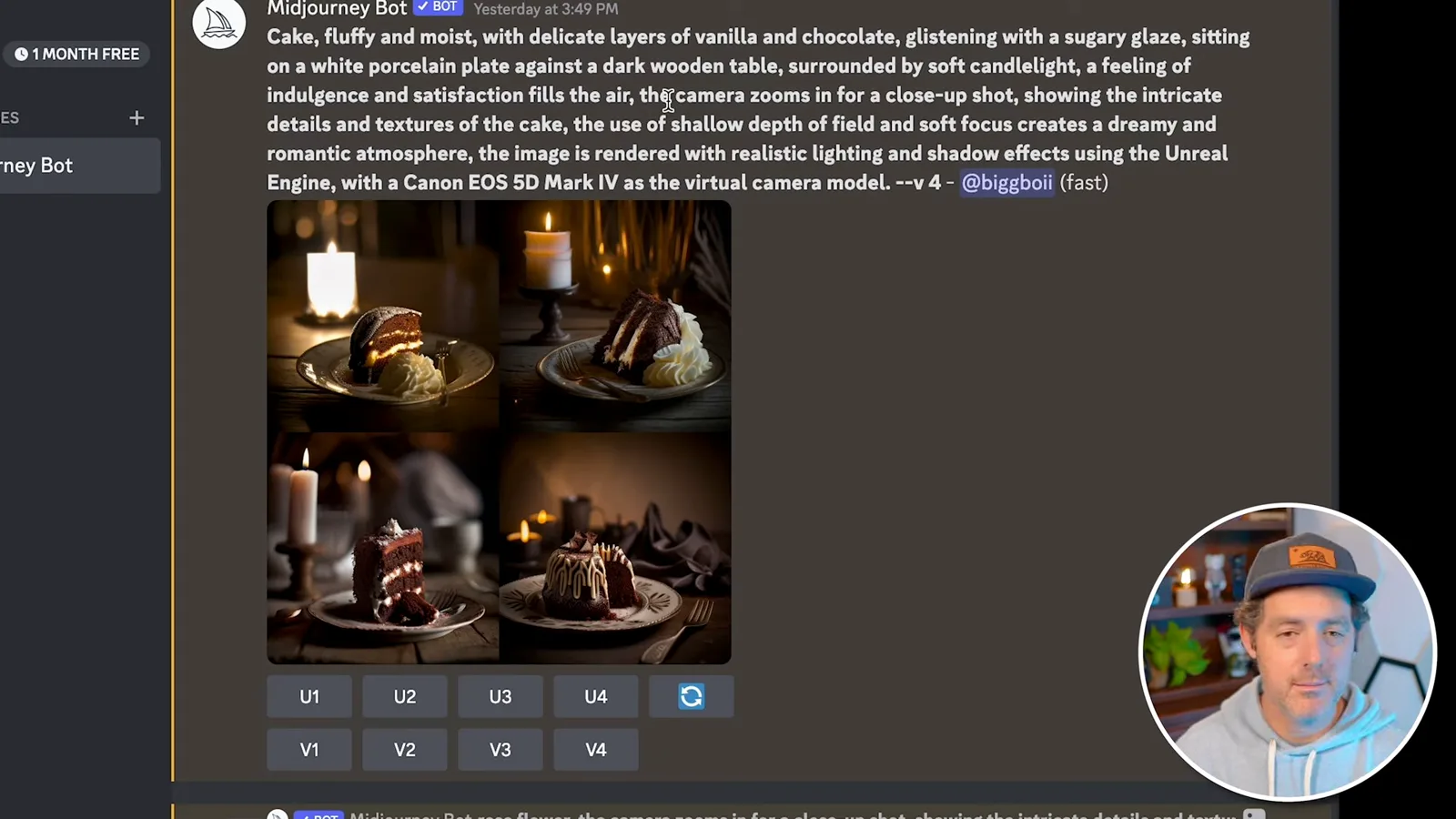
I often like simple prompts, but for food I find detailed descriptions useful: specify the subject, ingredients, surface, and lighting. In an upscaled cake image I look at crumbs, the fork, and the blurred background. I use “bokeh” as a cue for the appearance of out-of-focus areas; the term refers to the quality of that blur.
Nature and wildlife
Ant, parrot and lion examples demonstrate apparent detail and possible anatomical or textural errors. He tests photographic and rendering-style cues.
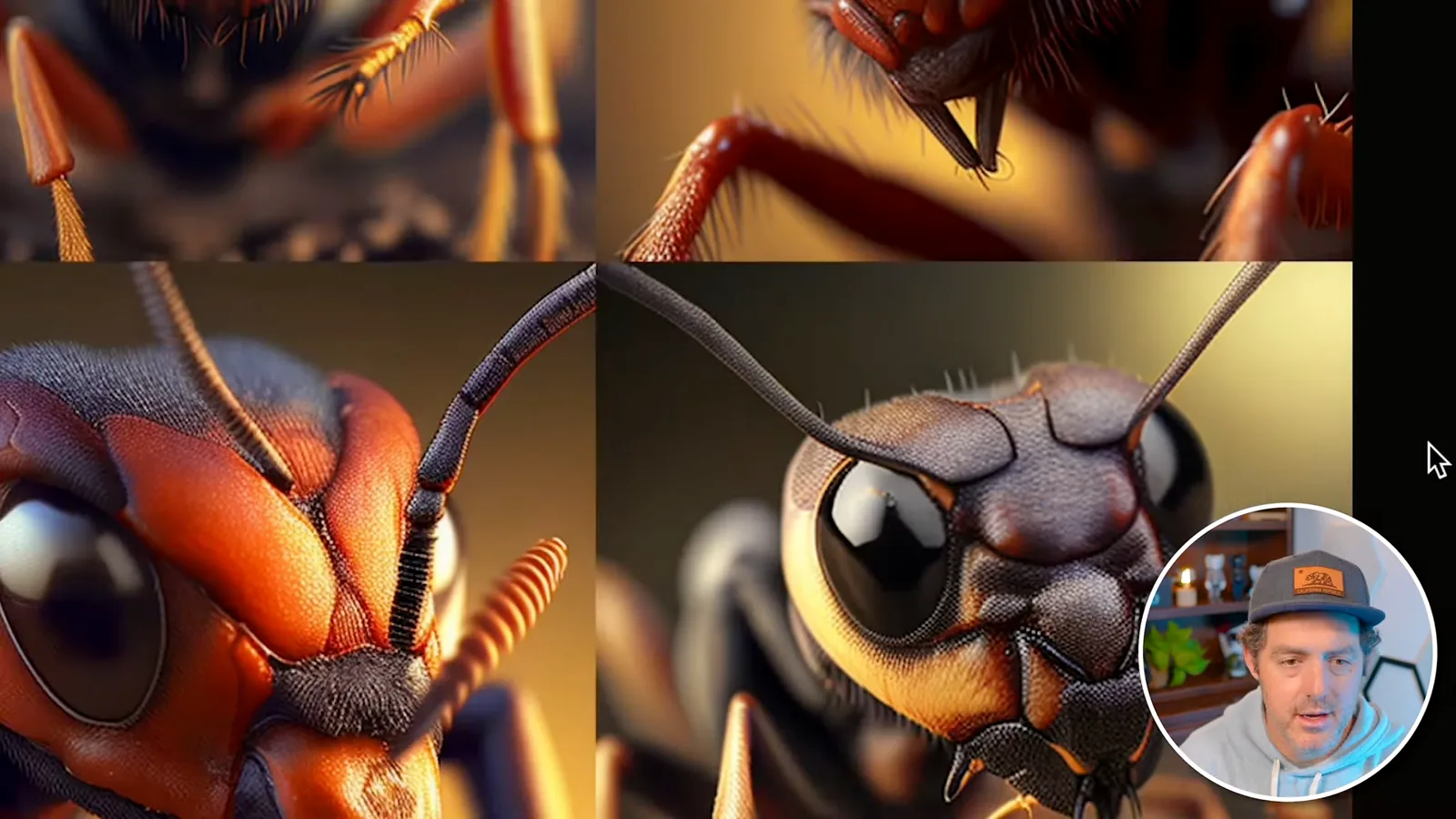
For nature I begin with a close-up ant and realism cues. The results contain fine texture, but I am unsure whether the anatomy is correct and notice an odd antenna. A detailed-looking generated animal is not necessarily an accurate biological reference.
I then ask for a parrot with high-quality and photographic cues, including a National Geographic reference. I like the apparent detail in feathers and beaks and upscale one result. I do not know whether writing 4K, 8K, or 12K changes the actual image quality; these words are not a substitute for checking the output dimensions.
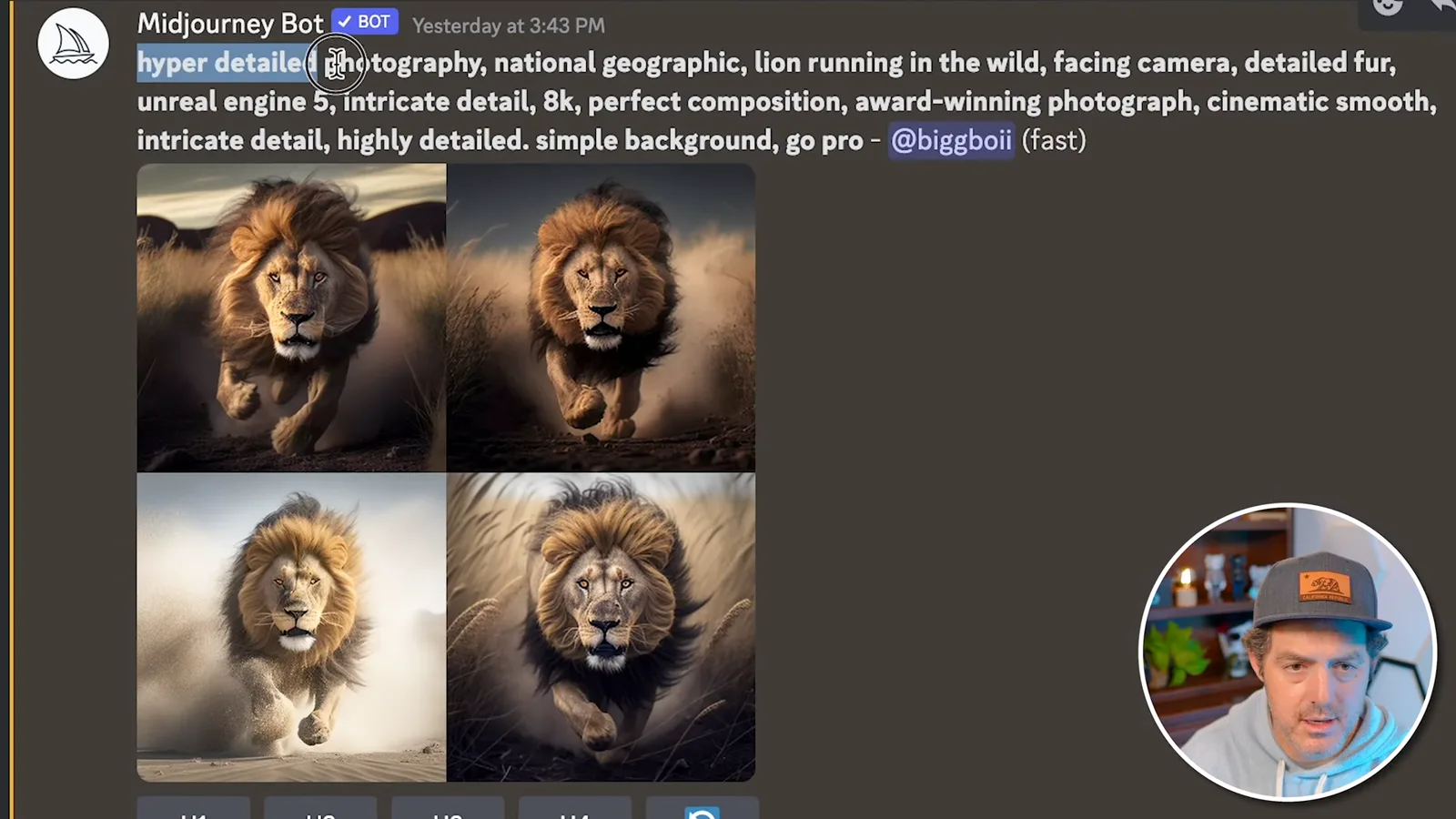
A lion prompt combines wildlife-photography cues, a running subject, detailed fur, and “Unreal Engine 5.” I think the results are detailed, although there is grain and blur around some snouts. Naming a rendering engine is a stylistic cue in this prompt; it does not establish that the image was actually rendered in that engine.
Interior design
Berman compares a broad room prompt with a more detailed design description. He closes with his preference for the portrait examples.
For architecture I try an interior-design prompt describing a modern house and add a lighting cue. I want even illumination, but “global illumination” is a rendering concept involving direct and indirect light, not a guarantee of shadowless lighting. In a prompt, the model may interpret the phrase loosely.
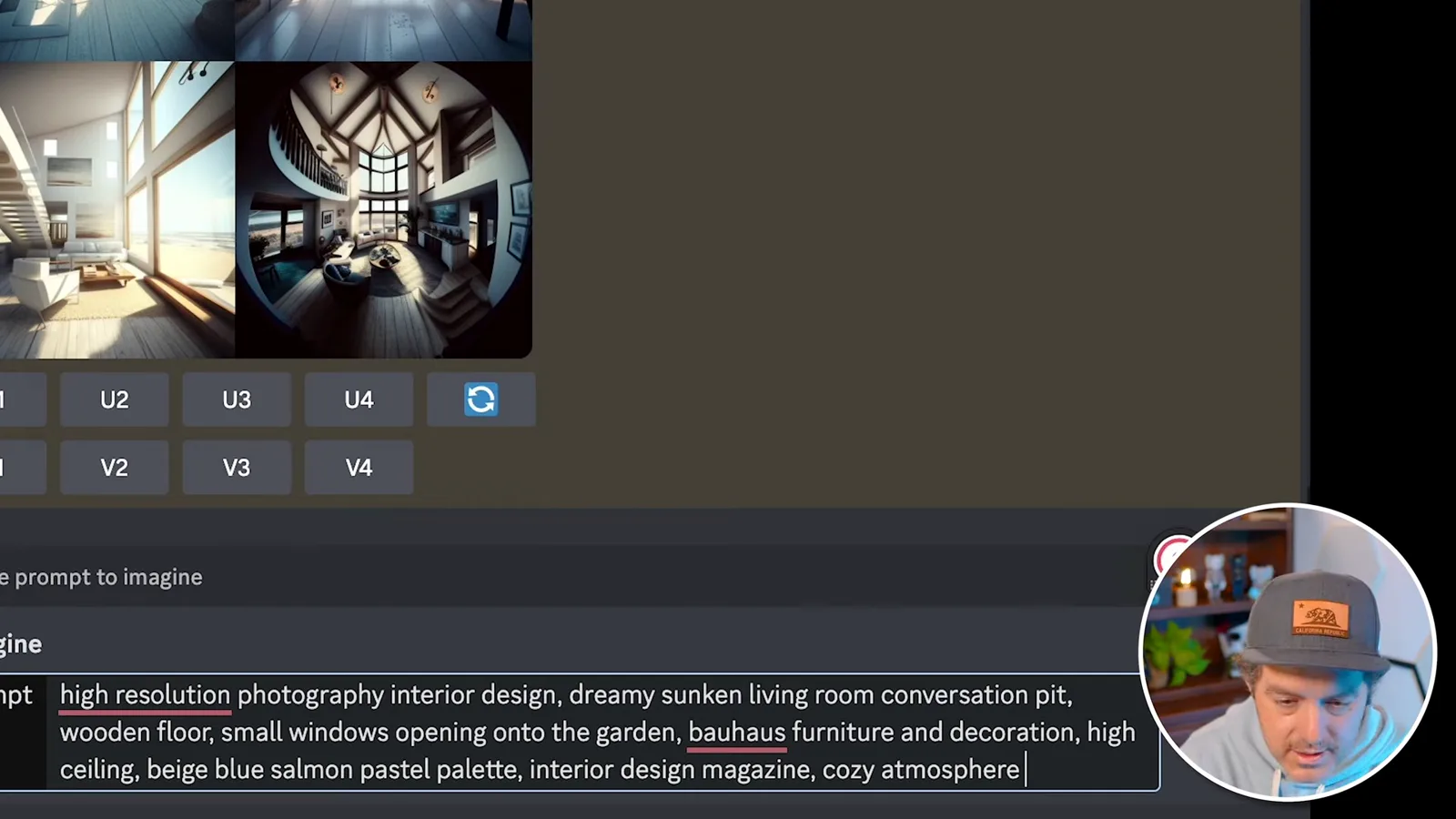
A more specific interior prompt describes a sunken living room, wooden floors, small garden-facing windows, Bauhaus furniture, a high ceiling, and a pastel palette. I prefer the resulting examples, especially the light on the couch and the wood floor. The general lesson is to describe the scene and iterate, while checking whether individual details actually appear.
Across these examples, portraits are my personal favorite for apparent realism. Food, nature, and interiors can also produce appealing results, but the images are generated and may contain errors even when they look photographic.
Sur la même chaîne
 34:21EN
 Matthew Berman· 27 oct. 2026Matthew Berman Examines Anthropic’s IPO Filing, AI Growth and GovernanceMatthew Berman, Sam Altman · Forward FutureThe presenter reviews the S-1’s financial metrics, compute strategy and voting structure while questioning the tension between rapid AI development and safety.
 0:36ENMatthew Berman· 25 oct. 2026Kimi K3.1 and a Rubik’s Cube Solver DemonstrationMatthew Berman · Forward FutureMatthew Berman shows a scrambled virtual cube being solved and gives the Kimi K3.1 test a favorable assessment.
 0:21ENMatthew Berman· 24 oct. 2026An AI-Generated Kimi Benchmark Chart Used Invented ScoresMatthew Berman · Forward FutureMatthew Berman asks for a graph of Kimi K3.1 Pro benchmarks, then discovers that the displayed figures are illustrative placeholders.
 25:50ENMatthew Berman· 24 oct. 2026Kimi K3.1 Pro Tested: Strong 3D Demos, Uneven Results and Competitive PricingMatthew Berman · Forward FutureMatthew Berman tests the open-weight model on coding, 3D rendering and visual explanations, then compares benchmark results and prices.
 32:20ENMatthew Berman· 23 oct. 2026Who Is Local AI For? The Costs, Trade-offs and a Hybrid FutureMatthew Berman · Forward FutureMatthew Berman weighs data control and independence against hardware cost, setup complexity and inference speed.
 1:03:37ENMatthew Berman· 23 oct. 2026Matthew Berman’s Team Tests Kimi K3.1 on Animation, Games, and ChartsMatthew Berman, Alex, Brian · Forward FutureA live team AMA turns into an informal test of Kimi K3.1, from personal-agent workflows to motion graphics, a browser game, and a benchmark chart.