En 30 secondes
Matthew Berman reviews EMO, an Alibaba Group research system for generating expressive portrait videos from a reference image and vocal audio. He explains the diffusion architecture, stability controls, reported dataset and limitations, while emphasizing that convincing synthetic footage can misrepresent what a person said. He also discusses a Jensen Huang clip about natural-language computing and argues that learning basic coding remains valuable for systematic problem-solving.
- 1Image and audio to videoEMO animates a reference portrait to supplied vocal audio, so the depicted person need not have performed the recording.
- 2Diffusion and controlThe architecture combines frame and audio features with speed and face-region signals to generate video frames.
- 3Stability challengesThe authors address jitter and distortions with control mechanisms, while acknowledging that artifacts remain possible.
- 4Research limitationsThe paper reports slower generation than non-diffusion methods and possible unintended body-part artifacts.
- 5The programming debateHuang emphasizes domain expertise and natural-language computing; Berman still values learning code for systematic thinking.
À retenir
- EMO generates a speaking or singing portrait from a single reference image and vocal audio.
- The research aims to produce expressions and head movements as well as lip motion.
- The paper uses stability controls but acknowledges slow diffusion generation and possible body-part artifacts.
- The reported comparisons apply to the study’s chosen data and metrics.
- Berman connects easier AI media tools to a debate about coding and domain expertise.
Lire le texte remanié, chapitre par chapitre
Synthetic portrait examples
Berman opens with generated singing and speaking portraits and asks how people can judge authenticity. He introduces EMO’s image-and-audio inputs.
What happens when a realistic-looking video no longer proves that the person shown said or sang the audio? I begin with generated portrait examples that look convincing while being synthetic. The technique raises questions about how people judge the authenticity of what they see online.
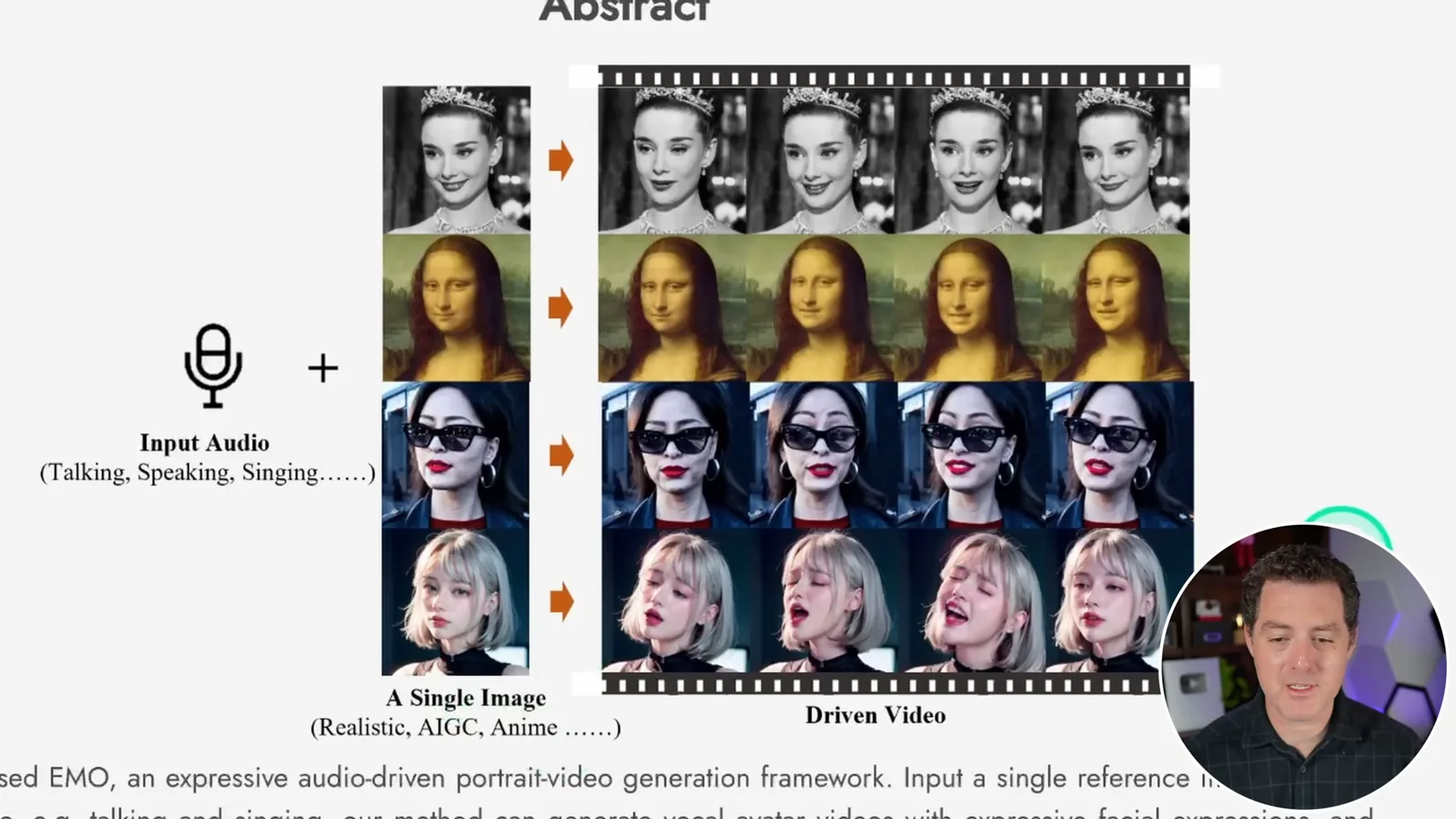
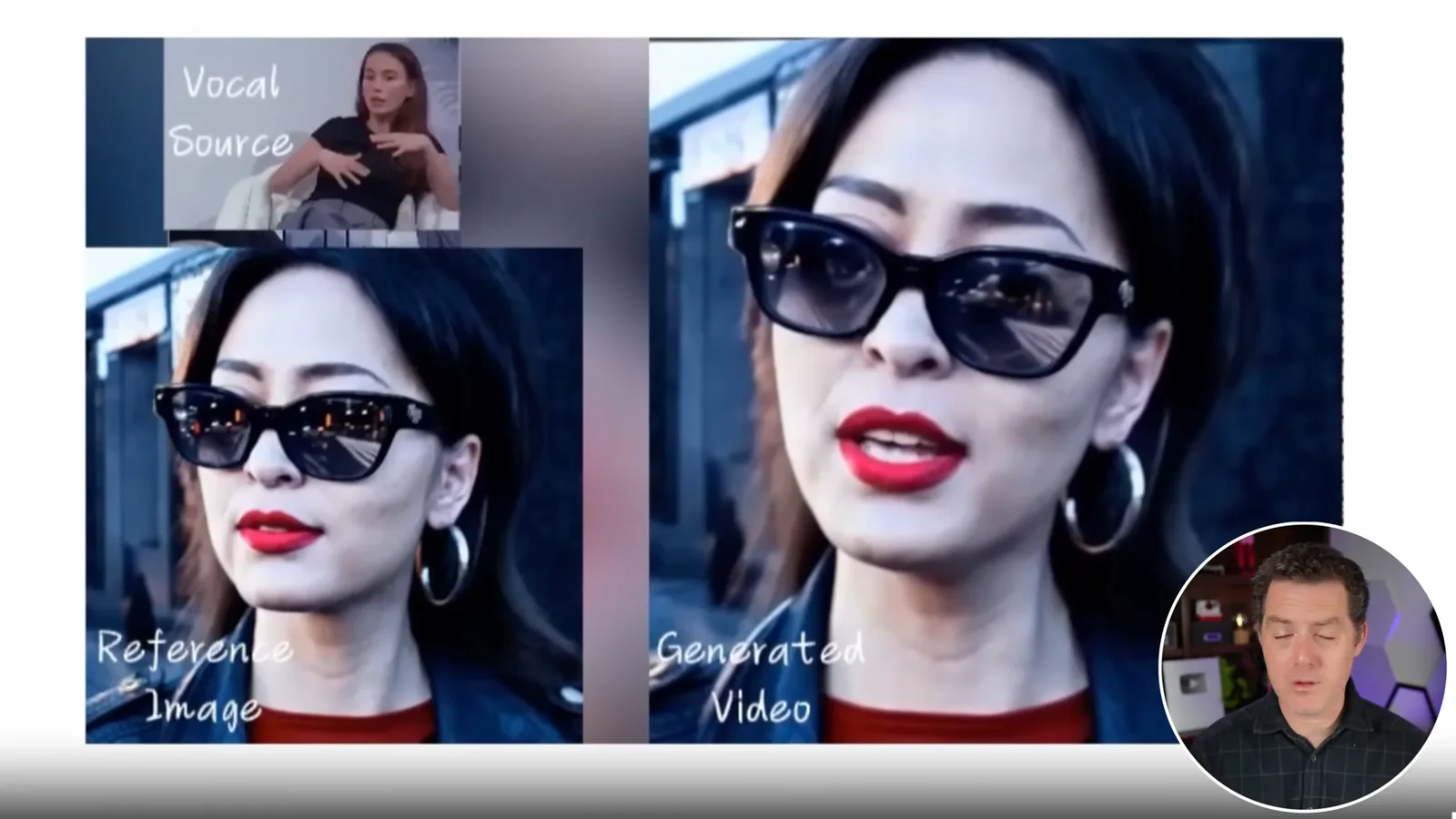
The Alibaba Group research project EMO, short for Emote Portrait Alive, takes a single reference image and vocal audio and generates a portrait video that appears to speak or sing. The examples include an old film image, the Mona Lisa, an AI-generated character from a Sora video and an illustrated character. The resulting visual performance is generated; the depicted person need not have spoken the supplied audio.
The project’s illustrations show more than moving lips: expressions and head poses change with the audio. One comparison uses the same image for singing and speaking. Another applies a separate vocal source to the synthetic woman from the Sora example, producing a convincing-looking talking portrait in the selected demonstration.
How EMO generates portrait video
He reviews the diffusion architecture, expressive movement, stability controls, training data and comparisons. The paper also identifies generation-time and artifact limitations.
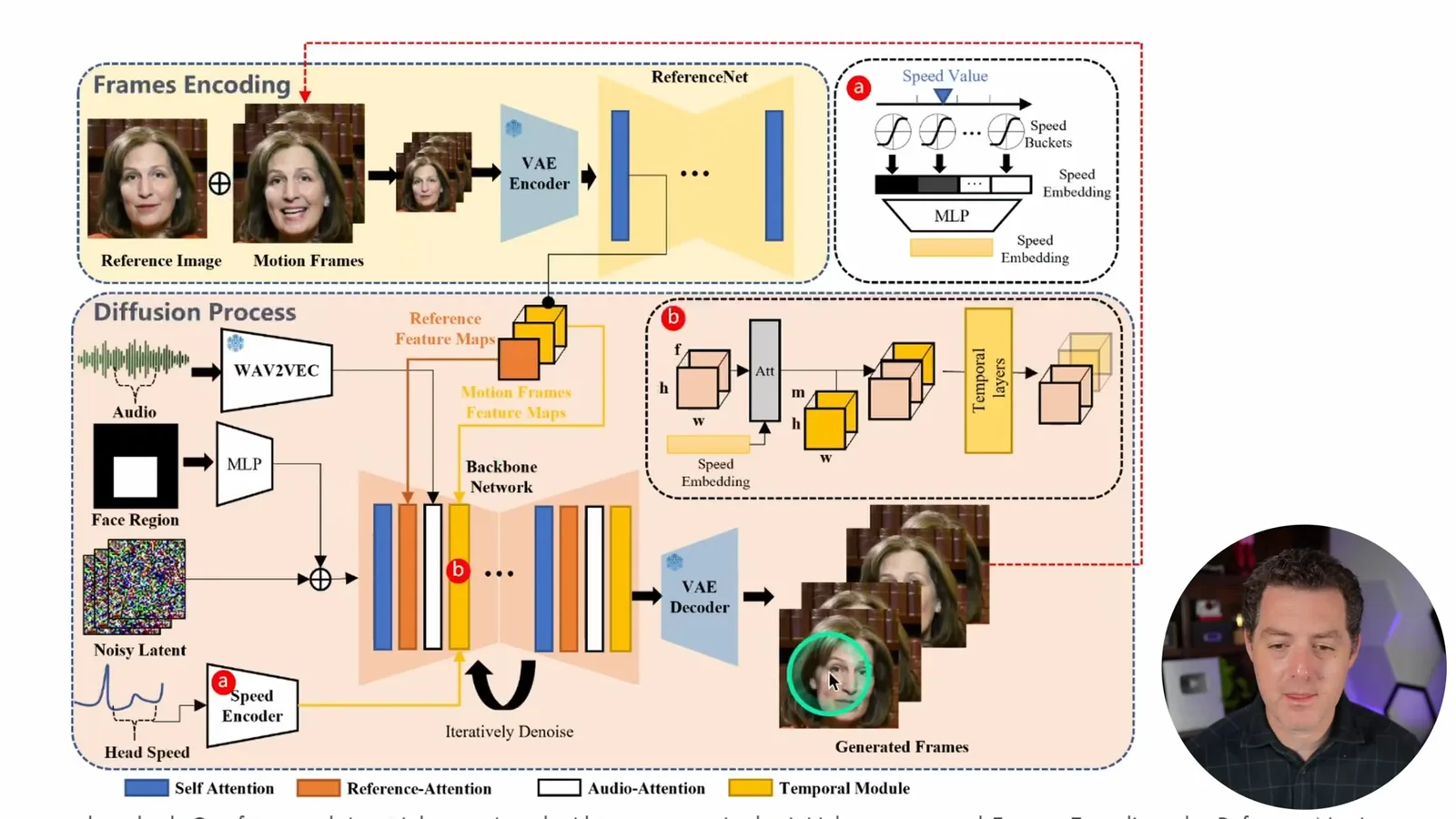
The architecture diagram shows reference and motion frames encoded alongside audio features, a face-region signal, a noisy latent and head-speed information. A diffusion network generates frames, which can be combined with the supplied audio. This is the authors’ research architecture, not evidence that every input will produce flawless video.
The paper describes a direct audio-to-video approach that avoids intermediate 3D models or facial landmarks. Its authors say the generated duration can follow the length of the audio input. That is a research claim about the method, not a guarantee of unlimited duration or consistent quality for all inputs.
The central problem is the relationship between audio and expression. An excited voice may be associated with raised eyebrows or a different head position, but audio does not uniquely determine a face’s motion. The authors aim to generate plausible expressions and distinctive facial styles rather than merely matching mouth movement.
The researchers argue that direct synthesis removes the need for intermediate representations and complex preprocessing used by some approaches. That should not be read as a claim that the whole pipeline requires no preparation at all. Their insight is that vocal audio carries useful cues about expression, even though the mapping remains ambiguous.
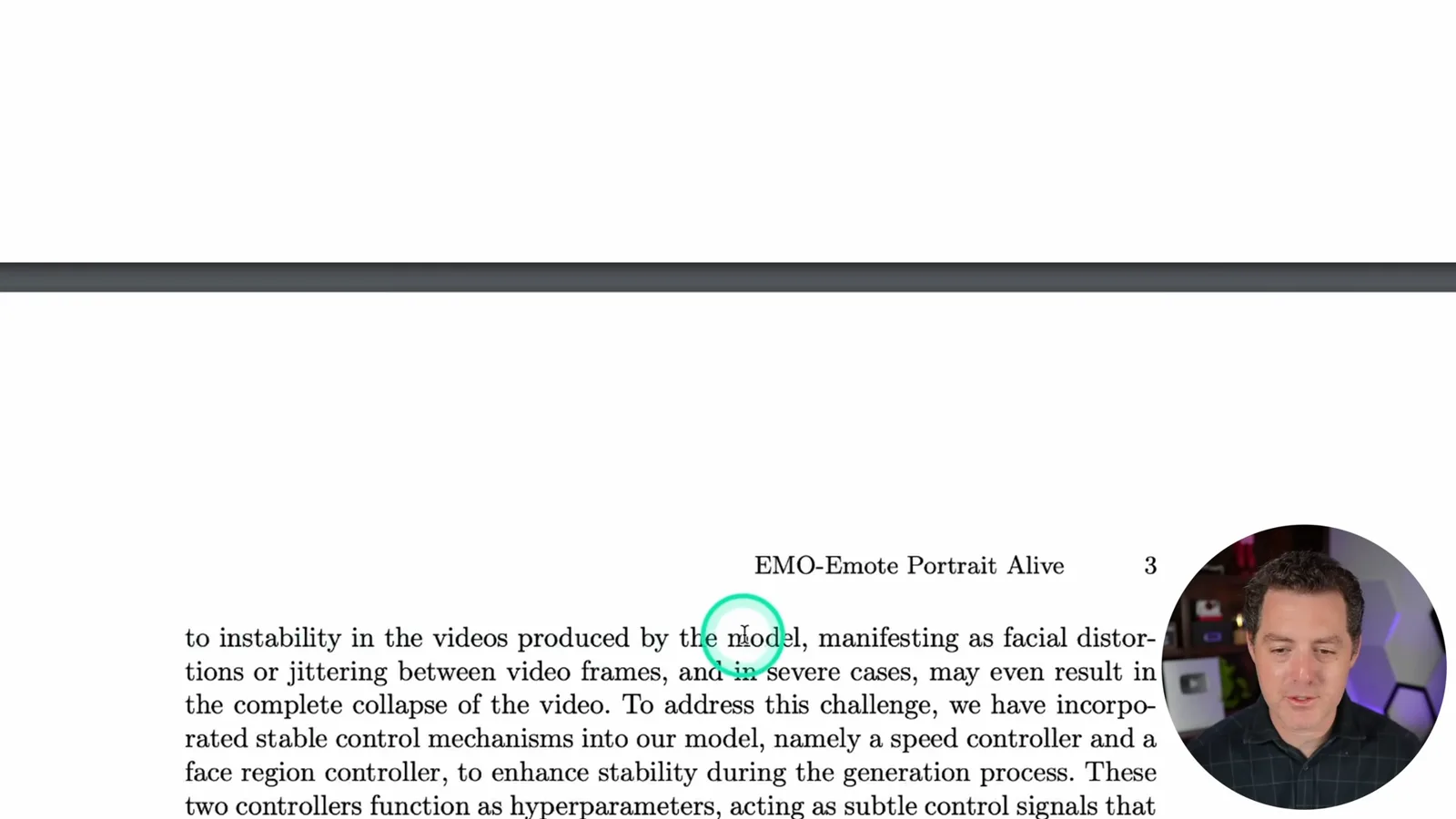
That ambiguity can produce frame-to-frame jitter, facial distortion or even video collapse. The paper introduces a speed controller and a face-region controller to improve stability. These controls are intended to reduce artifacts while retaining expressiveness; they do not guarantee that generated movement will be perfect.
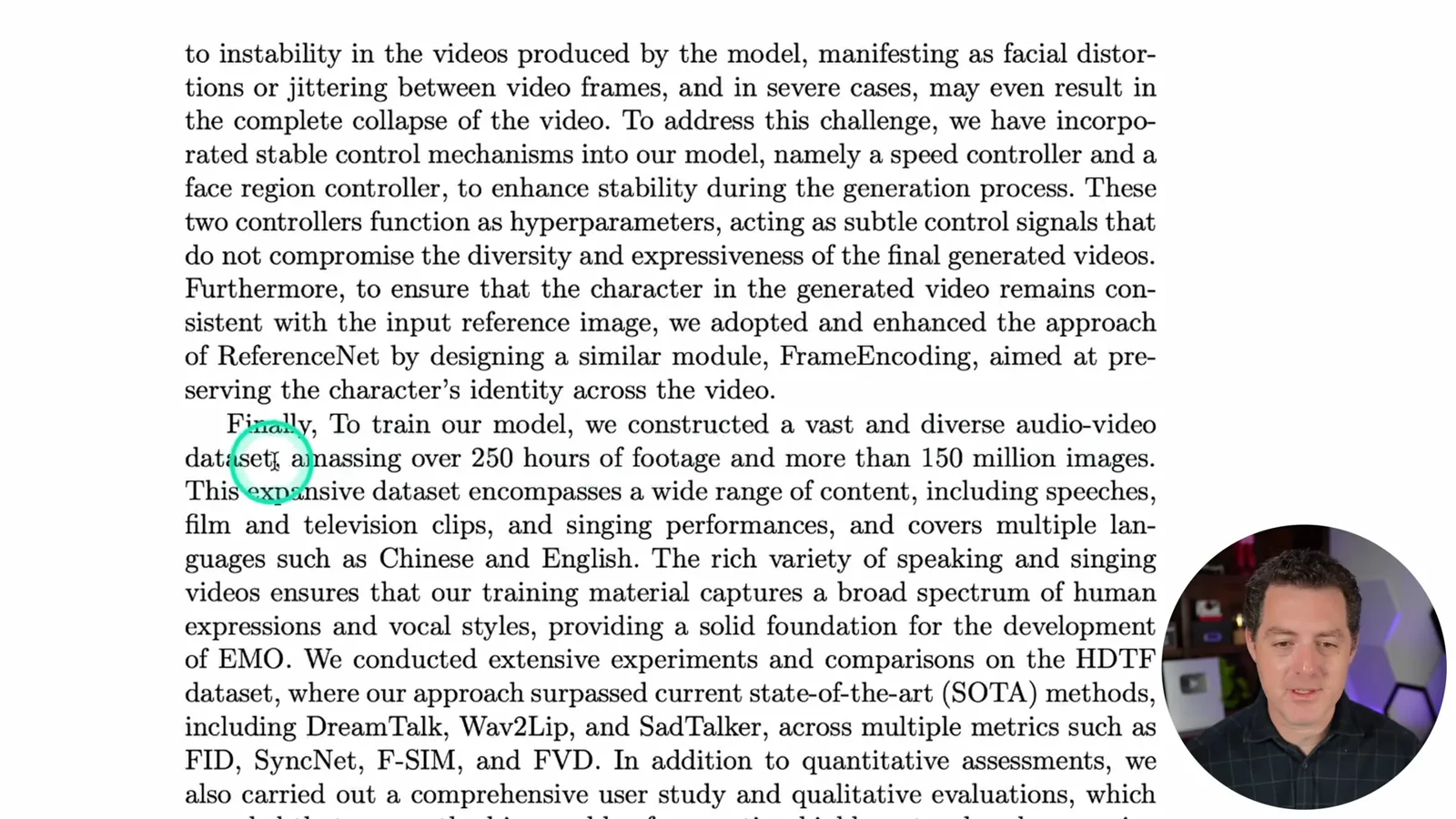
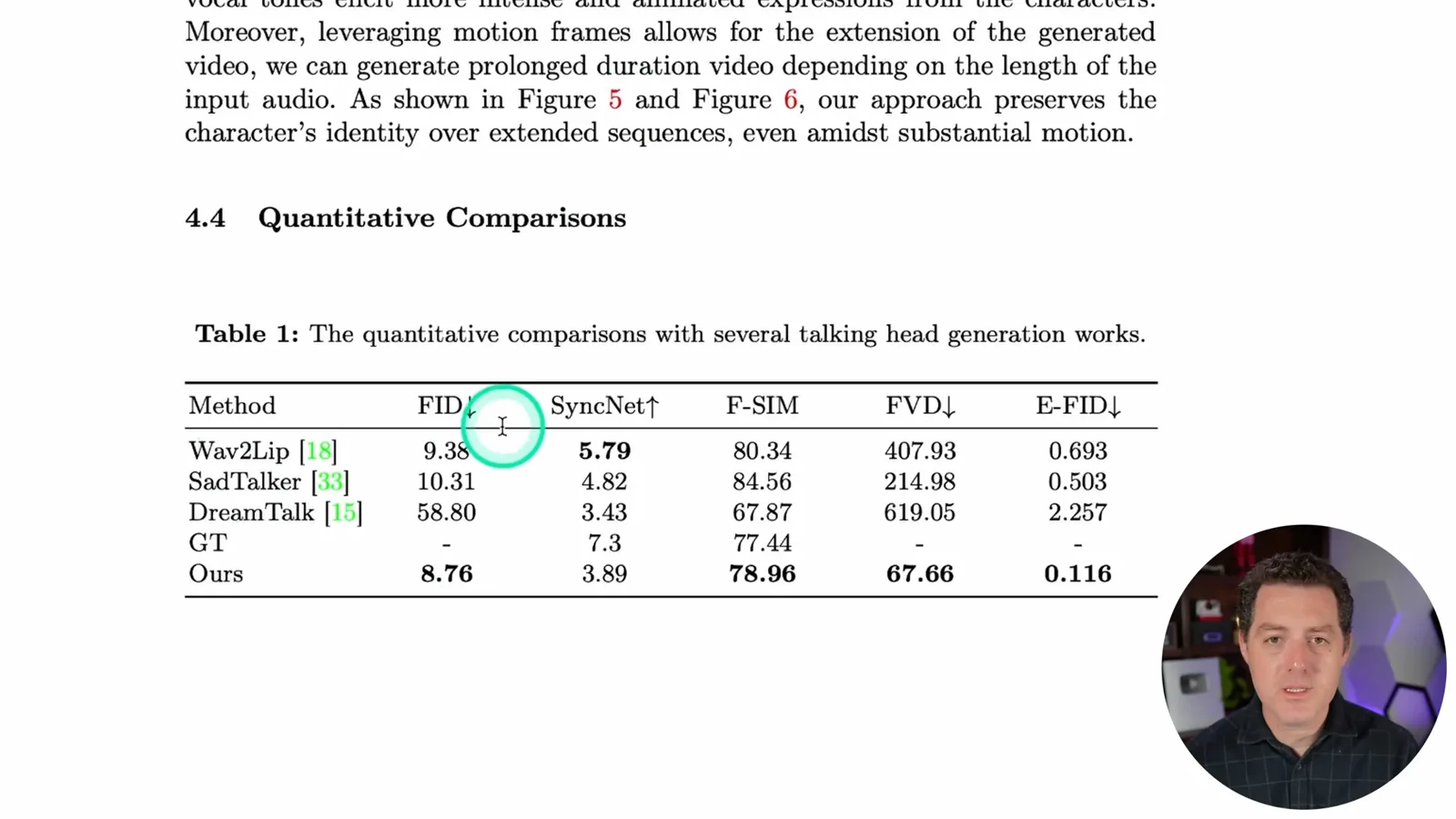
The authors report training on more than 250 hours of audio-video footage and over 150 million images, including speeches, film and television clips, and songs in multiple languages. The paper compares EMO with prior talking-head methods using several quantitative metrics. Those results reflect the study’s dataset and measurements rather than a universal ranking.
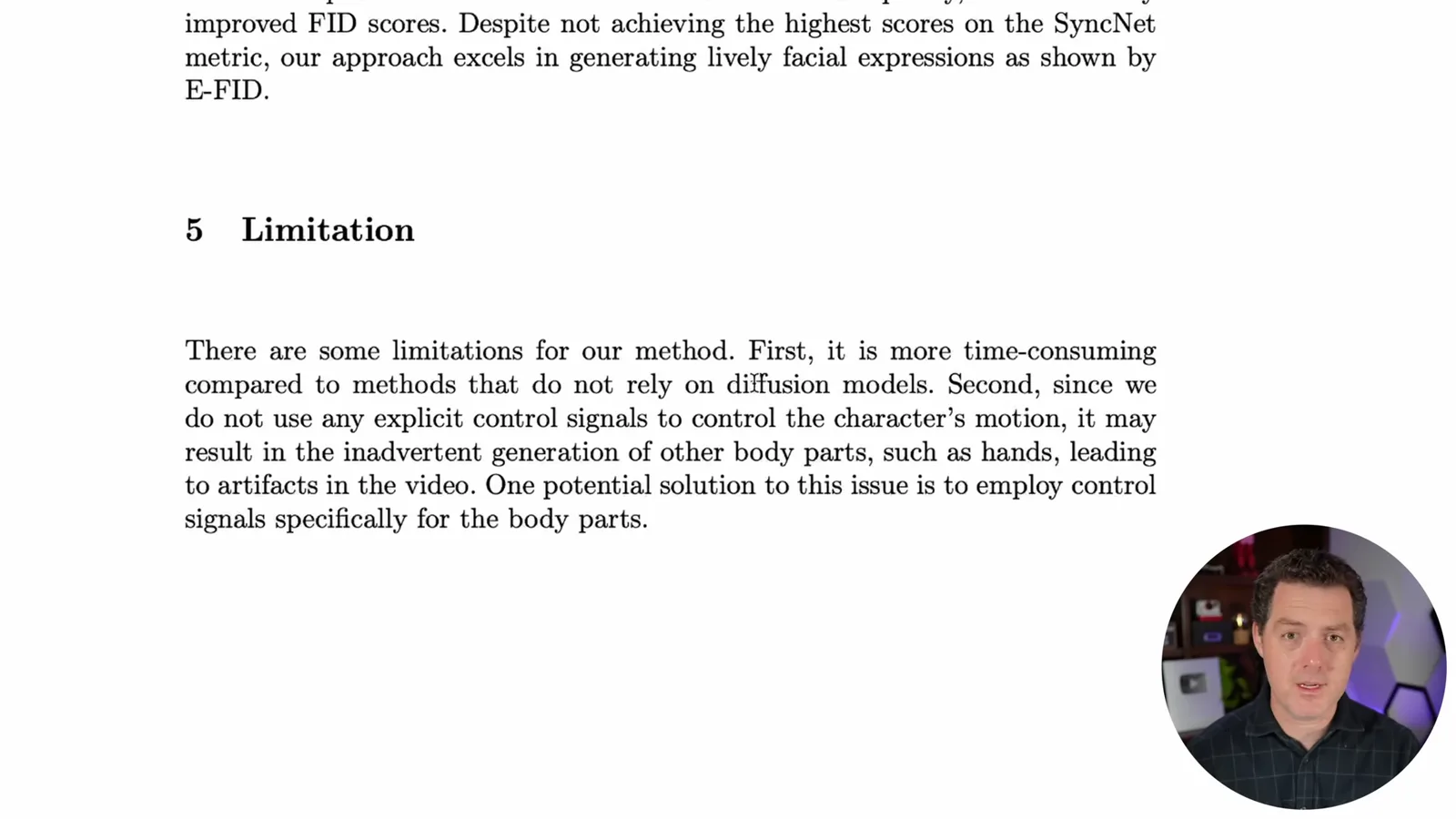
The limitations matter: the diffusion method takes more time than approaches that do not use diffusion, and the lack of explicit body-motion control can lead to unwanted hands or other artifacts. The authors suggest body-part control signals as one possible remedy. I play further generated examples to illustrate the result.
Programming and natural-language tools
Berman plays a Jensen Huang clip about domain expertise and natural-language computing. He argues that basic coding still teaches useful systematic thinking.
I then turn to a clip of NVIDIA CEO Jensen Huang discussing programming. Huang argues that computing should become usable through human language so that people with expertise in fields such as biology, education, manufacturing and farming can apply it. He emphasizes upskilling and domain problem-solving.
I still intend to teach my children to code because it encourages systematic thinking and problem-solving. My prediction is that programming as we know it will change as natural-language interfaces improve, not that every technical problem is already solved. Learning how to formulate and solve problems remains valuable.
I connect that prediction to research projects in video generation, games, avatars and robotics: tasks once difficult are becoming easier to approach with AI tools. EMO is one example of a system that turns a reference image and audio into generated motion. I still encourage beginners to learn basic coding for the discipline of thinking systematically.
Sur la même chaîne
 34:21EN
 Matthew Berman· 27 oct. 2026Matthew Berman Examines Anthropic’s IPO Filing, AI Growth and GovernanceMatthew Berman, Sam Altman · Forward FutureThe presenter reviews the S-1’s financial metrics, compute strategy and voting structure while questioning the tension between rapid AI development and safety.
 0:26ENMatthew Berman· 25 oct. 2026Sam Altman on Human Values and Problem-Solving in an AI WorldSam Altman · OpenAIIn a short interview excerpt, Altman considers the enjoyment of solving hard problems and the human role in interpreting results.
 0:36ENMatthew Berman· 25 oct. 2026Kimi K3.1 and a Rubik’s Cube Solver DemonstrationMatthew Berman · Forward FutureMatthew Berman shows a scrambled virtual cube being solved and gives the Kimi K3.1 test a favorable assessment.
 0:21ENMatthew Berman· 24 oct. 2026An AI-Generated Kimi Benchmark Chart Used Invented ScoresMatthew Berman · Forward FutureMatthew Berman asks for a graph of Kimi K3.1 Pro benchmarks, then discovers that the displayed figures are illustrative placeholders.
 25:50ENMatthew Berman· 24 oct. 2026Kimi K3.1 Pro Tested: Strong 3D Demos, Uneven Results and Competitive PricingMatthew Berman · Forward FutureMatthew Berman tests the open-weight model on coding, 3D rendering and visual explanations, then compares benchmark results and prices.
 32:20ENMatthew Berman· 23 oct. 2026Who Is Local AI For? The Costs, Trade-offs and a Hybrid FutureMatthew Berman · Forward FutureMatthew Berman weighs data control and independence against hardware cost, setup complexity and inference speed.