En 30 secondes
Matthew Berman shows a short test of a Rubik’s Cube simulator generated in response to a GPT-5 coding prompt. He demonstrates scrambling and solving on 3×3, 5×5, and 20×20 cubes, noting slower rendering on the largest. The visible results appear solved in the presented examples; the clip does not establish how the solver works or whether it handles arbitrary cube states.
- 1The coding promptBerman asks GPT-5 for a Three.js simulator supporting interactive cubes up to 20×20×20.
- 2Scramble and solveThe 3×3 simulation scrambles, then its visible faces appear solved after he activates the solve control.
- 3Larger cubesHe tries 5×5 and 20×20 versions; the larger simulation runs at a lower frame rate.
À retenir
- The prompt requests an interactive HTML and JavaScript cube simulator using Three.js, with sizes up to 20×20×20.
- The displayed 3×3 and 5×5 examples appear to return to a solved state after Berman uses the solve control.
- The 20×20 demonstration shows a drop in frame rate and ends with the visible faces in a uniform state.
- The brief demonstration does not independently verify every cube face, all possible inputs, or the solving algorithm.
Lire le texte remanié, chapitre par chapitre
Prompt and 3×3 test
Berman asks GPT-5 for an interactive Three.js cube simulator. He scrambles the default cube and observes the solve animation.
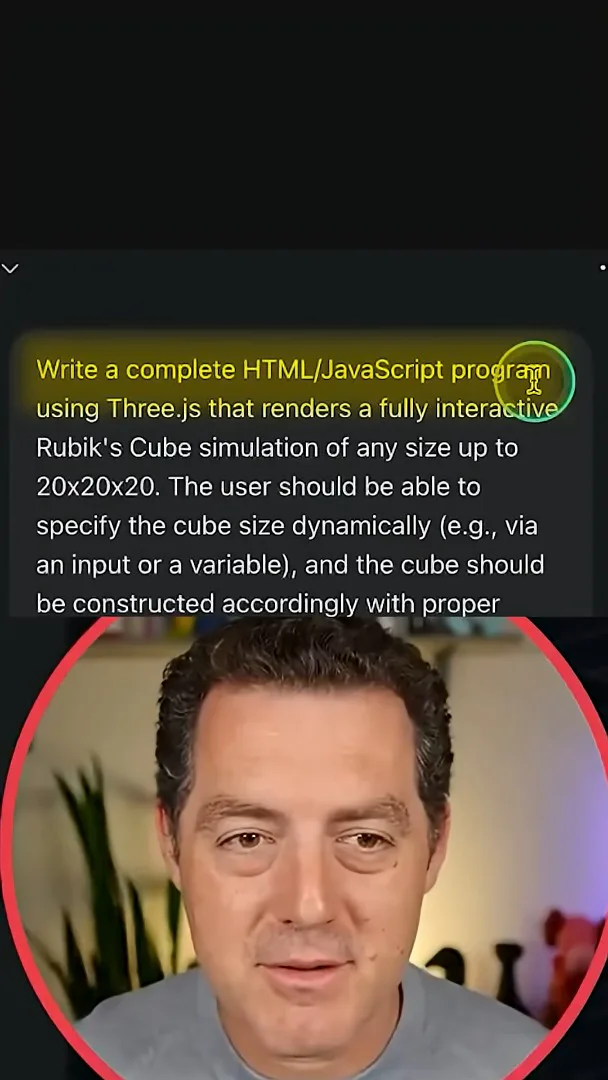
I have been trying GPT-5 and want to see what it does with a Rubik’s Cube challenge. I ask it to write a complete HTML and JavaScript program using Three.js for an interactive cube simulator, with sizes up to 20×20×20. The demonstration tests the generated program rather than a physical cube.
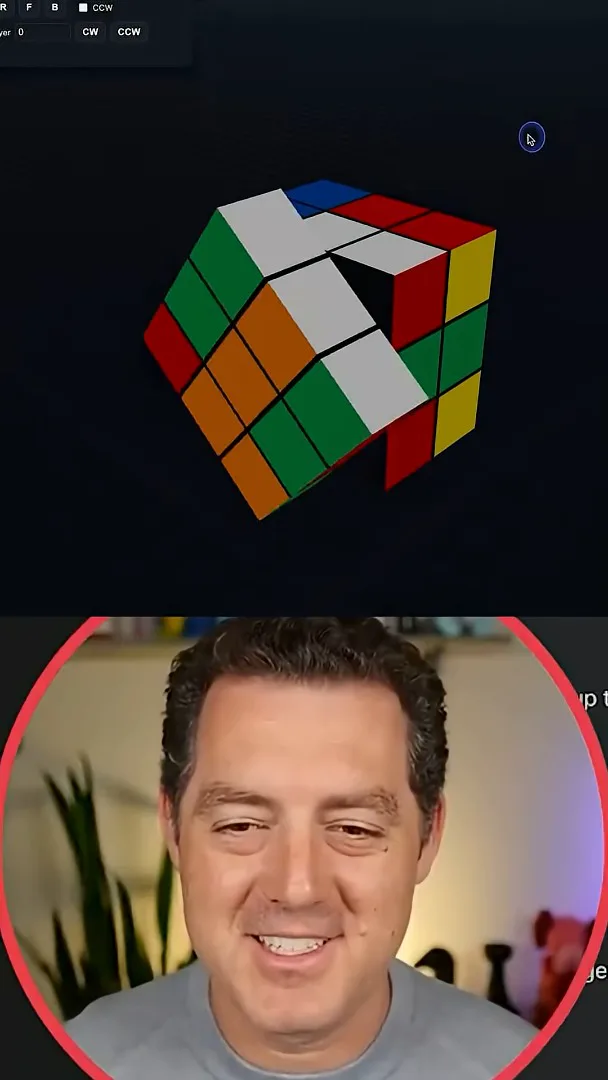
The initial 3×3 cube looks good, though I have seen other models render a cube that falls apart during rotation. Here the scramble animation moves the layers, and when I press Solve, the colors begin to group together. The visible faces return to uniform colors in the shown example; the short clip does not inspect the algorithm or every face.
Testing larger cubes
He tries the same controls on a 5×5 cube and then a 20×20 cube. The largest cube slows down, but its visible faces return to uniform colors.
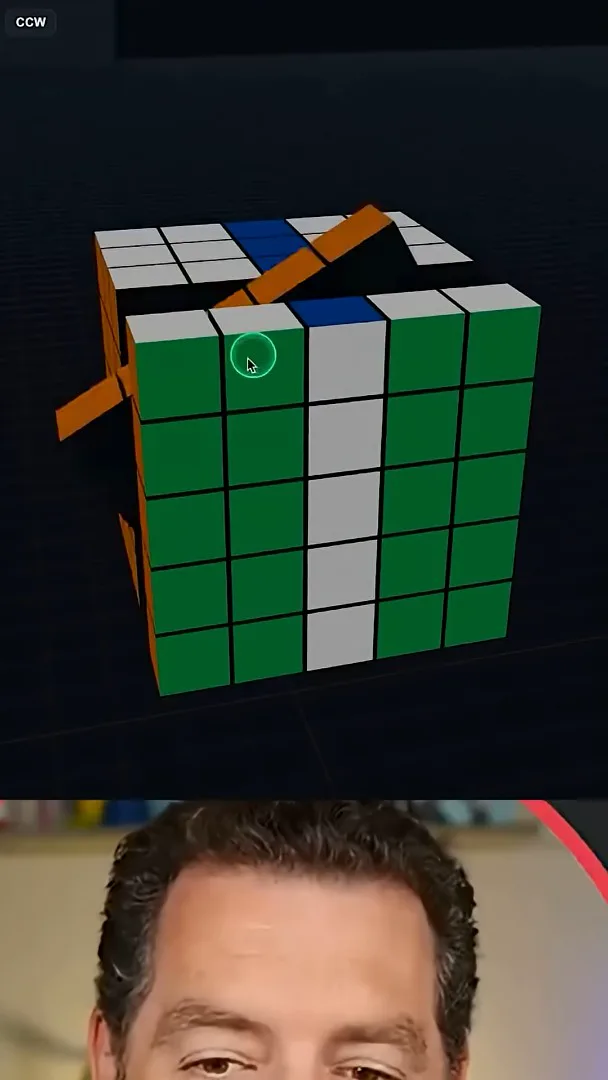
I switch to a 5×5 cube and run the solve action. Its layers move and the colors come together, and I describe the result as solved. This shows the behavior of the presented example, but it does not establish that every possible cube state can be solved.
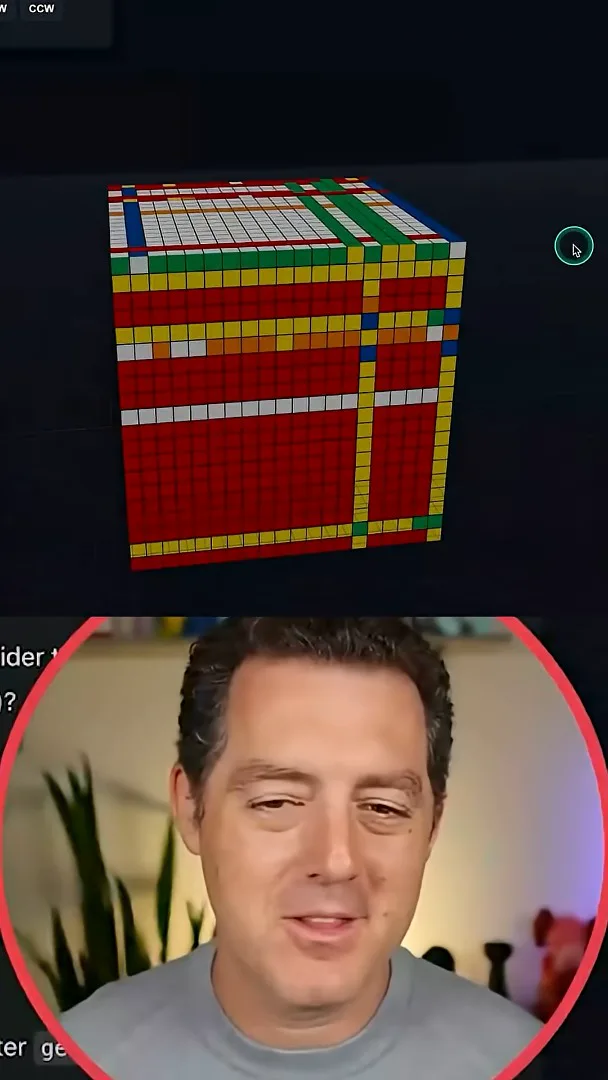
Finally, I build and scramble a 20×20 cube. The frame rate visibly drops, but the solve animation continues and the visible faces end up in uniform colors. It is an impressive result to watch, though the video does not show how the solver derives its moves or independently verify all sides.
Sur la même chaîne
 34:21EN
 Matthew Berman· 27 oct. 2026Matthew Berman Examines Anthropic’s IPO Filing, AI Growth and GovernanceMatthew Berman, Sam Altman · Forward FutureThe presenter reviews the S-1’s financial metrics, compute strategy and voting structure while questioning the tension between rapid AI development and safety.
 25:50ENMatthew Berman· 24 oct. 2026Kimi K3.1 Pro Tested: Strong 3D Demos, Uneven Results and Competitive PricingMatthew Berman · Forward FutureMatthew Berman tests the open-weight model on coding, 3D rendering and visual explanations, then compares benchmark results and prices.
 32:20ENMatthew Berman· 23 oct. 2026Who Is Local AI For? The Costs, Trade-offs and a Hybrid FutureMatthew Berman · Forward FutureMatthew Berman weighs data control and independence against hardware cost, setup complexity and inference speed.
 1:03:37ENMatthew Berman· 23 oct. 2026Matthew Berman’s Team Tests Kimi K3.1 on Animation, Games, and ChartsMatthew Berman, Alex, Brian · Forward FutureA live team AMA turns into an informal test of Kimi K3.1, from personal-agent workflows to motion graphics, a browser game, and a benchmark chart.
 0:53ENMatthew Berman· 22 oct. 2026Sam Altman on AI and the Discovery of New KnowledgeSam Altman · OpenAIAltman expects progress in mathematical discovery to extend to biology, materials and energy.
 0:22ENMatthew Berman· 21 oct. 2026A Robot Bodyguard Video Shows Dramatic Rescue ScenariosMatthew Berman · Forward FutureMatthew Berman reacts to a short robot demonstration depicting fighting and vehicle-rescue scenarios.