En 30 secondes
In this August 21, 2025 video, Matthew Berman reviews early examples of the image model known as Nano Banana and tests it in LM Arena. He praises its ability to preserve parts of an image while changing others, while noting imperfect text, product shapes and likenesses. The video includes a Chatbase sponsorship.
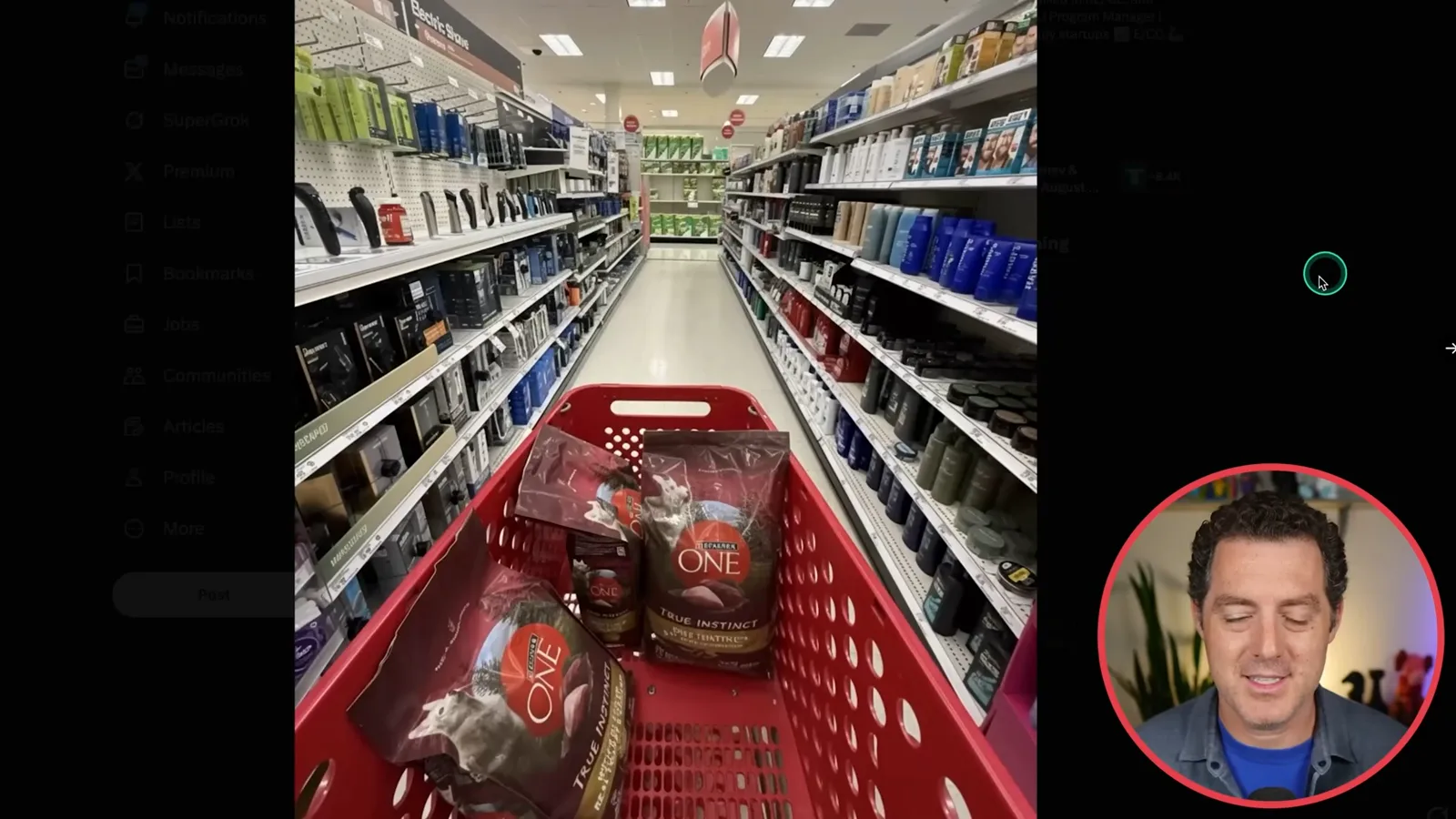
- 1Selective editsA shopping-cart example adds a dog-food bag while retaining much of the surrounding scene.
- 2Restoration and colorizationBerman shows repaired photographs; generated colors and missing details may be inferred rather than historically accurate.
- 3Combining referencesA composite puts people, a dog and a car together from separate images.
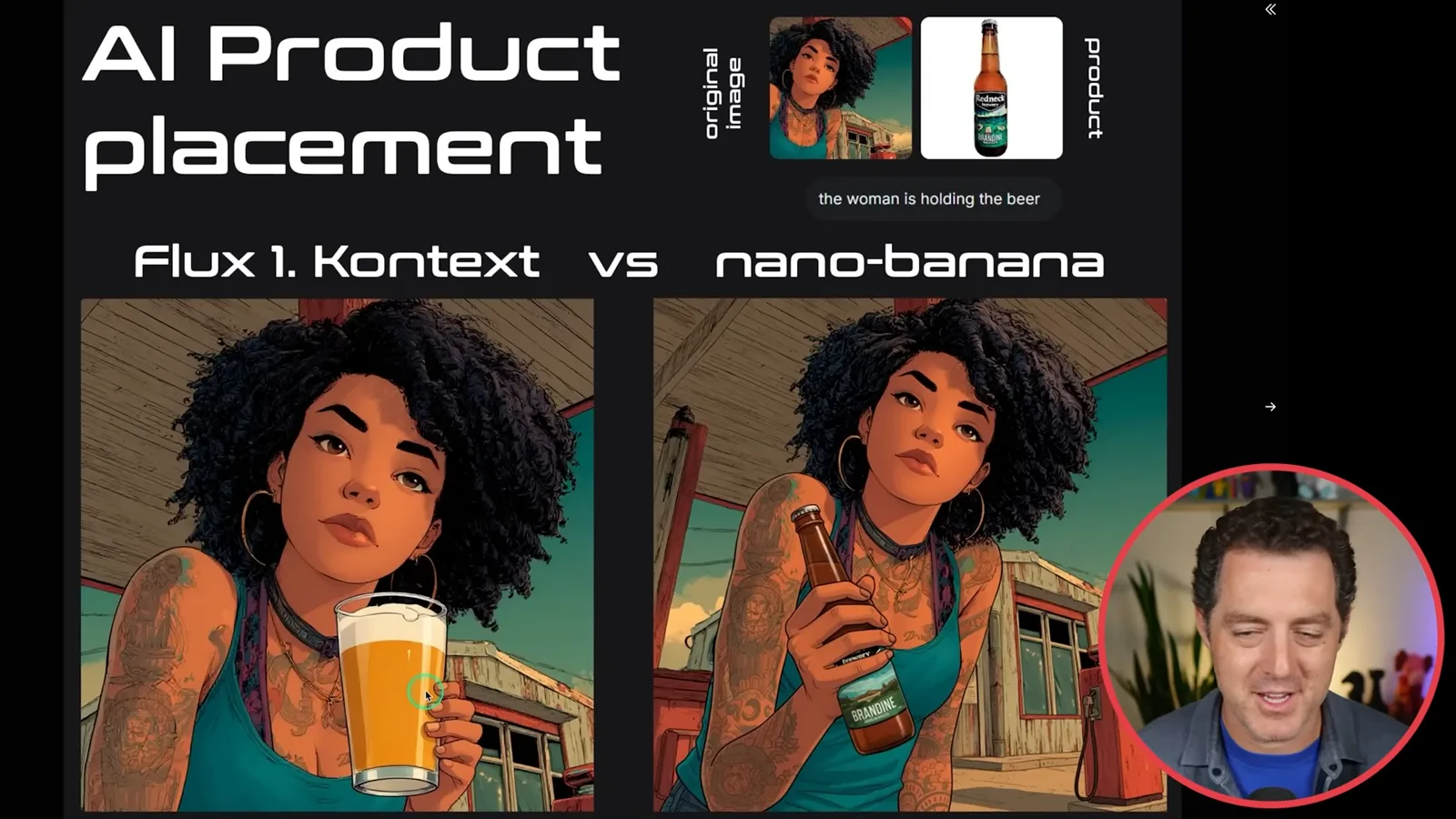
- 4Product placement comparisonA selected example contrasts two models on inserting a specific bottle into an image.
- 5A hands-on comparisonBerman edits his own portrait and observes that preferences differ depending on the request.
À retenir
- Selective editing can preserve much of a scene while adding or replacing an object, but details may still change.
- Restored photographs and imagined viewpoints can contain plausible invented colors or details.
- Image composition and product placement examples show potential as well as errors in text, hands and shapes.
- The comparisons are small, selected demonstrations rather than a rigorous ranking of models.
- The LM Arena access method and attribution discussion reflect what was known when the video was recorded.
Lire le texte remanié, chapitre par chapitre
Early image-editing examples
Berman reviews additions, composites and a mesh-like overlay. He then shows photo restoration and colorization.
In August 2025, a model known as Nano Banana appeared in LM Arena’s image battles. I look at examples shared by others and try a few edits myself, focusing on how well it changes one part of an image while preserving the rest.
One example asks the model to add a third bag of dog food to a shopping cart. The result keeps much of the scene and packaging consistent, although I notice some imperfections in the dog illustration.
A generated selfie combines a young Michael Jackson and Billie Eilish. I find the image convincing, which also illustrates that a realistic composite is not evidence that the depicted event occurred.
Another example overlays a 3D-looking mesh on a photograph of Tom Holland. The mesh appears to follow the clothing and pose, but the picture alone does not prove that a correct underlying 3D model was recovered.
Several examples repair and colorize damaged or faded photographs. The results can be visually appealing, but inferred colors and reconstructed details should not be assumed to record the original scene accurately.
The model’s appearance and sponsor
He describes finding Nano Banana in LM Arena and speculates about its origin. The video includes a Chatbase sponsorship.
At the time, people encountered Nano Banana through random matchups in LM Arena. I interpret a banana emoji posted by Google’s Logan Kilpatrick as a clue that Google may be behind it; this was an inference at the time of the video.
Composition and limitations
Examples cover reference styles, generated viewpoints, combining subjects and editing books. Some outputs have incorrect details.
After a sponsored segment for Chatbase, I show a four-panel sports montage that follows a reference style. Other examples colorize an image, imagine the reverse view of a scene and create an advertisement; unseen parts of a scene are generated guesses.
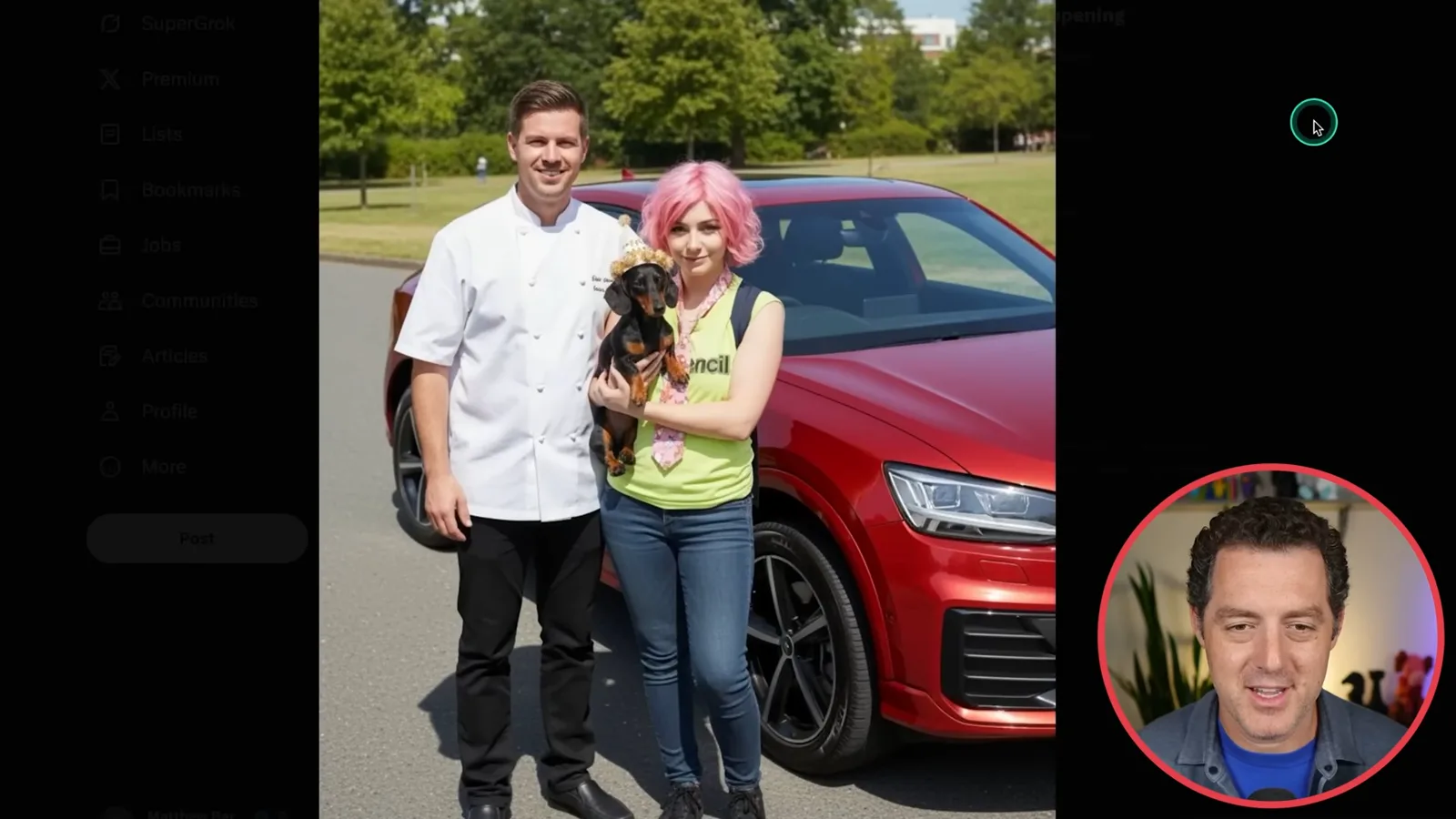
One composite combines separate images of a man, a woman, a dog and a car. Details such as the chef’s clothing carry through, illustrating multi-image composition, although not every property of the source car is easy to verify.
An example puts Tim Cook with a rumored phone, but I find the handset awkwardly shaped and oversized. Another replaces Batman with Superman while preserving the cat; the change is not perfect, but the unchanged element remains consistent.
A hat is added to a portrait, and another instruction turns a stack of books upright between bookends. The book example exposes a limitation: some names and lettering become unclear or altered after the edit.
Comparisons and hands-on tests
Berman compares selected outputs and describes how he accessed battle mode. His own edits show both strengths and imperfect likenesses.
A comparison with GPT Image 1 gives two different visual styles for the same prompt. I prefer the more realistic-looking result in this example, but one selected output is not a general benchmark.
A product-placement example compares FLUX.1 Kontext with Nano Banana on inserting a particular beer bottle into a character’s hand. In the displayed outputs, Nano Banana retains the bottle more closely, while the FLUX example produces a glass and a problematic hand.
Other examples combine public figures in a generated beach scene and place a chair beside a lamp. In the latter, I like the light and patterned shadows; these are selected demonstrations rather than proof of consistent performance on every prompt.
At the time of recording, the way to try it was to choose image generation and battle mode in LM Arena, then wait for the service to select Nano Banana randomly. Availability and access methods described here reflect August 2025.
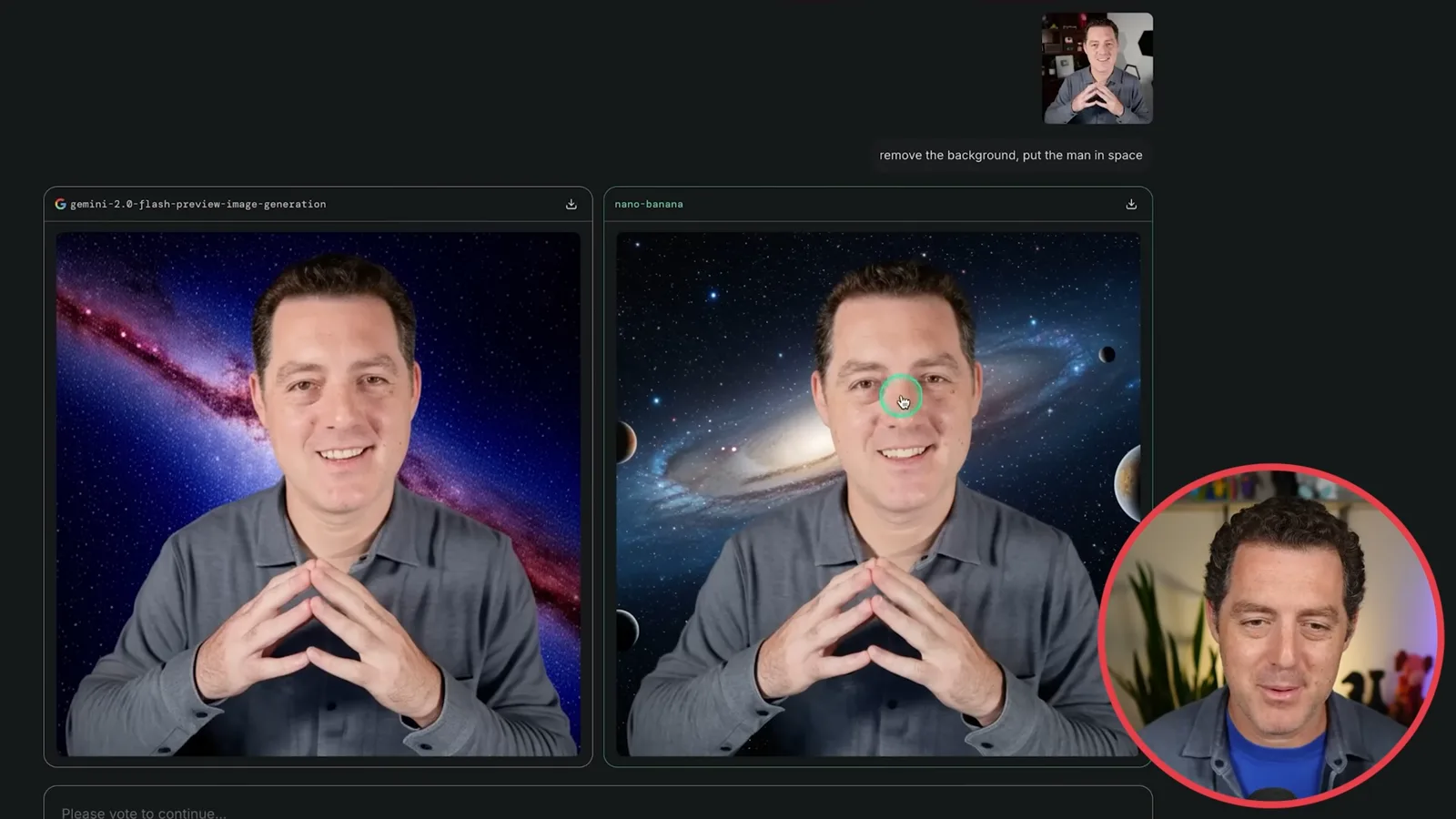
For my own test, I ask to remove the background from a portrait and place me in space. Compared with the Gemini 2.0 Flash image shown beside it, I prefer the Nano Banana result because it preserves my face more closely.
I then add a space helmet and ask for slightly tinted glass, comparing Nano Banana with Qwen Image Edit. For the tint, I actually prefer the Qwen example, showing that the result depends on the particular edit.
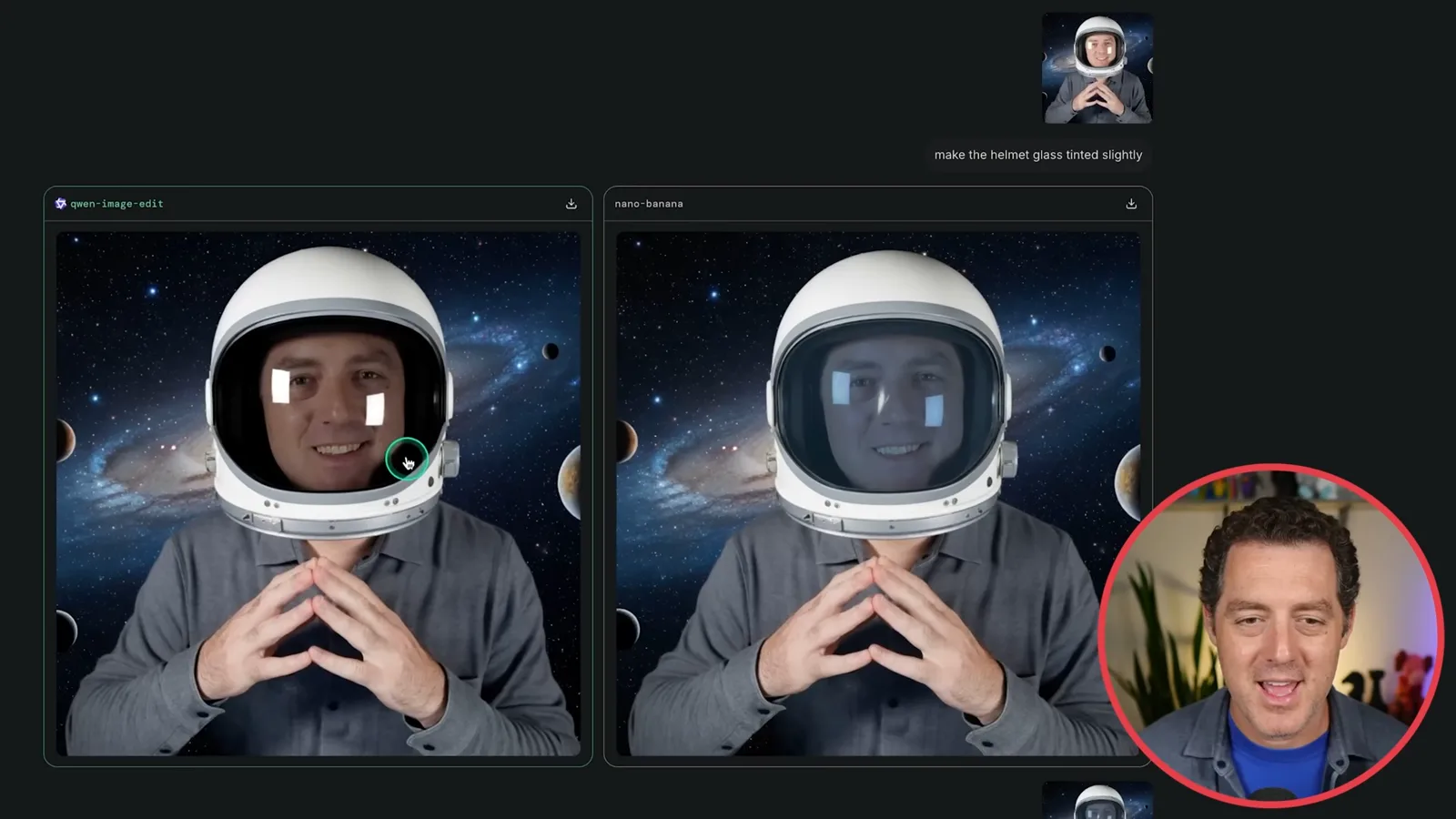
Finally I ask for a giant banana chasing me. The result is funny but does not look much like me, despite carrying some features forward. These early examples make me eager to test the model further.
Sur la même chaîne
 25:50EN
 32:20EN
 0:22EN
 45:08EN
 0:32EN
 12:14EN