En 30 secondes
Matthew Berman examines Kwebbelkop's 2023 experiment using an AI-generated avatar and production workflow on his YouTube channel. He discusses burnout, the proposed business model, and why labeling generated content matters, while acknowledging that the audience's response and the experiment's future were uncertain at the time.
- 1Burnout and continuityBerman connects the experiment to the pressure of constant uploads and the difficulty of sustaining a channel centered on one person.
- 2An AI production workflowHe says Kwebbelkop relaunched his main channel with an avatar and AI-assisted ideas, scripts, voice, and editing; the precise tools are not confirmed in the video.
- 3DisclosureBerman favors labeling AI-generated content, while noting the practical difficulty of deciding how much AI involvement triggers a label.
À retenir
- Kwebbelkop's experiment aimed to continue a creator-led channel using AI-generated production and an avatar.
- Automation might reduce some production demands, but audience interest and quality remain open questions.
- Berman supports disclosure while asking where to draw the line between ordinary digital editing and generated content.
- Platform monetization and disclosure policies change; eligibility is not guaranteed merely because content uses AI.
Lire le texte remanié, chapitre par chapitre
A creator experiments with AI
Berman introduces Kwebbelkop and the history of his channel and virtual creator Blue.
In August 2023, Matthew Berman looks at a YouTube channel experimenting with AI-generated production. He asks whether viewers can tell when content is generated, whether that distinction matters to them, and what these tools could mean for creators and entertainment.
The creator is Jordi van den Bussche, known as Kwebbelkop, whose channel had amassed more than 15 million subscribers and thousands of videos at the time. Berman describes years of gaming, challenge, and reaction videos, as well as the creator's experience with burnout from sustained production.
Kwebbelkop had previously launched Blue, a virtual YouTuber using AI in part. Berman says the main channel was then relaunched with an AI avatar and a workflow covering ideas, scripts, voice, and editing. The description notes that the explanation of the precise tools was accidentally cut; its list of possible tools is Berman's speculation, not a verified production breakdown.
Automation, burnout, and the audience
He considers motivations for AI production and whether viewers will enjoy the result.
Berman discusses motivations including income, avoiding burnout, and keeping a channel alive when its creator steps away. He cites Kwebbelkop's argument that AI influencers could improve work-life balance. A highly personal channel can be hard to sustain when its creator cannot or does not want to maintain the same pace.
At the time, Berman says the initial videos had not yet attracted extraordinary view counts. He speculates that producing more videos could increase total views, but stresses the unresolved question: whether audiences find the content compelling and enjoyable. Neither production volume nor an AI label guarantees engagement.
Selling tools and labeling content
Berman describes a proposed software product and discusses disclosure and the blend of human and AI creativity.
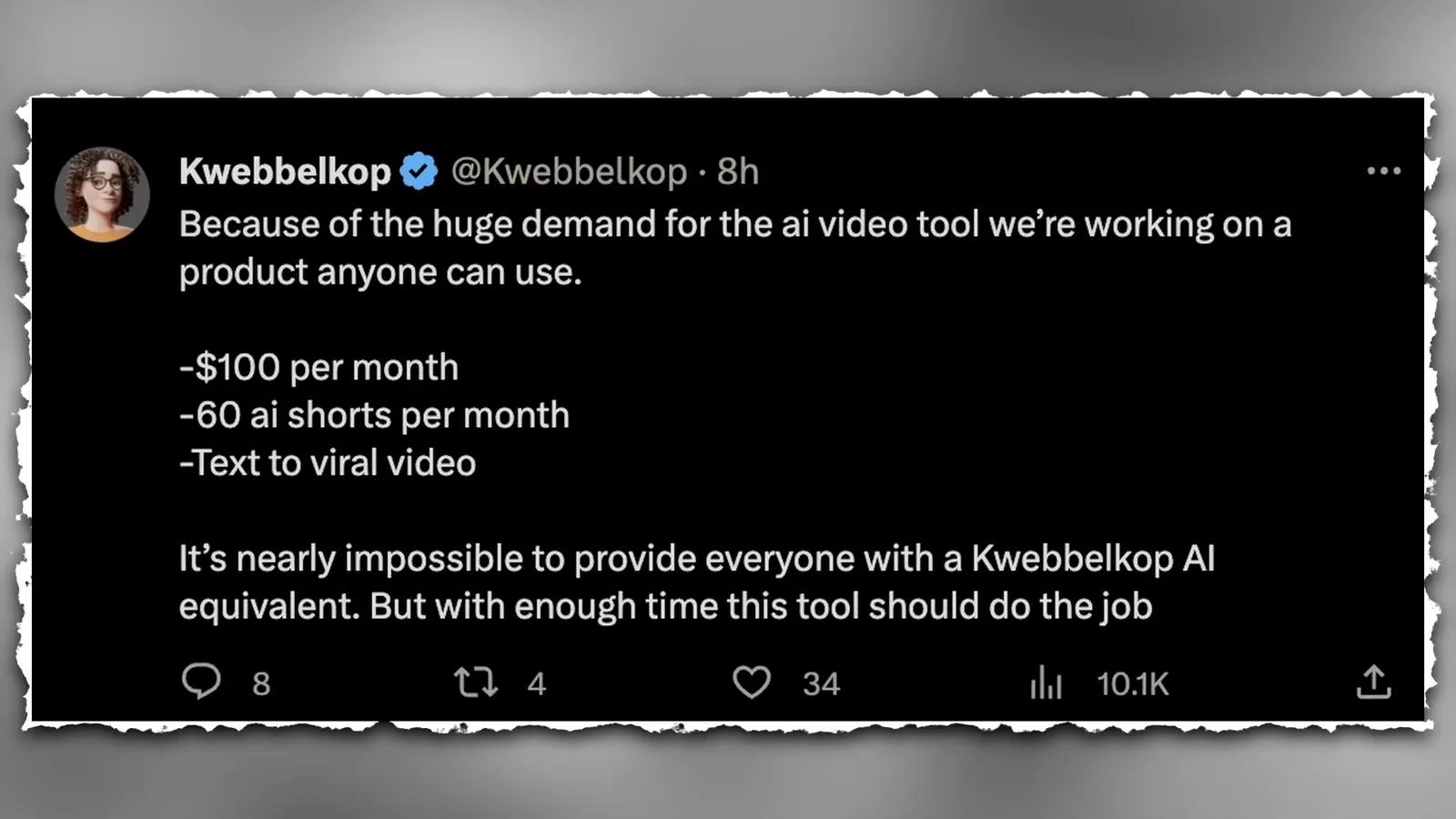
He says Kwebbelkop was also working on software to offer AI video production to others. A displayed post describes a proposed subscription, not proof that the product shipped with those features or price. Berman treats the commercial plan as a work in progress.
Berman supports labeling AI-generated content and notes a poll in which many respondents favored disclosure. He asks where to draw the line, since ordinary photography and video editing can also use AI. His 2023 description of YouTube monetization rules should not be treated as a current guarantee: platform eligibility and disclosure requirements depend on the applicable policies and the content.
He also points to musician Lupe Fiasco experimenting with AI as a writing partner. Berman closes with a question for viewers: as human and generated material increasingly mix, how should creators communicate that process and what kinds of work will audiences value?
Sur la même chaîne
 25:50EN
 32:20EN
 45:08EN
 0:32EN
 12:14EN
 10:36EN