En 30 segundos
A company’s culture is the behavior it celebrates minus the behavior it tolerates, says restaurateur Danny Meyer. He learned to replace broad values with specific expectations, and to address bad behavior as well as recognize good work. His restaurants taught him that reliable service alone does not explain loyalty: hospitality means making people feel the business is on their side. His five-year attempt to replace tipping also showed how a conviction can run into laws and labor-market realities; after restoring tips, he introduced a nightly revenue share for cooks.
- 1The restaurants people loved most were not the highest-scoring on serviceUnion Square Cafe and Gramercy Tavern ranked first and second among New Yorkers’ favorites while scoring lower for food, decor and service. Meyer concluded that hospitality—making guests feel the business was on their side—was missing from the survey.
- 2A community develops through dialogue, like a baseball glove breaking inA business starts with its own point of view, Meyer says, but its character should develop through exchanges with the people who choose to use it.
- 3Meyer chose an investment by looking at how a business treated employeesOn a 2009 television appearance he picked Chipotle without tasting its food because he believed its employee-first approach created a virtuous cycle. He says the hospitality index he later assembled outperformed the S&P by 350%, though he is unsure which original companies still fit today.
- 4When tipping returned, a revenue share gave cooks a stake in busy nightsMeyer says his five-year no-tipping experiment ended when restaurants competed to rehire after pandemic shutdowns. He brought tipping back and introduced a nightly revenue share for cooks.
- 5Culture is celebrated behavior minus the bad behavior leaders tolerateMeyer moved from broad values to company-specific expected behaviors. He says he also had to learn to hold people accountable, rather than only catching them doing things right.
Conclusiones
- Define expected behaviors in language tied to your company’s own history, not just a generic list of values.
- Celebrate colleagues who act on those expectations, and address the unwanted behavior you tolerate.
- Distinguish delivering the expected service from making someone feel understood and supported.
- Start with a point of view, then let dialogue with customers shape the community around it.
- When a change runs into outside constraints, Meyer suggests keeping the goal and finding another way to make progress.
Lee el texto editado por capítulos
Hospitality begins with making people feel they belong
Meyer defines hospitality as a responsibility that extends beyond restaurants. He recalls an unrealized plan to train asylum seekers after a hotel housing his restaurants became a shelter.
Hospitality, Danny Meyer says, is not confined to restaurants and hotels. It is the opportunity each of us has to make other people feel welcome and that they belong. A business begins with a point of view, but its community takes shape through dialogue with the people who choose to use it.
Baratunde Thurston introduces Meyer, who opened Union Square Cafe in New York in 1985 and later started what became Shake Shack. Thurston describes his work as building a culture around how people feel, an idea Meyer wrote about in Setting the Table and has continued to explore as his businesses grew.
A preceding presentation on immigration prompts Meyer to recall a hotel where his company operated restaurants. Roughly three or four years earlier, it was converted into housing for asylum seekers, primarily from Venezuela. The change meant the restaurants could no longer operate there.
Meyer says he asked what positive thing could come from the loss. He proposed making the site a job-training center for the asylum seekers, saying the industry needed workers. The governor and mayor agreed to accelerate training opportunities, he says, but the national government declined to accelerate the process; people who wanted to work were left on the streets.
Why good service did not explain diners’ favorite restaurants
Zagat’s rankings led Meyer to separate reliable delivery from hospitality. The latter, he says, makes the experience personal and signals that a business is on the guest’s side.
Thurston asks how service differs from hospitality. Meyer says service—the technical delivery of what a customer expects—is essential and difficult. Hospitality is a different question: was that service customized so the person felt the business was on their side?
He arrived at the distinction by studying the annual Zagat restaurant survey. It scored food, decor and service and separately asked New Yorkers to name their favorite restaurants. His restaurants’ scores improved, but their rankings as favorites improved much faster.
The year Union Square Cafe and Gramercy Tavern were first and second among favorites, Meyer says, they ranked tenth and twelfth for food, twelfth and fifteenth for service, and roughly thirtieth and sixty-fifth for decor. He called Zagat to suggest adding hospitality as a fourth category. Zagat said it was already covered; Meyer disagreed.
For Meyer, the challenge has been how to scale a feeling, not just a system for making and delivering a product. Thurston connects that question to belonging: genuine community, he suggests, happens when the people a host brings together connect with one another, rather than remaining focused only on the host.
A community is shaped by the people who use it
Thurston asks how a venue creates connections among its visitors. Meyer compares the evolving relationship between a business and its customers to breaking in a baseball glove by playing catch.
A restaurant creates a place where people can gather, Meyer says, but people activate that community. He compares a new restaurant to a new baseball glove: even an expensive glove needs to be broken in by playing catch.
The glove eventually takes shape through the dialogue between the hand wearing it and the person throwing the ball. Likewise, Meyer says, a business should begin with a clear idea of who it wants to be, then become a product of exchanges with the people who choose to use it. That relationship becomes its community.
Care for employees first, then the wider circle
Meyer describes a cycle connecting employees, customers, suppliers, the community and investors. He recalls choosing Chipotle on television and creating a hospitality-oriented stock index.
Thurston describes Meyer’s “enlightened hospitality” as circles of care: staff first, followed by customers, suppliers, the surrounding community and investors. He asks whether Amazon, Google and Apple, which appeared in Meyer’s 2009 hospitality index, would still qualify in 2026. Meyer is unsure and says he plans to revisit the list.
The index began when Meyer appeared on Jim Cramer’s Mad Money in 2009. A producer brought out eight plates representing public restaurant companies, and Cramer asked which business he would invest in based on the food. Meyer had not prepared for the question and did not want to disparage the restaurants.
Without tasting the food, he pointed to the burrito and chose Chipotle. He believed it practiced a cycle in which taking care of employees helps them care for customers, generating revenue that can support the community and better ingredients. Chipotle’s stock later rose, though Meyer says he deserves no credit for that.
Cramer asked him to create a hospitality index. Meyer says it outperformed the S&P by 350%, although he did not personally invest in those companies. He still believes a business can earn stakeholders’ support by starting the chain and supporting them first; he compares it to giving someone a hug to receive one back.
AI and the demand for human connection
Meyer hopes AI can help businesses know the people they serve and personalize experiences. He also sees an opportunity for restaurants and workplaces to offer in-person connection.
Thurston asks how AI could help keep that cycle of care going when the technology feels difficult to control. Meyer says no one knows where AI will ultimately lead and expects both dangerous and beneficial uses. He chooses to consider what might go right.
One possibility, Meyer says, is that AI could help him learn more about the people he serves and the community he is building, making it easier to customize experiences. At the same time, he thinks restaurants and workplaces can offer something people need when they feel lonely: direct human connection.
He describes employees looking guests in the eye, smiling with them and helping create moments at a table. Phones can make people feel connected without providing that kind of contact, he says. He is glad to see more people returning to work in person, where they can meet real people.
What happened when Meyer tried to end tipping
His hospitality-included experiment sought to reduce disparities between cooks and tipped staff. After restoring tipping during pandemic reopening, his restaurants introduced a revenue share for cooks.
Thurston asks what happens when an organization’s desired culture runs up against laws, industry norms and political realities. Meyer’s attempt to change tip-based pay faced opposition, a lawsuit that restricted his ability to discuss it, and lobbying in Albany. How should a leader respond when they cannot impose their vision on everyone else?
Meyer says a leader needs a moral compass. He believes tipping created a large pay gap between cooks and the people who serve and host guests. In his account, restrictions on sharing tips with kitchen staff mean that rising menu prices benefit tipped workers while cooks’ wages can remain stagnant.
His company tried a model called Hospitality Included for five years. Meyer says it succeeded in pursuing a principle he believed in and opening a conversation about pay and the law. But when restaurants reopened after pandemic shutdowns, everyone was hiring at once, and he found he could not bring staff back under the model.
The restaurants restored tipping. Asking how to make that system work better, Meyer introduced a nightly revenue share for cooks so they too can earn more on busy nights. He says he would prefer laws that allow tips to be shared, but considers the new arrangement an improvement.
Turn values into behaviors and hold people to them
Meyer describes how he recognizes employees who exemplify company values. He argues that leaders must both celebrate desired behaviors and stop tolerating unwanted ones.
Thurston describes his own theatrical way of recognizing good service: asking sternly for a manager, then insisting the employee did a great job. It reminds him of Meyer’s “caught doing right” practice, in which staff document colleagues’ good actions, connect them to company values and put them on a visible board.
Thurston recalls a Shake Shack employee bringing food outside to a customer whose needed ramp was not working. He says Meyer called people along the restaurant’s chain of command to thank them. He asks what leaders, investors, parents and others can practice to bring more care into their own lives.
Meyer says he once tried to hold employees accountable to “family values,” but eventually recognized that calling a business a family was disingenuous. Values such as excellence, hospitality, entrepreneurial spirit and integrity mattered, yet they were broad enough to belong to almost any organization.
He moved from generic values to expected behaviors, using words connected to his own company’s history. In his view, organizations thrive by behaving better than competitors. He defines culture as the sum of expected behaviors that are celebrated, minus the unwanted behaviors that leaders tolerate.
Early in his career, Meyer says, he was better at catching people doing things right than holding them accountable for unwanted behavior. He compares that imbalance to a hockey team that scores more goals than its opponents but gives up even more. Leaders have to do both.
Clear expectations also give a growing culture a shared shorthand. Meyer compares it to a family nickname whose meaning everyone understands: language helps people know what is expected and feel that they belong. That longing to belong, he says, is central to every culture.
Más de este canal
 21:54EN
 Masters of Scale· 19 nov 2026Pódcast · 2 vocesJosh Tyrangiel: Useful AI starts with a problem, not a rivalryInvitado: Josh Tyrangiel · Presenta: Jeff BermanA journalist points to recycling, tax systems and sepsis care as places where small teams have put AI to work.
 22:24ENMasters of Scale· 18 nov 2026Pódcast · 2 vocesAmjad Masad: Replit's AI turnaround rests on enterprise trustInvitado: Amjad Masad · Presenta: Bob SafianReplit's CEO says security and reliability helped turn a stalled coding startup toward business customers as AI agents changed its own workplace.
 12:43ENMasters of Scale· 16 nov 2026PódcastBill Gross Gives Away a Million AI-Generated Startup IdeasGross combined his 31-part idea-finding method with millions of documents, and now wants to help founders turn ideas into businesses.
 23:56ENMasters of Scale· 12 nov 2026Pódcast · 2 vocesWalmart’s CEO wants faster change without losing the human connectionInvitado: John Furner · Presenta: Jeff BermanJohn Furner discusses agent shopping profiles, frontline tools and the leadership work needed to move a large retailer.
 21:35ENMasters of Scale· 11 nov 2026Pódcast · 2 vocesEric Ries: Why successful companies lose the purpose that made them workInvitado: Eric Ries · Presenta: Krista TippettRies argues that pressure from capital can erode a company’s mission, and that trust deserves a place in business decisions.
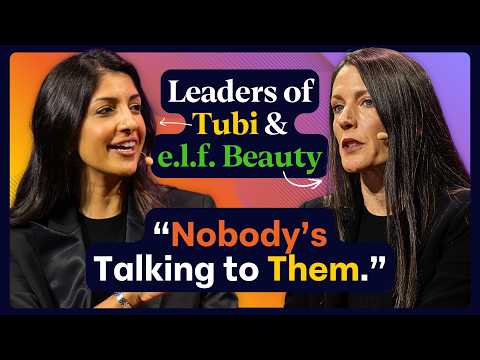 23:03ENMasters of Scale· 10 nov 2026Pódcast · 3 vocesTubi and e.l.f. grew by serving audiences incumbents overlookedInvitado: Anjali Sud, Kory Marchisotto · Presenta: Bob SafianAnjali Sud and Kory Marchisotto explain free streaming, affordable beauty and direct feedback from fans.