En 30 segundos
When her parents faced cancer, Ashley Alexander found that the hardest work extended beyond treatment: gathering scattered records, weighing options and making the most of brief appointments. The OpenAI health product leader now uses ChatGPT to explain unfamiliar terms and prepare questions for her father’s doctors. Peter Yang describes a shared project for his mother’s records and a one-page care summary. Both see AI as support for caregivers, not a substitute for clinical judgment, and stress that consent and human support matter.
- 1A caregiver must join information that the system leaves scatteredAlexander accompanied her father to appointments and helped weigh treatment options, but specialists did not always have the full picture. The experience led her toward health product work.
- 2Use the time between visits to prepare better questionsYang organized his mother’s records in a shared project. Alexander researches background before appointments so she can ask her father’s doctor about decisions specific to his case.
- 3Cancer care is more than the search for a cureAlexander describes the uncertainty before diagnosis and the difficult period of choosing treatment afterward. She argues that support throughout that process matters alongside research.
- 4Connected health records come with specific privacy choicesAlexander says connected medical records receive extra protection and are not used for model training or ad targeting. She describes these as product decisions by OpenAI.
- 5A one-page care summary can travel between providersYang keeps contacts and his mother’s treatment details together. Alexander describes another patient who shares current medications, results and notes with her care team.
- 6Separate a loved one’s context and get their consentAlexander uses project-only memory for her father’s care, obtains his consent, and asks questions in real time when clinicians use unfamiliar terminology.
- 7Caregiving also requires time to care for yourselfAlexander took leave when both parents faced cancer and she had experienced a miscarriage. She says caregivers carry a substantial emotional and practical load.
Conclusiones
- Prepare specific questions between appointments so the doctor can focus on decisions for the patient.
- With the patient’s consent, keep treatment history, contacts and recent results together for the care team.
- Ask about unfamiliar terms during an appointment, then verify treatment decisions with the clinician.
- Set aside time for your own health and seek support from people around you.
Lee el texto editado por capítulos
A family health crisis shaped Alexander’s work
Alexander became her parents’ advocate as they navigated cancer and fragmented information. She saw AI as a way to help people prepare and participate in care.
Both of Ashley Alexander’s parents have faced cancer. She has accompanied them to appointments, taken notes and asked questions, and says that experience shaped her decision to work on AI in health. Her father’s first diagnosis of non-Hodgkin lymphoma came when she was an undergraduate; she says both parents are now in remission.
The family faced choices between treatment paths without an obvious answer. Alexander found it difficult to assemble information across specialties: her father’s lungs and heart were connected, but the departments treating them were not organized to share the whole picture. She felt responsible for joining those pieces while lacking medical training.
Alexander says the experience exposed an imbalance of information in a system full of capable people. She studied health care management, worked on health cases at Bain and then moved into product work, hoping eventually to apply those skills to the problem. ChatGPT’s arrival made her think the information available to patients could change at scale.
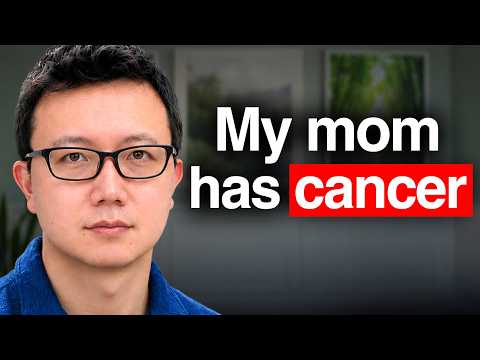
Peter Yang says his mother has had breast cancer three times. As a caregiver he has spent time calling offices, arranging a biopsy and trying to find out what happens next. Alexander says advocating for a relative can be a full-time job, and worries about people who do not have someone able to do it for them.
Preparing for appointments with AI
Yang and Alexander describe keeping records and asking questions between visits. Alexander says the clinician remains responsible for diagnosis and treatment.
Yang gave his parents a ChatGPT subscription and set up a shared project, uploading his mother’s records from a drive. He asks both about the disease and practical coordination, such as whom to call. He also uses AI to talk through worries he may not want to place on his mother.
Alexander uses the time between visits to understand background and prepare questions. For a newer therapy for her father’s interstitial lung disease, she researched the state of trials before the appointment, then asked his doctor whether that understanding was right and whether the treatment suited him. That left more of the visit for a plan tailored to him.
Yang asks whether doctors dislike patients arriving with AI research. Alexander says she hears both reactions, but that many clinicians value patients coming in informed and ready to make better use of limited time. Yang suggests presenting the research as a question for the expert rather than arriving with demands.
Alexander agrees: she says AI is not a replacement for a doctor or a means of deciding diagnosis and treatment. It can help a person prepare pointed questions for the clinician. She also sees potential to reduce the administrative work that follows doctors home after clinic hours, while keeping people in the review process.
Supporting the whole cancer care experience
Alexander says the period before diagnosis and treatment decisions can be frightening. She hopes AI can help across prevention and care as well as scientific discovery.
Yang asks about claims that AI will soon cure cancer and about the difficulty of obtaining advanced care. Alexander says a cure matters, but cancer care begins before that: there is uncertainty from a first symptom through diagnosis, and then another difficult period of comparing treatment options without complete information.
Alexander hopes AI can help across that whole experience as well as contribute to science. She also discusses prevention and maintaining habits such as sleep, movement and diet. She recounts a user who found it easier to discuss setbacks with a nonjudgmental tool while working on her own health goals.
Health records, privacy and care summaries
The speakers discuss connecting records, researching studies and keeping a shareable summary. Alexander explains OpenAI’s stated approach to connected health data.
The conversation turns to ChatGPT Health. Alexander describes a goal of giving the system enough context to personalize answers, including connected health records or wearable data where available, instead of requiring users to find and upload every result manually. She presents appointment booking as a possible future capability.
Yang raises concerns about sharing sensitive records. Alexander says OpenAI added encryption and other protections for connected health data, and that connected medical records are not used to train models or target advertising. She describes privacy and security as foundational to whether people will trust the product.
For someone following research on a chronic condition, Alexander suggests telling the tool what matters to them and setting up an alert for new studies or findings. Yang mentions searching clinical trial sites. Alexander distinguishes what users can ask the product to do now from her hope that it will eventually provide more proactive help.
Yang built a tool that maintains a one-page document for his mother, putting phone numbers at the top and updating it from emails and call notes. Alexander describes another patient who shares a page with her care team, placing current medications, recent results and appointment notes where they can be found quickly.
A portable summary can help when a new provider cannot see records from another system. Alexander recounts a public story from her former boss, Fiji Simo, in which an AI review surfaced a treatment conflict that the clinician then addressed. She attributes the gap to information missing from the clinician’s view, not a lack of care.
Alexander also describes a mother’s search for an explanation for her daughter’s symptoms. Yang says he keeps track of his own mother’s earlier chemotherapy and radiation so he can bring that history to her doctors. Alexander finds that even basic measurements, such as previous blood-pressure readings, can be hard to recall without a record.
Helping clinicians work across fragmented systems
Alexander describes moving imaging between hospitals and the potential of clinical tools. She distinguishes individual access from integration with a health system’s records.
Why do hospitals still rely on faxes and CDs? Alexander says privacy obligations are real, but the resulting systems can be difficult for families to navigate. To obtain a second opinion for her father, she had to collect imaging on discs from one institution and physically deliver it to another.
Alexander says health systems also want better technology that preserves privacy. She points to adoption of AI note-taking tools and says clinicians have been using AI more frequently. Health care moves differently from consumer software, she says, in part because the consequences and privacy requirements are different.
Alexander describes a free product for verified clinicians that can help them think through a case using appropriately anonymized details. She says connecting patient records to a clinical workflow requires organizational agreements and integration with the health system. OpenAI works with institutions on those integrations.
On research, Alexander says OpenAI and its foundation are focusing on life sciences and working with others to accelerate discovery. She also sees potential beyond discovering a treatment, including in trials and the work needed to get it to patients. Yang says advances against disease would matter more to him than conveniences such as managing email.
Alexander says health care has progressed quickly by its own standards, though it remains slower than social media product development. She considers care with privacy, security and an interface that her mother can use important reasons to take a different approach from ordinary consumer software.
Practical caregiving and making time for family
Alexander shares how she separates her father’s information and uses AI during visits. Both speakers emphasize community, boundaries and caregiver wellbeing.
For her father, Alexander uses a project with its own memory so his health information does not become confused with hers. She says she obtains his consent and may remove identifying information if he prefers. She uploads relevant results and uses the project to understand what is happening.
During appointments, including telehealth visits, Alexander sometimes types unfamiliar terms into ChatGPT as the doctor speaks. That lets her learn in parallel while her father asks questions. For example, she used it to understand the name of a lung procedure, then could make better use of the conversation with the clinician.
Yang says sharing his family’s situation brought help from people in his community, including a doctor who offered advice. Alexander agrees that people may know someone who can help: a friend’s father-in-law connected her family with a specialist near them. Both describe human relationships as an important source of support.
Yang asks how Alexander balances demanding work with time for parents. She says priorities must be explicit because there are only so many hours in a day. When her father has an appointment, she blocks the time; she also recognizes that supportive employers have made that possible for her.
Her father’s illness made Alexander reconsider how full her calendar really was. Some meetings can be dropped or postponed, she says, and some deadlines are self-imposed. Having children reinforced the need to reserve time for the people she values.
Around the pandemic, both parents were diagnosed with cancers close together, and Alexander had also experienced a miscarriage. She took a month of leave available through her then employer to care for them and herself. She does not regret that decision and says caregivers need to account for their own emotional, cognitive and practical load.
Alexander imagines a future assistant that notices a follow-up lab order, finds an appointment that fits the patient’s schedule and asks permission to book it. For now, she says, using AI already makes her feel better equipped to support her family; Yang also values the support of his community.
Más de este canal
 17:50EN
 Peter Yang· 4 nov 2026PódcastPeter Yang’s Five Steps for Using AI to Help Care for His MotherYang uses a shared care brief and organized records to navigate appointments, while making time for family.
 15:03ENPeter Yang· 3 nov 2026PódcastHow Peter Yang Used an AI Phone Agent to Negotiate His Internet BillAn AI call negotiated a lower price and faster service, but Yang still had to approve the change himself.
 33:09ENPeter Yang· 1 nov 2026Pódcast · 2 vocesJaclyn Konzelmann: When AI Can Build More, Choose What Deserves to ExistInvitado: Jaclyn Konzelmann · Presenta: Peter YangGoogle Labs pairs short strategy documents with prototypes, user co-creation and lessons from experiments that end.
 13:05ENPeter Yang· 28 oct 2026PódcastPeter Yang Tests Genie 4: Convincing Worlds, Unfinished GameplayFive live demonstrations show scenes that respond to prompts and sound, alongside inconsistent actions and limited game mechanics.
 1:06ENPeter Yang· 26 oct 2026PódcastPeter Yang on Setting Up Payroll for a One-Person BusinessIn a paid partnership, Yang describes the paperwork he encountered and a payroll product integrated with a business account.
 41:41ENPeter Yang· 25 oct 2026Pódcast · 2 vocesJake Moran’s AI Video Workflow Starts With a Story and Good TimestampsInvitado: Jake Moran · Presenta: Peter YangThe HyperFrames creator shows how he guides an agent through rough cuts, storyboards, references and frame-by-frame feedback.