En 30 segundos
Matthew Berman describes making a personalized virtual-pet prototype after his son became interested in Bitzee toys. He shows a Pico development board, asks Codex to build an initial version, and iterates with his son; a 3D-printed enclosure is still planned.
- 1The motivationHis son’s interest in Bitzee toys inspired a custom virtual-pet project.
- 2The hardwareThe shown Pico development kit has a screen, buttons and joystick and uses a plug-in board.
- 3Iterating togetherBerman used Codex to create a simple first version, then refined it with his son.
Conclusiones
- A Pico development kit combines a display and controls for the prototype.
- Berman says he used Codex to generate an initial version and then iterated with his son.
- The prototype was unfinished, with a 3D-printed enclosure planned next.
Lee el texto editado por capítulos
A virtual pet project
Berman explains why he decided to make a Bitzee-inspired device. He shows the development kit and its controls.
My son loves Bitzee virtual pets, which remind me of the Tamagotchi I played with as a child. He wants several, and I say they cost around $40 apiece, so I decided to make a virtual pet of my own. That price is my observation at the time, not a current price guarantee.
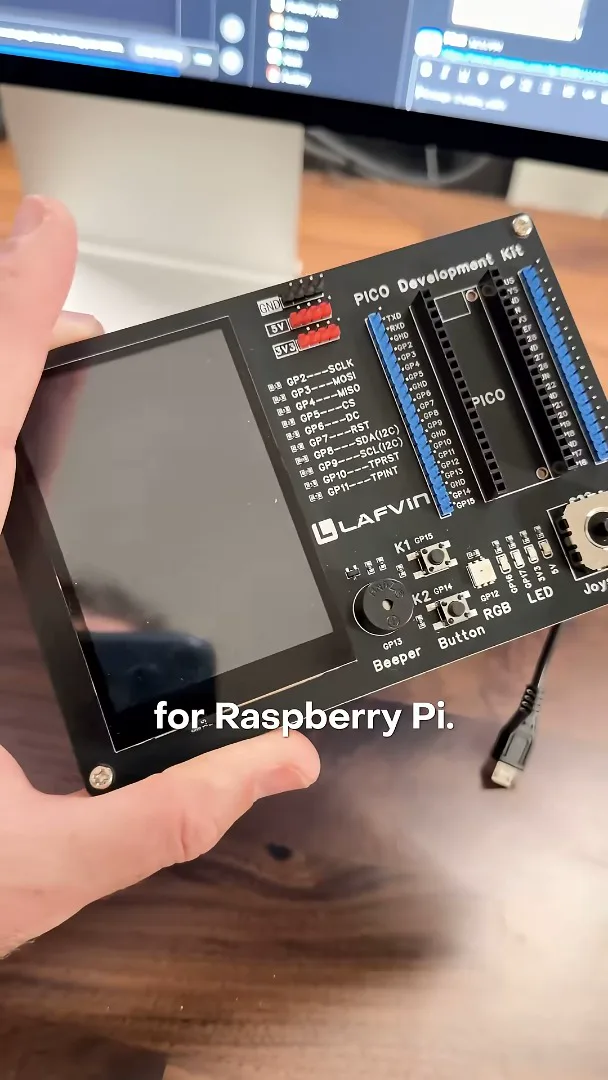
I bought a Raspberry Pi Pico development kit with a touchscreen, buttons and a joystick. The board I show accepts the Pico as a plug-in module, so this particular setup does not require me to solder it. The video is a project overview, not a full parts list or assembly guide.
Building and next steps
He describes prompting Codex and refining the prototype with his son. The enclosure remains future work.
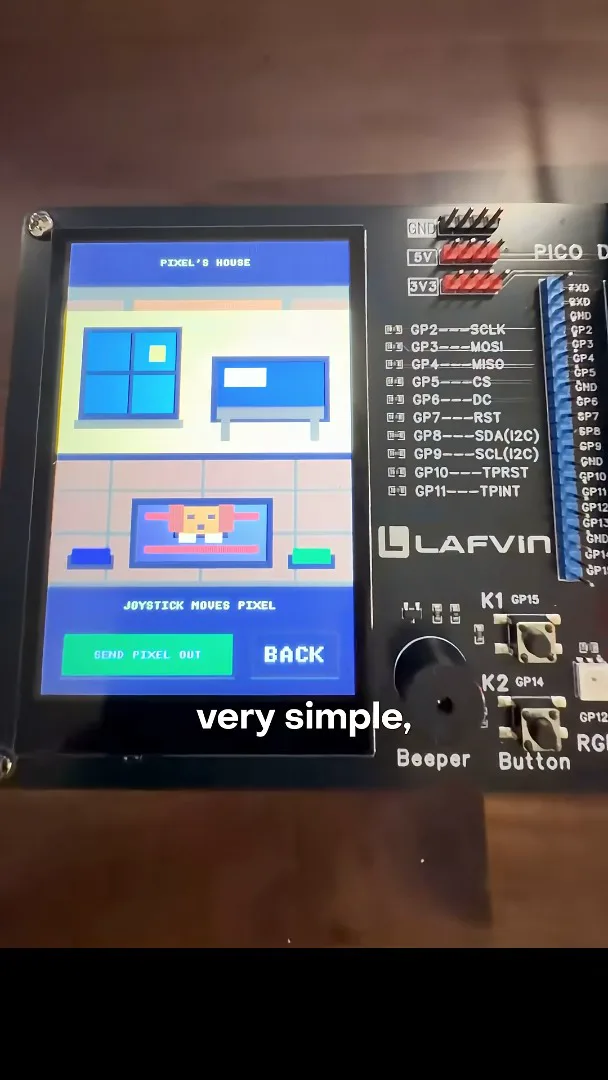
I connected the device to my computer, opened Codex and asked it to build me a Bitzee-inspired pet. The first version was simple, and my son and I iterated until it matched more of what he wanted. It is not finished: I plan to 3D-print a house for the device and show the result later.
Más de este canal
 34:21EN
 Matthew Berman· 27 oct 2026Matthew Berman Examines Anthropic’s IPO Filing, AI Growth and GovernanceMatthew Berman, Sam Altman · Forward FutureThe presenter reviews the S-1’s financial metrics, compute strategy and voting structure while questioning the tension between rapid AI development and safety.
 0:26ENMatthew Berman· 25 oct 2026Sam Altman on Human Values and Problem-Solving in an AI WorldSam Altman · OpenAIIn a short interview excerpt, Altman considers the enjoyment of solving hard problems and the human role in interpreting results.
 0:36ENMatthew Berman· 25 oct 2026Kimi K3.1 and a Rubik’s Cube Solver DemonstrationMatthew Berman · Forward FutureMatthew Berman shows a scrambled virtual cube being solved and gives the Kimi K3.1 test a favorable assessment.
 0:21ENMatthew Berman· 24 oct 2026An AI-Generated Kimi Benchmark Chart Used Invented ScoresMatthew Berman · Forward FutureMatthew Berman asks for a graph of Kimi K3.1 Pro benchmarks, then discovers that the displayed figures are illustrative placeholders.
 25:50ENMatthew Berman· 24 oct 2026Kimi K3.1 Pro Tested: Strong 3D Demos, Uneven Results and Competitive PricingMatthew Berman · Forward FutureMatthew Berman tests the open-weight model on coding, 3D rendering and visual explanations, then compares benchmark results and prices.
 32:20ENMatthew Berman· 23 oct 2026Who Is Local AI For? The Costs, Trade-offs and a Hybrid FutureMatthew Berman · Forward FutureMatthew Berman weighs data control and independence against hardware cost, setup complexity and inference speed.