En 30 segundos
After the 2026 Super Bowl, Matthew Berman examines a clip of Alexander Skarsgård with earbuds and a reflective object, circulated with a claim that it was a shelved OpenAI hardware ad. OpenAI denied the story; the clip itself does not establish a product name, design or release date. Berman uses the episode to explore his preference for earbuds and the challenges of competing with smartphones.
- 1A purported hardware adA post claimed a clip was a withdrawn OpenAI Super Bowl commercial. OpenAI representatives denied the claim.
- 2Berman’s preferred interfaceHe favors earbuds for conversation and imagines a separate device supplying vision and other sensors.
- 3The company’s responseOpenAI communications executive Lindsay McCallum Rémy called the purported leak fake; president Greg Brockman also rejected it.
- 4The smartphone challengeBerman discusses the difficulty of building hardware around existing Apple and Android ecosystems.
- 5Separate product rumorsReports about a supposed Sweetpea ear-worn device and the name Dime are unverified, and the disputed clip does not confirm them.
Conclusiones
- OpenAI denied that the viral Dime clip was its shelved Super Bowl advertisement.
- A real-looking video does not establish who commissioned it or what product it depicts.
- OpenAI confirmed its collaboration with Jony Ive and the merger of the io team, but the video does not verify device specifications.
- Berman favors an earbud-based AI interface with additional sensors; this is his design opinion.
- Claims about Sweetpea, Dime and hardware specifications remain rumors rather than confirmed product details.
Lee el texto editado por capítulos
A disputed Super Bowl clip
Berman plays a clip circulated as a purported OpenAI hardware advertisement. The company denies that account.
The 2026 Super Bowl featured advertising from several AI companies. OpenAI ran an ad for Codex, while a separate video circulated online with a claim that the company had pulled a hardware commercial. OpenAI denied that claim; the video is not evidence of an OpenAI device announcement.
The video and its appeal
He describes the reflective object and earbuds and explains why he likes that form factor. The clip is not verified as an OpenAI product demonstration.
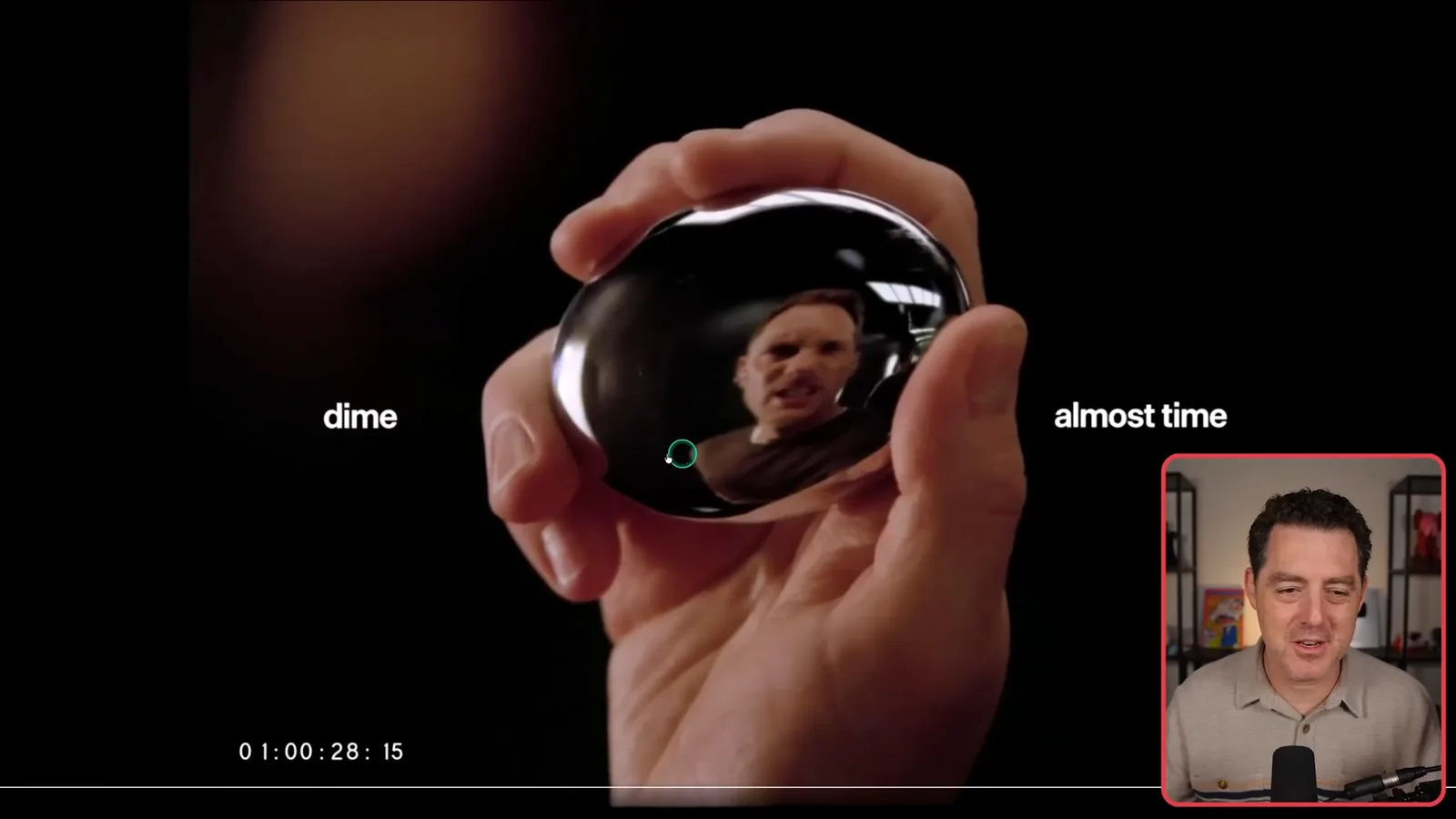
The clip shows actor Alexander Skarsgård looking at a reflective, stone-like object while wearing metallic earpieces. Berman says the design resembles what he imagines an AI device might look like. The image establishes what appears in the clip, not who made it or whether the object is a functional product.
I have long preferred earbuds to glasses as an AI interface, because they allow a person to talk to and hear an assistant. Audio alone would not give the assistant a view of its surroundings, however, so I imagine an additional device with vision, microphones and perhaps other sensors.
In the video, Skarsgård looks at the object, hesitates and eventually picks it up. Berman interprets the scene as curiosity mixed with uncertainty, and notes the words “dime” and “almost time” at the end. Those words do not establish a product name.
A false leak and a real denial
The host reviews the Reddit narrative and OpenAI’s response. The claimed last-minute ad substitution is unsupported.
OpenAI communications executive Lindsay McCallum Rémy called the supposed leak fake. The original Reddit post claimed to come from a frustrated employee and alleged that a futuristic ad was replaced at the last minute; Berman also questions the story. Neither the employee identity nor the alleged substitution is established.
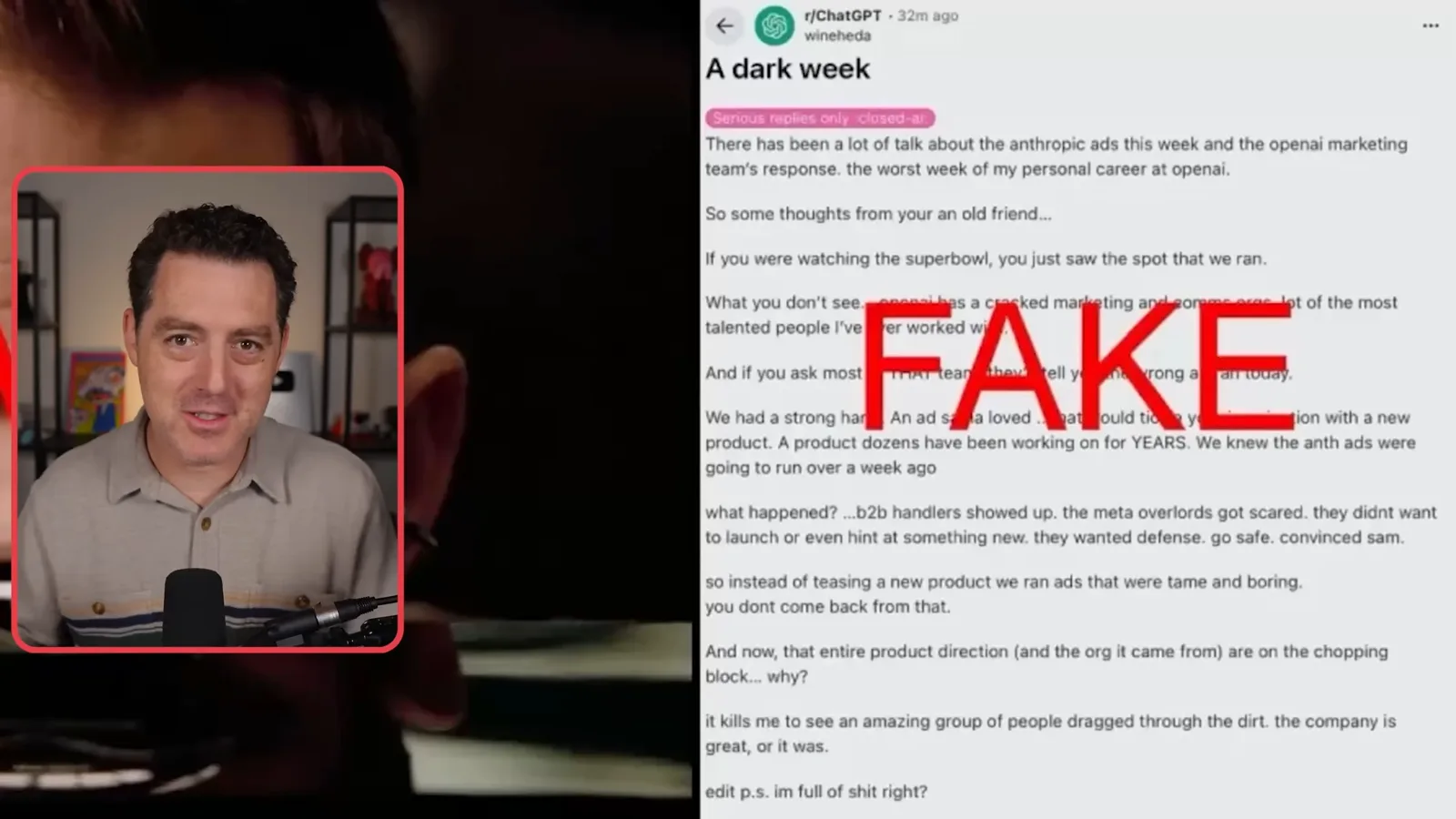
The post framed the supposed change as a response to Anthropic advertisements criticizing ads in ChatGPT. That narrative is part of the disputed claim, not evidence of OpenAI’s marketing decisions. [Marketing Brew reported](https://www.marketingbrew.com/stories/2026/02/11/ai-bowl-ad-reception-openai-anthropic-feud) that OpenAI said the clip had no connection to the company; it also reported confirmation from the actor’s representative that the footage was real, while its creator remained unclear.
Phones, earbuds and rumors
Berman considers smartphone platform advantages and reports about a potential wearable. Its name, specifications and relationship to the clip remain unconfirmed.
Turning to hardware design, I see a major challenge in competing with the smartphone. A phone already has a screen, cameras and microphones, and Apple and Android control the ecosystems on which people rely. Replacing it would be a major undertaking for any new entrant.
I think Apple is well positioned because the iPhone provides a powerful computer in the pocket and AirPods offer an intimate audio interface. An assistant that can speak and listen would still need a way to see the real world. This is my assessment of a possible design, not a description of a confirmed OpenAI product.
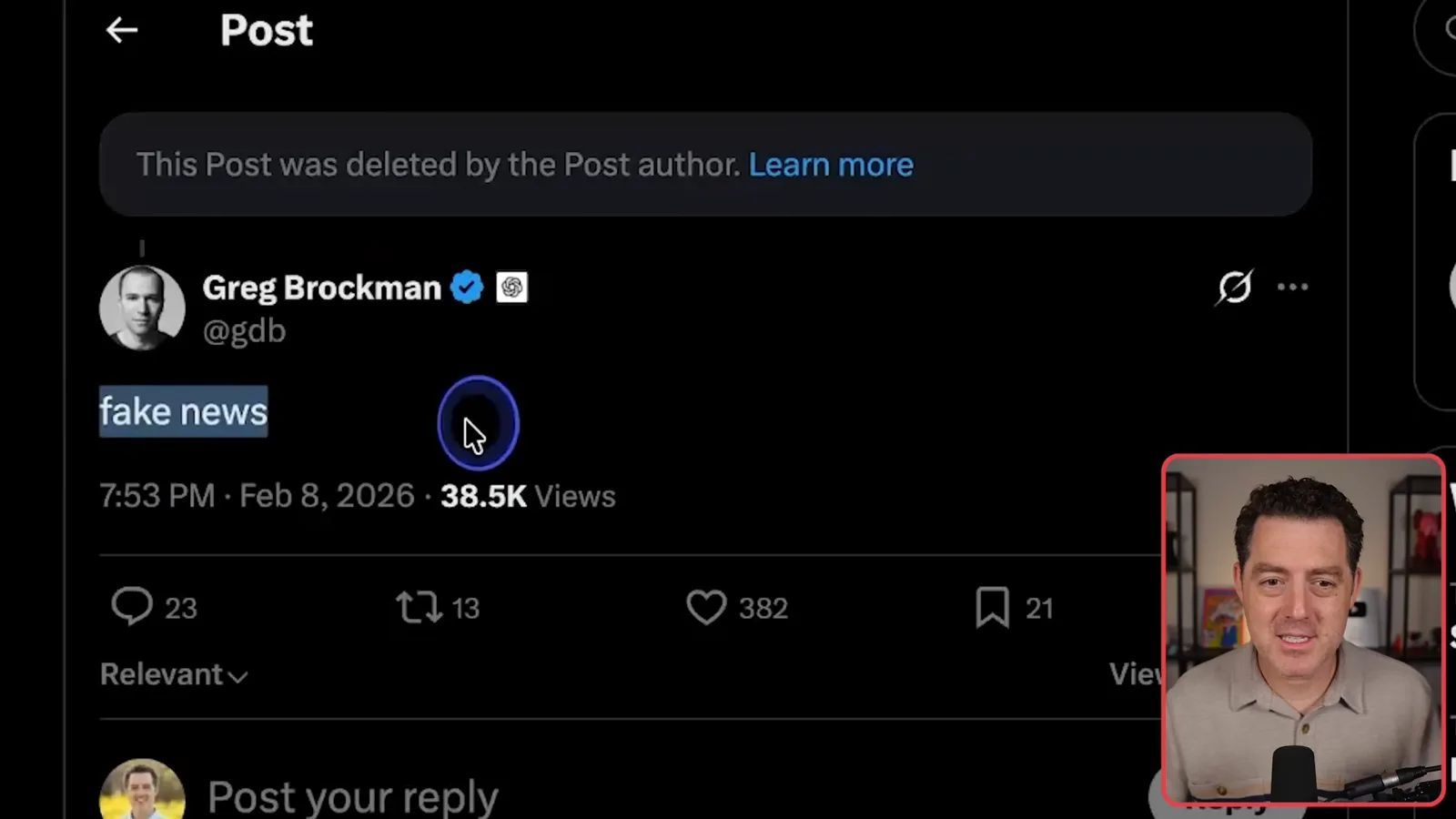
Berman shows OpenAI president Greg Brockman rejecting the circulating story. He speculates about whether the denial could conceal a real project, but provides no evidence for that possibility; the denial and the unsupported rumor should not be treated as equally established.
Berman says the actor and footage look real and wonders what the clip was made for. The actor’s representative later confirmed the footage to Marketing Brew, but its purpose and origin were still unclear in that report. Authentic footage alone does not connect it to OpenAI.
Berman also discusses separate reports about a rumored ear-worn device called Sweetpea, with behind-the-ear modules, a main unit, a smartphone-class chip and possible Siri integration. These are unverified reported specifications, not an OpenAI product announcement. Depending on an iPhone, he argues, could create platform risk for the device maker.
Another social-media claim described Dime as the consumer name, but the alleged document and name are not independently established here. OpenAI has confirmed that [the io team merged with it and that Jony Ive and LoveFrom took on design responsibilities](https://openai.com/sam-and-jony/); that confirmation does not validate the clip, the name or its supposed specifications. Berman closes by asking whether viewers would buy an AI device in such a form.
Más de este canal
 34:21EN
 Matthew Berman· 27 oct 2026Matthew Berman Examines Anthropic’s IPO Filing, AI Growth and GovernanceMatthew Berman, Sam Altman · Forward FutureThe presenter reviews the S-1’s financial metrics, compute strategy and voting structure while questioning the tension between rapid AI development and safety.
 0:26ENMatthew Berman· 25 oct 2026Sam Altman on Human Values and Problem-Solving in an AI WorldSam Altman · OpenAIIn a short interview excerpt, Altman considers the enjoyment of solving hard problems and the human role in interpreting results.
 0:36ENMatthew Berman· 25 oct 2026Kimi K3.1 and a Rubik’s Cube Solver DemonstrationMatthew Berman · Forward FutureMatthew Berman shows a scrambled virtual cube being solved and gives the Kimi K3.1 test a favorable assessment.
 0:21ENMatthew Berman· 24 oct 2026An AI-Generated Kimi Benchmark Chart Used Invented ScoresMatthew Berman · Forward FutureMatthew Berman asks for a graph of Kimi K3.1 Pro benchmarks, then discovers that the displayed figures are illustrative placeholders.
 25:50ENMatthew Berman· 24 oct 2026Kimi K3.1 Pro Tested: Strong 3D Demos, Uneven Results and Competitive PricingMatthew Berman · Forward FutureMatthew Berman tests the open-weight model on coding, 3D rendering and visual explanations, then compares benchmark results and prices.
 32:20ENMatthew Berman· 23 oct 2026Who Is Local AI For? The Costs, Trade-offs and a Hybrid FutureMatthew Berman · Forward FutureMatthew Berman weighs data control and independence against hardware cost, setup complexity and inference speed.