En 30 segundos
In September 2026, Matthew Berman shares his early experience with OpenAI’s GPT-6 Astra, showing games, a city simulation, a slide deck and browser tasks. He praises its visual and coding output while noting repeated design choices and small flaws. The selected demonstrations are not controlled model comparisons; the Box benchmark is presented in a paid sponsorship, and its reported gains apply to that evaluation.
- 1Early-access prototypesBerman shows interactive games and visual projects built with Astra. Prompt counts and iteration differ among the examples.
- 2Five-day city projectHe says a city-building game ran for five days under a goal workflow and remained unfinished when he stopped it.
- 3Browser controlHe shows edited recordings of diagramming and shopping research. Preparation and rehearsals are excluded from the displayed timer.
- 4Box-sponsored evaluationBox reports an overall 77% versus 74% accuracy on its complex-work dataset; industry subsets vary and these are sponsor-reported results.
- 5Stylistic repetitionSeveral projects use similar forest-green palettes and flat design, though Berman says explicit direction can change the style.
- 6Interactive 3D examplesThe small-planet demo has walking, swimming and waypoint navigation, with some collision and visual issues observed during play.
Conclusiones
- Berman reports early access to GPT-6 Astra and shows selected prototypes; his favorable judgments are personal observations rather than controlled comparisons.
- The Fall Guys-style game shown had an additional feedback prompt, while the city-building project ran for five days and was still unfinished when he stopped it.
- The browser recordings are edited highlights with preparation and rehearsals excluded, so their timers do not measure the complete development effort.
- Box’s sponsored evaluation shows 77% versus 74% overall accuracy for GPT-6 Astra and GPT-5.6 Sol, a three-percentage-point difference on that dataset.
- Berman notices repeated forest-green palettes and flat design, although he says the model responds well to direction.
- The games and town simulation demonstrate particular outputs, not independently verified claims of flawless performance or universal model superiority.
Lee el texto editado por capítulos
Early games and a generated city
Berman opens with a biome scene, a Fall Guys-style game and an ASCII city. He then shows a city-builder produced over five days.
I have had early access to OpenAI’s GPT-6 Astra and have made a collection of demonstrations, hosted on here.now. In my experience it is the best model I have used, although these are selected projects and my assessment is subjective. A seven-biome scene looks at least comparable to my best attempts with GLM 5.3 and Fable 5.1; I cannot confidently rank them from this example alone.
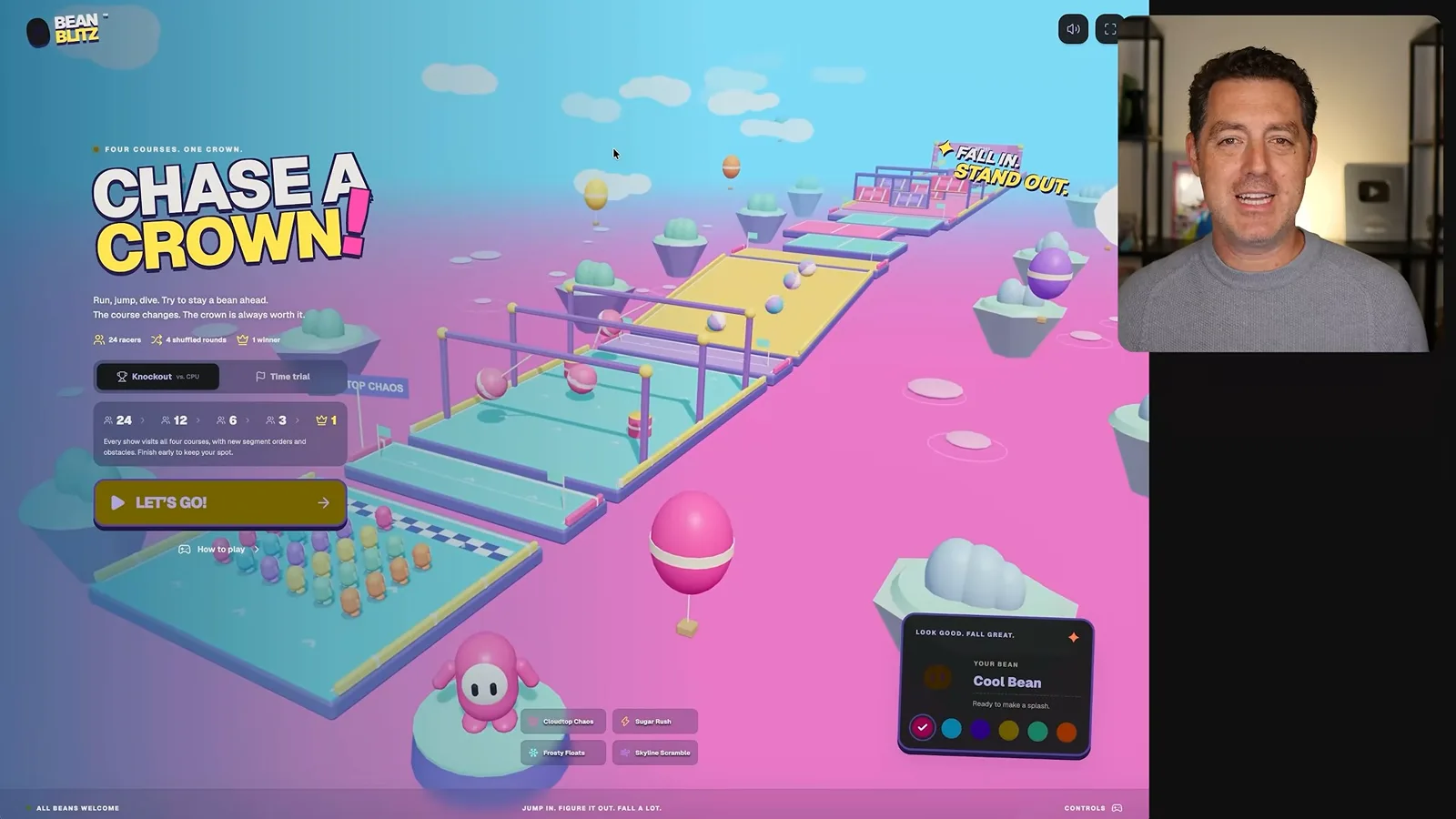
The first game resembles Fall Guys: characters race over obstacles, with sound effects and a dive control. I initially describe it as a one-prompt project, then clarify that the version shown received one additional feedback prompt from Brian. It is playable in the demo, and I finish a run in about 31 seconds.
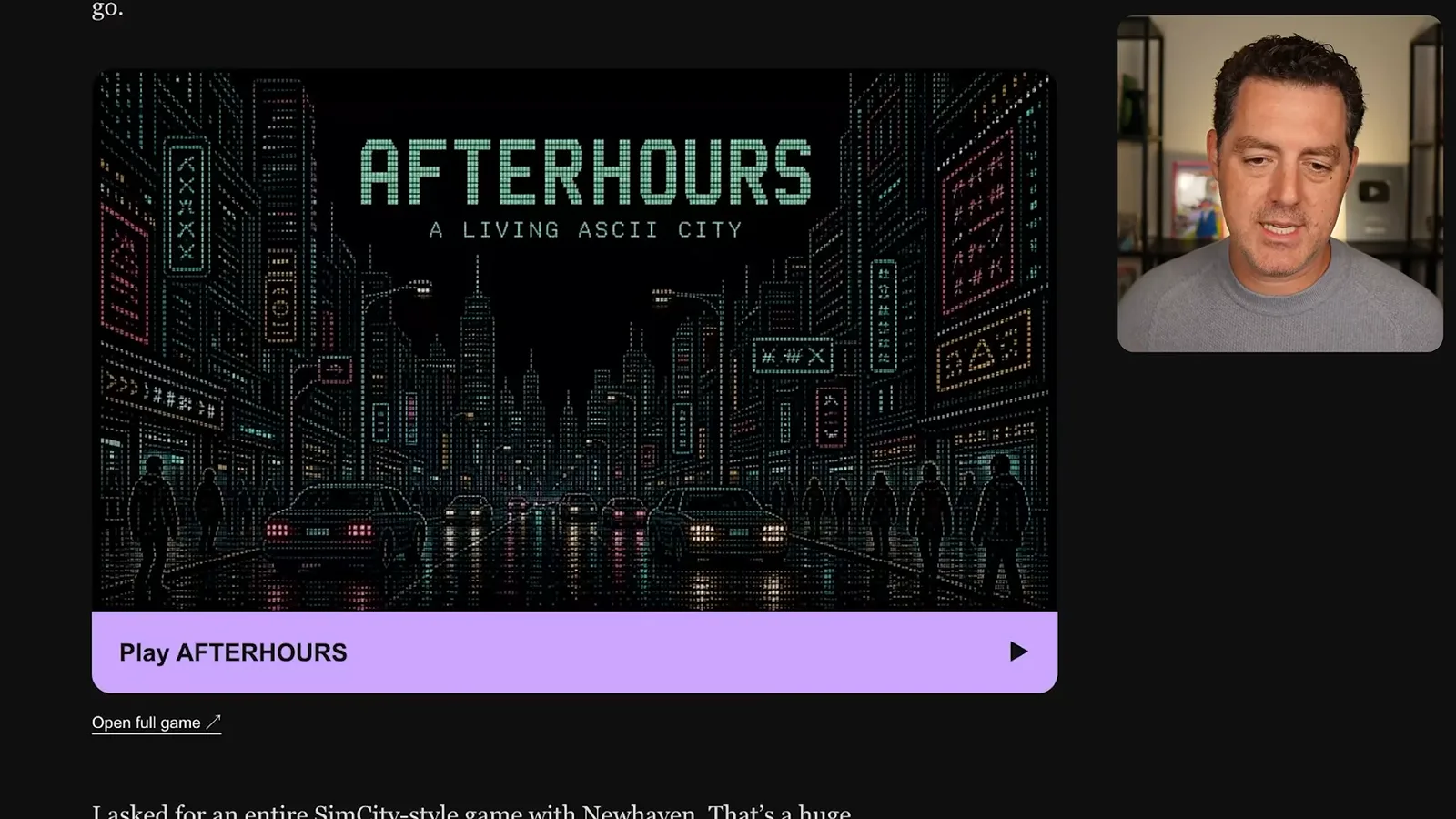
After Hours is a 3D city rendered with ASCII characters. I say it took about two prompts and show people moving through a rainy environment, a mini-map and a world that continues to populate as I walk. I borrowed the idea from someone else but could not recall the original creator.
For a SimCity-style project, I used a goal workflow that ran for five days. I watched it create individual assets including fire and police stations, a hospital, a nuclear plant and a university; it still had not finished when I stopped it. The visible result is a browser city-building game with moving people and traffic.
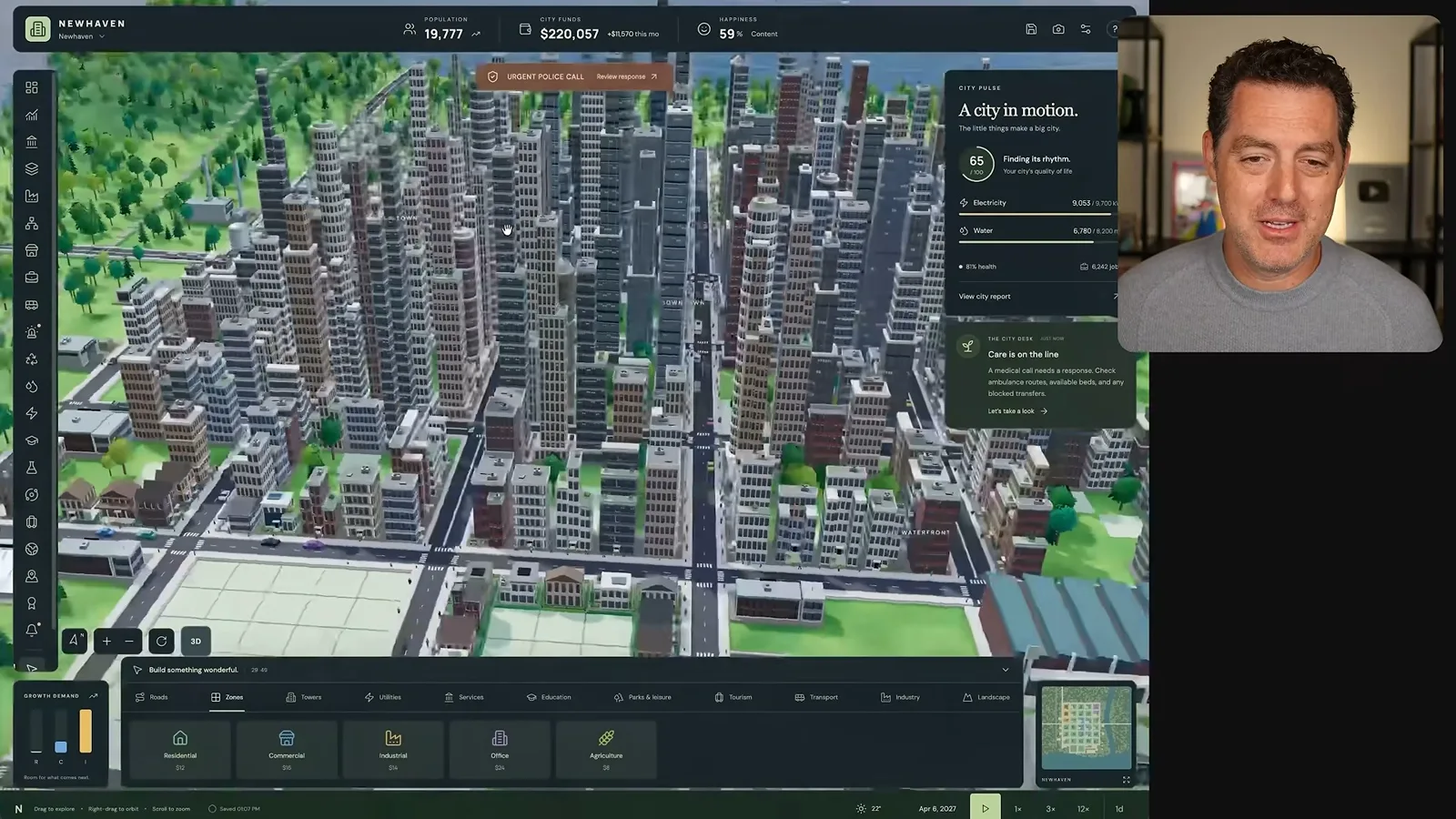
The city project initially had frame-rate problems, so I asked it to optimize for the browser and performance. I show roads, residential zoning, funds, population, happiness and emergencies, and the demonstration appears to respond to my actions. This brief inspection is not a full test of performance or game mechanics.
Slides, browser tasks and Box’s evaluation
He demonstrates a slide deck and browser control, then presents the sponsor’s complex-work benchmark. The benchmark and edited demonstrations have different scopes.
Another prompt produced a slide deck about data centers using Forward Future branding. I also value Astra’s browser control for everyday tasks such as appointment-making or researching items for sale. These examples show particular tasks, not a guarantee that it can reliably complete every transaction.
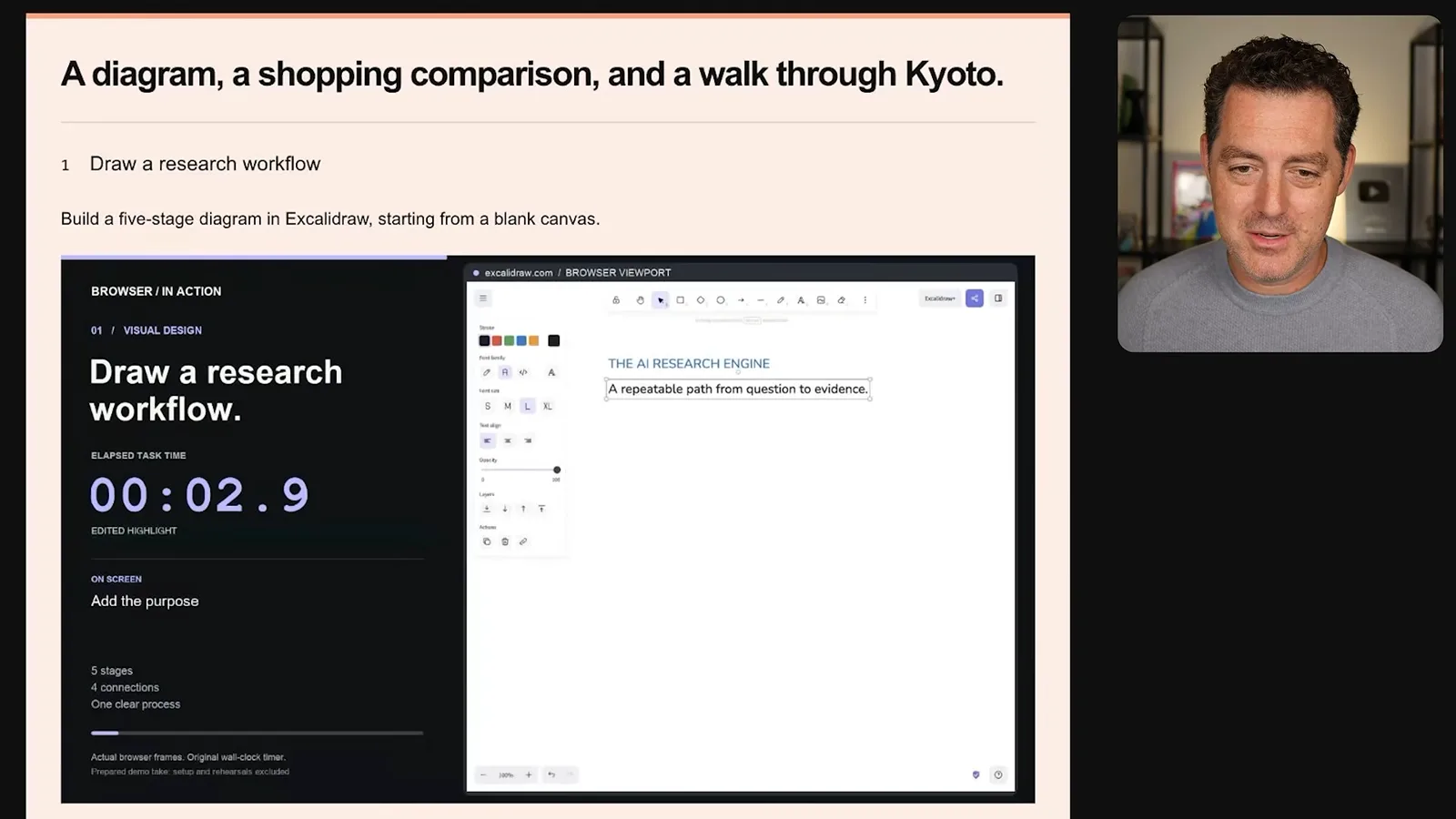
I asked the agent to perform browser tasks, write its own recording software and add a timer. The examples include drawing a research workflow in Excalidraw and comparing three Pokémon card listings on eBay; I report about 55 seconds for the comparison. The on-screen label calls the video an edited highlight and excludes setup and rehearsals, so the timer should not be read as total preparation time.
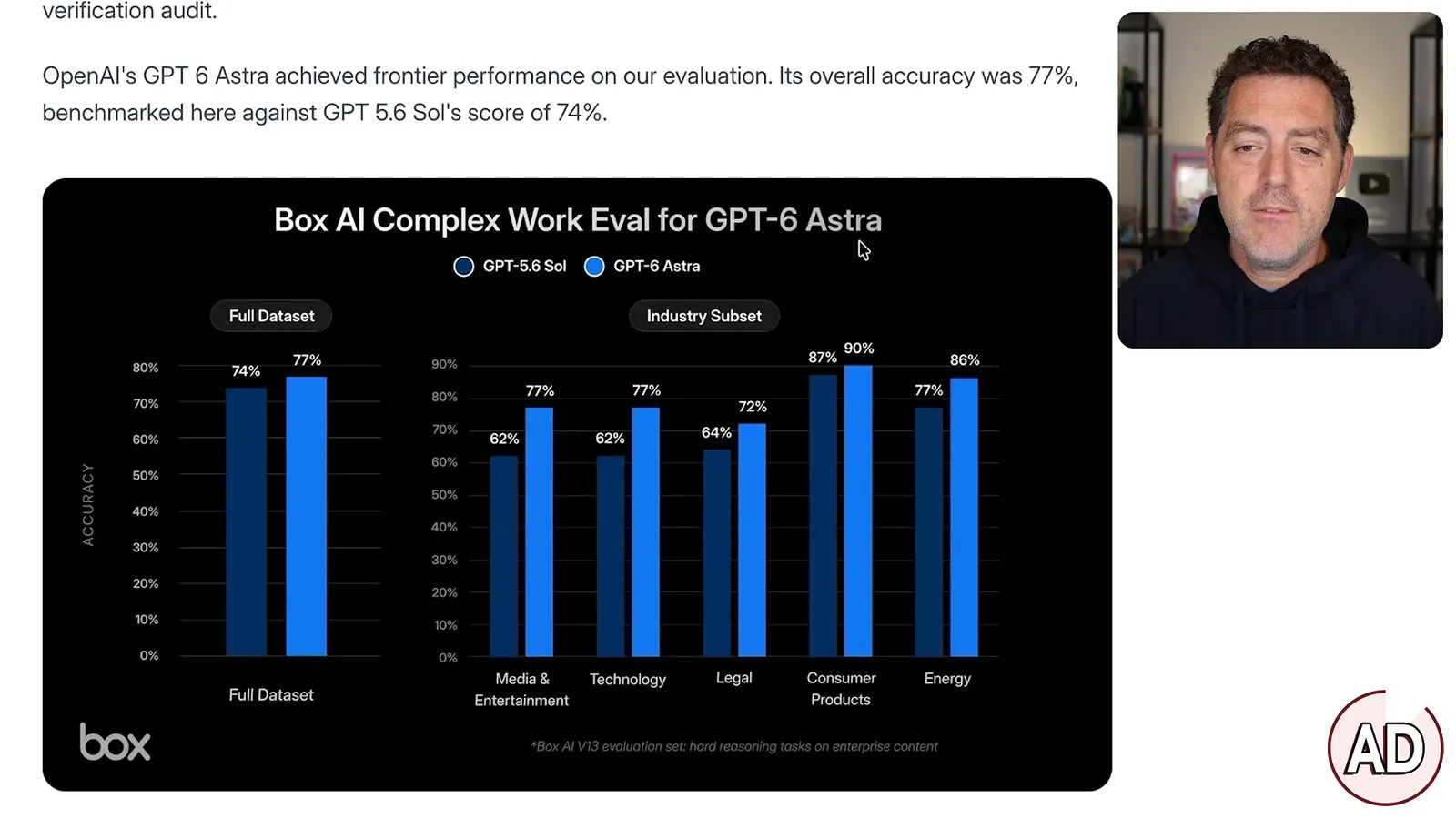
Box sponsors this video, and I present its own AI Complex Work Eval comparing GPT-6 Astra with GPT-5.6 Sol. The displayed overall scores are 77% and 74%, a gain of three percentage points on that dataset. This is a sponsor-reported evaluation of enterprise-content tasks, not an independent demonstration of performance on all knowledge work.
The Box chart shows media and entertainment and technology rising from 62% to 77%, legal from 64% to 72%, consumer products from 87% to 90%, and energy from 77% to 86%. The differences are percentage points; the subsets have their own task composition and do not establish universal performance in each industry. Box also promotes its document platform and says Astra will come to Box AI.
Visual style and interactive worlds
Berman describes recurring design choices and plays a cube, a needle-in-a-haystack game and a small planet. He notices minor issues as well as strengths.
Looking across the projects, I notice a familiar AI aesthetic in both writing and design: several independently prompted projects use variations of forest green and flat visual elements. The results still look good, but repeated defaults could make projects resemble one another. I find Astra responsive to direction, so a small prompt adjustment can produce different designs.
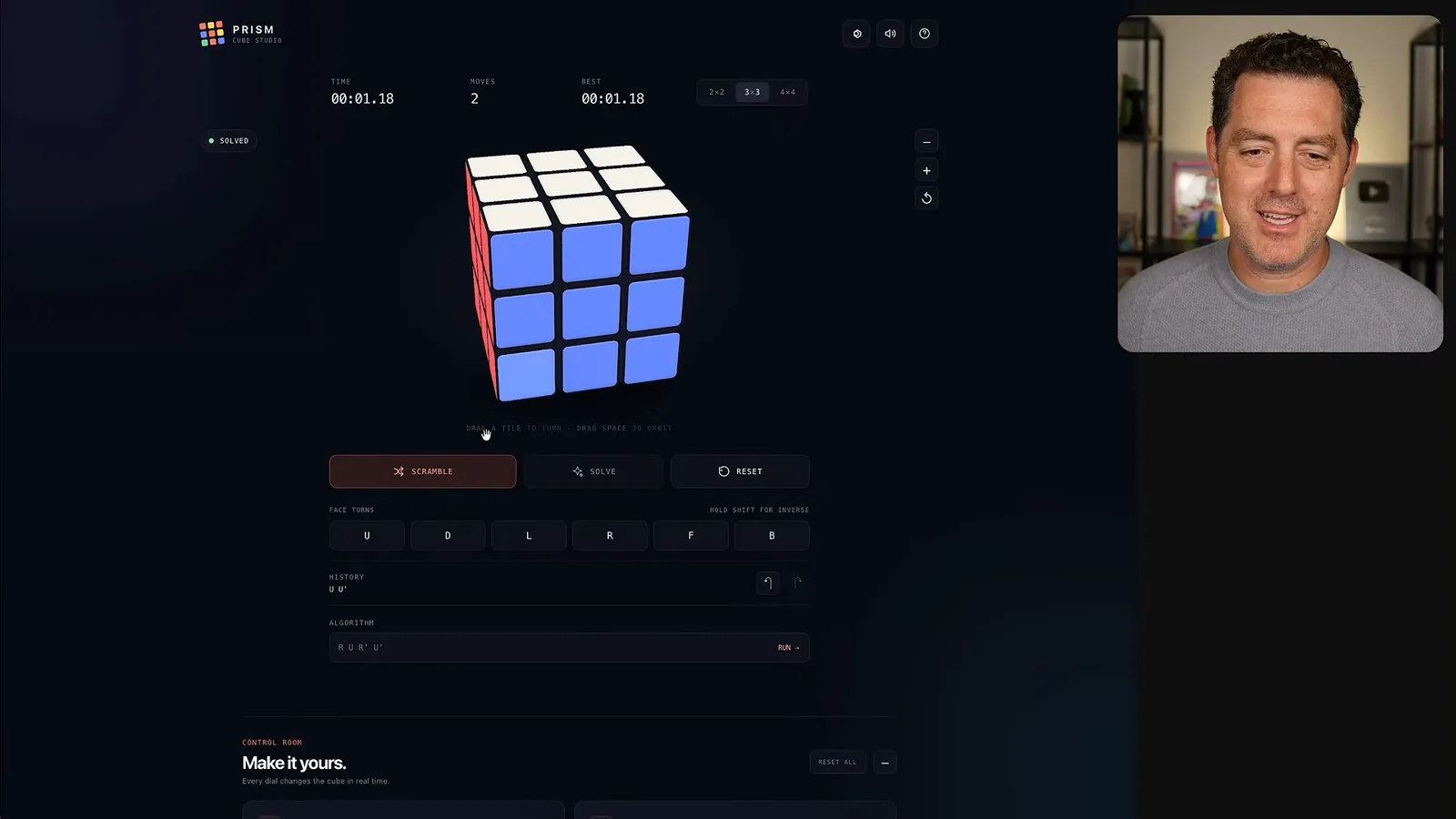
A Rubik’s Cube project scrambles and solves the cube and includes controls for colors and atmosphere. I consider the result impressive but say this kind of demo has become familiar. Another game places a needle among a claimed five million pieces of hay; the player searches one by one. I saw that idea elsewhere but cannot credit its origin.
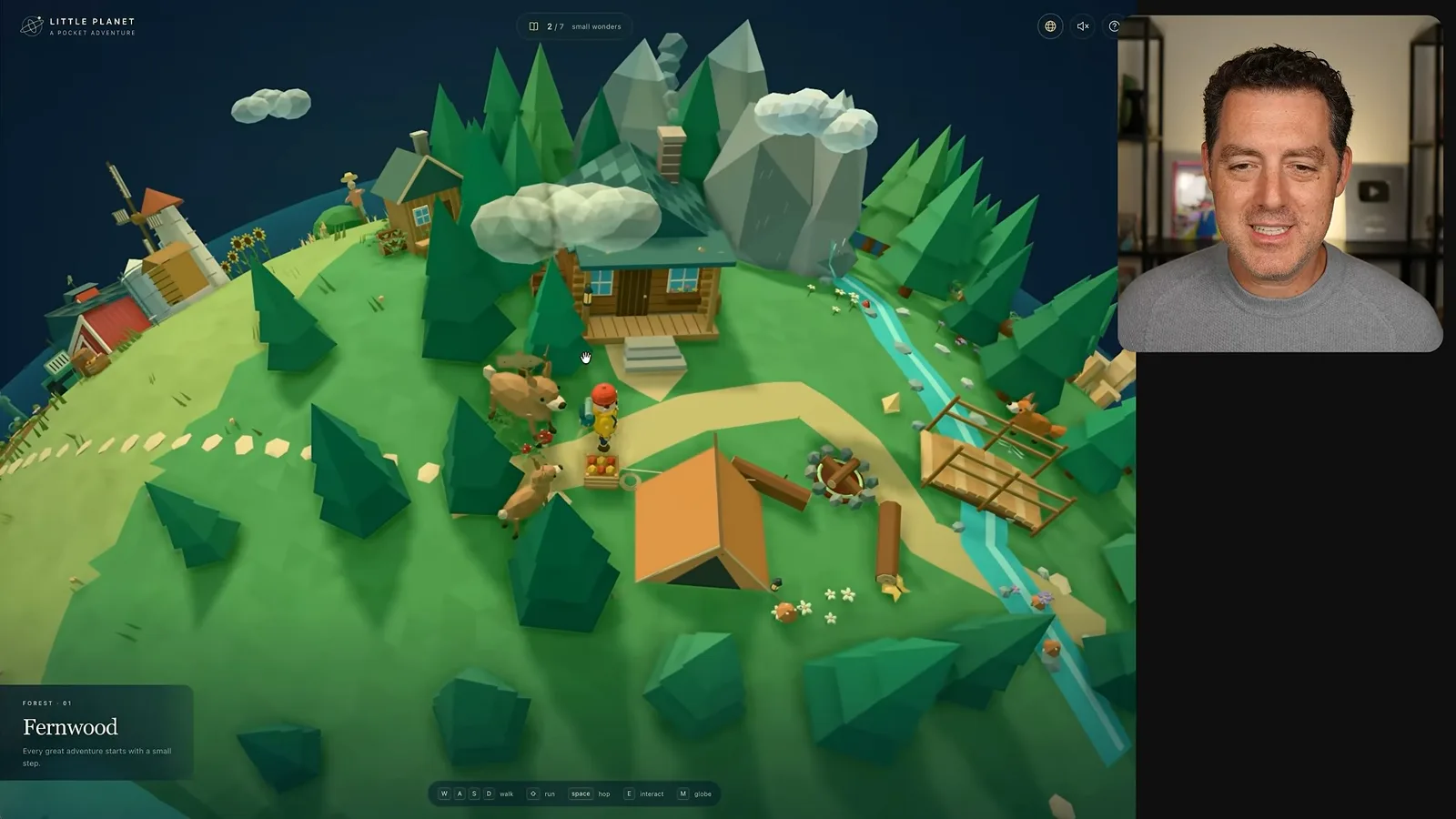
A small planet demo demonstrates a detailed 3D world with a character moving around it. I initially praise the spacing and lack of obvious clipping, then find that the character can pass through brush and a sheep and notice a small issue around the icebergs. I say this particular project came from one prompt.
At the beach, the character changes from walking to swimming; I cannot enter a boat. I also select waypoints and watch the character navigate toward them, including one near a volcano. These are features shown in the short play session, not a comprehensive test of navigation or collision handling.
Simulation, horror and other prototypes
He tours a town simulation, a horror game, a mouse-routing game and several websites. The review is based on selected examples from his own use.
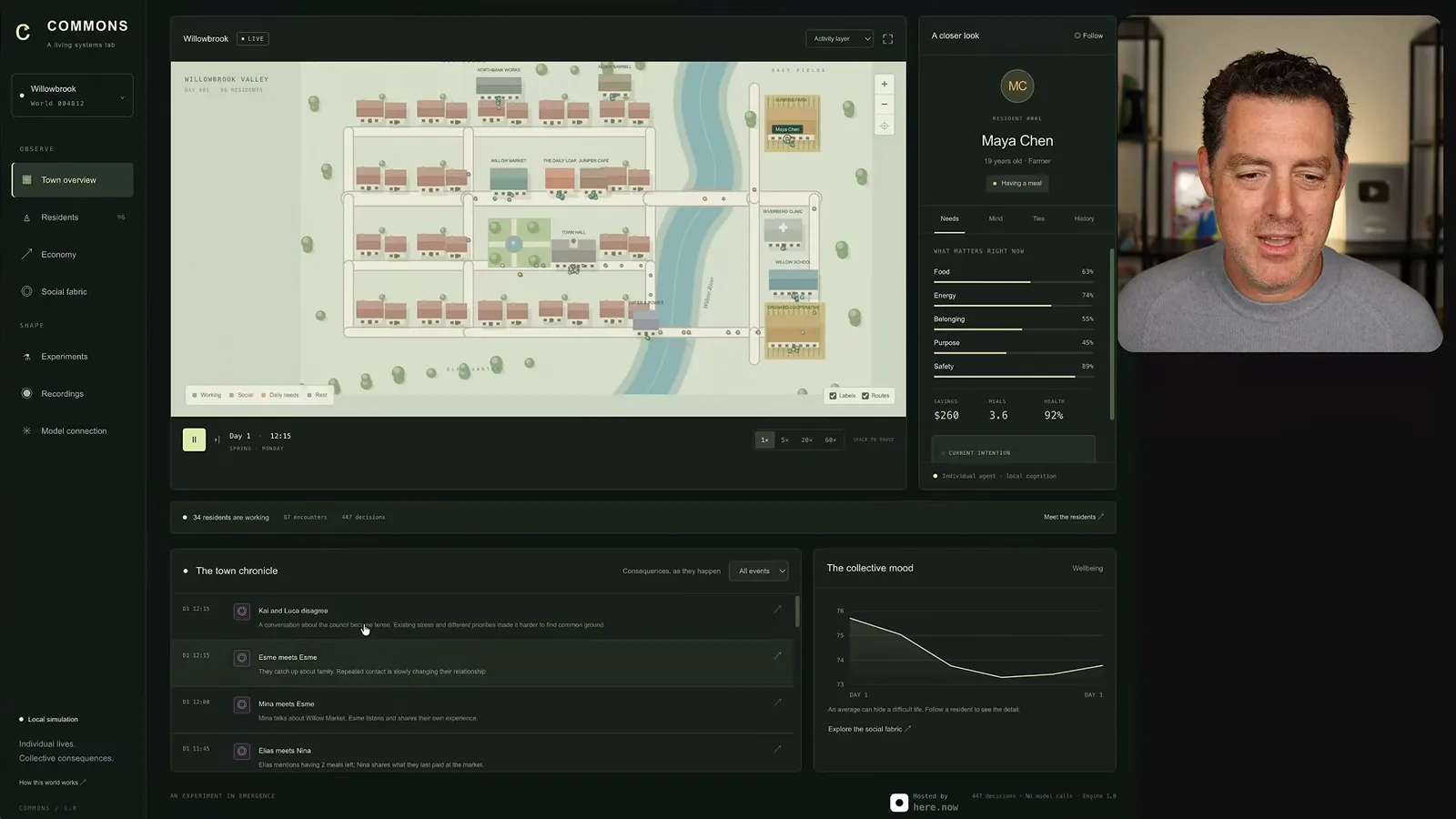
Commons is a small town simulation with residents, an economy and social indicators. I describe it as a replay of a simulated town and show controls for recording and experiments such as a dry season or a power outage. The interface displays a local simulation and does not by itself establish that a language model is running every resident live.
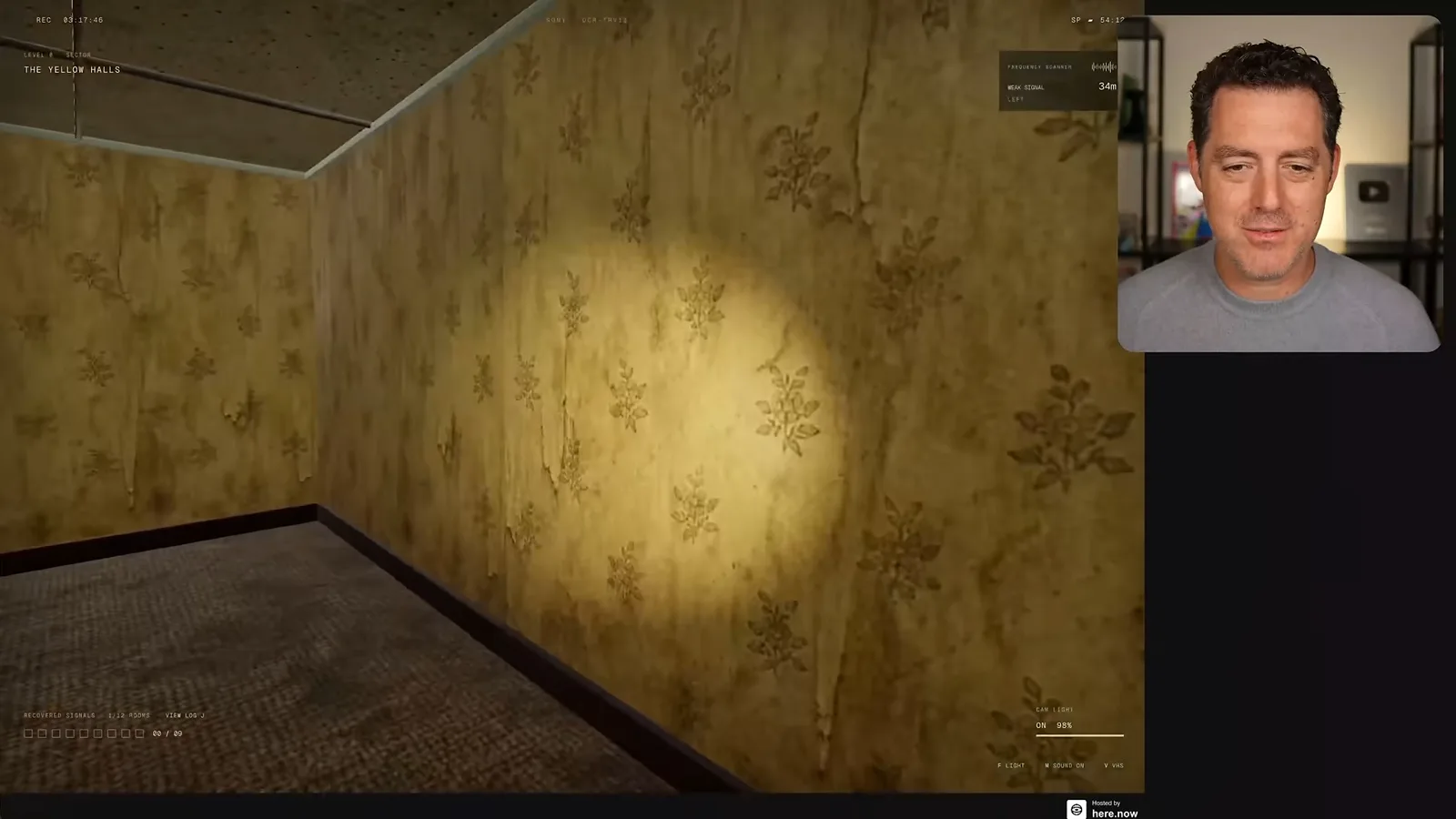
The 3D liminal-space horror game took a few prompts, rather than one. I asked for a realistic environment, a subtle antagonist and later jump scares, and explore corridors, a nursery and a pool. I say the assets were created with Astra and speculate that the space continues indefinitely; the video does not verify that extent.
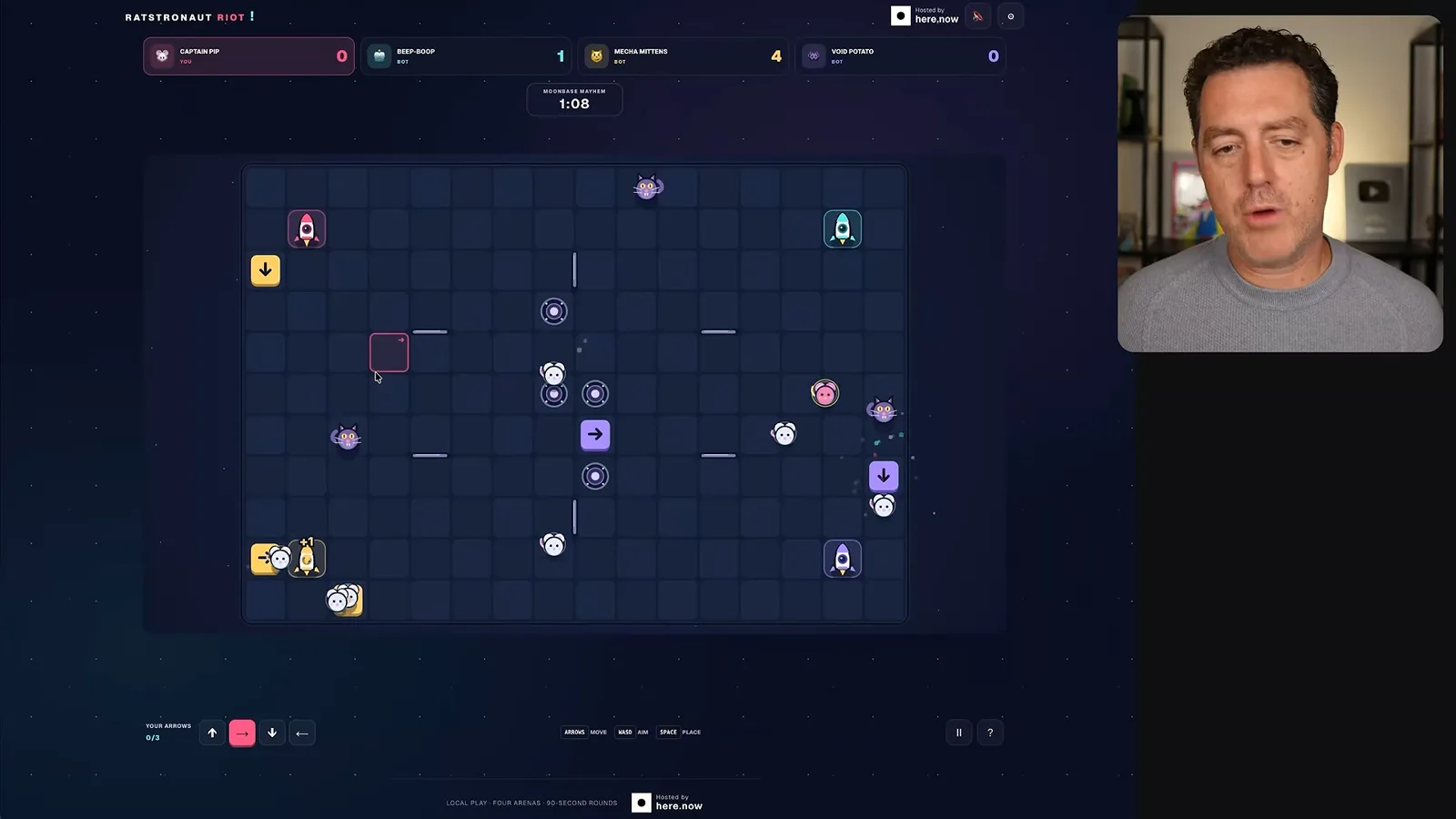
I briefly show a small GTA-style project and a manga, then play a Choo Choo Rocket-inspired game. The player places arrows to direct moving mice into a rocket while competitors attempt to redirect them. I prefer these game results to my own Fable 5.1 attempts, but I have not presented a controlled benchmark.
Finally, I show basic websites for the Galaxy Z Fold, an apple orchard and a rubber-duck club. I find some designs flat and adjust dark mode to view one page. The collection reflects my early hands-on impressions, with different prompts, iteration and time spent across projects.
Más de este canal
 34:21EN
 Matthew Berman· 27 oct 2026Matthew Berman Examines Anthropic’s IPO Filing, AI Growth and GovernanceMatthew Berman, Sam Altman · Forward FutureThe presenter reviews the S-1’s financial metrics, compute strategy and voting structure while questioning the tension between rapid AI development and safety.
 0:26ENMatthew Berman· 25 oct 2026Sam Altman on Human Values and Problem-Solving in an AI WorldSam Altman · OpenAIIn a short interview excerpt, Altman considers the enjoyment of solving hard problems and the human role in interpreting results.
 0:36ENMatthew Berman· 25 oct 2026Kimi K3.1 and a Rubik’s Cube Solver DemonstrationMatthew Berman · Forward FutureMatthew Berman shows a scrambled virtual cube being solved and gives the Kimi K3.1 test a favorable assessment.
 0:21ENMatthew Berman· 24 oct 2026An AI-Generated Kimi Benchmark Chart Used Invented ScoresMatthew Berman · Forward FutureMatthew Berman asks for a graph of Kimi K3.1 Pro benchmarks, then discovers that the displayed figures are illustrative placeholders.
 25:50ENMatthew Berman· 24 oct 2026Kimi K3.1 Pro Tested: Strong 3D Demos, Uneven Results and Competitive PricingMatthew Berman · Forward FutureMatthew Berman tests the open-weight model on coding, 3D rendering and visual explanations, then compares benchmark results and prices.
 32:20ENMatthew Berman· 23 oct 2026Who Is Local AI For? The Costs, Trade-offs and a Hybrid FutureMatthew Berman · Forward FutureMatthew Berman weighs data control and independence against hardware cost, setup complexity and inference speed.