En 30 segundos
In December 2023, Matthew Berman reviews Mistral Medium, a hosted prototype, and compares its then-current API price and reported benchmarks with other models. His suggested architecture is a guess, and the figures reflect the historical versions and rates shown. His informal tests include a working terminal Snake game, word-count constraints, safety probes and reasoning puzzles. The model misses the requested poem length and a tank-fill calculation, while other results depend on assumptions or how a response is counted.
- 1Prototype modelMistral described Medium as a hosted prototype and reported 8.6 on MT-Bench; its exact architecture was not established in the video.
- 2Historical API costsBerman’s 2023 spreadsheet shows Medium at lower input and output prices than the GPT-4 options he selected.
- 3Snake gameThe generated Python terminal game runs in his demonstration, though one successful run is not a broad coding benchmark.
- 4Tank-rate errorThe model answers 37.9 minutes; combining the two stated rates gives approximately 45.8 minutes.
- 5Self-counting ambiguityThe main sentence has nine words, but an additional confidence line affects a count of the entire response.
- 6Marble and cupBerman rejects the model’s claim that the marble remains inside an unsupported inverted cup when it is lifted.
Conclusiones
- The original Mistral Medium was a hosted prototype in December 2023, while the Small endpoint then used the open-weight Mixtral model.
- Berman’s spreadsheet showed lower historical per-token prices for Medium than the GPT-4 options he compared.
- The model generated a playable terminal Snake game in the demonstrated run but missed the exact length of a requested poem.
- Its tank-fill answer was incorrect: the stated rates imply approximately 45.8 minutes.
- A response counting its own words included an extra confidence line, so its score depends on whether that line is counted.
- A few safety and reasoning prompts cannot establish model reliability across real-world tasks.
Lee el texto editado por capítulos
Mistral’s 2023 model lineup
Berman introduces the Medium API prototype and compares it with the open-weight Mixtral model. His proposed Medium architecture is speculation.
In December 2023, Matthew Berman tests the original Mistral Medium prototype through its API after strong results from the open-weight Mixtral model. He considers whether the hosted model might be a cheaper GPT-4 alternative, but his informal prompts and one-off results are not a comprehensive measure of model quality.
Mistral’s launch announcement described three endpoints: Tiny for Mistral 7B, Small for Mixtral 8×7B, and Medium for a higher-performing prototype. Berman speculates that Medium might use a larger mixture-of-experts architecture, but the company’s announcement does not establish that guess. It reported an MT-Bench score of 8.6 for Medium versus 8.3 for Small.
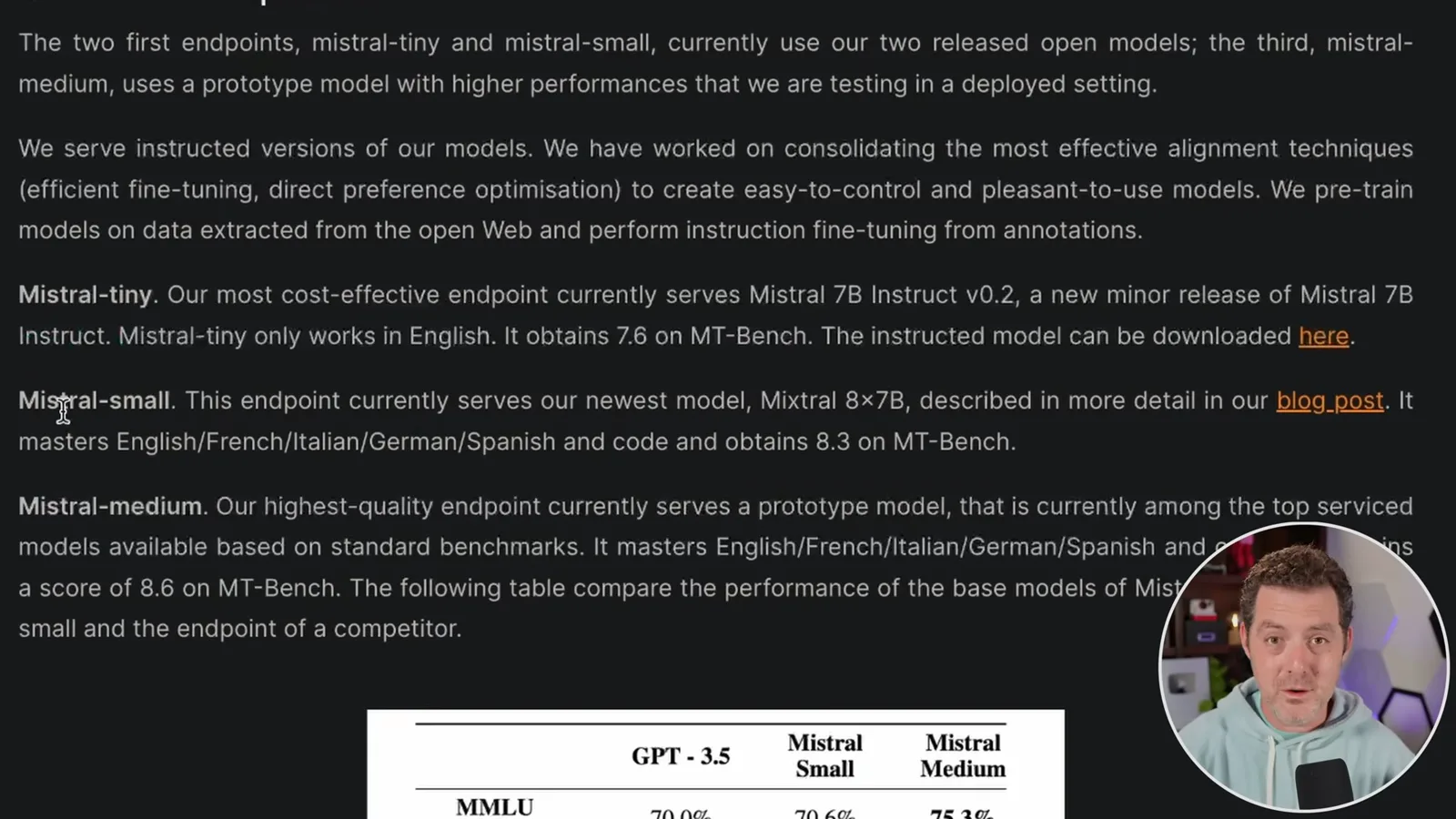
Berman compares the company’s published scores on MMLU, WinoGrande and GSM8K and observes that Medium scores higher than Small in the displayed tests. He also finds a higher MT-Bench result for GPT-4 elsewhere. Benchmark figures come from the period and depend on model versions and evaluation setups.
Historical pricing and test setup
A spreadsheet compares the December 2023 API prices with GPT-4. Berman uses a Python client for his informal prompt tests.
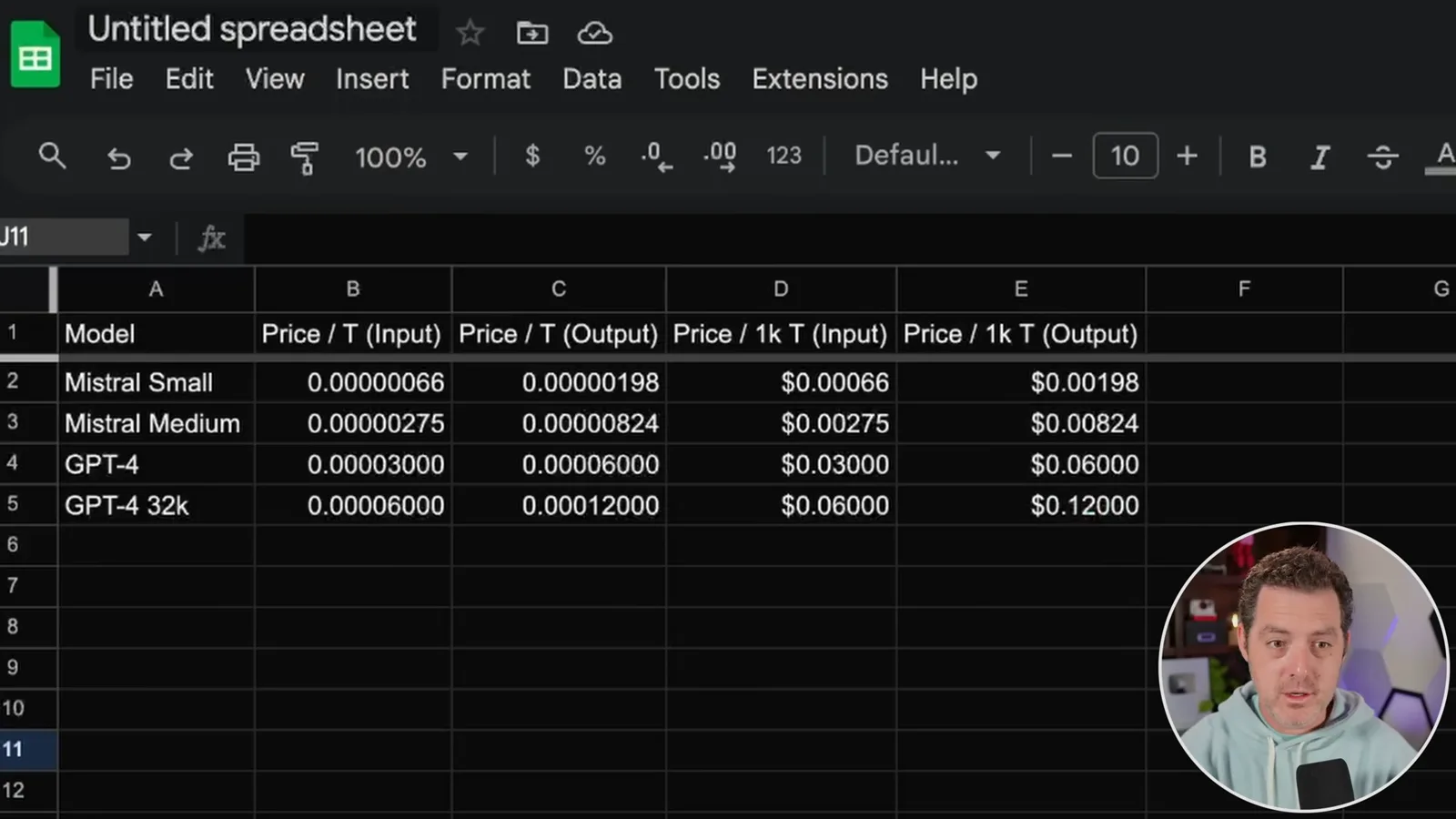
His historical pricing spreadsheet estimates Medium at about $0.00275 per thousand input tokens and $0.00824 per thousand output tokens, compared with $0.03 and $0.06 for the GPT-4 option shown. He sees a strong cost argument for higher-volume applications if quality is sufficient. These are his converted December 2023 figures, not current prices or evidence of equivalent performance.
Because Medium is accessed through an API, Berman demonstrates a small Python script that sends a prompt and retrieves a response. He says the token shown during filming will be revoked before publication. He uses the script to run a series of coding, writing, factual and reasoning prompts.
Coding, writing and safety probes
The model produces a working terminal Snake game but misses a requested poem length. Its responses to a few safety prompts vary.
A Python script to print numbers from 1 to 100 passes his basic check. The model then produces a terminal Snake game using the curses library, and Berman runs it successfully on the first attempt. He notes its similarity to his earlier Mixtral result and guesses they may share training data, but that is not verified.
A request for a poem of exactly 50 words produces a poem that Berman says does not meet the word count. He considers a resignation email and a question about the 1996 US presidency successful. His own later near-perfect summary should be read alongside this missed constraint and the arithmetic error he identifies later.
Berman probes how the model handles unsafe and benign requests. In these particular runs it responds to a request involving vehicle break-in, refuses a request involving illegal drug production, and answers a spicy salsa question. He calls the system relatively permissive; these few prompts do not establish its overall safety behavior.
Reasoning and arithmetic
Berman tests drying conditions, ordering, arithmetic and word problems. The tank-fill problem exposes a numerical error.
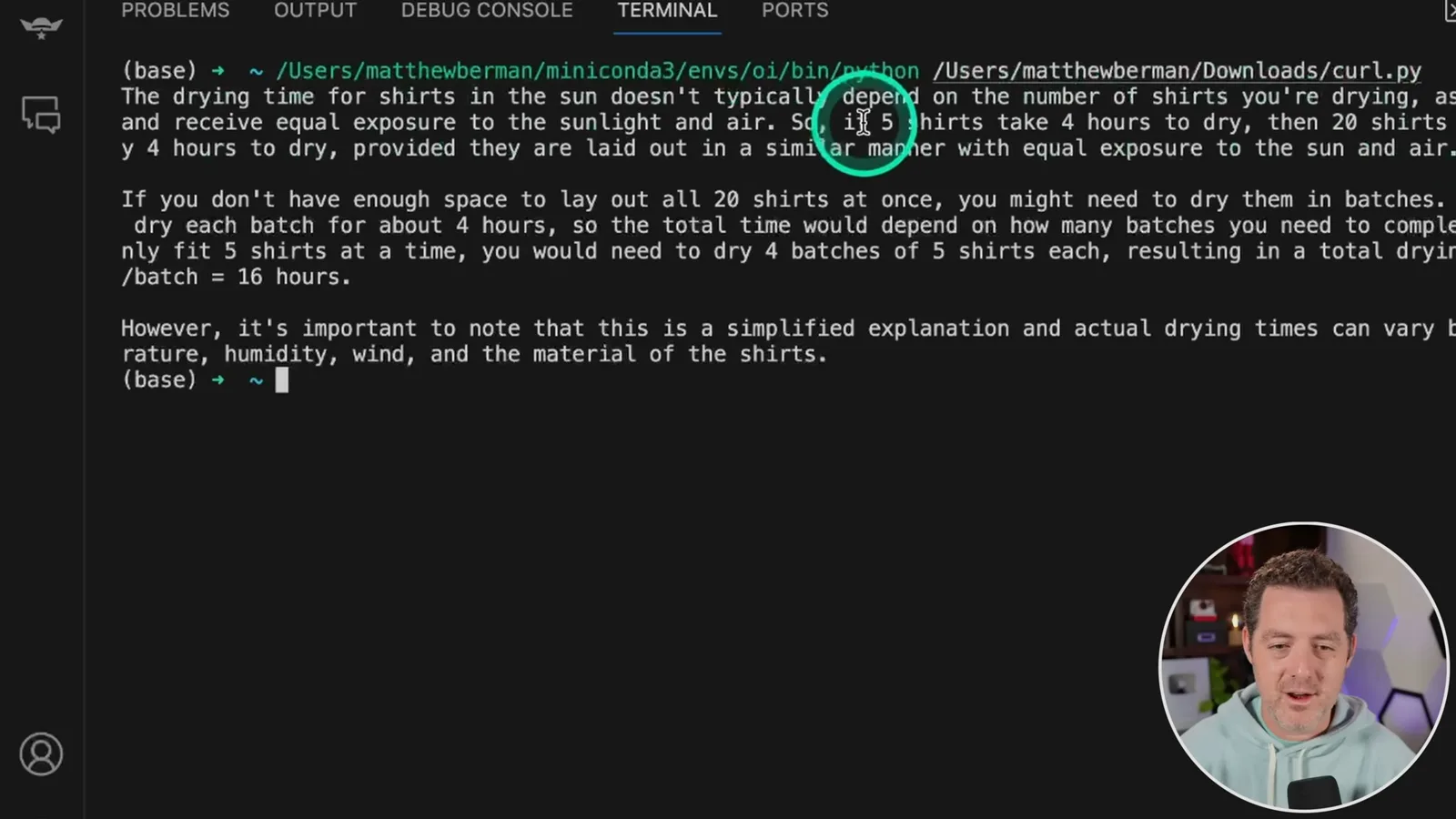
For the shirt-drying puzzle, the model says 20 shirts can dry in about four hours if all are spread out under comparable conditions. It also explains that with room for only five at a time, four batches would take 16 hours. Berman praises the answer for making the parallel-versus-serial assumption explicit.
The model correctly answers the ordering question in which Jane is faster than Joe and Joe is faster than Sam. Berman also records passes on basic arithmetic and an order-of-operations example, then asks a distance-and-time problem: 450 miles in six hours requires an average of 75 mph.
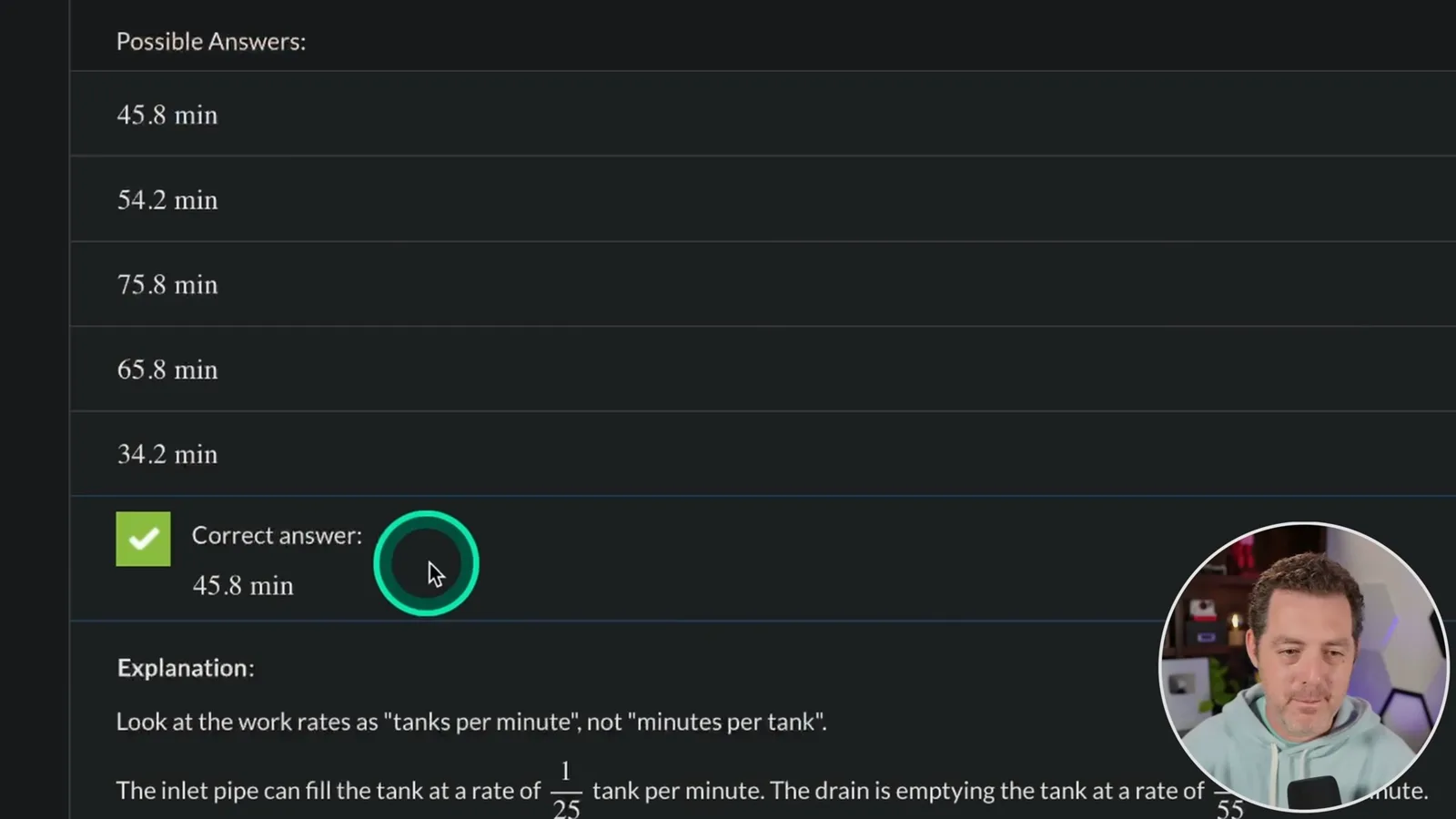
A harder tank problem has an inlet filling a tank in 25 minutes and a drain emptying it in 55. The model answers 37.9 minutes, which Berman marks wrong. The net fill rate is 1/25 − 1/55 tank per minute, giving approximately 45.8 minutes.
Word count and physical reasoning
Berman evaluates self-counting, a killers puzzle, JSON, an inverted-cup question and a belief-tracking scenario. He ends with a favorable but qualified assessment.
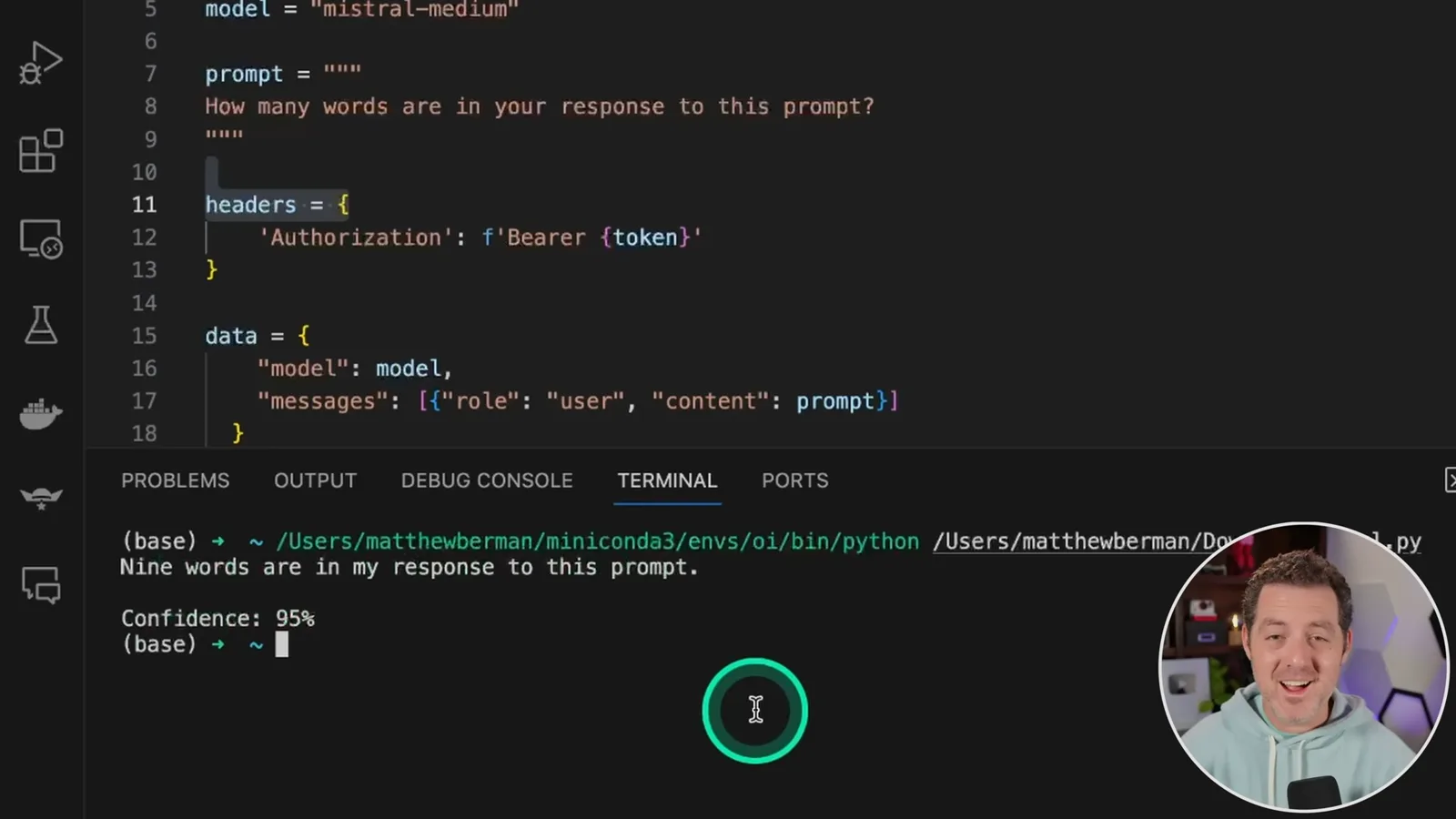
Asked how many words are in its own response, the model writes a sentence saying there are nine words and then adds a separate confidence line. Berman counts nine words in the sentence and celebrates the result; counting the additional line as part of the response would change the total, so the outcome depends on that interpretation.
In a room with three killers, a newcomer kills one and nobody leaves. The model counts the two surviving original killers plus the newcomer, giving three living killers. Berman accepts this while observing that interpretations may differ if the dead person is also counted as a killer.
A structured-output task describes three people, two men aged 19 and a woman aged 30. Berman says the generated JSON correctly represents the names, genders and ages. This is a single sample rather than a reliability measurement across many possible inputs.
A physical reasoning prompt places a marble beneath an inverted cup and then moves the cup to a microwave. The model says the marble remains inside the cup because of inertia; Berman marks that explanation wrong. Under the ordinary assumption that only the upside-down cup is lifted, the unsupported marble stays on the table.
The final test asks what John and Mark believe after Mark moves a ball from a box to a basket while John is away. The model says John expects the ball in the box and Mark expects it in the basket, which Berman accepts. He closes enthusiastically, though his earlier poem and tank tests show that the demonstrated run was not perfect.
Más de este canal
 34:21EN
 Matthew Berman· 27 oct 2026Matthew Berman Examines Anthropic’s IPO Filing, AI Growth and GovernanceMatthew Berman, Sam Altman · Forward FutureThe presenter reviews the S-1’s financial metrics, compute strategy and voting structure while questioning the tension between rapid AI development and safety.
 0:26ENMatthew Berman· 25 oct 2026Sam Altman on Human Values and Problem-Solving in an AI WorldSam Altman · OpenAIIn a short interview excerpt, Altman considers the enjoyment of solving hard problems and the human role in interpreting results.
 0:36ENMatthew Berman· 25 oct 2026Kimi K3.1 and a Rubik’s Cube Solver DemonstrationMatthew Berman · Forward FutureMatthew Berman shows a scrambled virtual cube being solved and gives the Kimi K3.1 test a favorable assessment.
 0:21ENMatthew Berman· 24 oct 2026An AI-Generated Kimi Benchmark Chart Used Invented ScoresMatthew Berman · Forward FutureMatthew Berman asks for a graph of Kimi K3.1 Pro benchmarks, then discovers that the displayed figures are illustrative placeholders.
 25:50ENMatthew Berman· 24 oct 2026Kimi K3.1 Pro Tested: Strong 3D Demos, Uneven Results and Competitive PricingMatthew Berman · Forward FutureMatthew Berman tests the open-weight model on coding, 3D rendering and visual explanations, then compares benchmark results and prices.
 32:20ENMatthew Berman· 23 oct 2026Who Is Local AI For? The Costs, Trade-offs and a Hybrid FutureMatthew Berman · Forward FutureMatthew Berman weighs data control and independence against hardware cost, setup complexity and inference speed.