En 30 segundos
Peter Yang builds a bot advisor, a YouTube researcher, an X scout, a digital cleanup assistant and a travel concierge using a persistent cloud computer. He shows why reports need iteration, requires approval before cleanup actions, and discusses privacy and the limits of his examples.
- 1Use an advisor to create botsYang describes his work and asks for ideas, then has the advisor create a YouTube researcher.
- 2Iterate before schedulingA precise 14-day window and concise report structure make the researcher's first verbose brief more useful.
- 3Review cleanup before actingYang explicitly requires approval before files are moved or deleted and subscriptions are canceled.
- 4Cloud-computer trustThe tutorial raises the question of access to sensitive accounts and cites the provider's privacy claims at the time.
Conclusiones
- Start with an advisor that suggests specialized bots from your own work and needs.
- Refine report format and sources before scheduling recurring research.
- Ask cleanup agents for numbered recommendations and review specific actions before authorizing them.
- A travel agent can compare itineraries, but historical savings and current fares must be checked in context.
- Consider privacy and current product terms before connecting sensitive accounts.
Lee el texto editado por capítulos
The persistent cloud computer
Yang introduces the concept and his advisor bot.
Peter Yang demonstrates five uses for Grok Bot, a personal-agent product he describes as running on a persistent cloud computer. He sets up an advisor, a YouTube researcher, an X scout, a digital cleanup assistant and a travel concierge, then tries games as a bonus. His examples and product comparisons reflect the time of the video.
Yang contrasts a cloud computer with his own always-on Mac mini and the cloud browser and plugins he was using elsewhere. His main appeal is persistence: an agent has a browser and operating system available without keeping his laptop open. His comparison of other products is a snapshot, not a statement about their current features.
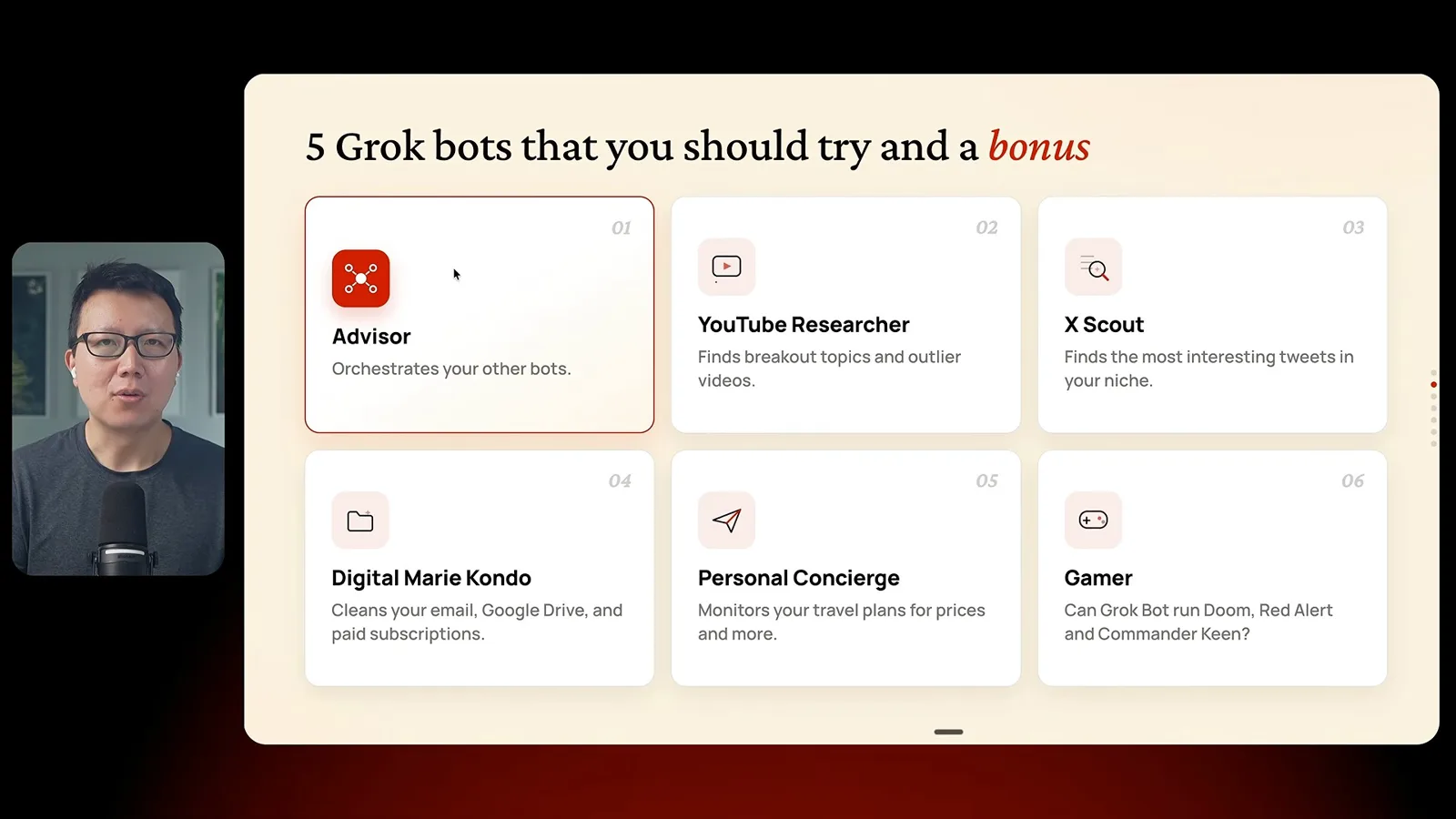
Start with an advisor: give it enough context about your work and interests, and ask it to suggest useful bots. Yang then asks the advisor to create a YouTube researcher combining channel research with comment analysis.
YouTube and X research
He refines reports and schedules recurring updates.
The researcher's first report is too long. Yang specifies a shorter format: three content ideas, five outlier videos from monitored channels, overall leaders and comment themes, restricted to the past 14 days. Here an outlier means unusually strong performance relative to the same channel's recent uploads, not simply a high raw view count.
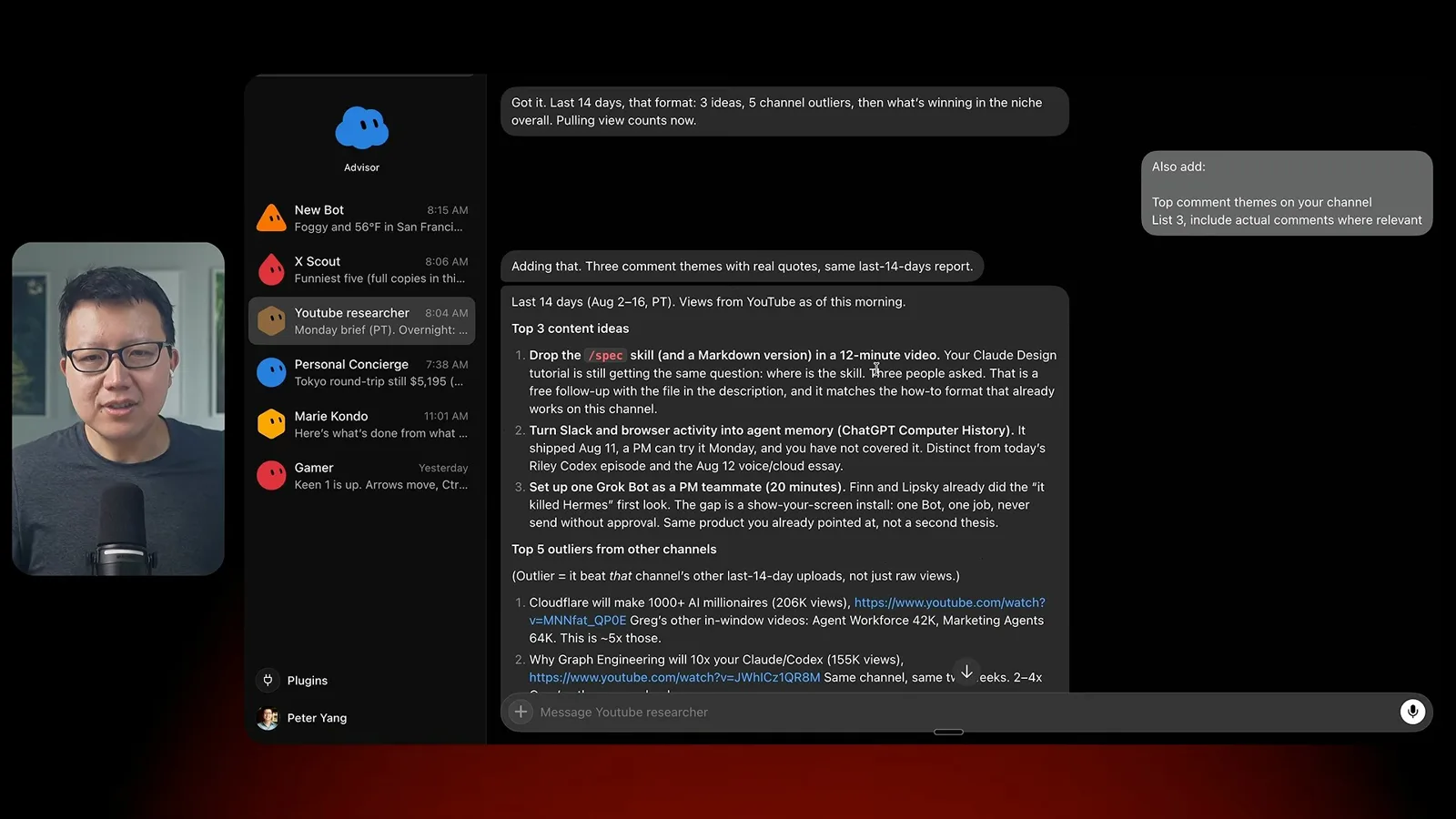
Once the brief is useful, he schedules a daily report. His general method is to give an initial task, inspect and refine the result, then schedule it only after the format fits the work.
For an X scout, Yang asks for notable recent posts from people he follows or engages with, grouped by theme, with links, analysis and ideas for his own posts. He also requests a humorous selection. After connecting Gmail, he sends a report to his inbox and sets up a routine.
Cleaning up with approval
A digital assistant proposes cleanup actions for human review.
A digital cleanup bot reviews email, Drive files, receipts and business banking data for possible clutter or subscriptions. Yang explicitly tells it not to move, delete, unsubscribe or cancel anything without his approval. He asks for numbered, categorized recommendations and narrows an initially overwhelming list.
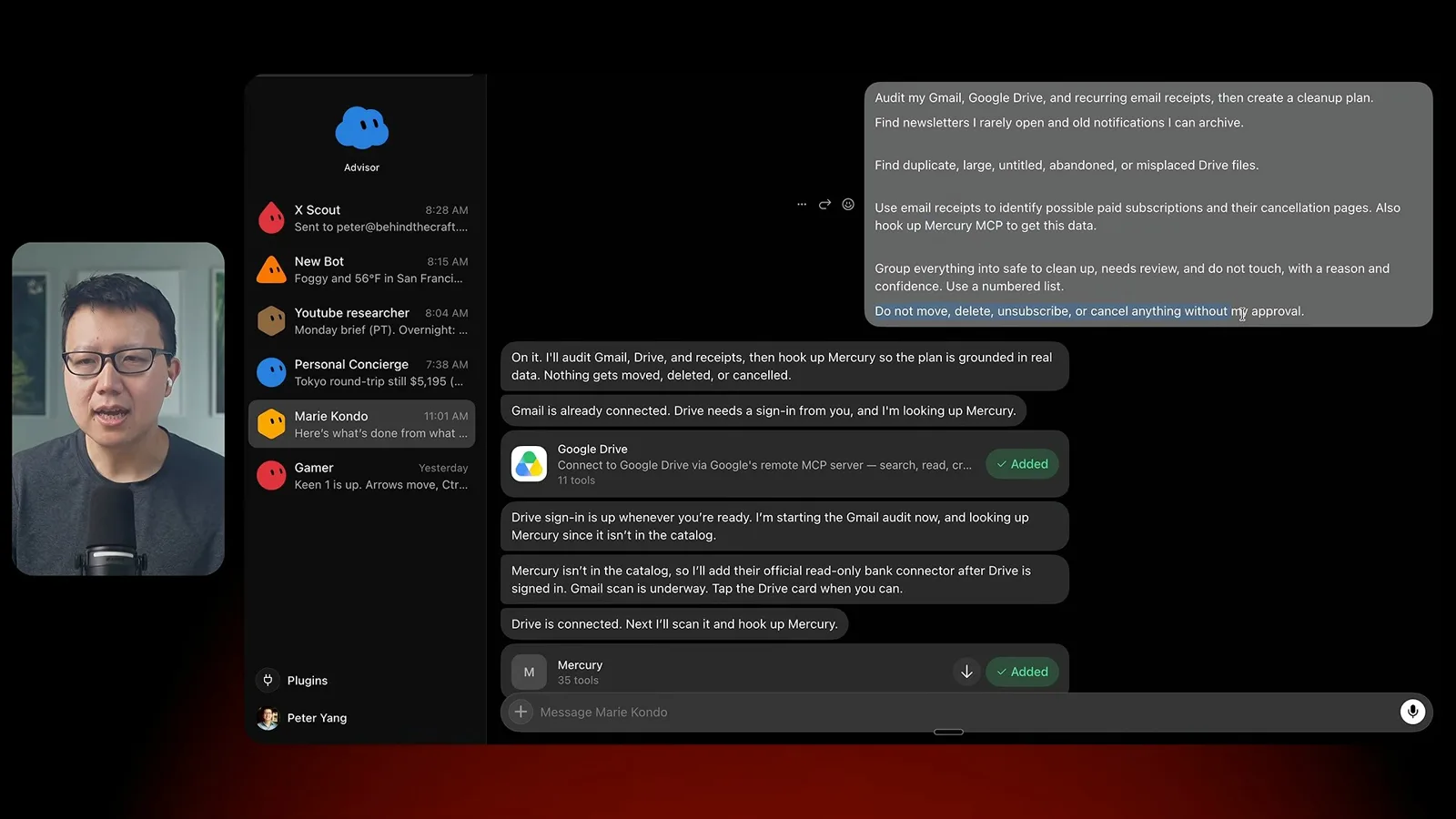
Only after reviewing the list does Yang authorize specific actions. In the demonstration the assistant moves selected files to trash, unsubscribes from selected senders and helps cancel a subscription after he signs in. He stresses that important files should be reviewed before deletion; the numbered list makes individual approvals easier to communicate.
Travel, games and privacy
A flight-monitoring example, a gaming experiment and questions of trust close the tutorial.
For a travel concierge, he gives the agent access to an itinerary and asks it to monitor flight options for a family trip. Yang says it finds a Tokyo round-trip option roughly $2,700 cheaper than the open-jaw itinerary in his example. That is a specific historical comparison: dates, route, additional travel and current fares all affect whether it is actually better.
As a bonus, Yang asks the cloud computer to install classic games. Doom launches but has mouse-control problems; Commander Keen runs with noticeable input lag. The experiment shows the flexibility of the environment without establishing it as a replacement for a gaming computer.
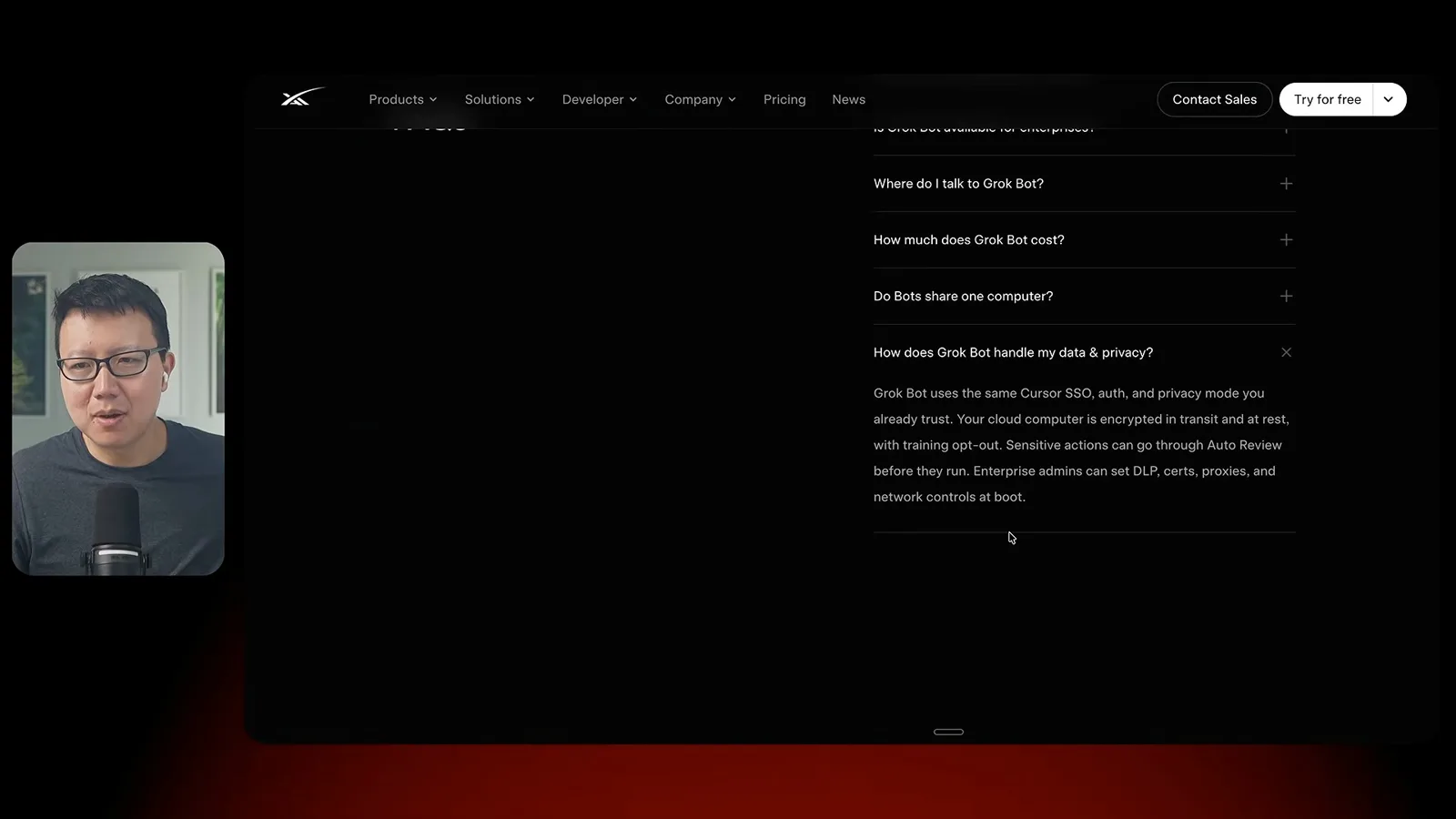
Yang raises a trust question: signing in to private services on a remote computer can feel different from signing in locally. He cites the product's then-published privacy description about encryption and training controls; those are provider claims and readers should check current terms and settings before connecting sensitive accounts.
Yang likes the focused interface but says it was not yet his daily driver. In the video he compares his own reported costs of regular Grok Bot use with ChatGPT; pricing, limits and features can change, so the comparison should be checked against current plans. His broader lesson is to design specific recurring tasks, refine the output, and retain control over consequential actions.
Más de este canal
 46:40EN
 Peter Yang· 8 nov 2026Pódcast · 2 vocesAshley Alexander: How AI Helps Me Care for My Parents With CancerInvitado: Ashley Alexander · Presenta: Peter YangA caregiver uses AI to prepare for appointments, organize records and ask better questions—while keeping doctors at the center of treatment.
 17:50ENPeter Yang· 4 nov 2026PódcastPeter Yang’s Five Steps for Using AI to Help Care for His MotherYang uses a shared care brief and organized records to navigate appointments, while making time for family.
 15:03ENPeter Yang· 3 nov 2026PódcastHow Peter Yang Used an AI Phone Agent to Negotiate His Internet BillAn AI call negotiated a lower price and faster service, but Yang still had to approve the change himself.
 33:09ENPeter Yang· 1 nov 2026Pódcast · 2 vocesJaclyn Konzelmann: When AI Can Build More, Choose What Deserves to ExistInvitado: Jaclyn Konzelmann · Presenta: Peter YangGoogle Labs pairs short strategy documents with prototypes, user co-creation and lessons from experiments that end.
 13:05ENPeter Yang· 28 oct 2026PódcastPeter Yang Tests Genie 4: Convincing Worlds, Unfinished GameplayFive live demonstrations show scenes that respond to prompts and sound, alongside inconsistent actions and limited game mechanics.
 1:06ENPeter Yang· 26 oct 2026PódcastPeter Yang on Setting Up Payroll for a One-Person BusinessIn a paid partnership, Yang describes the paperwork he encountered and a payroll product integrated with a business account.