En 30 segundos
Claire Vo says Fable 5.2 changed her view of Claude after she used it to animate brand characters, infer furniture assembly instructions and build an interactive 3D typewriter. It also helped reorganize a messy product-intelligence pipeline, although the migration was unfinished when she recorded. She disliked its unaided web designs and plans a fuller model comparison later.
- 1A post and brand guide became an animationFable turned a software-factory post into a visual story and animated previously static brand characters.
- 2Furniture photos produced assembly instructionsVo says the model inferred a useful sequence from pictures after other models failed.
- 3A code migration looked promising but was incompleteThe model reorganized part of ChatPRD’s pipeline; Vo had not finished testing the migration.
- 4Independent website design was a weak pointVo preferred pairing Fable with another model for front-end design.
- 5A 3D typewriter became an interactive writing spaceThe initial build supported typing; later iterations added scenes, music and a printer.
Conclusiones
- Give creative agents a concrete brand guide when visual consistency matters.
- Test spatial reasoning on a real task, such as interpreting parts and assembly order.
- Treat an unfinished migration as a work in progress until it is verified.
- Pair models by strengths when one is better at front-end design.
Lee el texto editado por capítulos
Why Vo returned to Claude
Fable 5.2 felt faster and easier to work with, although its unaided web design disappointed her.
I disliked working with earlier Fable and Opus models despite their intelligence: I found their responses hard to understand. Codex became my preferred place to code, partly because of its desktop, browser and computer-use experience.
I have returned to Claude Code and Opus 5.5. After a couple of days with Fable 5.2, I find it fast, autonomous and creative, although it has drawbacks. I expect to use Opus for tasks where Fable falls short.
Anthropic positions Fable for larger, complex and long-running work while recommending Opus 5.5 for many everyday tasks. I discuss reported science and coding results, but this episode is an early hands-on impression; a full comparison on my benchmark will come later.
The model has cyber, biological and anti-distillation safeguards, though I did not encounter them in these tests. What stood out was its speed across turns and its willingness to work autonomously and interrupt me when it needed something.
In my tests it was strong at animation, games and coding architecture. Its weaker point was independent front-end design: it could follow a good brand guide, but I disliked several designs when I left the visual choices entirely to it. I often paired it with an image-generation tool.
Animate a brand and interpret furniture parts
A marketing video, sprite animation and assembly guide illustrate the creative tests.
I had been making marketing videos from meeting notes and posts using HyperFrames and Opus, but many looked like animated slides. I gave Fable a post about software factories and the CXO.dev brand guide and asked it to make a video.
The resulting animation tells a story about a team building a software factory before its repository, checks and people are ready. I iterated with the model, but did not supply a storyboard or detailed creative direction beyond the brand guide.
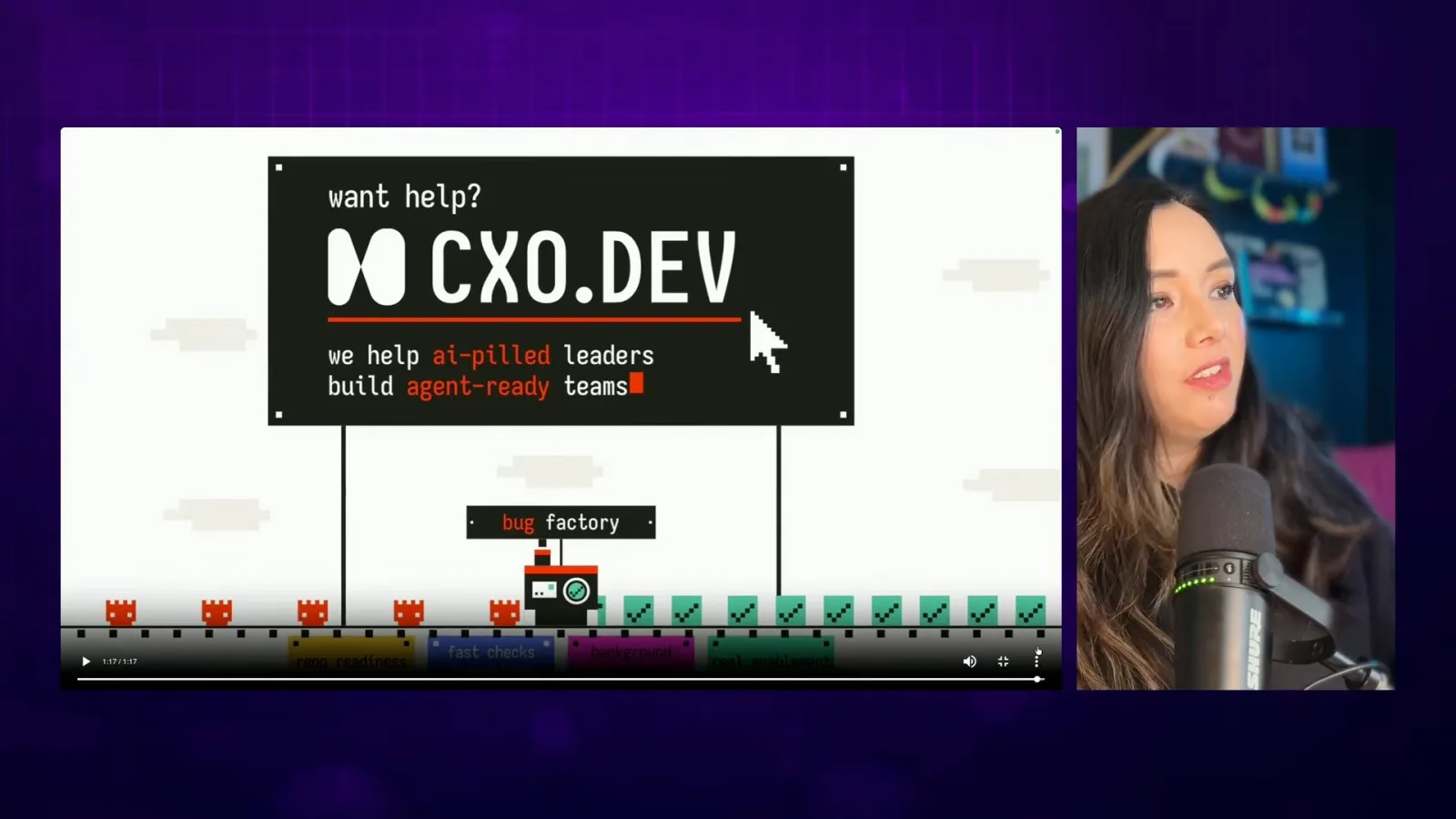
Our brand uses static pixel-like invader characters. Fable made sprite frames so they could walk, cheer and jump rather than simply wiggle across the screen. I added that animation task to my future benchmark because I had struggled to get other models to do it.
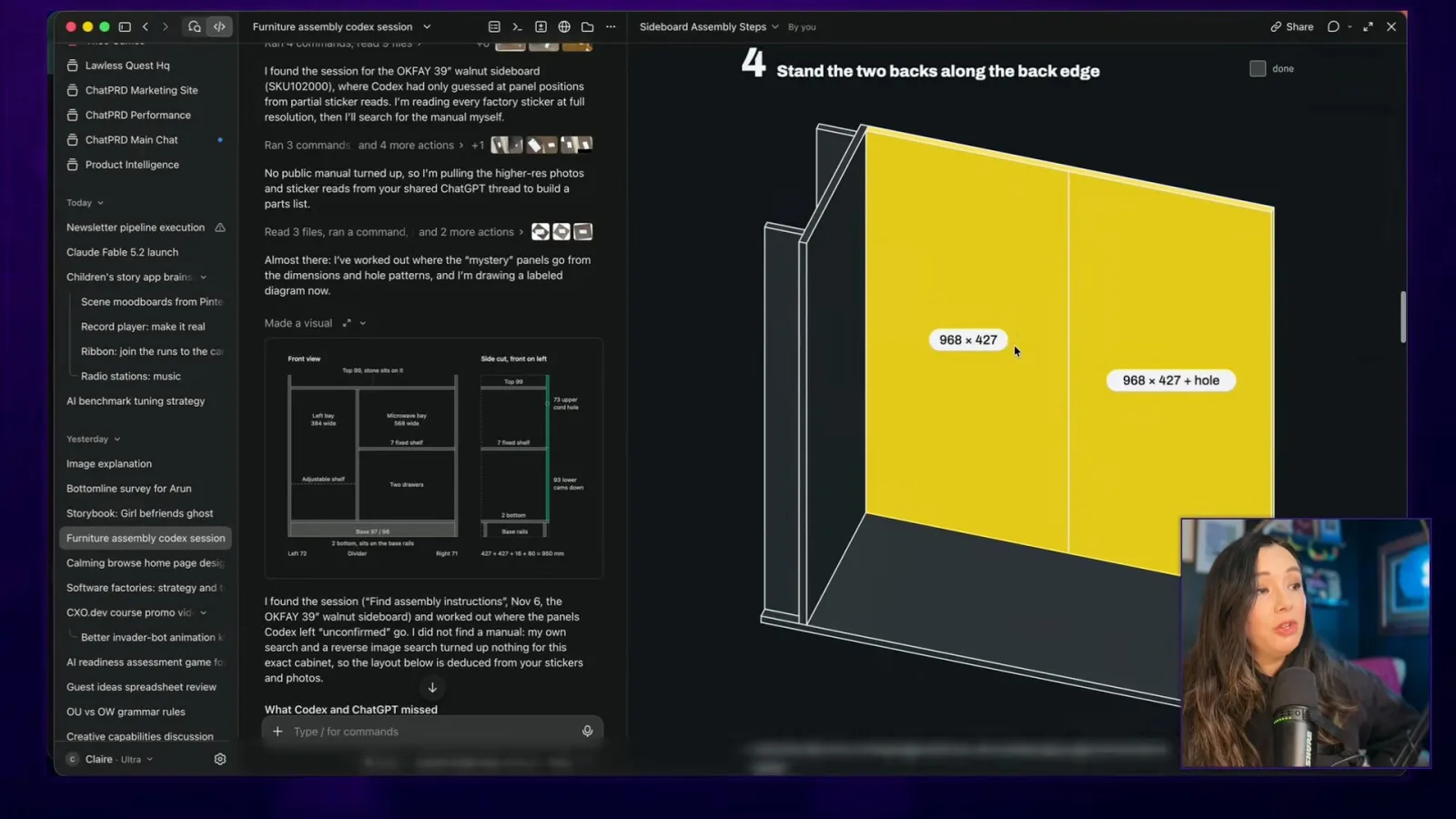
I also photographed a flat-packed piece of furniture that arrived with loose screws, many pieces and no instructions. Other models had failed to make a useful assembly guide. Fable produced a diagram and a sequence that I followed with the person who assembled it.
Build a game and reorganize a pipeline
Vo demonstrates a bug-defense game and an unfinished product-intelligence migration.
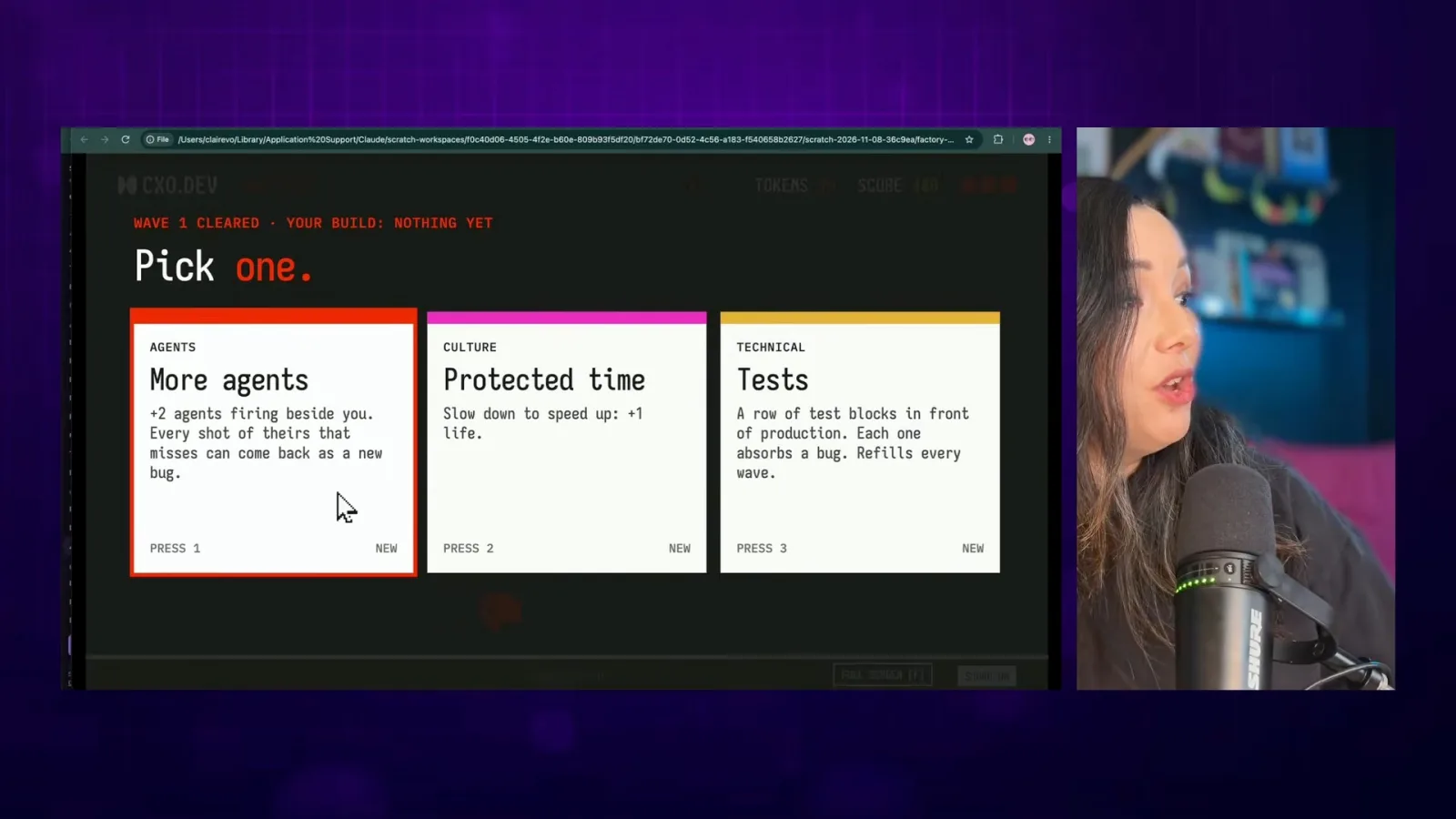
I extended the software-factory idea into a bug-defense game. The player chooses tradeoffs such as more agents, protected time or tests while trying to stop bugs reaching production. The model also produced a humorous trailer about a team confronting its token bill.
For engineering work, I asked Fable to make the ingestion and summarization pipeline of my ChatPRD product-intelligence tool more efficient and maintainable. The codebase had accumulated six months of changes; the proposed organization matched much of my planned roadmap.
The model worked autonomously but stopped at useful points, including when it needed a pull request. I was only halfway through the migration when recording, so I could not yet report whether the complete migration worked.
Weak web designs and an interactive typewriter
She contrasts disappointing homepage designs with a 3D writing environment.
The design failures were more visible when I asked it to create a calming browser homepage and a ghostly storybook. I disliked both designs. I may pair Opus 5.5 for front-end work with Fable for the back end.
Inspired by an open-source 3D record player, I asked Fable for a different project: a rendered typewriter. It accepts keyboard or on-screen input and lets me zoom in. The correction-fluid effect does not work perfectly.
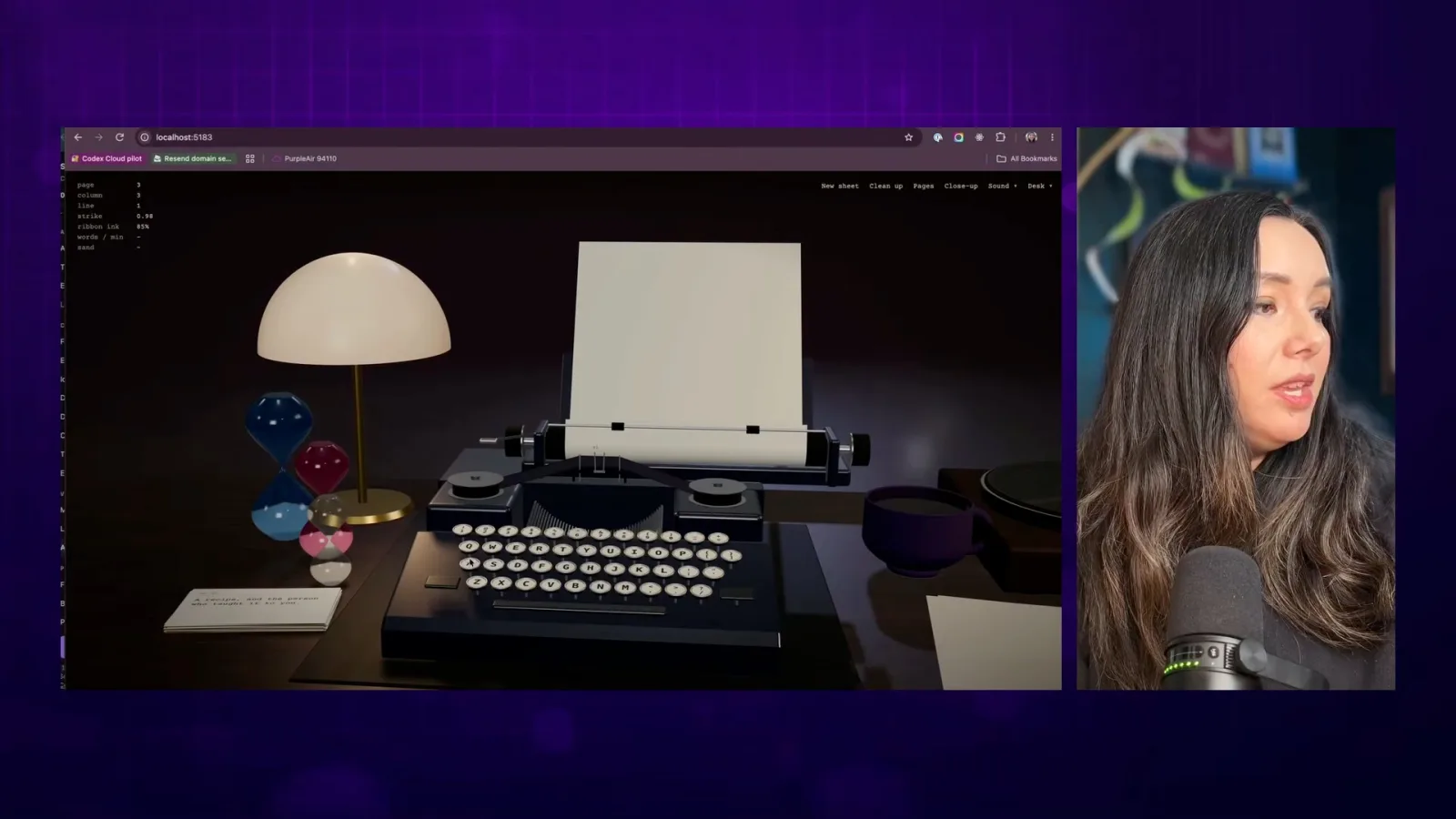
The writing environment includes music, rain sounds, writing prompts and sand timers. I integrated the record player and added scenes including an evening desk, a train, handwritten pages and a retro computer with a dot-matrix printer.
The initial typewriter was produced in one pass, after which I requested tweaks and additional features. I plan to make it available for others. For me, the project made a creative idea possible that I could not previously imagine building.
I have previewed the How I AI benchmark but will run a fuller comparison against other models later. The invader animation took 16 minutes in this test; other tasks finished in under a minute. I describe Fable’s intended availability through APIs, cloud platforms and Claude tools.
Más de este canal
 38:34EN
 How I AI· 9 nov 2026Pódcast · 2 vocesA founder used Codex to build the Norwegian tutor he wantedInvitado: William Imoh · Presenta: Claire VoWilliam Imoh describes a voice app built around conversation, then shows how role-based agents support his company.
 42:30ENHow I AI· 2 nov 2026Pódcast · 2 vocesInside Figma’s PM OS: Ezra Mechaber on Skills, Bug Bashes and Automated ExperimentsInvitado: Ezra Mechaber · Presenta: Claire VoFigma growth PM Ezra Mechaber shows Claire Vo how a shared repository supports product work, browser testing and a human-reviewed experiment loop.
 35:10ENHow I AI· 28 oct 2026PódcastFour Personal AI Agents on Nine Tasks: A User’s TestPresenta: Claire VoClaire Vo compares work and family workflows while acknowledging uneven access and subjective scoring.
 29:40ENHow I AI· 26 oct 2026Pódcast · 2 vocesHow Reddit Proto Connects Design, Live Data and Production CodeInvitado: Blair Metcalf · Presenta: Claire VoBlair Metcalf demonstrates Reddit’s internal prototyping harness and its design-system mapping for Figma and Cursor.
 16:22ENHow I AI· 21 oct 2026PódcastClaire Vo: Claude Duet Is Beautiful, but It Is Not My Number One AgentPresenta: Claire VoAnthropic’s phone-based personal agent has the most polished launch Claire Vo has seen: thoughtful onboarding, task lists, first-class artifacts, and Slack-style channels. Polish is not enough when every other agent is competing for the same attention.
 36:33ENHow I AI· 19 oct 2026Pódcast · 2 vocesHow Brooke Lacey Uses Claude Code to Edit Short VideosInvitado: Brooke Lacey · Presenta: Claire VoA creator combines local media tools, timed cut lists and human feedback.