In 30 seconds
Former Cursor founding designer Ryo Lu argues at AI Engineer Shanghai that tools should do more than increase output: they should expose assumptions, let people change decisions and help ideas emerge through making. A journal demo, a move to Taipei and a jazz ensemble illustrate his case.
- 1Capability and directionTools can help people do more and also understand what they care about.
- 2The blind spot of completenessA plausible answer can cover questions you have not yet formed.
- 3Let people touch changesA workbench exposes plans and lets people edit parts and regain direction.
- 4Keep the choice to use a toolA tool’s availability does not mean every task must be delegated.
- 5Use artifacts to understand othersDifferent versions make previously vague differences discussable.
- 6Change one decisionFind a decision in an AI answer that matters to you, change it and share it.
Takeaways
- A complete, plausible AI answer does not mean its user has thought through the question.
- A good workbench exposes important assumptions and lets people make local changes and regain direction.
- Knowing what you want can emerge through the process of making.
- Not every saved moment needs to be filled; life is also a source of creative work.
- People can change one another through making and discussing things together.
Read the edited text by chapter
Why stronger tools can make us uneasy
Ryo describes excitement and anxiety as tools become more capable. He asks whether greater output helps us understand what we want.
When we can do anything, do we still know what we want? I do not want to spend this talk proving how powerful AI is. We have seen a sentence turn into a website, a feature built in minutes, and machines work overnight on things we had not even thought to ask for.
At first I was excited too: things I could only imagine could finally be made. But after seeing someone else use a new model, admiration can give way to another thought: am I falling behind again? We respond by producing more, learning more tools and starting more agents. When would that ever be enough?
I have always believed in making tools that shorten the distance between imagination and reality. That belief has not changed. But as tools let me do more, do they also help me understand what I want? I am not arguing that we should reject AI or that slow is always better than fast.
Before making became proof
He recalls childhood curiosity about computers and what changed when the interest became work. He wants to preserve his relationship with making.
Much of the anxiety comes from using ability as proof of identity: I am a designer because I understand design; I am an engineer because I can write code. When machines can do those things too, the question becomes personal: if my work is no longer special, what makes me special?
I remember moving to Canada as a child and seeing a beautiful Apple computer. I could not afford one, so I changed my own computer’s icons and fonts and studied how its appealing buttons were made. I had not decided to become a designer; curiosity simply made me want to get closer to that feeling.
It was a privilege when that interest became work: I could make a living from what mattered to me and meet others who cared. But curiosity became planning and play became output. It grew easier to answer when something would launch, while the reason I wanted to make it without being asked became harder to remember.
I do not want the comfort of saying a machine will never have a particular ability; the boundary keeps moving. I want to preserve my relationship with making. Even if a machine produces ten versions quickly, I can stop at one detail, feel that it is wrong and change it myself.
A complete answer is not complete thinking
AI supplies a complete set of journal features and reasons. Ryo asks whether he actually made those decisions.
Suppose I ask AI to make a tool for recording my life. Two minutes later it gives me mood scores, streaks, daily reminders and weekly reports, each with a plausible explanation. A complete answer makes it easy to say, “All right, that will do.”
But did I actually decide that my life needs a score? Did I decide that a good record requires writing every day? Sometimes I do not form my own view and then ask for help; I see an answer I cannot readily object to and mistake its completeness for my own understanding.
The answer may not be wrong; it may even be better than what I imagined. But if this happens every time, I get less practice reasoning from my own experience. A finished answer does not mean my thinking is finished, and the questions it covers up are especially hard to notice.
Choosing what a journal should keep
The audience chooses features to remove. Their different choices give shape to what recording life means to each person.
I ask the audience not what feature is missing, but which of the four they would remove. I would remove streaks, daily reminders and weekly reports: I want to preserve my life, not feel I owe the tool homework whenever I miss a day.
You might need the reminder, or prefer an endless canvas to a daily page. There is no standard answer. By pausing, we have taken the vague idea of recording life, found a decision we care about and started to explain why.
Knowing what you want need not be a prerequisite for making something; it can emerge as a result of making it. Tools can help that process, but I do not want a rule that says we must struggle through every decision before using them or be called lazy.
A service counter and a workbench
Ryo contrasts a service counter that returns a finished product with a workbench that permits intervention. He proposes visible assumptions and local edits.
Some work I am happy to hand over outright, such as moving information or converting formats. When I have not yet worked something out, however, I need a tool that lets me keep exploring rather than closing the question for me.
I compare two pictures. A service counter handles a request and returns a finished version; if it is right, I can use it immediately. But if it removes a reminder I liked, I have to explain again. Faced with a finished object, my choices can shrink to accepting, rejecting or asking again.
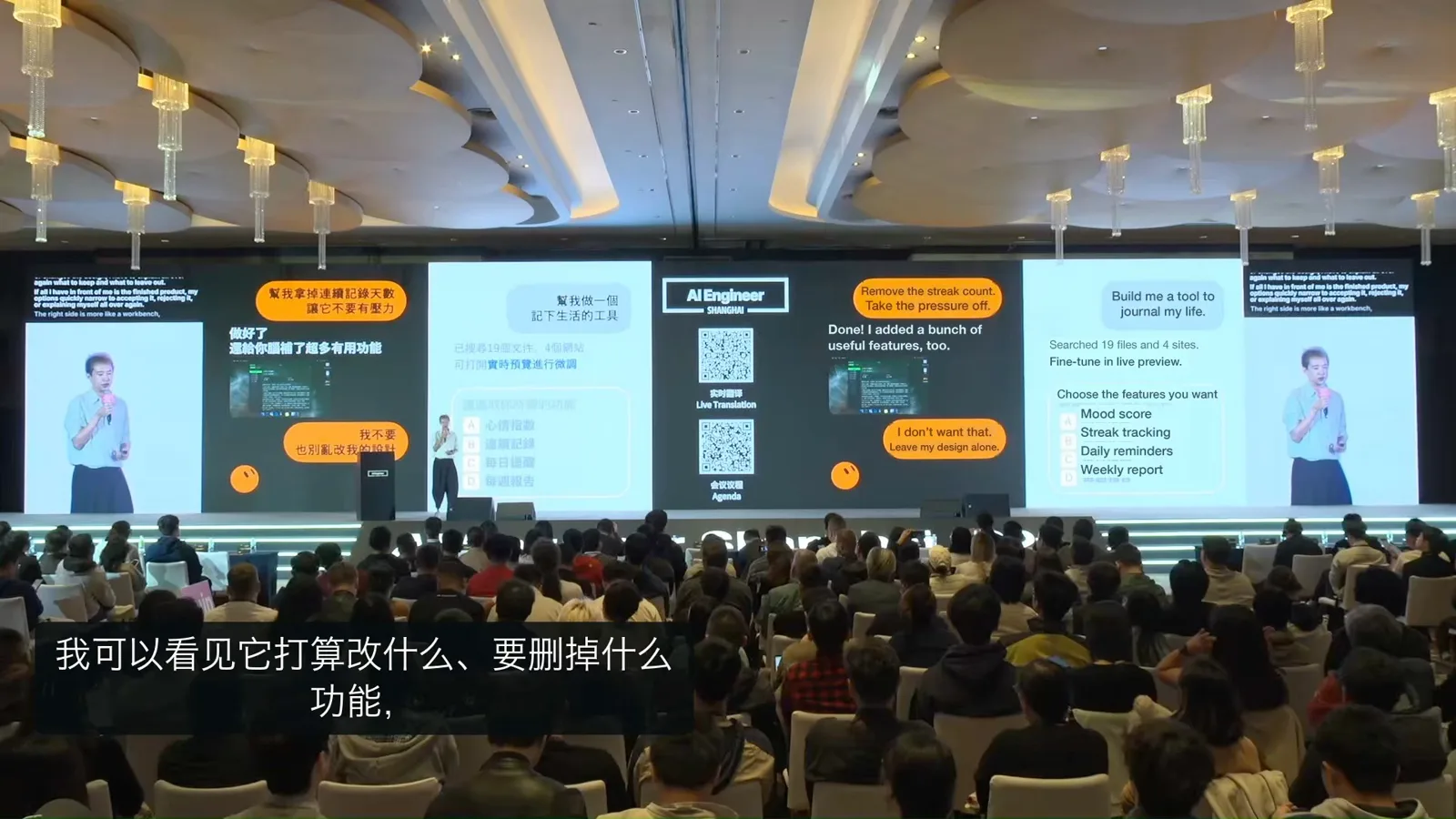
A workbench lets me see the planned changes and deletions, intervene before execution and adjust a live preview afterward. Seeing a reminder about to disappear may be what tells me I want to keep it. The difference is not the number of buttons; it is whether I can touch what is changing.
That is why I care about files, plans, edits, diffs and ways to intervene when designing software tools. I do not mean everyone should read every line of code or expose every detail. I want a way in when I want to understand, and something I can change when I want to change it.
Chat can be part of a workbench too; I do not want to assign a brand or interface permanently to either side. Better questions are whether I can change one part, understand a key decision, take back direction and explore freely.
For tool builders I suggest three starting points: make important assumptions visible, make changes small enough to try, and let people take delegated work back when needed. This does not mean adding a confirmation button to every step. It means offering more than accepting or rejecting an entire answer.
When to put the tool down
Tools can save time but also encourage us to fill it again. Ryo reflects on life and work after moving to Taipei.
A tool being available does not mean we must always use it. AI can help me think, or lead me to think less; it can save time, or give me more reasons to fill that time again. Greater capability alone cannot decide how I should use it.
Having email does not mean every situation requires another message. Sometimes I need AI to organize complicated work quickly; sometimes I want to write a few lines myself; sometimes I need to meet someone at a tea house. None of these is inherently nobler—I want to preserve the reasons for choosing.
Moving from San Francisco to Taipei was partly an exercise in that choice. I did not stop wanting to make things; I stopped wanting every part of life explained by its usefulness to work. An emptier calendar did not immediately give me certainty. Instead, each day I had to ask what I wanted to do.
Time that does not immediately become output is not wasted. A conversation, an unfamiliar walk or a song played repeatedly can remind me what I still care about. Life is not a competitor to creative work; it is a source of things worth making.
Rather than maximizing output, I hope tools give us time and attention to care for other people and the world: to understand questions we have not yet understood and act on what matters. Caring itself does not have to become another metric to maximize.
Collaborating like a jazz ensemble
Different versions help people understand one another. A jazz ensemble illustrates listening, disagreement and coordination.
Return to the journal. We can keep a simple page for each day, keep a free-form canvas, or combine the two. Ask someone who chose differently why, and the versions become more than outputs: they become material for understanding one another.
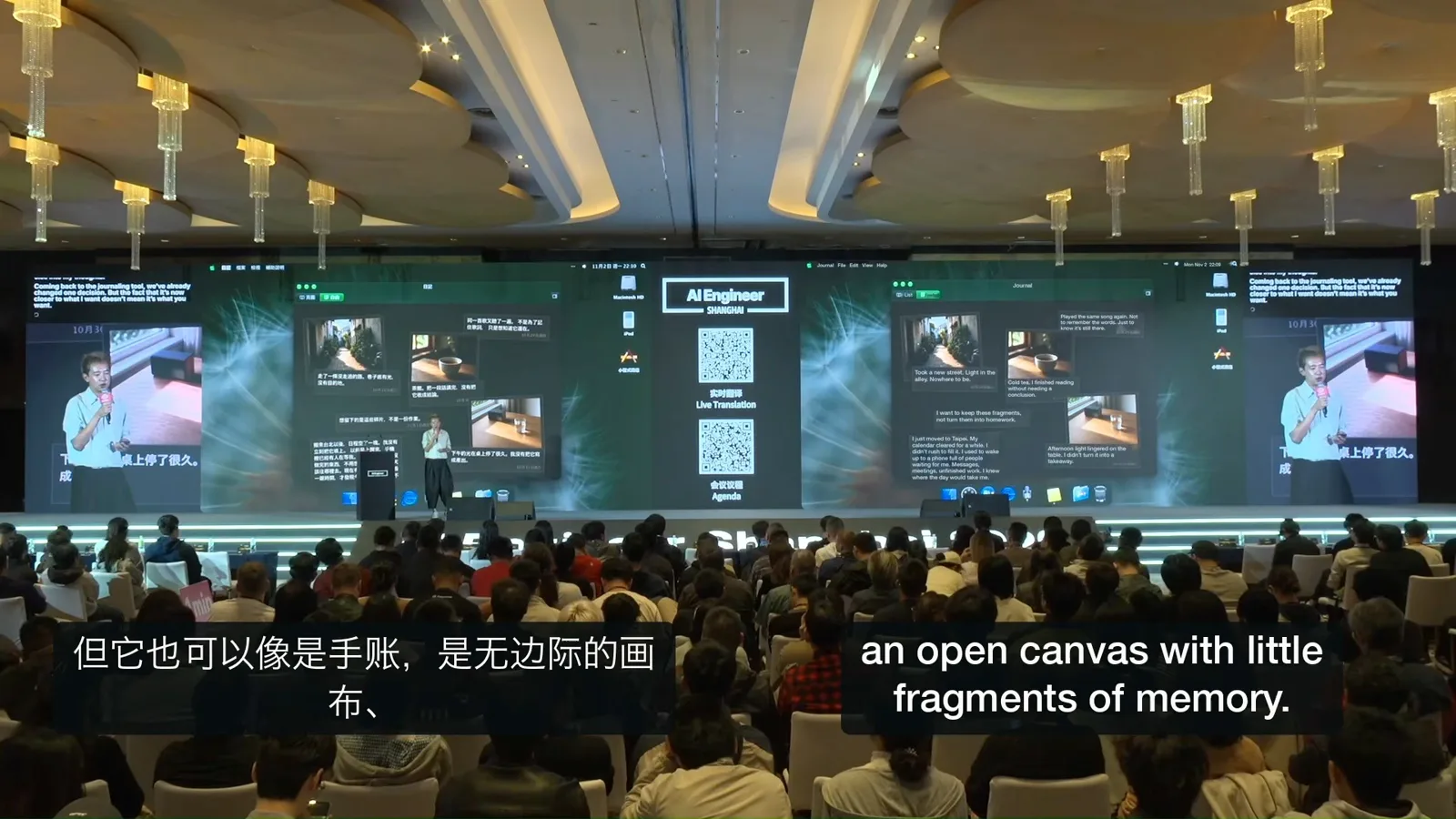
Many judgments at work form in the same way: someone finds a design strange in use, insists on a detail I dismissed, or takes apart something I was sure about and shows me what I missed. Collaboration is not always comfortable. We misunderstand, disagree, apologize and try again.
I think of collaboration as a jazz ensemble. Not everyone plays the most notes or proves they are the best. One person carries a melody, another listens, leaves space and joins in. When the rhythm is lost, they listen their way back; the result is not something any one person planned alone.
AI is convenient and patient, and I do not want to deny how helpful that ease can be. But if I always choose the easiest partner to respond to me, I may lose chances to build understanding with someone different. I want more than a world that responds to me; I want one capable of changing me.
Finding yourself through making
People need not know themselves completely before starting. Small choices in making can produce new understanding.
So when we can do anything, do we know what we want? My answer is still: not necessarily. That does not mean we must find a grand mission before starting. In small choices we can discover what matters to us.
We did not begin by completing a product requirements document. We looked at a version, felt something was wrong and changed a little, then understood more clearly what we wanted. Making things does not just express a self we already know; it lets us encounter a self we have not yet met.
An exercise for the next answer
Ryo invites the audience to pick one unexamined decision in a complete answer, change it and share it.
The next time you see a complete AI answer, take a moment: which decision in it have I not thought through myself? Pick one thing you care about, change a little, and if possible show it to another person. You do not have to change everything at once or prove you are better than the machine.
I still believe in tools: they can let people participate who could not before, and make possible things that were out of reach, without requiring us to give our whole lives to maintaining a system. I want tools that help me feel more clearly, explore freely, care for the world and make things with others that we could not otherwise make.
More from this channel
 14:58EN
 AI Engineer· Nov 6, 2026Sparsh Jain on Building Experiential Memory for AI AgentsSparsh Jain · CentralAgent AIAn agent-memory lifecycle forms, updates and retrieves lessons while evaluation loops manage changing context.
 17:27ENAI Engineer· Nov 6, 2026Philipp Schmid: Seven Things an AI Coworker NeedsPhilipp Schmid · Google DeepMindA walkthrough of managed agents, skills, credentials and controls, culminating in a scheduled portfolio-audit demo.
 18:13ENAI Engineer· Nov 6, 2026Sid Pednekar: Judgment Is the Scarce Resource in AI AdoptionSid PednekarA framework for choosing valuable problems, building shared capabilities and turning experience into organizational learning.
 14:04ENAI Engineer· Nov 6, 2026Frank Long on Building AI Investment Workflows Around QualityFrank Long · CoatueCoatue’s Frank Long breaks investing into information, analysis and decision steps, and argues for choosing the right combination of code, models and people.
 17:52ENAI Engineer· Nov 5, 2026Cameron Wolfe on Evaluating AI When Answers Are SubjectiveCameron Wolfe · NetflixNetflix’s Cameron Wolfe outlines human review, calibrated model judges and production monitoring as a repeatable evaluation loop.
 20:45ENAI Engineer· Nov 5, 2026John Stecher and Scott Worland on Building AI Systems That Can ChangeScott Worland, John Stecher · Norm AIThe Blackstone and Norm AI CTOs discuss data strategy, evaluations, production controls and when to wait for a better model.