In 30 seconds
Theo Browne suggests treating an AI agent skill’s description primarily as a trigger. He says descriptions may be included even when a skill is not used, so detailed procedures belong in the skill itself.
- 1Think about triggersTheo recommends treating the skill description as a way to signal when the model should load it.
- 2Context costHe says descriptions are inserted even when the skill is not used; that behavior depends on the agent system.
- 3Keep details in the skillAn overly detailed description can effectively contain the whole skill before the model chooses to load it.
Takeaways
- A skill description can tell a model when the skill is relevant.
- Theo argues that descriptions should avoid embedding the full procedure.
- How descriptions are provided to a model depends on the particular agent system.
Read the edited text by chapter
Descriptions as routing cues
Theo explains why he favors trigger-oriented descriptions for skills. His advice is motivated by how descriptions are supplied to a model in the workflow he discusses.
Think of the description of a skill as trigger keywords, rather than a complete explanation of what it does. The important job is to tell the model when to pull that skill in.
In the setup I am discussing, the description is inserted even when the skill is not being used. I have seen descriptions that contain everything needed to perform the task, so the model can get the details without ever loading the skill itself. How and when descriptions enter context varies by agent system.
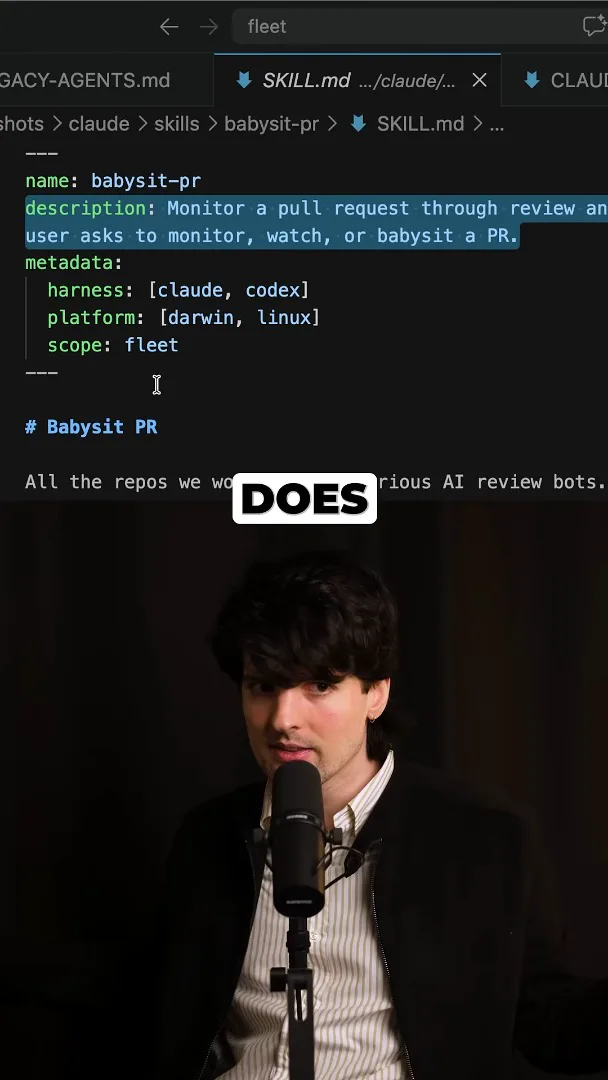
For that reason, I would avoid turning the description into an elaborate explanation of every operation. Use the terms and situations that help the model recognize when the skill is relevant, and keep the detailed procedure in the skill.
More from this channel
 38:47EN
 Theo - t3․gg· Oct 28, 2026Theo’s Long-Running Agent Experiments: Verification, Compute and CostTheo Browne · Ping LabsA skateboard game and two compiler projects show how repeated checks and flexible compute can sustain agent work—and how expensive those loops can become.
 36:07ENTheo - t3․gg· Oct 27, 2026Theo on Token Costs, Coding Agents, and the Price of AI CapabilityTheo Browne · Ping LabsA viral estimate of Lauren's AI spending prompts a closer look at cache pricing, benchmarks, and the changing work of coding agents.
 30:37ENTheo - t3․gg· Oct 26, 2026Theo’s Three Skills for Reviewing and Shipping with Coding AgentsTheo Browne · Ping LabsHow sol-loop, full-send and full-stop encode review, verification and different levels of merge authority.
 0:43ENTheo - t3․gg· Oct 23, 2026Theo Distinguishes Security Vulnerabilities from Active AttacksTheo Browne · Ping LabsA short explanation of why disclosed software flaws and reported attacks are different kinds of security news.
 29:22ENTheo - t3․gg· Oct 22, 2026Theo on Security Vulnerabilities, Stolen API Keys and AITheo Browne · Ping LabsA look at the gap between vulnerability disclosure and patching, and a speculative account of why stolen inference keys may be valuable.
 31:13ENTheo - t3․gg· Oct 20, 2026Theo on Why Smarter Models Help More Than DevelopersTheo Browne · Ping LabsFrom game modifications to compiler experiments, Theo revisits his assumptions about who benefits from more capable AI.