In 30 seconds
In August 2024, Matthew Berman reviews Figure AI’s announcement and promotional footage for Figure 02. He discusses the company’s reported hardware specifications, cameras, speech interface, battery, and hands, and shares his enthusiasm for the design. Berman also considers Figure’s stated vision for factory work, households, and eventually space. The specifications are company claims from the time, while his ideas about the robot’s internal architecture and future deployment are speculation rather than established results.
- 1Ground-up redesignFigure says it redesigned the robot’s hardware and software, including cameras, batteries, sensors and actuators.
- 2Speech and visionFigure describes a speech interface and six RGB cameras; Berman speculates about how the models coordinate robot behavior.
- 3More capable handsThe company reports fourth-generation hands with 16 degrees of freedom and human-equivalent strength.
- 4Battery and onboard computeFigure reports a 2.25 kWh battery, more energy, and three times the previous generation’s onboard computation and inference.
- 5Dimensions and performanceBerman cites Figure’s figures for height, weight, payload, runtime, and speed.
- 6Long-term marketsFigure identifies physical labor, consumer households, and off-world work as potential opportunities.
Takeaways
- Figure described Figure 02 as a ground-up hardware and software redesign with changes to sensing, computing, batteries, and actuation.
- The company reported six RGB cameras, an onboard visual-language model, and fourth-generation hands with 16 degrees of freedom.
- Figure listed a 2.25 kWh battery and Berman cited five hours of runtime, but the video does not independently verify operating conditions.
- The proposed shift toward spoken interaction is an ambition; the footage and announcement do not demonstrate that any task can be reliably performed by voice command.
- Factory work, household assistance, and off-world construction are Figure’s long-term opportunities, not demonstrated deployments at the scale discussed.
Read the edited text by chapter
Introducing Figure 02
Berman plays the company’s promotional video and introduces the new humanoid. He reads Figure’s claims about its redesign.
Figure 02 is here. I start with the company’s promotional video and then look at what Figure has announced about its new humanoid robot. The footage is a product presentation, so its claims and visual demonstrations should be understood in that context.
I am impressed by the new generation and expect humanoid robots to become widespread in the future. That is my forecast, not a deployment figure established by the video. Figure says its engineering and design teams redesigned the hardware and software from the ground up, covering AI, computer vision, batteries, electronics, sensors, and actuators.
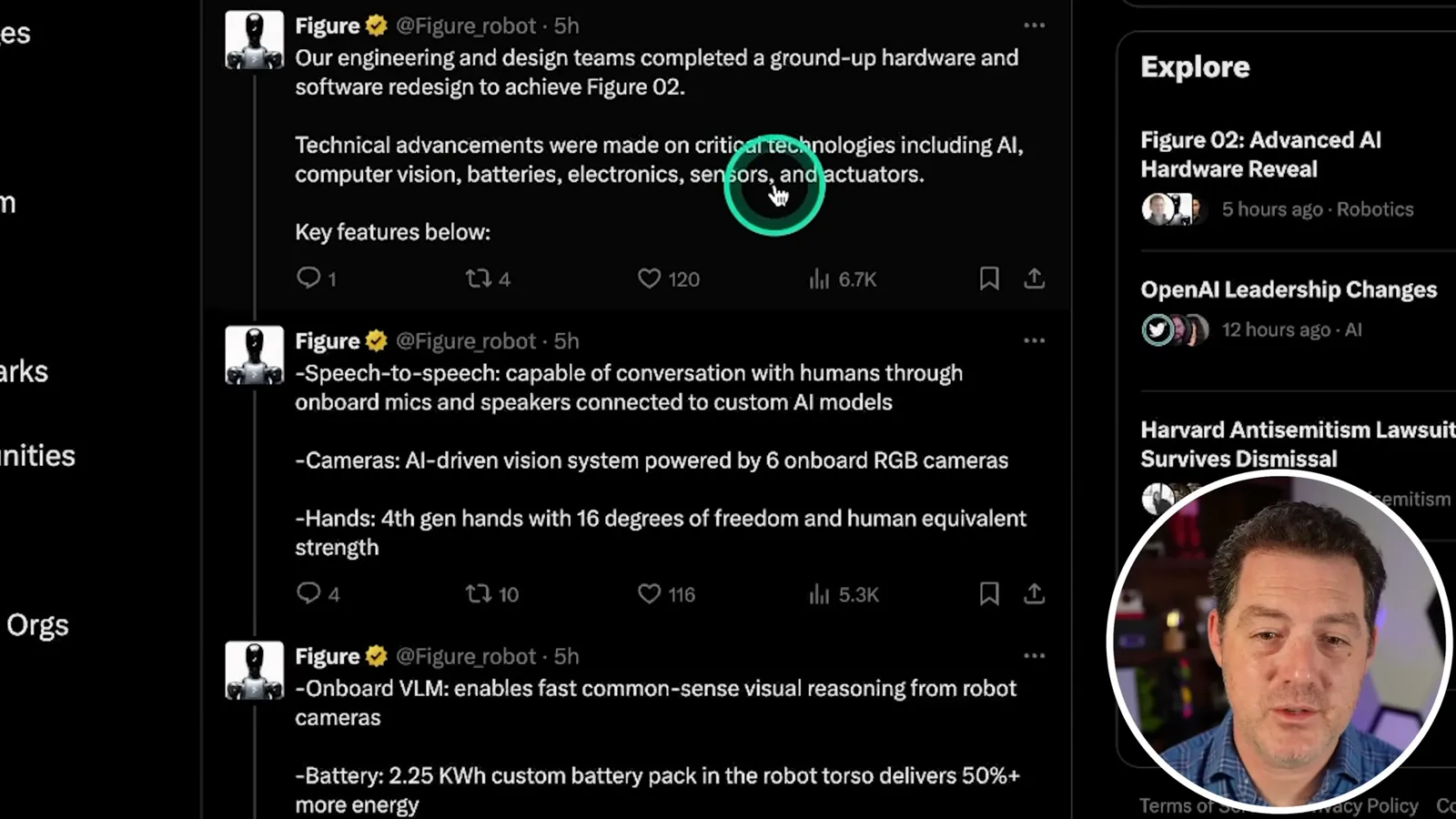
The most obvious change to me is its sleeker appearance compared with Figure 01. It looks futuristic and almost production-ready, although appearance alone cannot establish whether a robot is reliable or ready for commercial deployment.
Speech, cameras, hands, and AI
The announcement describes a speech interface, six cameras, improved hands, and an onboard visual-language model. Berman offers his own interpretation of how the system may work.
Figure describes speech-to-speech conversation using onboard microphones and speakers connected to custom AI models. I see natural language as a potentially important interface: a person could speak to a robot instead of manually programming every action. That is a proposed use, not proof that the robot can safely execute any instruction.
The company also says the robot has six onboard RGB cameras. I guess that its control resembles Figure 01 and uses a neural network to connect inputs and outputs, but I do not demonstrate the internal architecture. My expectation that such an approach will improve efficiency and instruction-following is likewise an inference.
Hands are a particularly difficult part of humanoid design because they require moving parts, dexterity, and precision. I mention an estimate I had read about the share of engineering work devoted to hands, without giving a source. Figure says its fourth-generation hands have 16 degrees of freedom and human-equivalent strength; the promotional demo shows the robot moving parts.
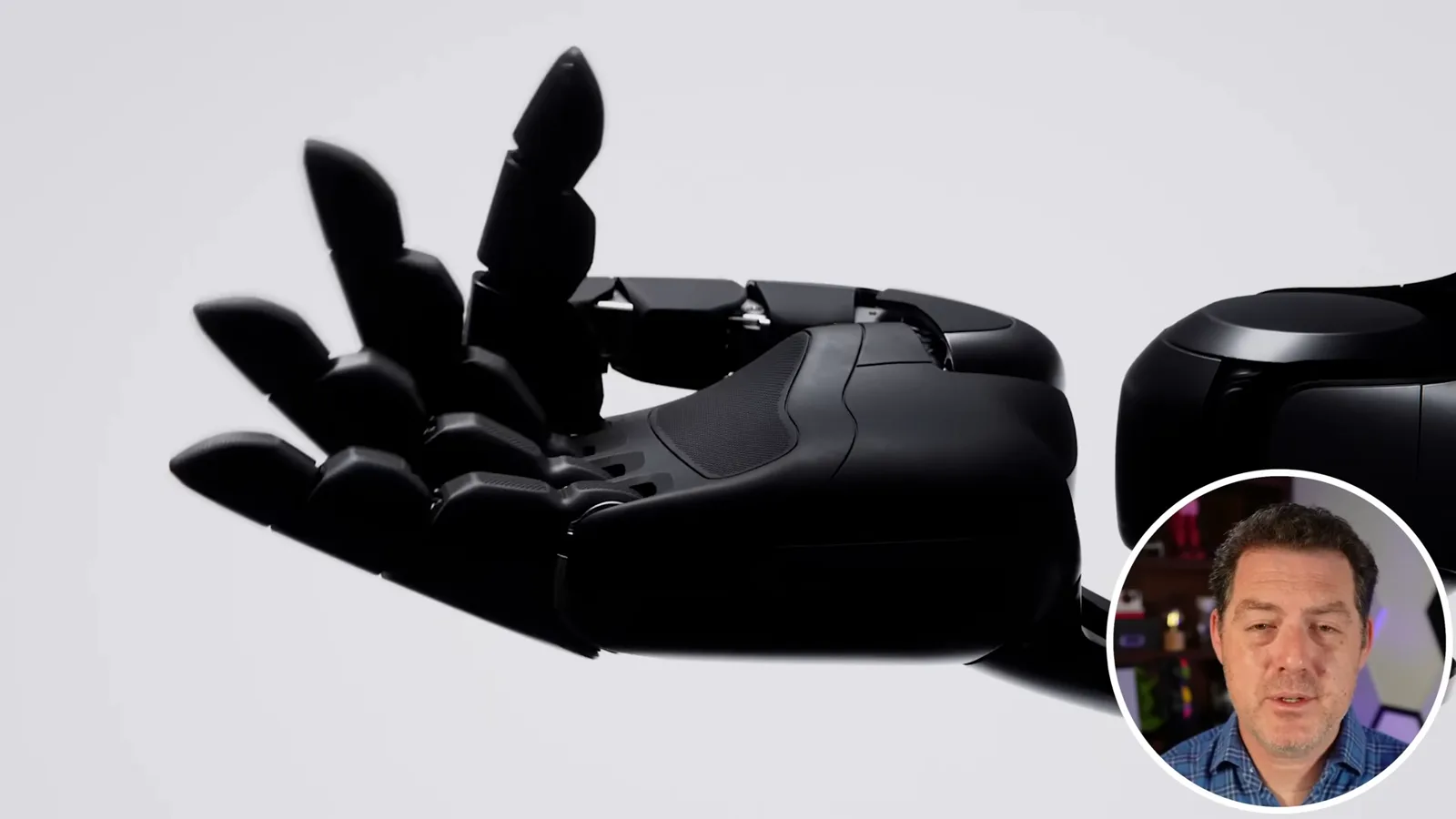
Figure also describes an onboard visual-language model intended to provide visual reasoning using the cameras. I speculate that it turns camera input into instructions for the robot, but the announcement shown here does not establish the full control pipeline or independently verify the model’s reasoning capabilities.
Power, computation, and specifications
Berman discusses the advertised battery and compute improvements and later reviews the robot’s dimensions and performance figures. A separate sponsor message interrupts this section.
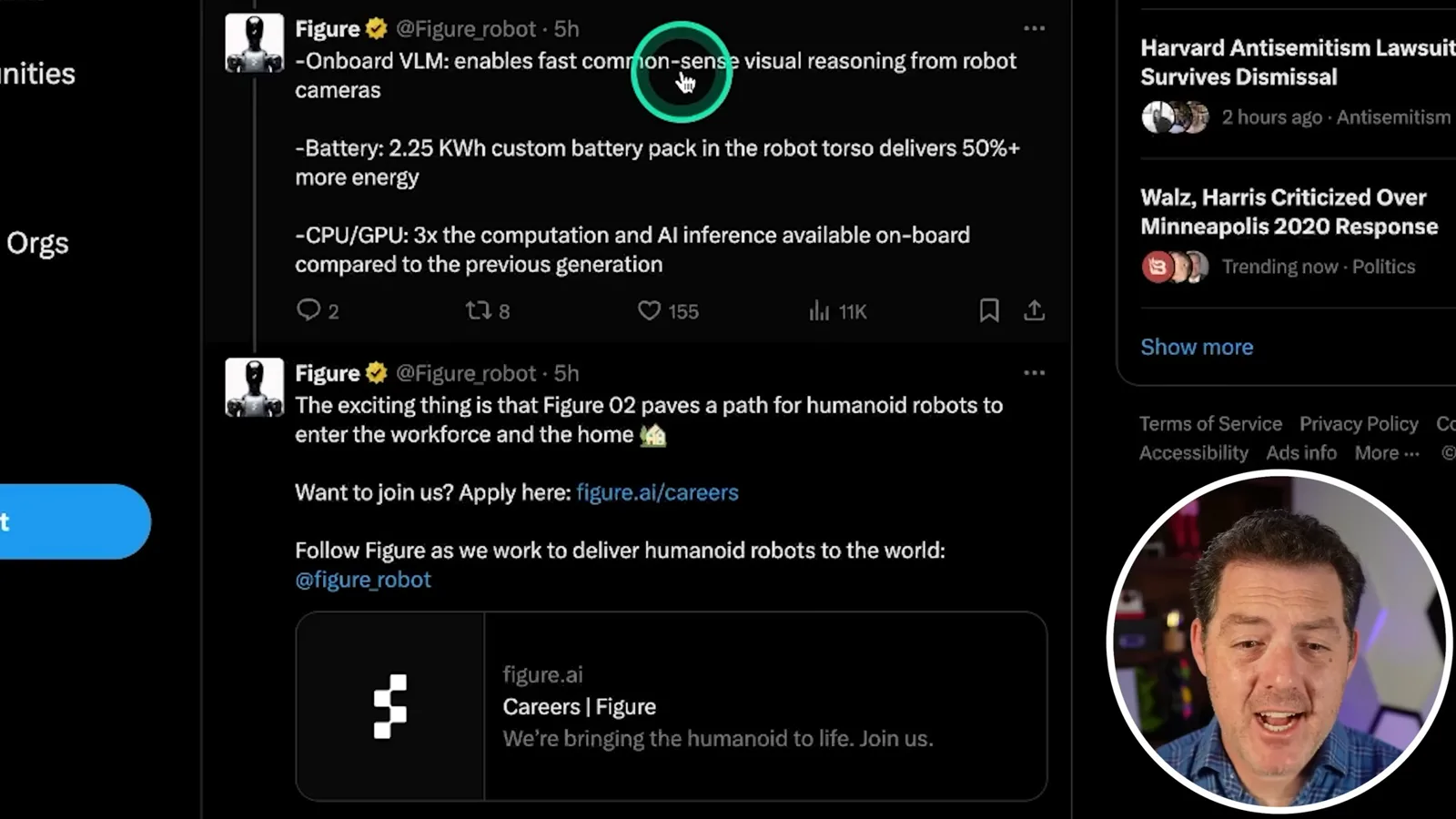
The company reports a custom 2.25 kWh battery in the torso, delivering more than 50% more energy, and says onboard computation and AI inference are three times those of the previous generation. I mention an approximately five-hour runtime. These are the stated specifications; the video does not test battery life under defined workloads.
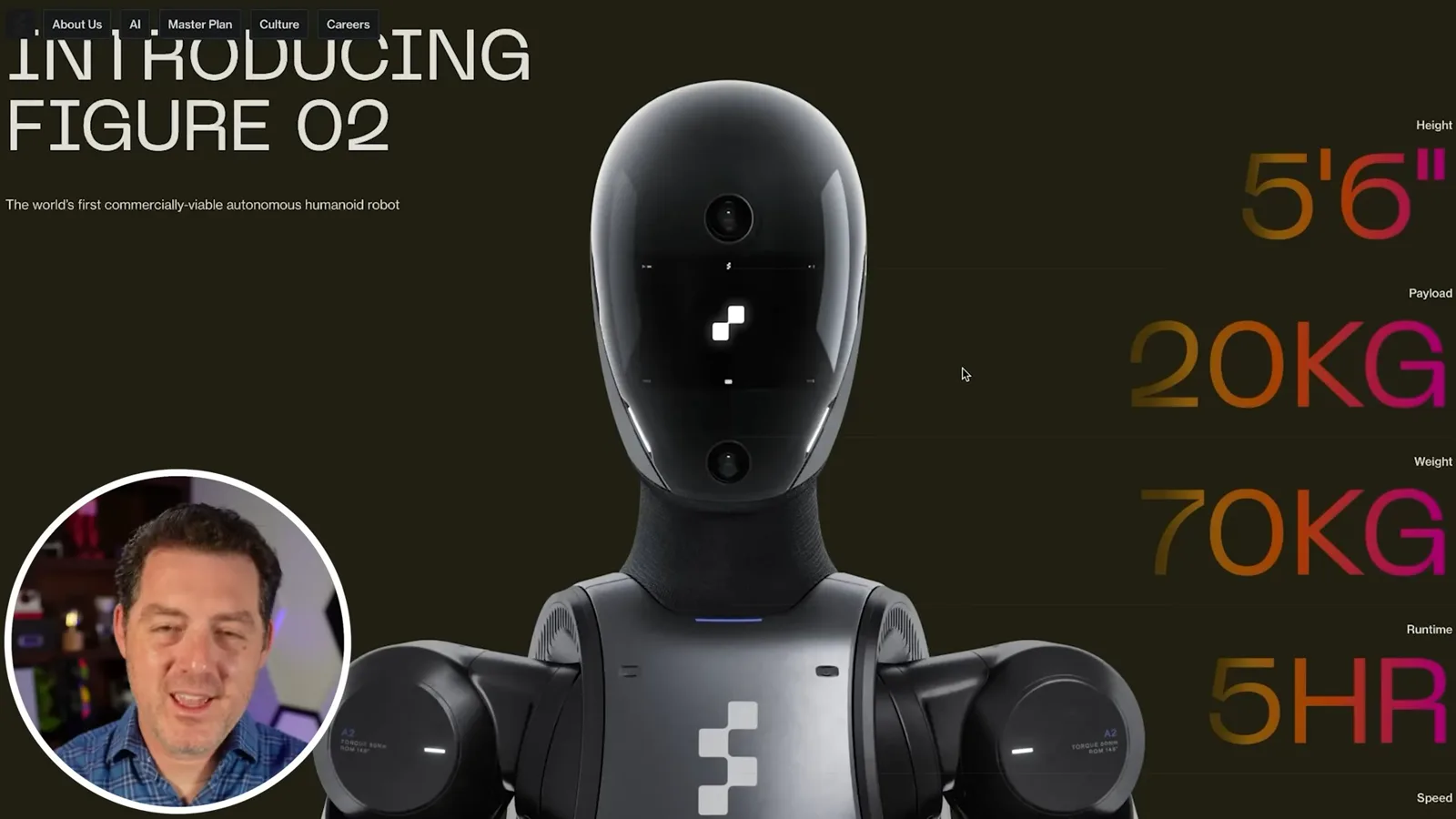
Figure’s listed specifications put the robot at 5 feet 6 inches tall, with a 20 kg payload and a weight of 70 kg. I also cite five hours of runtime, a speed of 1.2 meters per second, and fully electric operation. Those are product figures from the announcement, not measurements I made myself.
Figure’s vision for humanoid robots
Berman reads the company’s mission and considers applications in factories and homes. He distinguishes its eventual off-world ambitions and large market estimates from present capabilities.
Why are humanoids attracting so much attention? Figure’s stated mission is to build general-purpose humanoids that can take on unsafe or undesirable jobs and improve people’s lives. That is the company’s vision; whether and how robots accomplish it will depend on real-world deployment.
I point to Figure, Tesla’s Optimus, Boston Dynamics, and companies in China as examples of a broader push into humanoid robotics. I expect factories and dangerous work to be early applications, followed potentially by help in homes and care for older people. These are predictions, not a report that such uses have been achieved at scale.
Looking further ahead, I imagine robots taking on much of the physical work while AI handles work that requires thought. I find the prospect of people having less work to do both fascinating and worth discussing, but it is a speculative vision rather than a demonstrated outcome.
Figure identifies three long-term opportunities: physical labor, consumer households, and off-world activities. Its presentation estimates human labor at 50% of global GDP, or $42 trillion; I repeat the company’s market framing rather than independently verify that estimate. The off-world idea is to assist future exploration and construction beyond Earth.
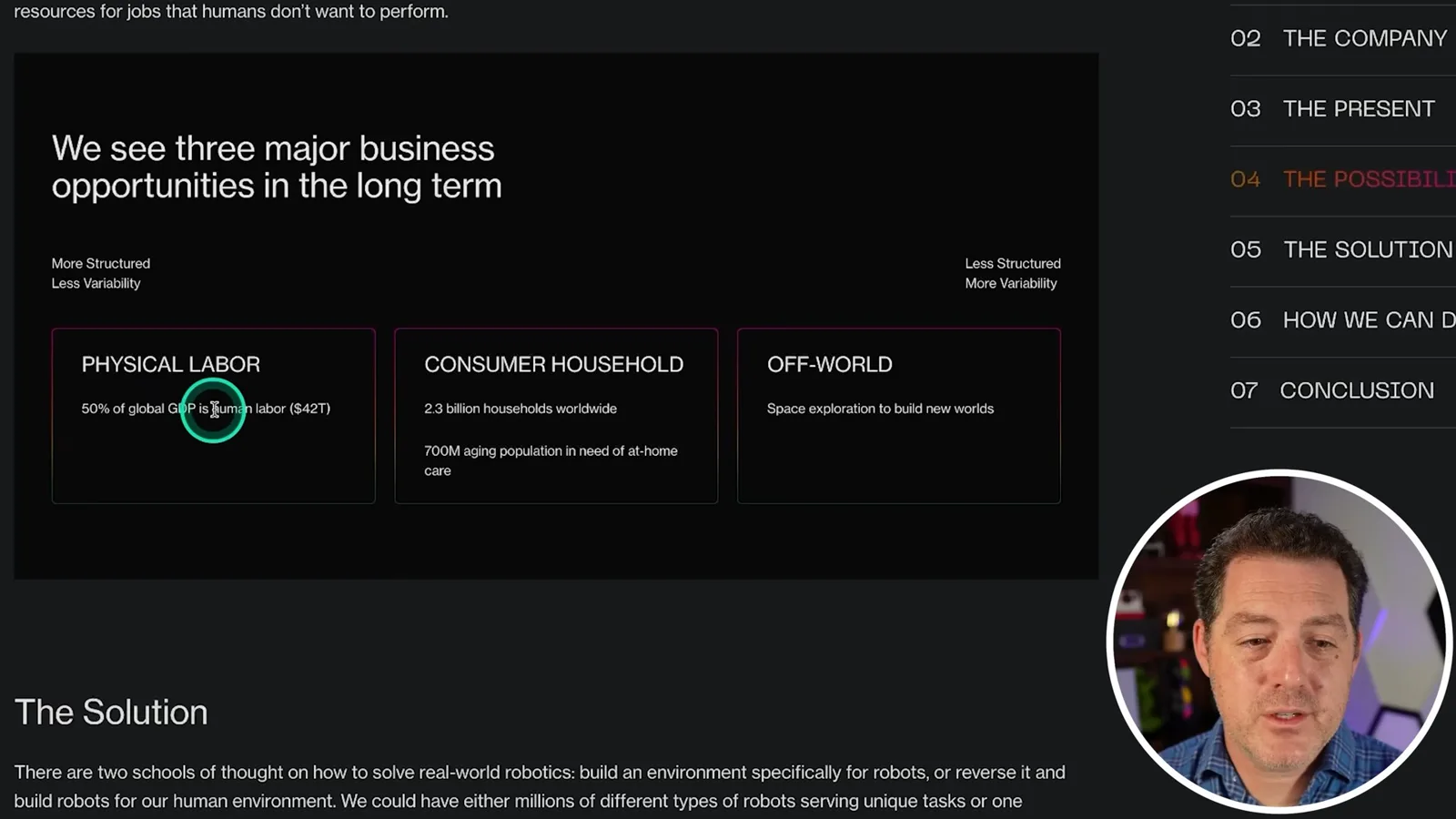
The company’s presentation also sketches potential demand using billions of people in labor, household assistance, and elder care. Those figures describe broad populations or potential roles, not orders, robot deployments, or guaranteed market size. I find the ambition both exciting and a little frightening.
More from this channel
 25:50EN
 32:20EN
 1:03:37EN
 0:53EN
 0:22EN
 45:08EN