In 30 seconds
Matthew Berman introduces TypeSafe's Jev, a model designed for fast structured decisions, and reviews demonstrations ranging from support-ticket classification to simulated characters and games. He emphasizes claimed speed and low cost, while noting it is not designed as a general chat or coding model. His claim of zero hallucinations should not be read as a guarantee of correct decisions, and a simulated driving demo does not establish real-world driving safety.
- 1A different output styleTypeSafe describes RLCD, or reinforcement learning for calibrated decisions, and positions Jev for structured decisions rather than general chat.
- 2Fast interactive demosThe video shows game control and a browser-navigation race, but speed depends on the setup and does not establish broad accuracy.
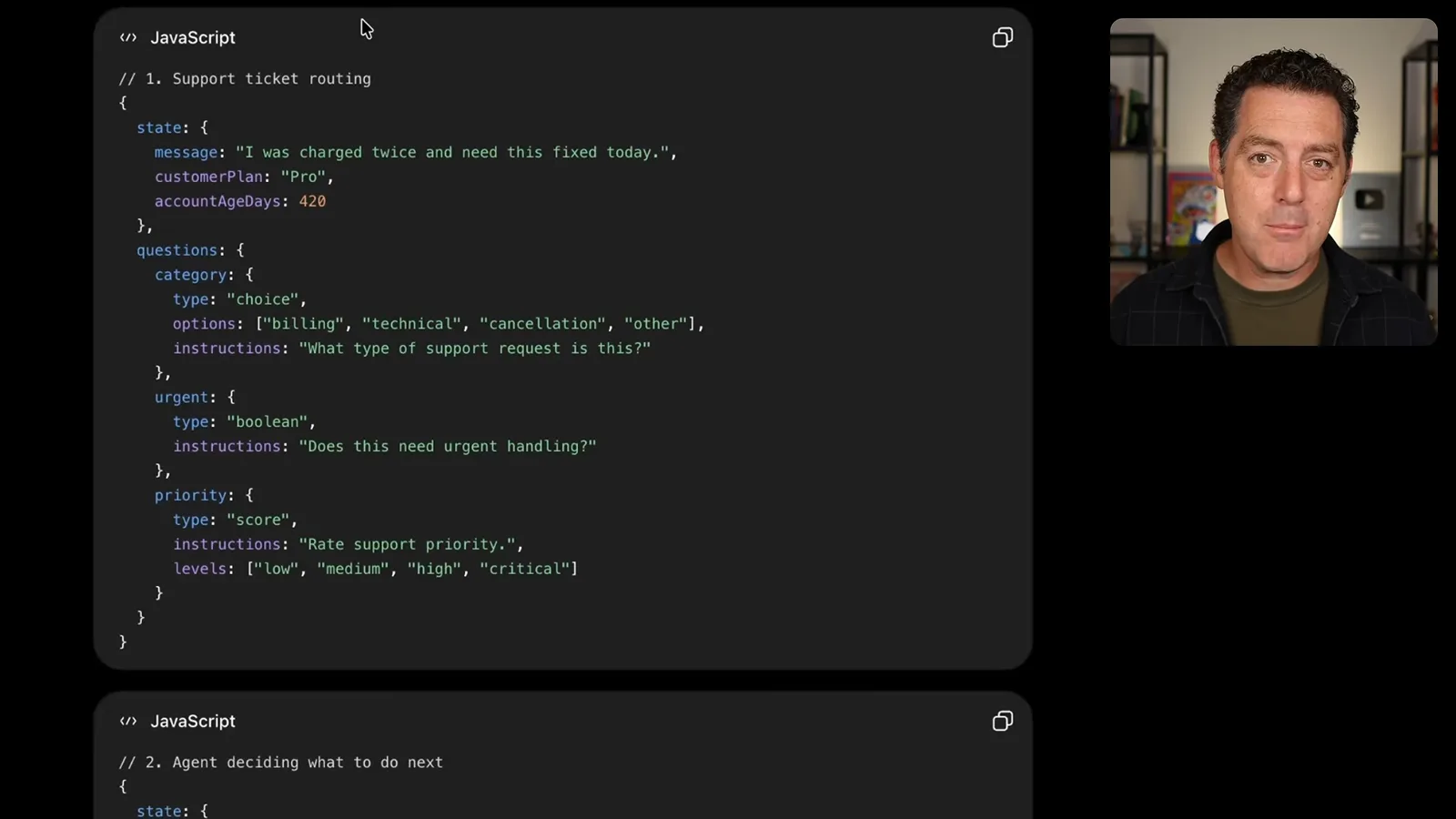
- 3Ticket routingAn example classifies a support request, urgency and priority using a supplied state and predefined output types.
- 4Reliability needs evaluationBerman repeats a zero-hallucination claim. Structured responses can still be wrong, so high-stakes use requires task-specific validation and oversight.
- 5A simulated townBerman shows 50 characters reacting to a broadcast, with decisions returned in under a second in his demonstration.
- 6Chess and other demonstrationsA timed chess example illustrates that fast responses can influence a game even when the position is weaker. Later examples include routing and simulated driving.
Takeaways
- Jev is presented as a decision model that returns structured choices or scores rather than general conversational answers.
- Speed and cost comparisons depend on task, setup, concurrency and pricing terms; the video's headline multiples are claims.
- A constrained output format does not prevent wrong classifications or decisions, even if it avoids free-form invented text.
- The examples include ticket routing, simulated agents, model routing, chess and games; these demonstrations are not independent reliability tests.
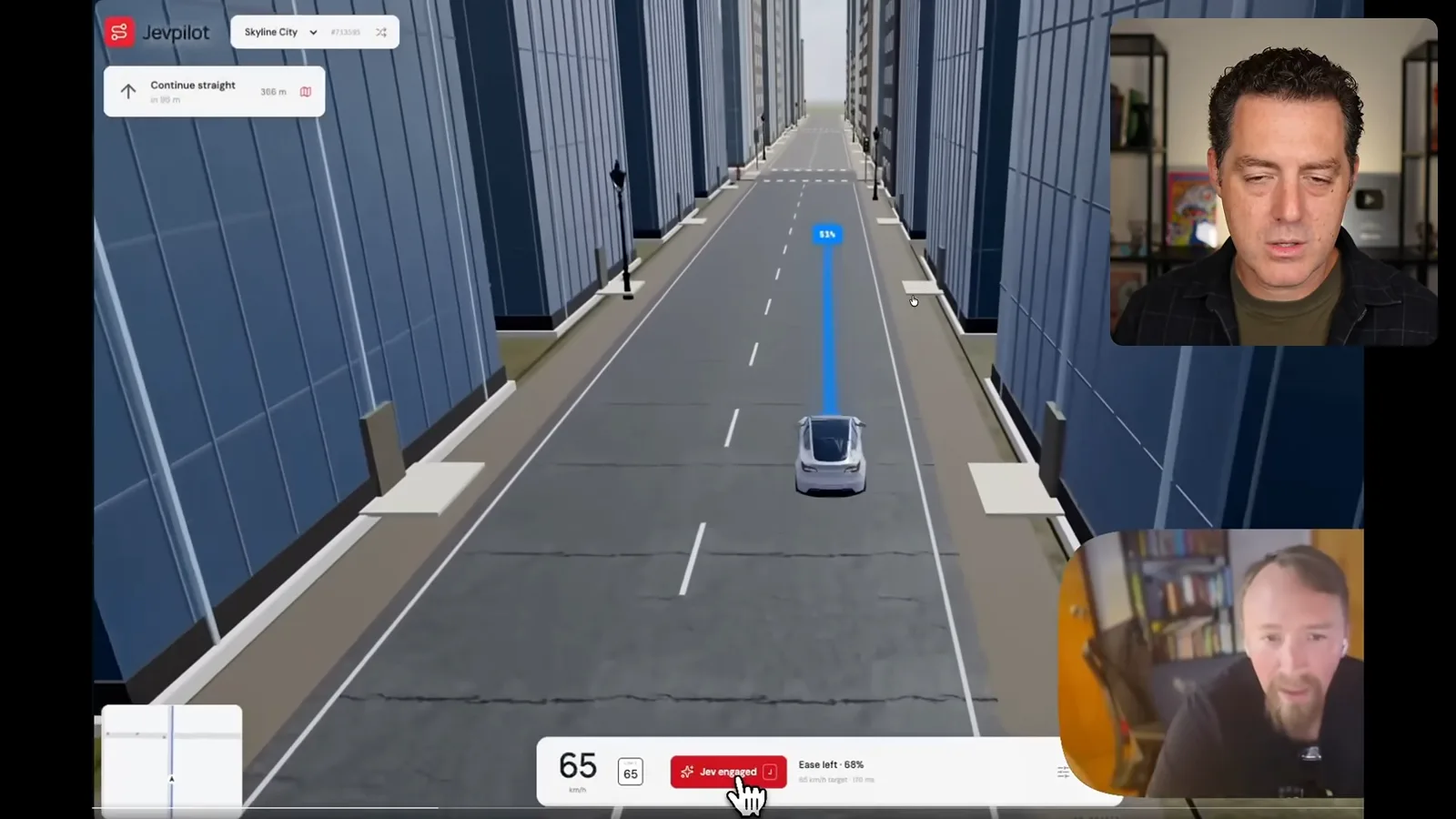
- The driving example is a simulation, not evidence of a validated autonomous-driving system.
Read the edited text by chapter
Introducing Jev
Berman presents the decision model and the developer's speed, cost and training claims.
Matthew Berman introduces Jev, a decision-oriented AI model from TypeSafe. He is impressed by the speed shown in the launch demonstrations and says it trades general chat and coding ability for fast, structured decisions. The speed and price multiples he repeats are launch claims, not universal measurements.
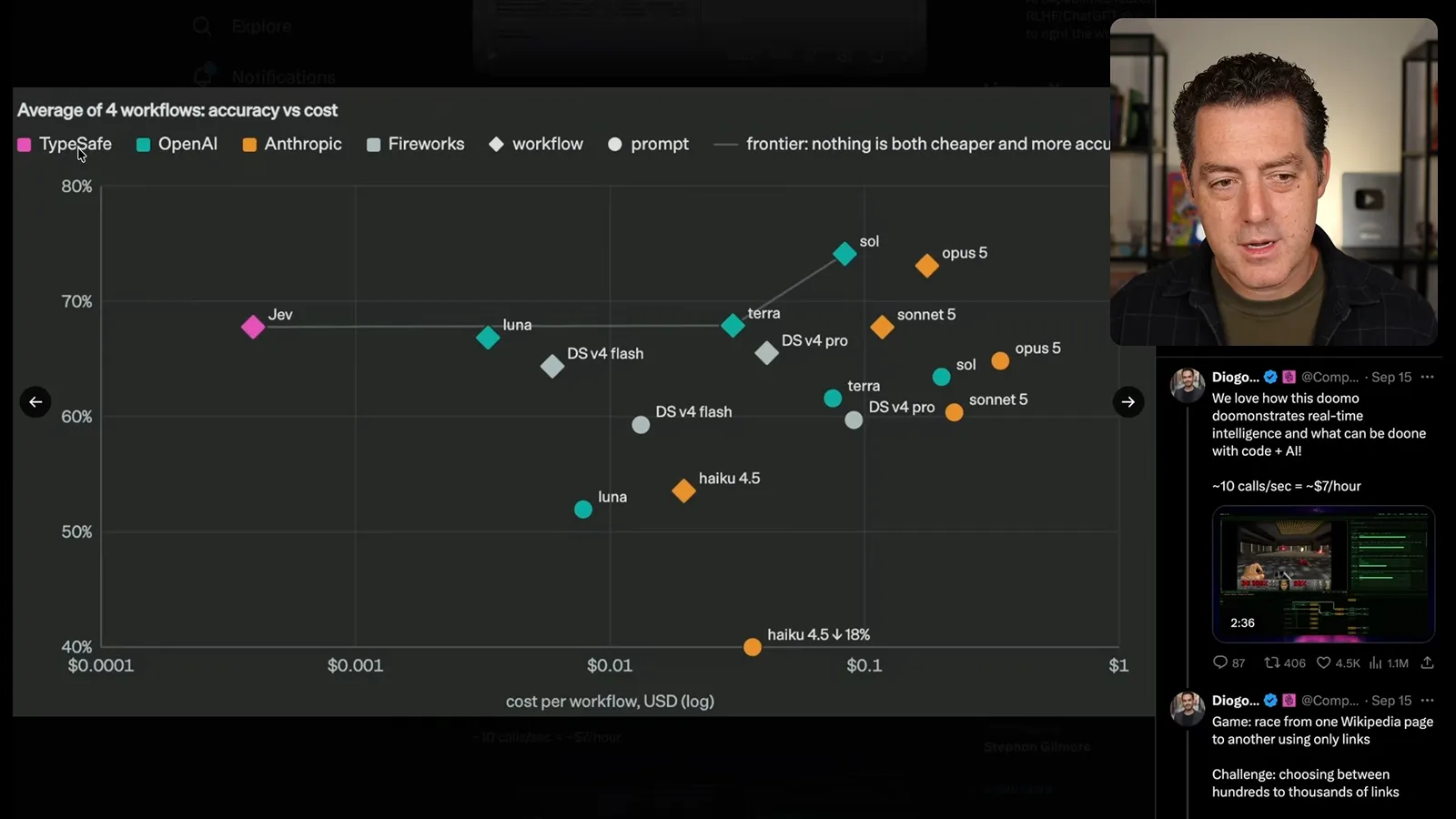
The company calls its training approach reinforcement learning for calibrated decisions, or RLCD. Berman contrasts its decision-oriented output with conversational models and describes claims of up to 200 times faster responses and lower costs, including free output tokens under the offer presented in September 2026. Pricing and limits can change.
Games, browser use and ticket routing
He shows rapid interaction examples and explains structured support-ticket decisions.
A Doom demonstration shows the model making choices inside a game loop. A separate Wikipedia navigation race compares Jev with other models on a sequence of link choices. These examples show a particular interactive setup; they do not by themselves measure accuracy or speed across all workloads.
In a support-ticket example, a customer reports a duplicate charge and asks for a quick fix. The input includes account information, while the questions request a category, an urgency flag and a priority score. Berman suggests that many such decisions can be processed in parallel.
Reliability and simulation
The video discusses reliability and demonstrates a simulated town and a sorting visualization.
Berman repeats a claim that Jev has zero hallucinations and mentions safety-critical settings. A structured choice can still be incorrect, biased or poorly calibrated; avoiding free-form text is not a guarantee of truth or safe decisions. Real deployments need representative testing, monitoring and appropriate human oversight.
Berman says he built a simulated town using another coding model and used Jev for its characters' decisions. After a broadcast about a bakery sale, the interface shows 50 responses in roughly 0.6 seconds, with most characters continuing their existing activity and a smaller number investigating or joining.
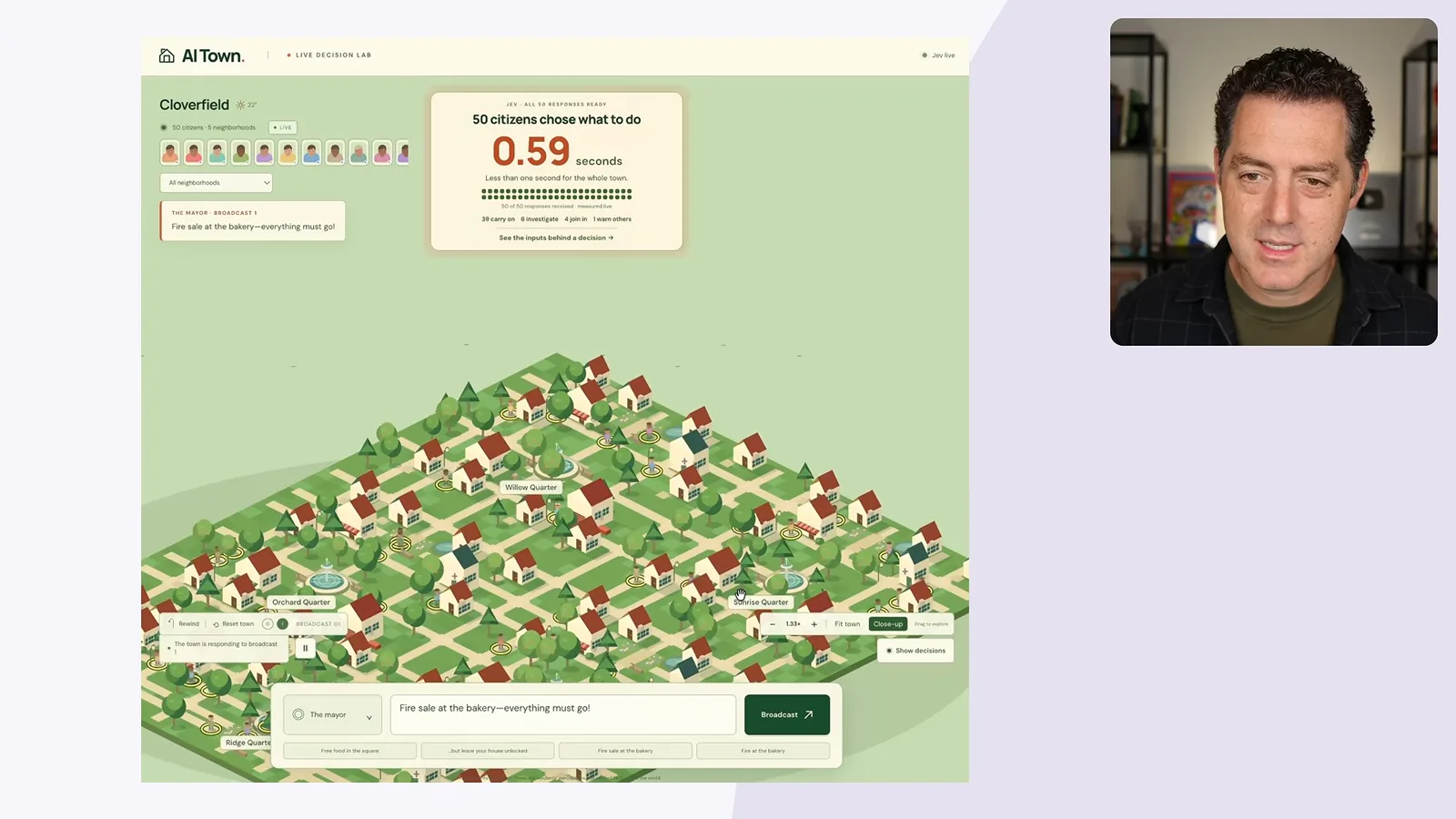
A second prompt sends many characters toward a fountain. Another visualization sorts colored candies, with Berman describing decisions made in parallel. These are demonstrations of responsiveness and orchestration in artificial environments, not evidence of general real-world reliability.

Chess, routing and driving demos
Berman reviews external experiments and closes with a view of possible uses for fast decisions.
Berman stresses that Jev is not intended to replace a conversational model for every job. He sees potential in high-volume choices where a system supplies a state and asks for a structured answer. He also notes the developer's warning that the model is less suited to chess than general models.
A timed chess demonstration illustrates a speed tradeoff: one opponent is described as having the stronger position but loses on time, while another defeats Jev. Berman suggests fast decisions can matter under a clock, although a small number of games cannot establish overall playing strength.
Other examples include using Jev to route prompts to other models and a tool that classifies and removes unwanted page content. Berman also shows a creator's simulated driving environment where Jev selects steering actions. The simulation is not Tesla's production system or proof that a model is safe to drive a real vehicle.
A final example shows real-time control of a game. Berman concludes that developers are still discovering where rapid, inexpensive decisions are useful, and expects further experiments to clarify the tradeoffs.
More from this channel
 25:50EN
 32:20EN
 45:08EN
 0:32EN
 12:14EN
 10:36EN