In 30 seconds
A speaker predicts that workers will increasingly direct AI agents and describes coding, prototyping and content workflows. He also reports staff departures; the short ends mid-explanation and the original video has embedding disabled.
- 1Managing AI agentsThe speaker describes delegating some coding tasks to agents.
- 2Prototyping firstHe uses a working prototype to test design ideas earlier.
- 3Content and team sizeHe expects writing tools to let a smaller team cover more work.
- 4A workplace transitionHe reports that the organization had already let some employees go.
Takeaways
- The speaker describes delegating some coding tasks to agents.
- He uses a working prototype to test design ideas earlier.
- He expects writing tools to let a smaller team cover more work.
- He reports that the organization had already let some employees go.
Read the edited text by chapter
A changing engineering workflow
The speaker explains his expectation that people will manage AI agents.
The speaker expects AI adoption to accelerate and says the organization wants people with a different mindset. He likens the future job to managing several AI interns rather than personally performing every task. This is a prediction about the speaker’s own workplace, not an established outcome across industries.
In software engineering, he describes running a coding agent while moving on to the next problem. He says his team has sometimes copied a bug report from Asana into an agent and obtained a solution in one attempt. He values understanding the problem, components and their interactions, and framing instructions for the tool.
Design and content
He describes prototyping and writing workflows.
For design, he says he now builds a working prototype with Bolt before discussing an idea with others, then develops mockups and details if the idea seems promising. In his experience this helps the team discard poor ideas more quickly.
He says AI writing tools can help one person produce content faster, and asks how a single person might manage a blog, social media, changelog and documentation. These are his expectations about a workflow, not evidence that quality or staffing outcomes will be the same everywhere.
Team implications
He discusses a possible smaller team and reports actual departures.
He speculates that the organization might need a smaller team with stronger problem-framing skills. He also says it had let a couple of talented employees go because, in its assessment, their fit with the new direction was limited. The short ends during his explanation; the original video has embedding disabled.
More from this channel
 1:49:40EN
 Cognitive Revolution "How AI Changes Everything"· Oct 28, 2026Podcast · 4 speakersA Strategy for Preserving Options on the Path to Advanced AIGuest Joel Predd, Ben Boudreaux, Matt Chessen · Host Nathan LabenzRAND researchers discuss uncertainty, security architecture and human agency with Nathan Labenz.
 1:28:36ENCognitive Revolution "How AI Changes Everything"· Oct 24, 2026Podcast · 5 speakersAI’s Pace: Interpretability, GPU Credit and the Physical Supply ChainGuest Zvi Mowshowitz, Evan Conrad, Lonis Hamaili · Host Nathan Labenz, Prakash NarayananA weekly highlights episode weighs uncertain AI research trajectories against finance, infrastructure, security and regulation.
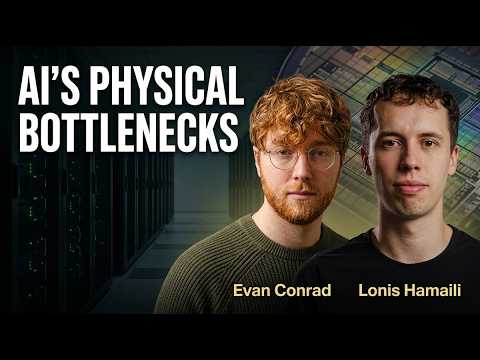 3:13:44ENCognitive Revolution "How AI Changes Everything"· Oct 22, 2026Podcast · 4 speakersAI’s Physical Bottlenecks: Compute Markets, Chip Investments and Agent TrustGuest Evan Conrad, Lonis Hamaili · Host Nathan Labenz, Prakash NarayananA full AI:AM discussion of security incidents, GPU financing, semiconductor supply and an agent-to-agent network.
 2:40:58ENCognitive Revolution "How AI Changes Everything"· Oct 21, 2026Podcast · 3 speakersFrontier AI, Interpretability and the Fight Over Its PaceGuest Zvi Mowshowitz · Host Nathan Labenz, Prakash NarayananZvi Mowshowitz joins AI:AM to discuss neural networks, policy and the institutions facing rapid change.
 1:25:56ENCognitive Revolution "How AI Changes Everything"· Oct 17, 2026PodcastClaude Changed the Password. The Steering Wheel Was Already OptionalHost Nathan LabenzNathan Labenz and Prakash Narayanan spend a week on agents that can lock you out, models that dodge a feeling they deny having, and formal proofs that found Linux bugs.
 2:51:22ENCognitive Revolution "How AI Changes Everything"· Oct 14, 2026Podcast · 4 speakersAI Minds and 8 mm Memories: Research, Archives and SimulationGuest Cameron Berg, Phil Maher · Host Nathan Labenz, Prakash NarayananCameron Berg discusses hidden model states; Phil Maher explains preserving home movies and a fly-brain demo.