In 30 Sekunden
Matthew Berman introduces Claude Cowork as an early attempt to bring Claude Code-style agent workflows to non-coding work. He discusses Anthropic's examples, a desktop organization demonstration, connectors, browser control and the product's initial Mac and Max plan availability. Berman also highlights folder permissions, potentially destructive actions and prompt injection. His availability details and predictions are from the January 2026 launch, not a guide to current access.
- 1From coding to knowledge workBerman says Claude Code users applied it to varied non-coding tasks, motivating a more approachable product.
- 2Isolation and integrationsHe highlights a built-in virtual machine, browser automation and data connectors as features of the early preview.
- 3Organizing a desktopA demonstration shows Cowork inspecting a permitted desktop, asking follow-up questions and organizing files.
- 4Permissions and risksBerman describes chosen-folder access and warns that destructive actions and prompt injection remain possible.
Das Wichtigste
- Cowork grew out of people using Claude Code for tasks beyond software development, according to the launch discussion.
- The early preview combined access to chosen folders with planning, browser automation and connectors.
- A demonstration showed Cowork organizing a cluttered desktop after the user granted access.
- Berman says the initial launch required macOS and a Claude Max plan; those conditions are historical.
- Permission controls and isolation do not eliminate destructive actions or prompt injection risks.
Den bearbeiteten Text nach Kapiteln lesen
Why Cowork was created
Berman introduces the launch and presents the product demonstration. He discusses examples of non-coding tasks that people had already given Claude Code.
Anthropic has launched Claude Cowork for knowledge work beyond coding. I think it looks incredible, so before getting into the details I show its demonstration video.
Berman points to an explanation from Boris, the creator of Claude Code: people had been using the coding tool for non-coding tasks including vacation research, slide decks, email cleanup, subscription cancellations, recovering wedding photos, monitoring plants and controlling an oven. Those uses were surprising because the tool was designed for programmers.
With Claude Code, you give the agent access to a folder, prompt it to create code files or a directory, and iterate on the result. Berman argues that the same access can support many other kinds of work. Cowork is intended to make those workflows easier for non-developers.
An early preview and its features
He explains the connection to Claude Code and describes isolation, automation and connectors. He notes launch-day availability and makes predictions about future access.
Anthropic describes Cowork as an early, raw first step toward extending Claude Code to non-coding work. Berman highlights a built-in virtual machine for isolation, browser automation, data connectors and clarification questions when the agent is unsure. He welcomes isolation as a guardrail for users granting access to their computers.
At the January 2026 launch, Berman says the preview is available only on macOS and requires a Claude Max plan. He expects it to improve and become more widely available, but those are predictions about the future rather than guarantees.
Desktop demonstration and integrations
A demonstration organizes a cluttered desktop. Berman then describes connectors, browser control and queued instructions.
In the demonstration, a user gives Cowork access to a cluttered desktop and asks it to organize the files. Cowork reads the contents and asks follow-up questions; the demonstration then shows the desktop organized into categories. Berman compares the process to Claude Code: the agent creates a plan, executes steps and verifies them.
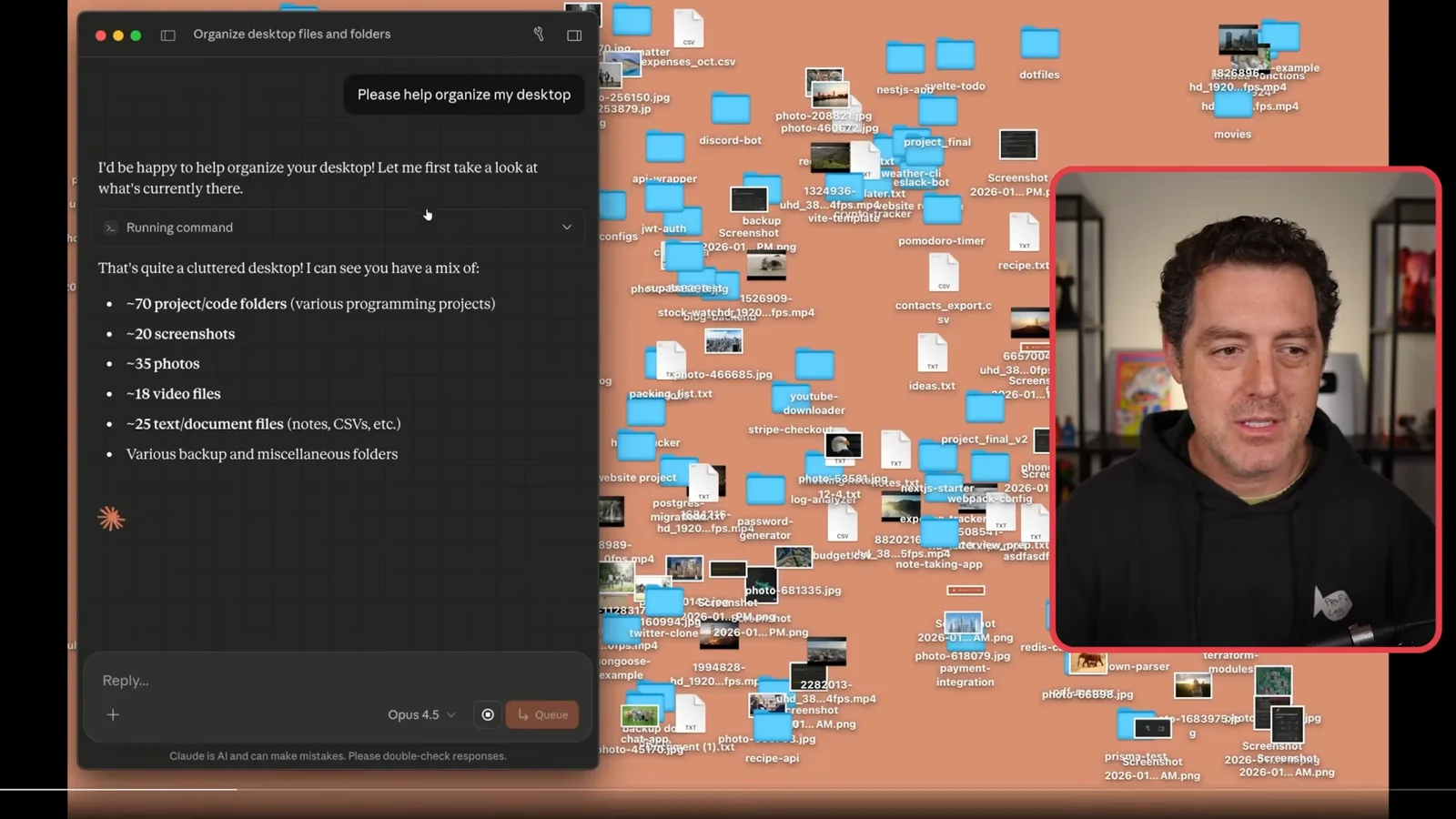
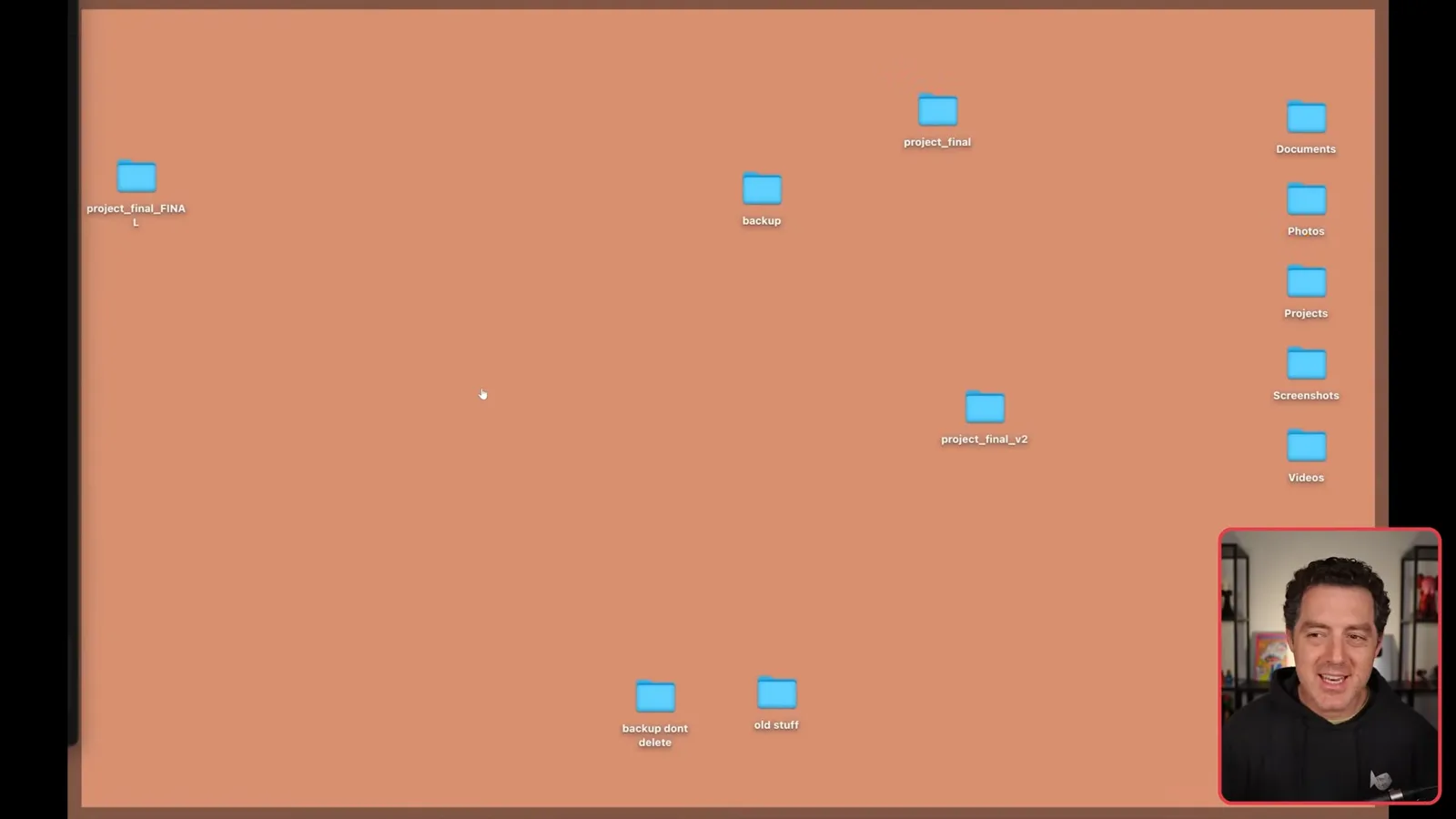
Berman says Cowork can use existing connectors to services such as Google Drive or Box, and can control a browser to navigate websites and return when a task is complete. Users can also queue further instructions while work is in progress, a feature he values in coding agents.
Access and safety
Berman discusses selected folders, permissions and the possibility of destructive actions. He highlights prompt injection and says he has not yet tested the product himself.
The user chooses which folders to share rather than automatically granting full computer access. Berman expects the agent to ask permission before significant actions, but notes that it can still take destructive actions on a user's behalf. He urges care rather than treating the controls as a guarantee.
Berman also warns about prompt injection: an attacker can place instructions in content the agent encounters online in an attempt to change its plans. He says defenses exist but cannot provide complete protection. At the time of the video, he had seen positive early comments but had not yet tested Cowork himself.
Mehr aus diesem Kanal
 14:45EN
 Matthew Berman· 29. Okt. 2026Matthew Berman Examines Google’s Gemini 4 Carbon AnnouncementMatthew Berman · Forward FutureMatthew Berman reviews Google’s reported benchmark results, staged rollout and pricing for Gemini 4 Carbon, while noting he has not yet used the model.
 21:11ENMatthew Berman· 28. Okt. 2026Matthew Berman tests DeepSeek V4.1 Flash: coding, vision and local appsMatthew Berman · Forward FutureA hands-on tour of visual coding, image reasoning, local applications and provider economics reveals both impressive results and visible flaws.
 34:21ENMatthew Berman· 27. Okt. 2026Matthew Berman Examines Anthropic’s IPO Filing, AI Growth and GovernanceMatthew Berman, Sam Altman · Forward FutureThe presenter reviews the S-1’s financial metrics, compute strategy and voting structure while questioning the tension between rapid AI development and safety.
 0:26ENMatthew Berman· 25. Okt. 2026Sam Altman on Human Values and Problem-Solving in an AI WorldSam Altman · OpenAIIn a short interview excerpt, Altman considers the enjoyment of solving hard problems and the human role in interpreting results.
 0:36ENMatthew Berman· 25. Okt. 2026Kimi K3.1 and a Rubik’s Cube Solver DemonstrationMatthew Berman · Forward FutureMatthew Berman shows a scrambled virtual cube being solved and gives the Kimi K3.1 test a favorable assessment.
 0:21ENMatthew Berman· 24. Okt. 2026An AI-Generated Kimi Benchmark Chart Used Invented ScoresMatthew Berman · Forward FutureMatthew Berman asks for a graph of Kimi K3.1 Pro benchmarks, then discovers that the displayed figures are illustrative placeholders.