In 30 Sekunden
Peter Yang demonstrates four game experiments using GPT-6 Astra alongside tools such as Blender, Godot and image generation. He revises mechanics and difficulty after play testing, and his deck builder begins as a Claude prototype before moving to ChatGPT. His model ranking is a personal assessment; the comparisons involve different tools and levels of effort.
- 1Use tools suited to the projectYang uses Blender and Godot for 3D prototypes and a web-based approach with 2D artwork for the deck builder.
- 2The visual comparison changes multiple variablesEarlier space-shooter examples used Three.js, while the newer demonstration also used Blender and Godot.
- 3Prototype, play and give specific feedbackThe first shooter was not fun; Yang asked for stronger enemies, power-ups and a better boss.
- 4Balance is part of game designYang adjusted difficulty after testing the strategy game and finding later waves too hard.
- 5The deck builder began in another modelClaude produced an initial prototype before Yang moved the code to ChatGPT and refined the art and gameplay.
Das Wichtigste
- Begin with the player experience and use concept art to communicate the desired look.
- Build milestones and play-test: Yang’s first shooter was not fun, and the strategy level needed rebalancing.
- The model comparison is not controlled because earlier examples and the newer version used different tools.
- No Moat started in Claude and evolved in ChatGPT through 2D art, balance work and mobile testing.
- The examples range from tech demos to a more developed prototype and all involve human feedback.
Den bearbeiteten Text nach Kapiteln lesen
Four game experiments
Yang introduces his setup and personal assessment.
Peter Yang demonstrates four game prototypes made with GPT-6 Astra and other tools: a space shooter, a moving-train shooter, a real-time strategy level and a roguelike deck builder. He calls Astra the best model he has used for games, a personal judgment rather than a controlled benchmark.
His setup includes ChatGPT, the open-source Blender 3D tool and Godot game engine, with MCP connections. He says he asked the assistant to install the tools and used a medium reasoning setting. Tool availability and plan limits in the video reflect that moment.
A space shooter and a train shooter
Concept art, milestones and iterative feedback shape two prototypes.
The first prototype, Starfall, is inspired by Star Fox: the player flies through a collapsing structure, fights enemies and reaches a boss. Yang compares it to earlier model examples but notes that the older versions used Three.js while the Astra version also used Blender and Godot, so the comparison changes more than the model.
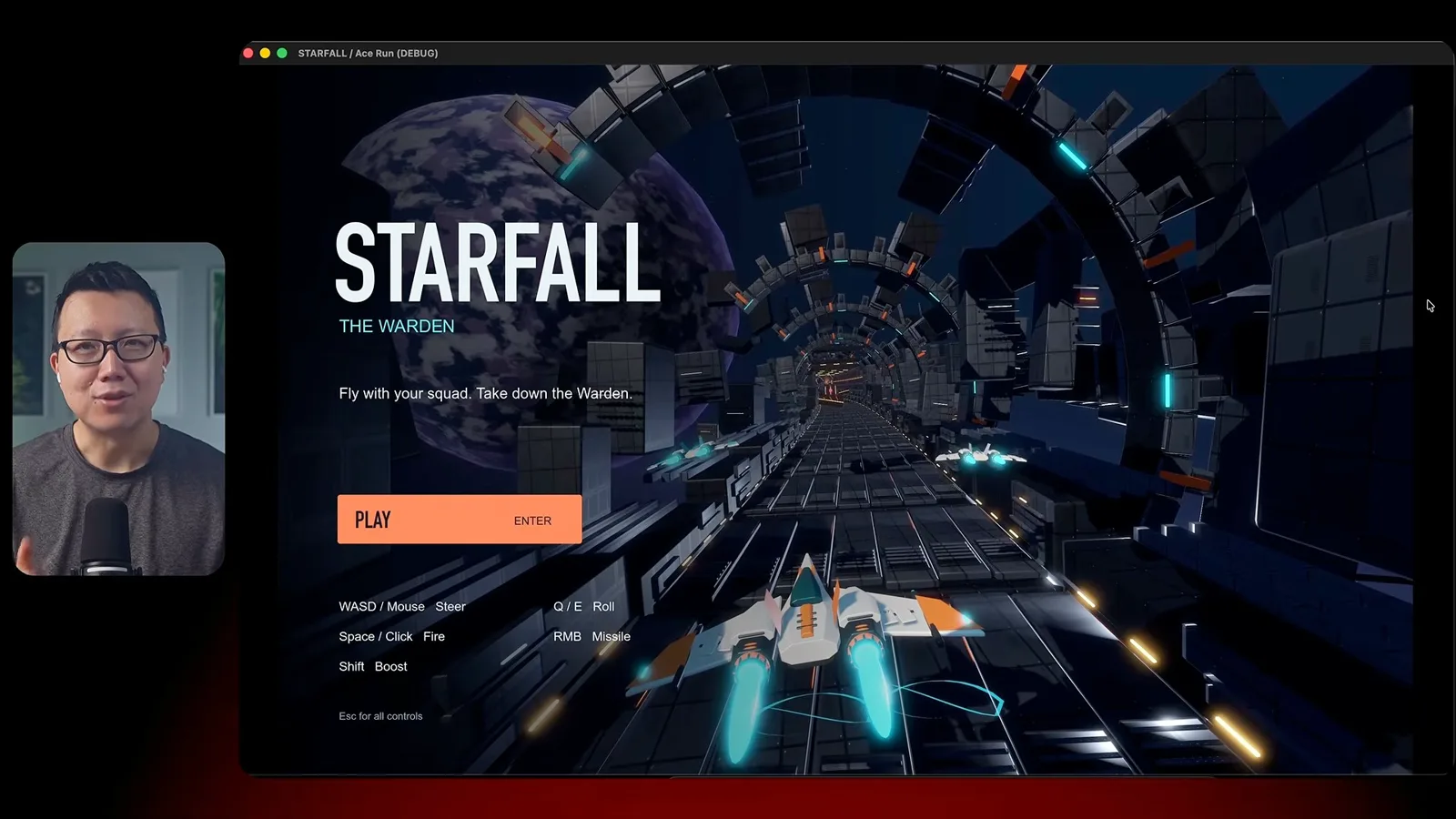
He starts with ideas and reference art, then asks for teammates, power-ups, harder enemies and a more interesting boss. The first version was not much fun. He says the agent can play-test with browser and computer use, and he iterates based on his own experience.
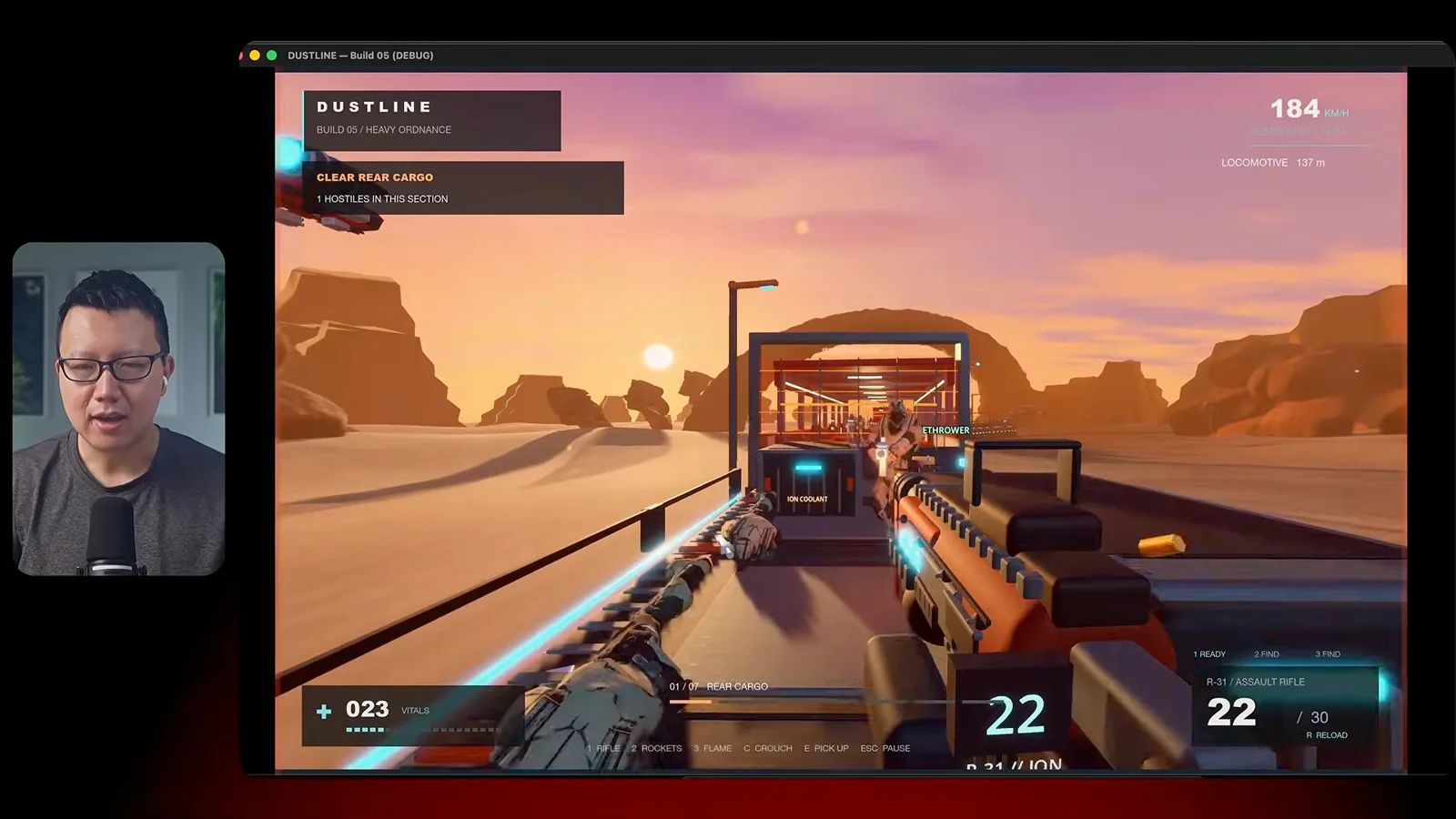
Dustline is a first-person shooter on a moving train, with multiple weapons, enemies and a final boss. Yang calls it a tech demo. He asks for ideas, creates concept art, divides the work into milestones and provides feedback on visuals, enemy behavior and weapons, including by voice from his phone.
A real-time strategy level
Yang tests unit mechanics, lighting and difficulty.
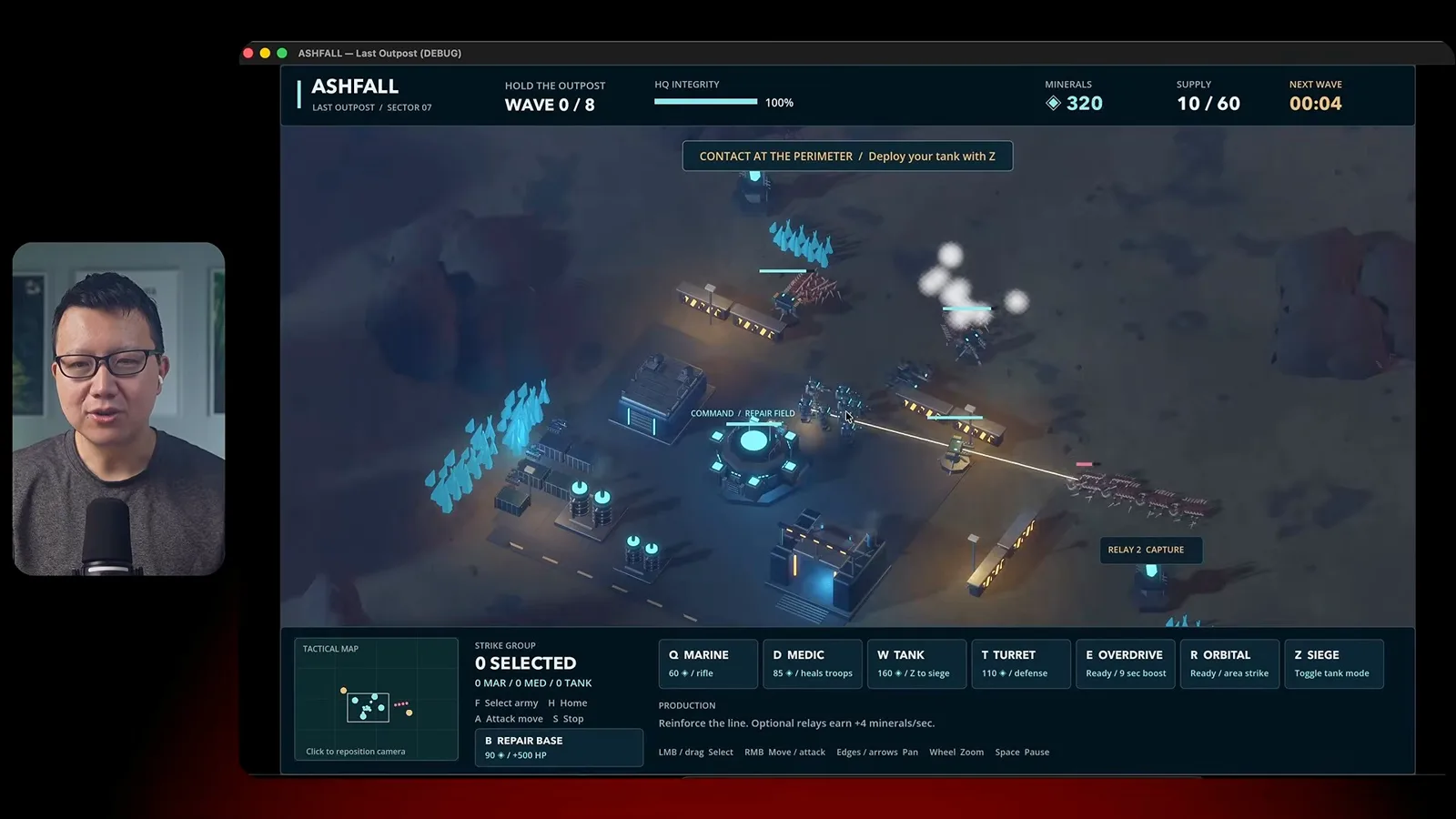
Ashfall is a StarCraft-inspired base-defense level with controllable units, turrets and waves of enemies. Yang asks for specific mechanics, better lighting and difficulty adjustments. His own play test reveals that later waves became too hard, so he asks for a rebalance.
A roguelike deck builder
A prototype evolves through artwork, balance and mobile testing.
The fourth project, No Moat, is a roguelike deck builder about an AI founder. Players choose characters and companions, play cards and face encounters. Yang considers it closer to an actual game than the other prototypes because he spent more time on mechanics and balance.
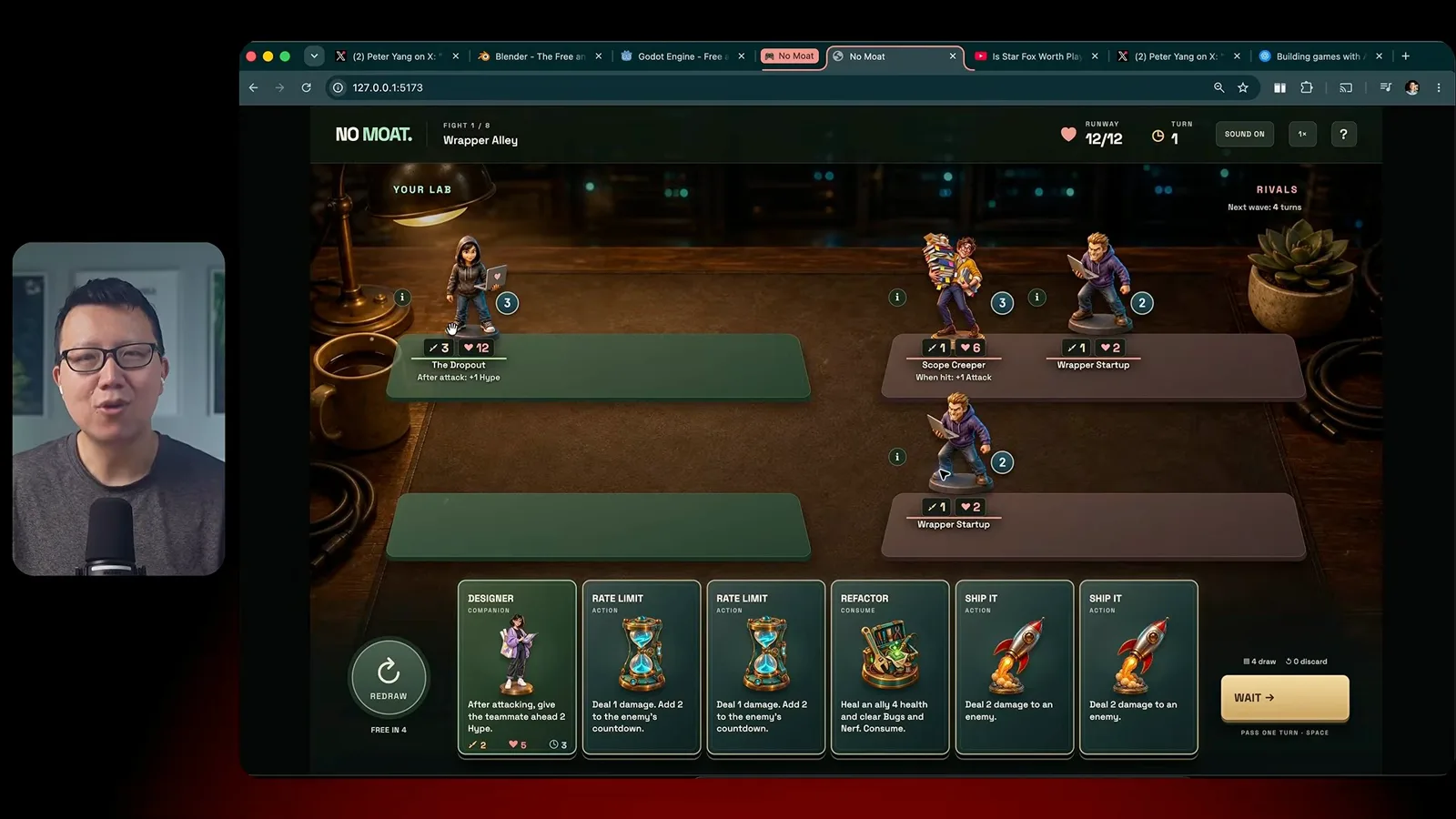
He began the deck builder with Claude before Astra was available, using a specification and an early emoji-based prototype. After moving the code to ChatGPT, he focuses on one convincing fight and generates two-dimensional character and environment art. An attempt at 3D characters is less satisfactory for his chosen style.
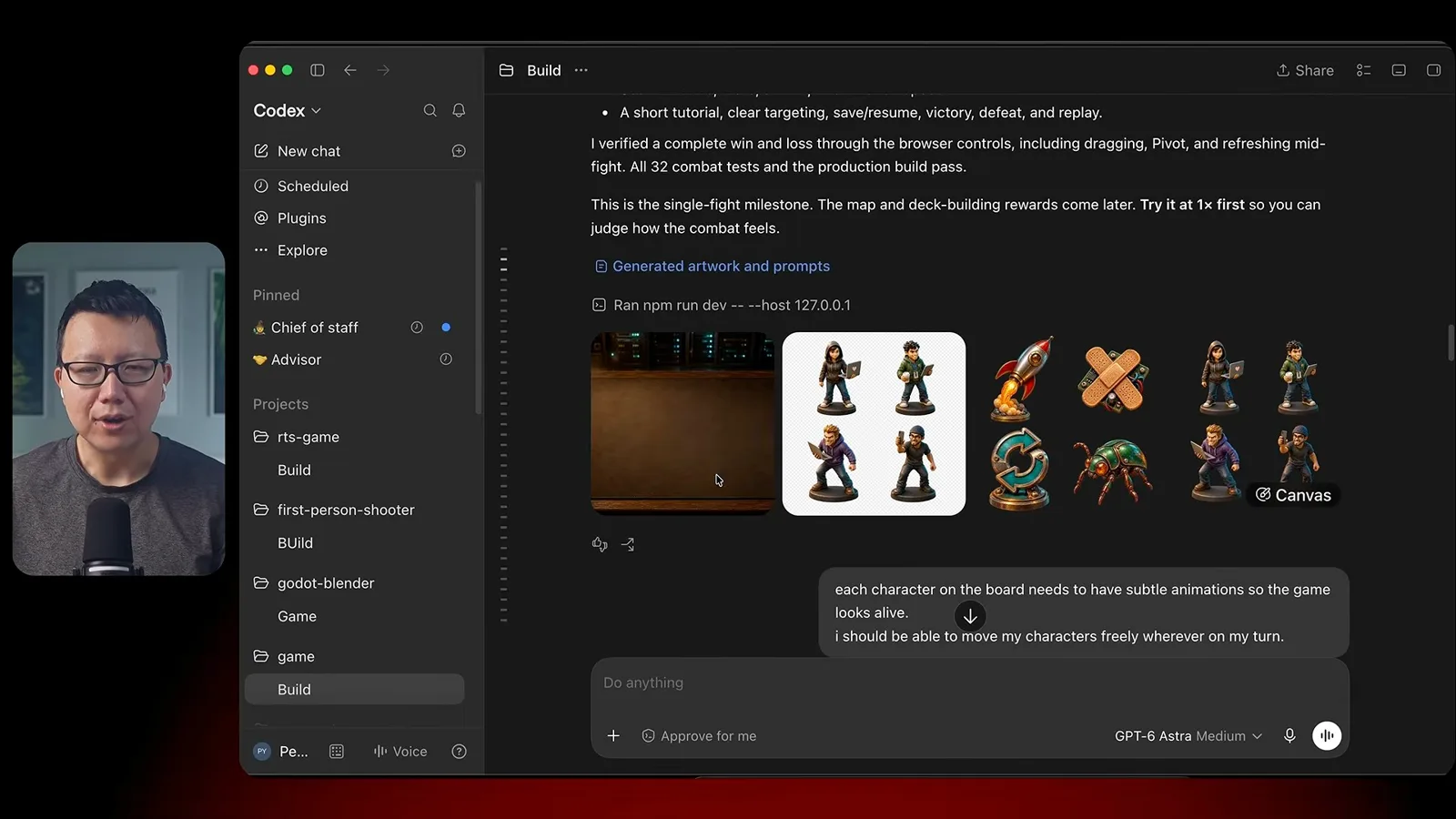
Yang adds enemies and characters, tests the game, asks for balance and improves the mobile layout. He publishes the web game and says it took about two hours of back-and-forth. He observes that some generated character art relies on stereotypes.
Lessons and launch commentary
Yang summarizes his process and comments on launch availability.
His general process is to brainstorm an experience, provide concept art and iterate through play testing and feedback. The prototypes involve different tools, time investments and human decisions; his examples do not establish that any model reliably makes a finished game in one prompt.
Yang also discusses criticism of the Astra launch, arguing that announcements should coincide with broad availability. His suggestion that third parties may have affected release timing is speculation. He encourages viewers to experiment with their own ideas.
Mehr aus diesem Kanal
 46:40EN
 Peter Yang· 8. Nov. 2026Podcast · 2 StimmenAshley Alexander: How AI Helps Me Care for My Parents With CancerGast: Ashley Alexander · Moderation: Peter YangA caregiver uses AI to prepare for appointments, organize records and ask better questions—while keeping doctors at the center of treatment.
 17:50ENPeter Yang· 4. Nov. 2026PodcastPeter Yang’s Five Steps for Using AI to Help Care for His MotherYang uses a shared care brief and organized records to navigate appointments, while making time for family.
 15:03ENPeter Yang· 3. Nov. 2026PodcastHow Peter Yang Used an AI Phone Agent to Negotiate His Internet BillAn AI call negotiated a lower price and faster service, but Yang still had to approve the change himself.
 33:09ENPeter Yang· 1. Nov. 2026Podcast · 2 StimmenJaclyn Konzelmann: When AI Can Build More, Choose What Deserves to ExistGast: Jaclyn Konzelmann · Moderation: Peter YangGoogle Labs pairs short strategy documents with prototypes, user co-creation and lessons from experiments that end.
 13:05ENPeter Yang· 28. Okt. 2026PodcastPeter Yang Tests Genie 4: Convincing Worlds, Unfinished GameplayFive live demonstrations show scenes that respond to prompts and sound, alongside inconsistent actions and limited game mechanics.
 1:06ENPeter Yang· 26. Okt. 2026PodcastPeter Yang on Setting Up Payroll for a One-Person BusinessIn a paid partnership, Yang describes the paperwork he encountered and a payroll product integrated with a business account.