In 30 Sekunden
In Neuralink’s 2022 presentation, a monkey moved a cursor to highlighted letters; Musk said it was not spelling independently. The team also demonstrated its R1 robot inserting electrode threads into an artificial brain proxy and described a wireless N1 implant. Musk’s claims about restoring vision and movement were future ambitions. His forecast of a human implant within six months was followed by the company’s reported first human implantation in January 2024.
- 1The monkey followed highlighted lettersMusk says the animal moved a cursor to targets but could not spell independently.
- 2Vision and movement restoration were aspirationsThe presentation did not demonstrate the proposed clinical outcomes.
- 3N1 combines wireless electronics and flexible threadsThe team describes more than 1,000 recording and stimulation channels and wireless charging.
- 4R1 inserted threads into an artificial brain proxyThe demonstration shows planned insertion points and robot-assisted placement, not surgery on a person.
- 5Leaving the protective membrane intact creates new challengesAn engineer describes the difficulty of passing a fine needle and thread through the dura without buckling.
Das Wichtigste
- The monkey selected highlighted keys with a cursor; it did not independently compose a message.
- The R1 robot’s live insertion demonstration used simulated brain tissue, not a human patient.
- The team described a wireless implant and challenges involving charging, heat and fine electrode placement.
- Vision restoration and bypassing spinal injury were proposed future applications, not results shown in the video.
- Neuralink reports its first human implantation occurred in January 2024, later than the six-month forecast made in 2022.
Den bearbeiteten Text nach Kapiteln lesen
Goals, testing and the monkey demonstration
Musk outlines aspirations, a human-trial forecast and the limits of the animal cursor task.
At Neuralink’s 2022 show-and-tell event, Elon Musk describes a long-term ambition for a brain interface that can read and stimulate signals. He also imagines eventually communicating across a spinal injury; these are research goals, not established treatments.
Musk says turning a prototype into a safe, reliable and affordable product at scale is difficult. He predicts a first human implant in roughly six months, subject to FDA steps.
That was a 2022 forecast. [Neuralink later reported](https://neuralink.com/updates/prime-study-progress-update/) FDA approval for its first-in-human study in May 2023 and the first human implantation in January 2024.
Musk says the company performs bench testing before animal implants and wants animal procedures to confirm prior tests. He describes work with six monkeys and says the team was monitoring device stability.
A video shows a monkey moving a cursor to highlighted letters using an implant. Musk explicitly says the monkey cannot spell independently; the animal follows highlighted targets rather than composing a message.
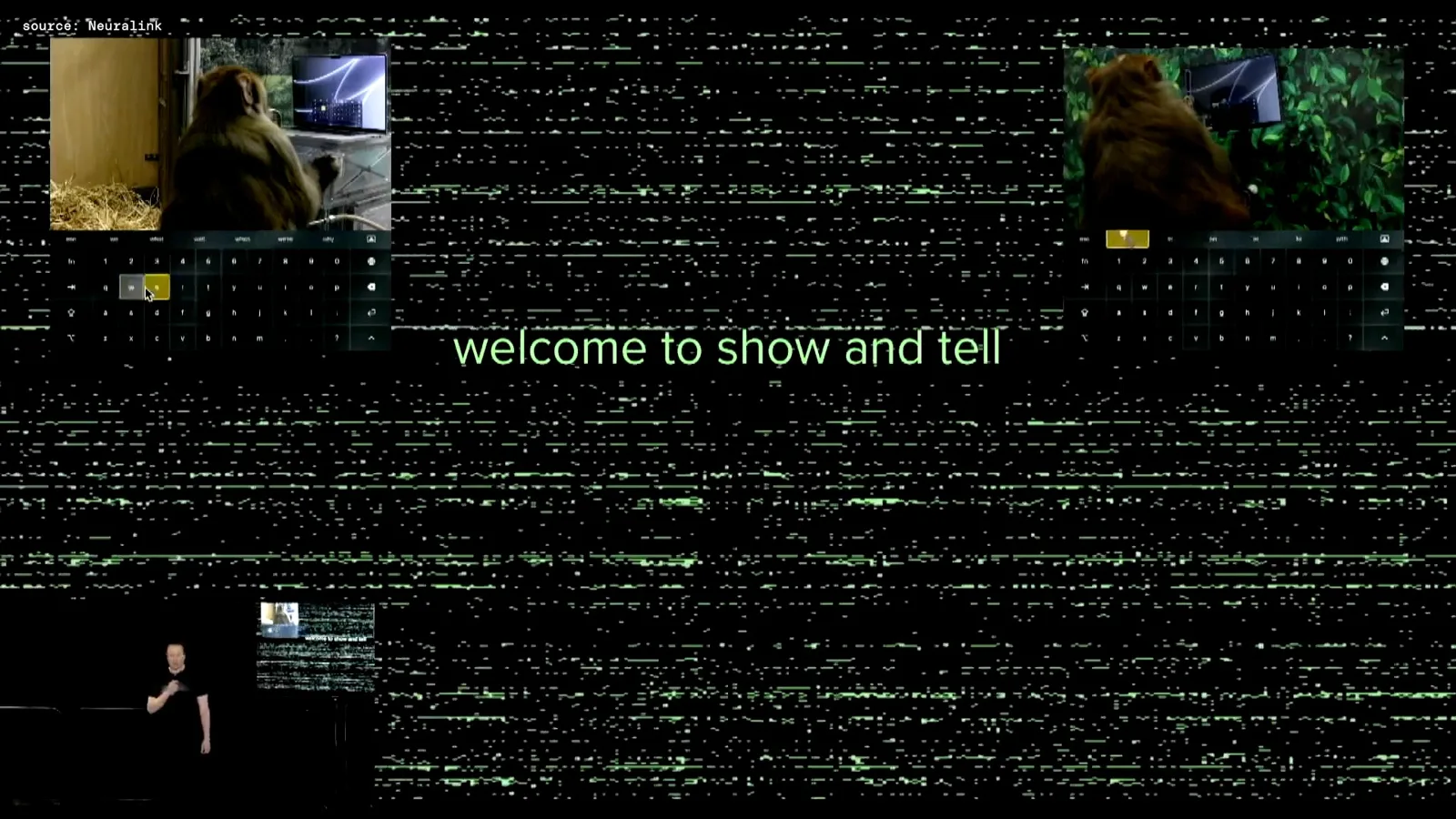
Musk presents cursor and phone control as a possible aid for people with paralysis. His claim that users could eventually control a phone faster than someone with working hands is a prediction, not a result demonstrated here.
He says devices should be removable and upgradable. He also describes rewards and says Neuralink cares about animal welfare; the edited presentation is not an independent assessment of welfare or safety.
Musk describes possible future vision restoration, including for people born blind, and possible connections around spinal injuries. These are ambitions, not capabilities established by the video.
The implant and wireless charging
Neuralink engineers describe N1 electronics, electrode threads and charging requirements.
Neuralink’s DJ Seo introduces the N1 implant as a small wireless device with more than 1,000 recording and stimulation channels on flexible threads. He says it is intended to sit beneath the skin and charge wirelessly.
An engineer describes charging challenges: alignment, disturbances, speed and heat near tissue. The team shows a charging setup in which a trained monkey receives a reward while the implant charges.
Robot insertion and clinical preparation
The team demonstrates R1 on simulated tissue and discusses replacement and a proposed first human trial.
The team introduces the R1 surgical robot, designed to insert very fine electrode threads while avoiding blood vessels. The live demonstration uses an artificial brain proxy, not a human patient.
The targeting view marks planned insertion points on the proxy. The robot separates threads from their backing and inserts them at selected locations; the team demonstrates several insertions.
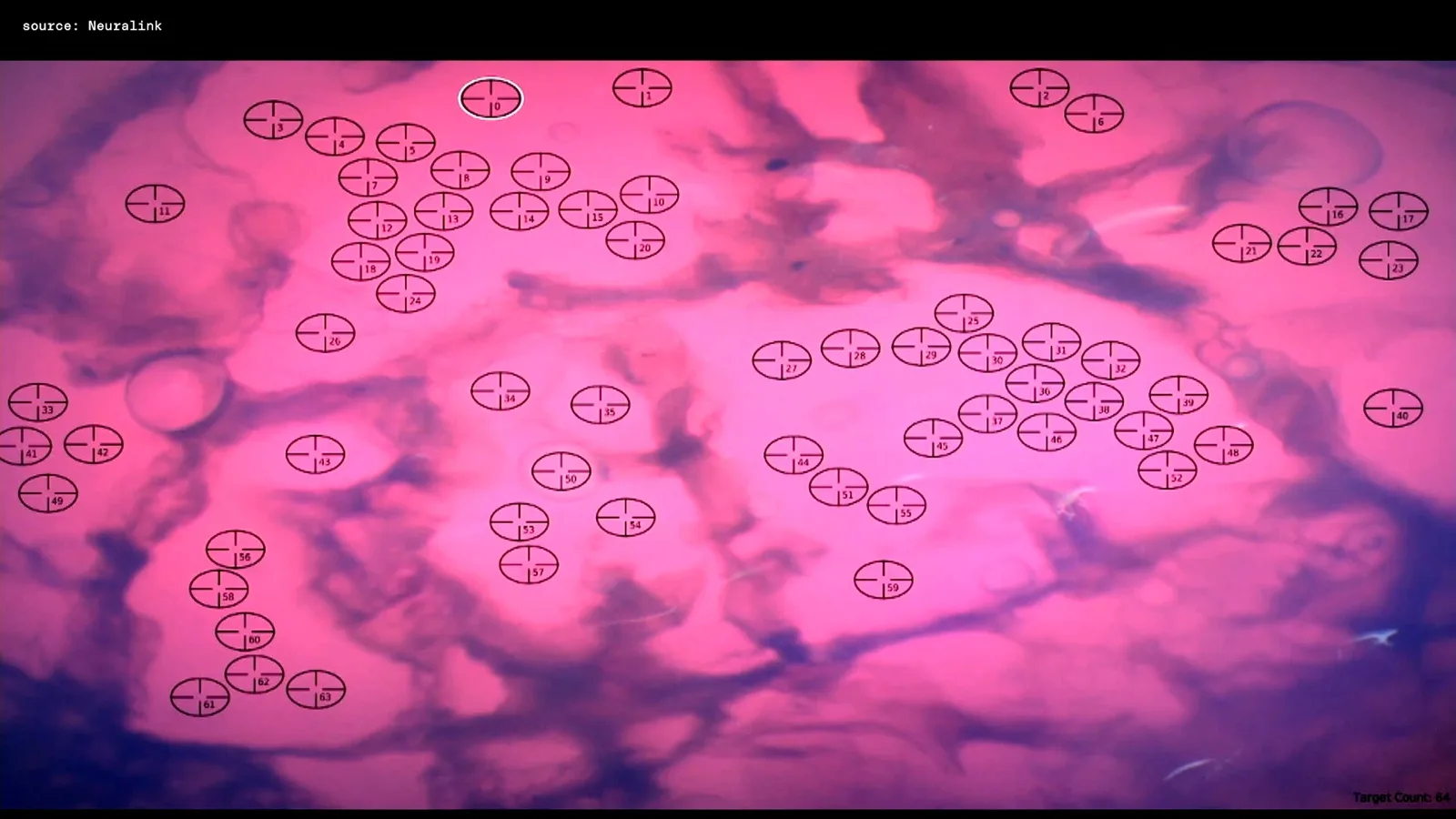
The presenters describe a proposed procedure involving a skull opening, preparation of the protective dura and robot-assisted thread insertion. They say the neurosurgeon performs the rest of the surgery.
An engineer says the team is exploring a less invasive approach that leaves the dura intact to make replacement easier. Passing a thin needle and thread through a tough membrane without buckling presents engineering challenges.
The team says engineers work on manufacturing and debugging to shorten iteration cycles. It describes a dedicated operating space as a step toward its clinical plans.
The initial stated goal is to help people with paralysis control digital devices. The team says it is working with the FDA toward a first human trial; Musk closes by inviting specialists to join.