In 30 Sekunden
Matt Might recounts his son Bertrand’s diagnostic journey and how it led him from programming-language research into precision medicine. He describes an approach that combines patient data, biological models, literature-derived knowledge graphs and explicit reasoning to suggest possible next steps for clinicians. The 2020 talk includes experimental hypotheses and individual patient experiences, not evidence that a suggested intervention works broadly. Might emphasizes further experiments and physician assessment, and describes a planned trial as future work at the time.
- 1Data and explanationsMight argues that precision medicine uses data to search for patient-specific options and should provide clinicians with a comprehensible rationale.
- 2A diagnostic odysseyHis son’s rare NGLY1 deficiency was identified by research exome sequencing after years without a diagnosis.
- 3From models to candidatesAnimal models and computational screening suggested a possible target and an existing drug; the observations he describes do not establish general efficacy.
- 4Logic over biomedical knowledgeThe team uses miniKanren and a literature-derived graph to generate potential drug–disease relationships and explanations.
- 5Research consultationsMight describes case studies where hypotheses were sent to physicians and outcomes were reported; he notes the need for further science.
- 6A second diagnostic searchHe recounts how computational ranking and sequencing were used alongside hospital care during his son’s severe illness.
Das Wichtigste
- Might frames precision medicine as using patient-specific data to guide a search for better health outcomes.
- A genomic diagnosis can identify a candidate mechanism but may still leave its consequences and treatments uncertain.
- Patient models and drug screens can generate candidates, but effects in a model do not necessarily translate to people.
- Logic programming over biomedical knowledge can produce hypotheses with an explicit chain of supporting relationships.
- Might’s patient examples are individual observations or research hypotheses that require clinical assessment and further study.
- Computational tools complement researchers and clinicians rather than replacing the work of testing and interpreting evidence.
Den bearbeiteten Text nach Kapiteln lesen
Precision medicine as a data problem
Might introduces his computer-science background and frames personalized care as a data-intensive search. He argues that clinicians need the reasons behind computational suggestions.
Matt Might introduces himself as a computer scientist whose earlier academic work centered on functional programming and programming languages. He says he has no formal medical training and frames the talk as a meeting of computing and biology, not medical advice.
He points to Alan Turing’s work on reaction–diffusion models as an early example of computational thinking in biology. Might argues that modern patient data and computation can similarly change the questions researchers are able to ask.
Might calls data a powerful tool for medicine and describes precision medicine as a process for using patient-specific information to search for better outcomes. In his framing, a recommendation should come with reasons that a clinician can examine, rather than only an algorithm’s unexplained output.
He traces the public prominence of precision medicine to the 2015 initiative and its aspiration to deliver the right intervention to the right patient at the right time. Genomic data, medical records and other information can inform the search, but more data also creates a larger reasoning problem.
Sometimes the next step is not a treatment but an experiment to resolve uncertainty. Might says physicians need a rationale for proposed interventions because they must judge their relevance and safety for an individual patient.
Bertrand’s diagnostic journey
Might describes years without a diagnosis and explains the genetics behind the research exome sequencing that identified NGLY1 variants. He discusses connecting patients and studying the disease.
His personal story begins with his son Bertrand, who experienced seizures, developmental and movement difficulties, and an inability to produce tears. The family spent four years searching for a diagnosis; chronic dry eyes also threatened his vision.
Might gives a simplified introduction to DNA for a computing audience. A genome can be viewed as a long sequence over four nucleotide letters; genes are transcribed into RNA and translated into amino-acid sequences that form proteins. Variants can have different effects, including no apparent effect or loss of function.
Research exome sequencing made it possible to focus on protein-coding regions at a lower cost than sequencing the whole genome at the time. In Bertrand’s case, the team found two damaging variants in NGLY1, a gene involved in processing misfolded glycoproteins. Might says he was then the first identified patient with the condition.
Researchers compared the proposed gene function with Bertrand’s clinical history to assess whether the variants could explain what they saw. A diagnosis was important but did not immediately provide a prognosis or an established treatment. Might’s response was to seek experiments that could reduce uncertainty.
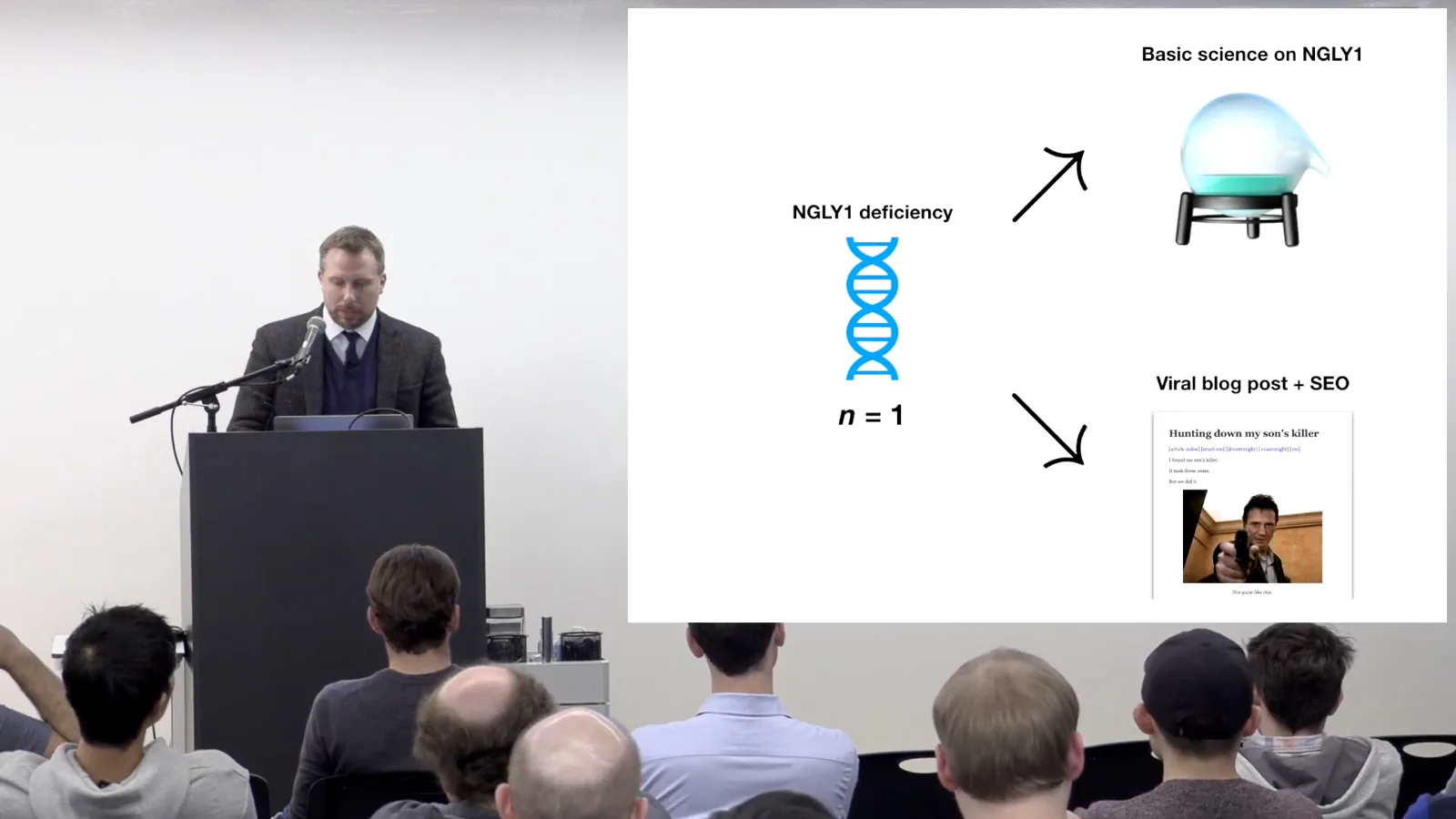
He wrote a widely shared blog post intended to help other families find the condition. He says that over the following seven years roughly 70 patients were identified worldwide, while his estimate of the total population was about 500. The patient community helped attract further research, including an NIH study.
From a hypothesis to research
Might recounts a personal observation involving a supplement and subsequent experiments in flies. He then describes animal models and screening for a possible drug target.
Might describes studying the biology and proposing that loss of recycling might reduce a particular cellular sugar. He recounts giving Bertrand a supplement and observing tears after several days. This was a family’s individual observation; he describes it as the start of further research, not a controlled demonstration of a general treatment.
Researchers subsequently studied a fly model lacking the gene. Might reports that most of those flies died in the model and that survival increased when they were raised on the sugar. The experiment concerns flies and does not by itself establish an effect in patients.
He also helped develop drug-screening work for ion-channel epilepsies and obtained support to investigate NGLY1 deficiency. In a worm model, researchers found that removing a second gene could improve survival and disease features, suggesting a possible target for further study.
The team used computational docking to screen about 200,000 molecular structures, simplifying molecular interactions to make the search tractable. Of 70 candidates, he says 14 were already approved drugs. Laboratory testing identified a possible inhibitor of the second target among them.
Might reports that Bertrand later received the identified drug and that his development and communication improved over subsequent years. He presents this as a promising personal experience; the story does not isolate the drug’s effect or establish efficacy for other patients.
Scaling precision medicine
Might discusses national initiatives and his work at UAB. Patient-derived models and drug repurposing aim to turn biological hypotheses into candidates for clinical evaluation.
Might recounts joining the federal Precision Medicine Initiative and helping plan what became All of Us, a research effort linking genetic and health information. He also describes an effort to investigate possible treatments for several other rare disorders, before taking an opportunity to build a precision-medicine institute at UAB.
The practical problem, he says, is how to repeat such investigations. One approach builds a disease model, measures a phenotype and screens existing compounds for changes in that model. A result in cells or animals is only a starting point: a candidate may not have the same effect or adequate potency in a person.
He describes patient-derived neurons engineered to respond to one color of light and emit another when active. Researchers can observe signals across a network and test whether compounds change a measured phenotype. He presents this as a research capability, not a validated treatment for every neurological disorder.
Logic programming and explainable hypotheses
A knowledge graph and miniKanren support reasoning over reported biomedical relationships. The proposed algorithm separates diagnosis, mechanism and possible therapeutic directions.
A second approach uses logic programming. Might works with miniKanren developer Will Byrd to query biomedical knowledge for possible drug repurposing. The system can answer questions ranging from potential inhibitors of a mechanism to possible treatments, while returning the relationships behind a hypothesis.
As an example, he describes a proposed chain involving xylitol, aldehyde production and Fanconi anemia. He presents it as a potential research direction and says he was discussing possible studies; the chain is not clinical proof that the intervention prevents cancer or treats the disease.
The team used natural-language processing on biomedical abstracts to construct a knowledge graph whose nodes include genes, drugs, symptoms and diseases. Edges represent reported relationships such as inhibition or association. Logic rules can combine several relationships into a candidate “may treat” claim.
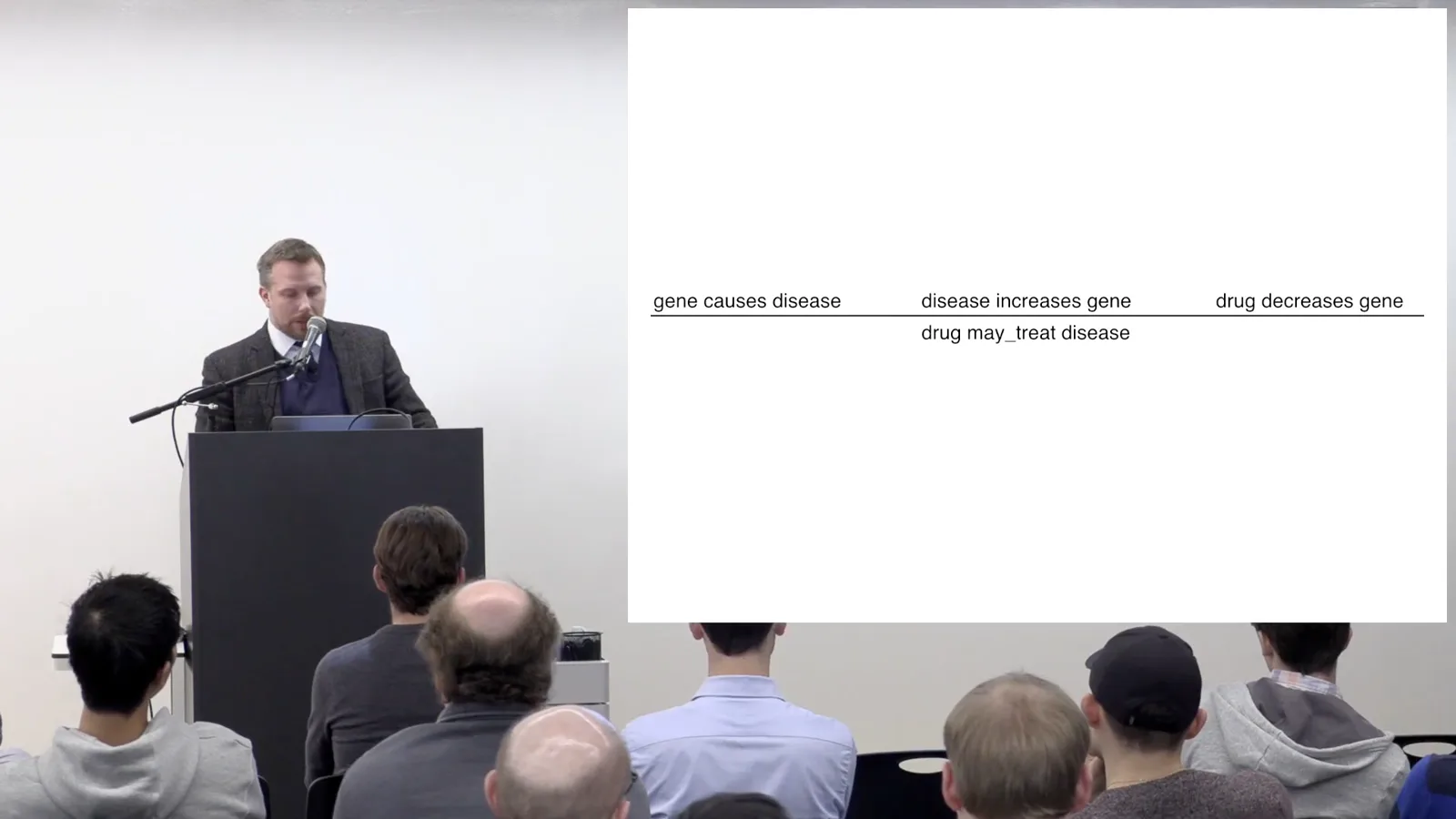
One simple rule might connect a disease, an affected gene and a compound that changes that gene’s activity. Might also describes indirect paths through intermediate genes. The resulting explanation helps a researcher inspect the proposed reasoning, but its validity depends on the underlying evidence and assumptions.
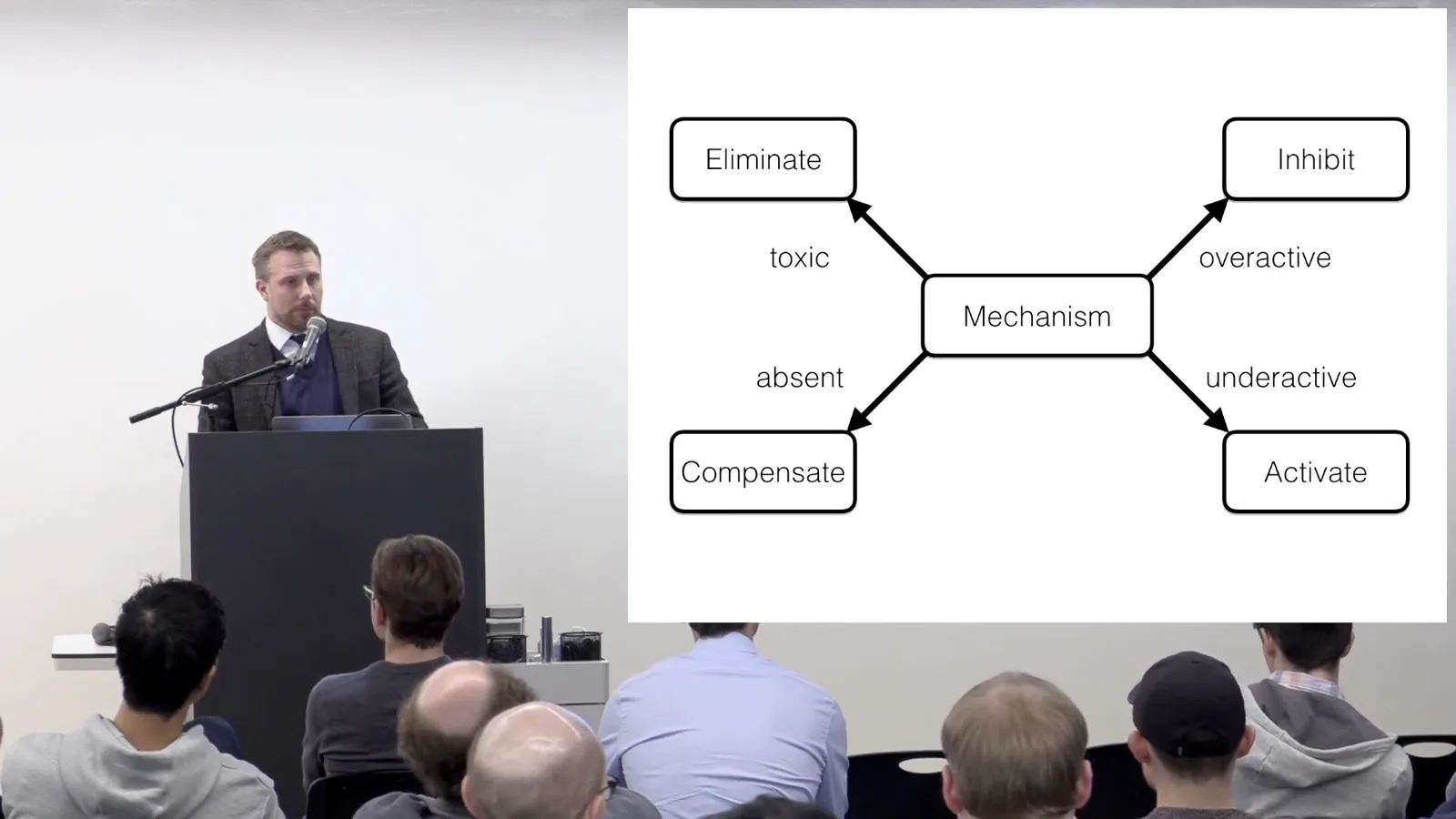
At UAB, a research consultation service seeks the next useful step for a patient facing a diagnostic or therapeutic odyssey. Might sketches two stages: identify the mechanism, then investigate how an observed change might be compensated for. The goal can include carefully measured individual research rather than an immediate answer.
He says scaling requires both automation and people. Undergraduate researchers work among patients, physicians, scientists, literature and computational tools, while faculty and staff conduct additional experiments. Their reports are intended to give clinicians a rationale to assess, not to substitute for clinical judgment.
Individual cases and their limits
Might recounts cases in which clinicians considered hypotheses and families reported changes. These reports are individual experiences, and he calls for further investigation.
Might gives several individual examples of researchers proposing possible interventions from inferred molecular mechanisms and reporting them to physicians. He recounts reductions in seizures in one case and family-reported changes in another, while explicitly saying that further science is needed to determine whether and how the latter observation is real.
Another family reported that a child began standing and taking steps after an intervention proposed for a genetic condition. Might emphasizes that the substance involved can be dangerous at high doses. This is a single reported experience and he describes work to investigate and communicate it responsibly.
For a patient with severe recurrent vomiting, his team ranked published treatment literature and identified an option her clinicians had not tried. He reports a marked improvement afterward. The account illustrates a search through underused literature, but an individual result does not establish a broadly effective treatment.
Might says the knowledge graph also generated a candidate hypothesis for NGLY1 deficiency with a chain of molecular relationships. He then describes modeling biological reaction networks in Kappa and using static analysis to predict consequences of removing a gene or enzyme; these are research predictions requiring validation.
A second diagnostic odyssey
Might describes Bertrand’s critical illness, a search through disease relationships and metagenomic sequencing. He closes with a planned clinical trial and a call for further research.
At the time of the talk, Might reports that Bertrand’s vision had improved, his seizures had stopped, and he was using an eye-gaze communication device. He stresses that work on the disorder continued. He also briefly describes a cancer case in which molecular information influenced treatment selection.
Might recounts a later episode of septic shock in Bertrand, followed by weeks in intensive care, surgeries and negative cultures. He describes a series of clinical interventions and the family’s distress as the team tried to identify the cause.
During that illness he extended the knowledge-graph search to rank diseases that could explain several symptoms. In parallel, the team used metagenomic sequencing on blood and pleural-fluid samples to look for microbial DNA, then compared the sequencing evidence with the candidate list.
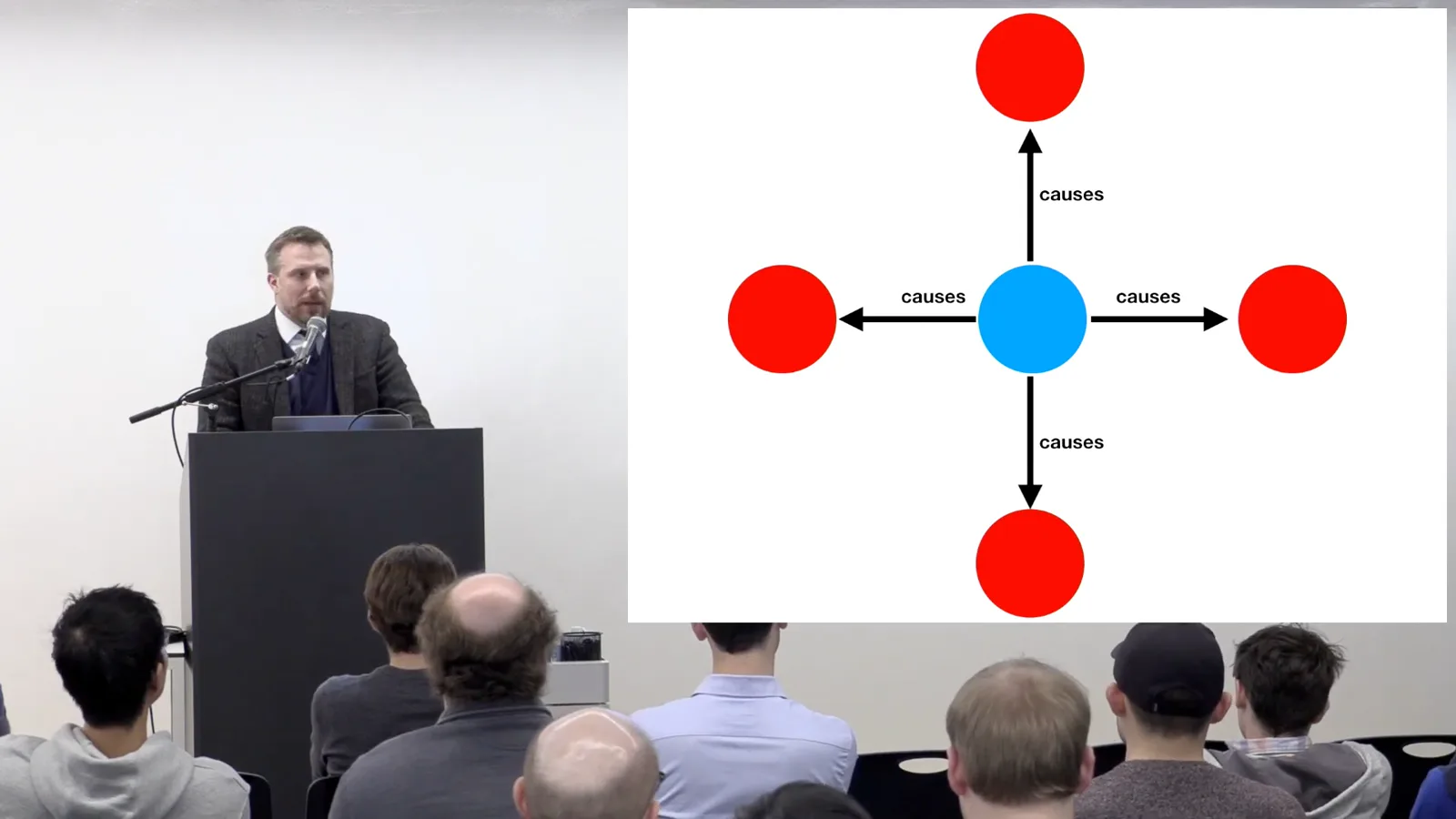
Might reports that Pseudomonas appeared in both the computational candidates and the sequencing analysis, with additional evidence from a Pseudomonas phage. He describes an analysis of sample processing intended to localize the signal to the lungs, as well as evidence of E. coli.
He says clinicians treated Bertrand with an antibiotic covering the suspected organisms and that his condition improved, with subsequent sequencing no longer detecting those organisms. This is his account of a complex individual case, not a controlled comparison of diagnostic or treatment methods.
Might describes Bertrand returning home and a family trip afterward. At the time of the talk he says an NIH-funded clinical trial for NGLY1 deficiency was due to begin soon; that statement reflects a plan at the time, not a claim about its later result.
He closes by inviting computing researchers to contribute to biomedical natural-language processing and better knowledge graphs. His central message is that when an answer is not yet known, research can identify the next question and generate evidence for future decisions.
Mehr aus diesem Kanal
 15:33EN
 1:48:29EN
 1:36:37EN
 1:05:45EN
 1:25:00EN
 1:16:29EN