In 30 Sekunden
Matthew Berman explains Microsoft Research's early experiments using ChatGPT to generate code for drones and a robot arm. The examples show natural-language task requests and human feedback, but rely on predefined robot interfaces and careful review rather than unrestricted autonomous control.
- 1From language to robot codeMicrosoft's research applies a language model to robot tasks by combining prompts with predefined APIs and human feedback.
- 2A human supervisesBerman describes moving the human from writing every iteration to supervising and refining the output; the person still reviews the generated code.
- 3Drone tasksExamples include using a mirror for a selfie, scanning a shelf and navigating around an obstacle.
- 4A robot arm and a simulated turbineThe demonstrations also include simulated inspection and arranging blocks into the Microsoft logo.
Das Wichtigste
- Researchers give ChatGPT a description of a task and a library of high-level robot functions.
- A human reviews and can refine the generated code before deployment, including for quality and safety.
- Demonstrations include finding a drink, inspecting objects, obstacle avoidance and arranging blocks.
- The wind-turbine inspection example is a simulation, and the researchers caution against deploying generated code without careful analysis.
Den bearbeiteten Text nach Kapiteln lesen
A natural-language interface for robots
Berman introduces Microsoft Research's 2023 work and contrasts it with manually programming robot tasks. He imagines home robots receiving ordinary language requests.
What if you could control a robot by talking to it? Microsoft Research has published work on using ChatGPT to help control robots with ordinary language. A home assistant that can respond to a request like 'make my bed' feels a step closer, although the research demonstrations are narrower than that future scenario.
Today, controlling a robotic arm or a sophisticated robot often involves writing code or detailed instructions, a process that requires specialized technical skills. Software development has a similar barrier, and tools such as GitHub Copilot and ChatGPT can generate code from language descriptions. I see robotics as a natural extension of that idea.
Research method and human review
The team uses a task prompt and predefined high-level APIs to generate robot code. A person checks and refines that code before deployment.
The Microsoft team describes its method and the challenges of connecting ChatGPT to robots. One example asks a drone to find a drink, then asks it to find something with sugar and a red logo. The researchers' system uses available perception and robot functions; the demonstration does not mean a language model alone controls any arbitrary robot.
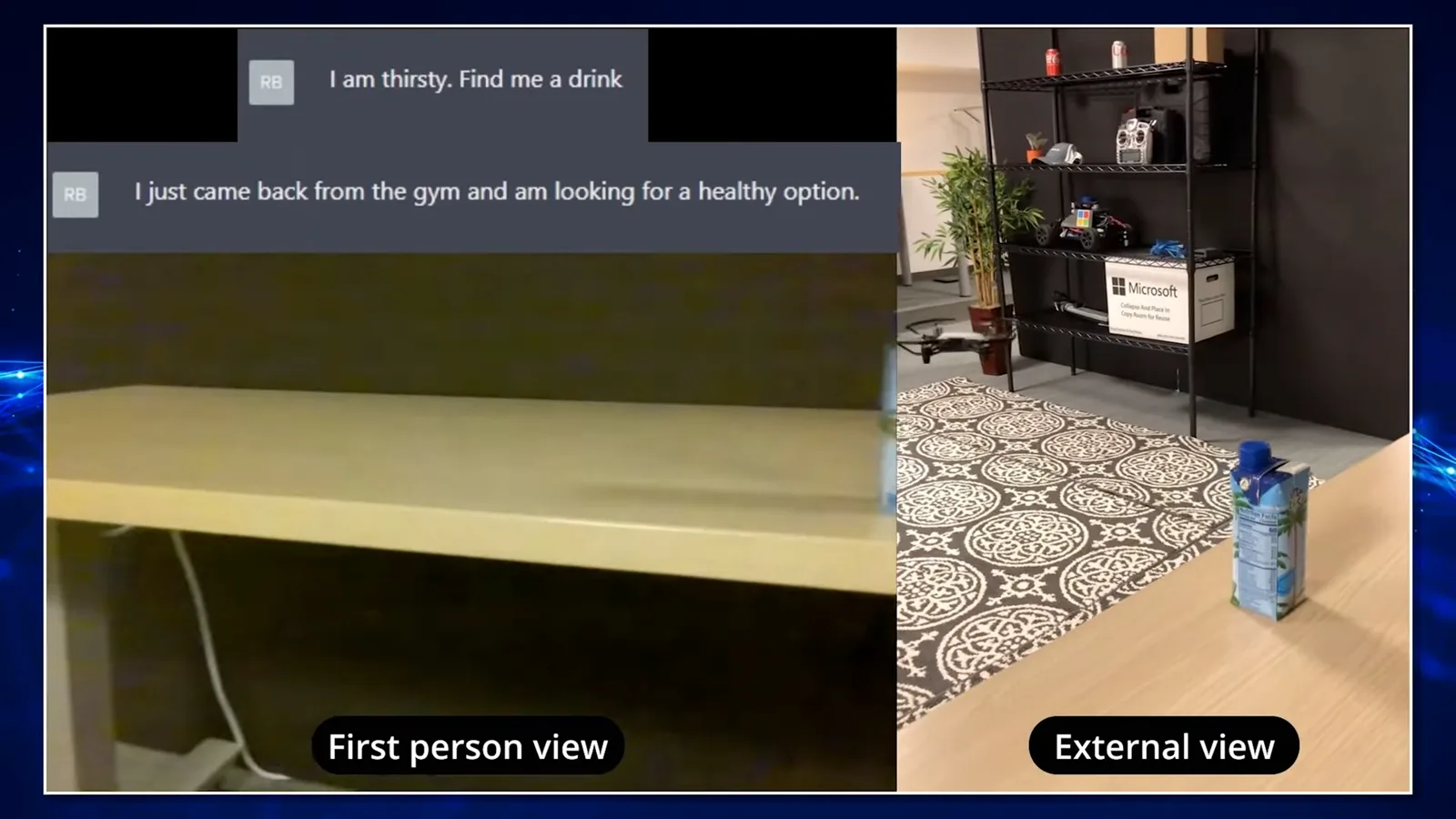
The idea is to put a person 'on the loop': rather than manually writing each iteration, the person supervises the result and gives feedback in language. I expect this could make iteration faster and potentially allow a less technical person to manage it. The human remains responsible for judging the output, however.
First, researchers define high-level robot APIs—the actions available to a particular robot, such as moving a drone. They then provide ChatGPT with the task and the available functions. It generates code, which a person reviews for accuracy, quality and safety before deployment. Microsoft also recommends simulation and careful analysis rather than directly deploying generated outputs.
Drone examples
The video shows a selfie, a shelf inspection, an orchid inspection and an obstacle-avoidance algorithm. Some tasks require additional human feedback.
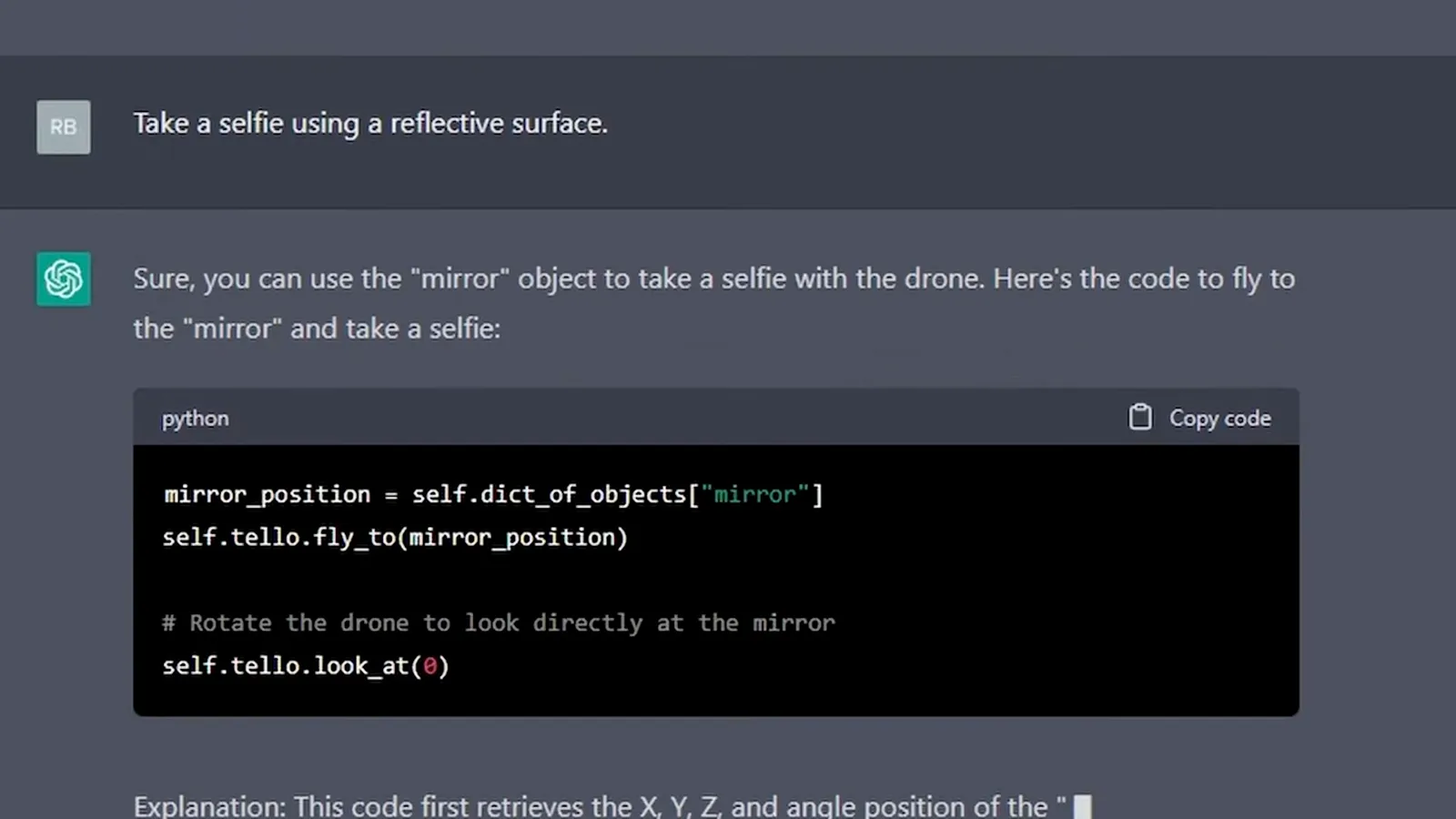
In another example the drone takes a selfie using a reflective surface. I describe the request as simply 'take a selfie,' but the prompt shown on screen explicitly mentions a reflective surface. The generated code uses a mirror object. A separate request asks the drone to inspect a shelf in a lawnmower pattern, moving back and forth while increasing its height.
Another instruction asks the drone to inspect an orchid, fly in a half circle and avoid a chair. The team also asks ChatGPT for an algorithm to reach a goal while avoiding obstacles using a forward-facing distance sensor. The model writes much of the algorithm, but a human has to point out omissions, including the drone's orientation, through further conversation.
Simulation and robot arm
A turbine inspection takes place in simulation, and an arm arranges blocks. Berman closes by imagining more capable language-controlled robots.
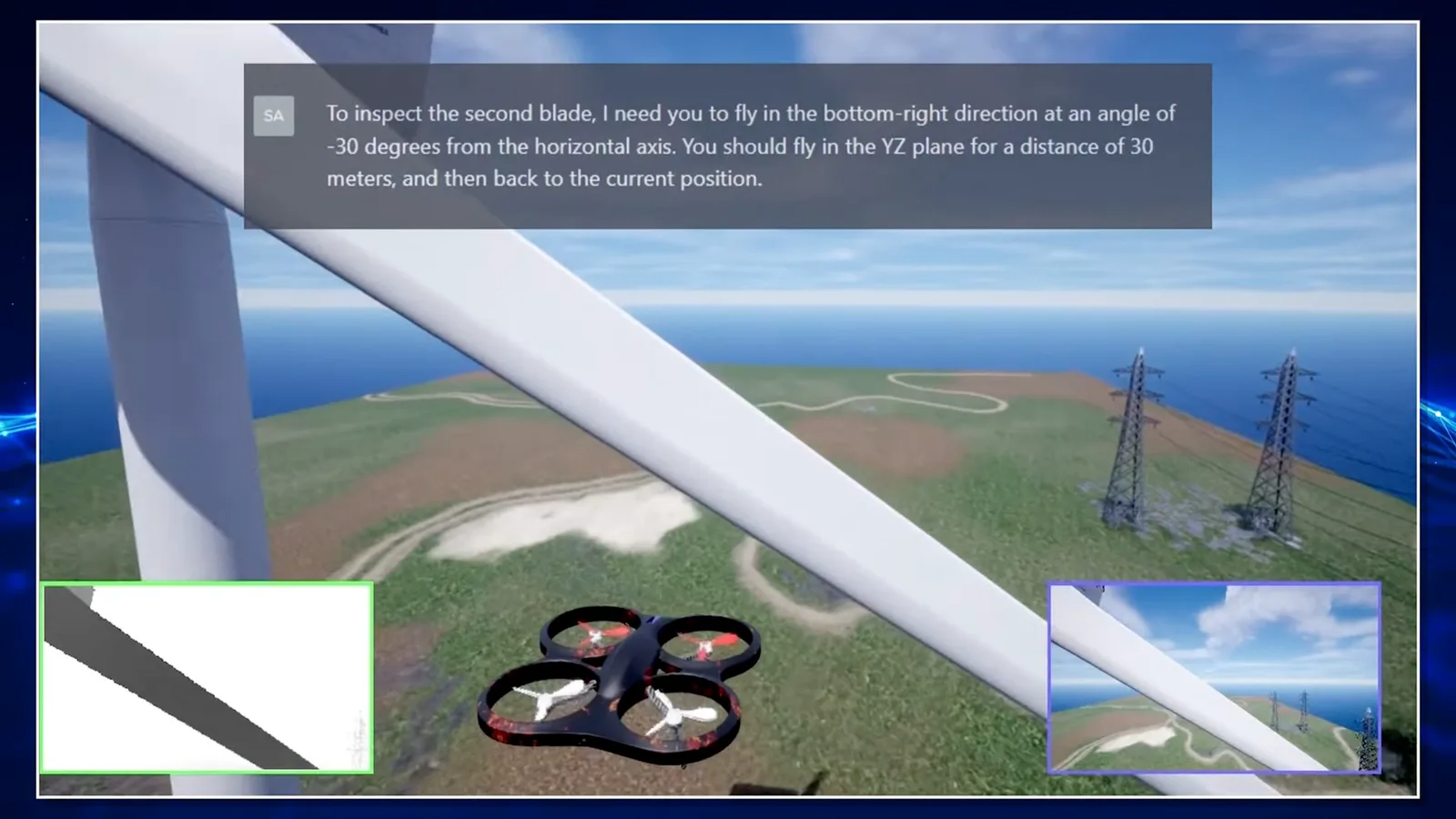
Microsoft also shows a simulated drone inspecting a wind turbine and a robot arm arranging colored blocks into the Microsoft logo. I say the model needed the logo described to it; Microsoft reports that the model recalled and drew the logo before composing the robot actions. These are research demonstrations, not evidence that a robot can safely perform arbitrary household tasks. I'm excited to imagine more robots following natural-language instructions in the future.
Mehr aus diesem Kanal
 34:21EN
 Matthew Berman· 27. Okt. 2026Matthew Berman Examines Anthropic’s IPO Filing, AI Growth and GovernanceMatthew Berman, Sam Altman · Forward FutureThe presenter reviews the S-1’s financial metrics, compute strategy and voting structure while questioning the tension between rapid AI development and safety.
 0:36ENMatthew Berman· 25. Okt. 2026Kimi K3.1 and a Rubik’s Cube Solver DemonstrationMatthew Berman · Forward FutureMatthew Berman shows a scrambled virtual cube being solved and gives the Kimi K3.1 test a favorable assessment.
 25:50ENMatthew Berman· 24. Okt. 2026Kimi K3.1 Pro Tested: Strong 3D Demos, Uneven Results and Competitive PricingMatthew Berman · Forward FutureMatthew Berman tests the open-weight model on coding, 3D rendering and visual explanations, then compares benchmark results and prices.
 32:20ENMatthew Berman· 23. Okt. 2026Who Is Local AI For? The Costs, Trade-offs and a Hybrid FutureMatthew Berman · Forward FutureMatthew Berman weighs data control and independence against hardware cost, setup complexity and inference speed.
 1:03:37ENMatthew Berman· 23. Okt. 2026Matthew Berman’s Team Tests Kimi K3.1 on Animation, Games, and ChartsMatthew Berman, Alex, Brian · Forward FutureA live team AMA turns into an informal test of Kimi K3.1, from personal-agent workflows to motion graphics, a browser game, and a benchmark chart.
 0:53ENMatthew Berman· 22. Okt. 2026Sam Altman on AI and the Discovery of New KnowledgeSam Altman · OpenAIAltman expects progress in mathematical discovery to extend to biology, materials and energy.