In 30 Sekunden
Theo Browne discusses Jev, a model from Typesafe AI designed to return structured decisions quickly. He reviews the company’s performance claims and demonstrations, tries a checkers example, and shows how he classified his own coding-agent history. He also warns against using a fast classifier as a substitute for deep code review or context compaction. Claimed speed, price, confidence and accuracy depend on the measured workload and do not make predictions infallible.
- 1System 1 framingTypesafe describes a fast decision model intended to complement slower, deliberate reasoning.
- 2Format versus contentTheo distinguishes a constrained output shape from the nondeterministic and potentially incorrect content inside it.
- 3Benchmark limitationsThe company’s comparisons use selected workflows and model-generated references, so their large reported gains are not universal.
- 4A compaction cautionTheo argues that selecting messages with a small classifier is different from synthesizing a context summary.
- 5Classifying chat historyHis experiment analyzes 1,118 threads, while demonstrating that the threshold changes the reported proportions.
Das Wichtigste
- Structured output can make a model easier to integrate into software, but a valid format does not guarantee a correct decision.
- Jev targets fast classification and ranking, rather than general text generation or extended reasoning.
- Speed and cost comparisons depend on the tasks, configurations and pricing at the time.
- Confidence scores need calibration against real outcomes before they are used to automate decisions.
- Theo questions using a small, fast classifier for complex code judging or conversation compaction.
- Large-scale classification can expose patterns, but thresholds and the quality of labels affect the conclusions.
Den bearbeiteten Text nach Kapiteln lesen
A different kind of model
Theo introduces Jev as a classifier and describes the company’s fast-decision framing. A checkers demo illustrates speed alongside weak strategy.
Jev is a different kind of model from the coding assistants I usually discuss. Typesafe AI designed it for classifying and organizing data and returning structured decisions, not for writing code or replacing a general reasoning model. Its speed opens up a range of software integrations, but the task still has to suit the model.
The company frames Jev as a ‘system 1’ model: fast, intuitive decisions as opposed to slower, deliberate reasoning. Its name refers to Jevons paradox, the idea that improving efficiency can increase total use. The opportunity is to make existing classification tasks cheap and fast enough to use more often.
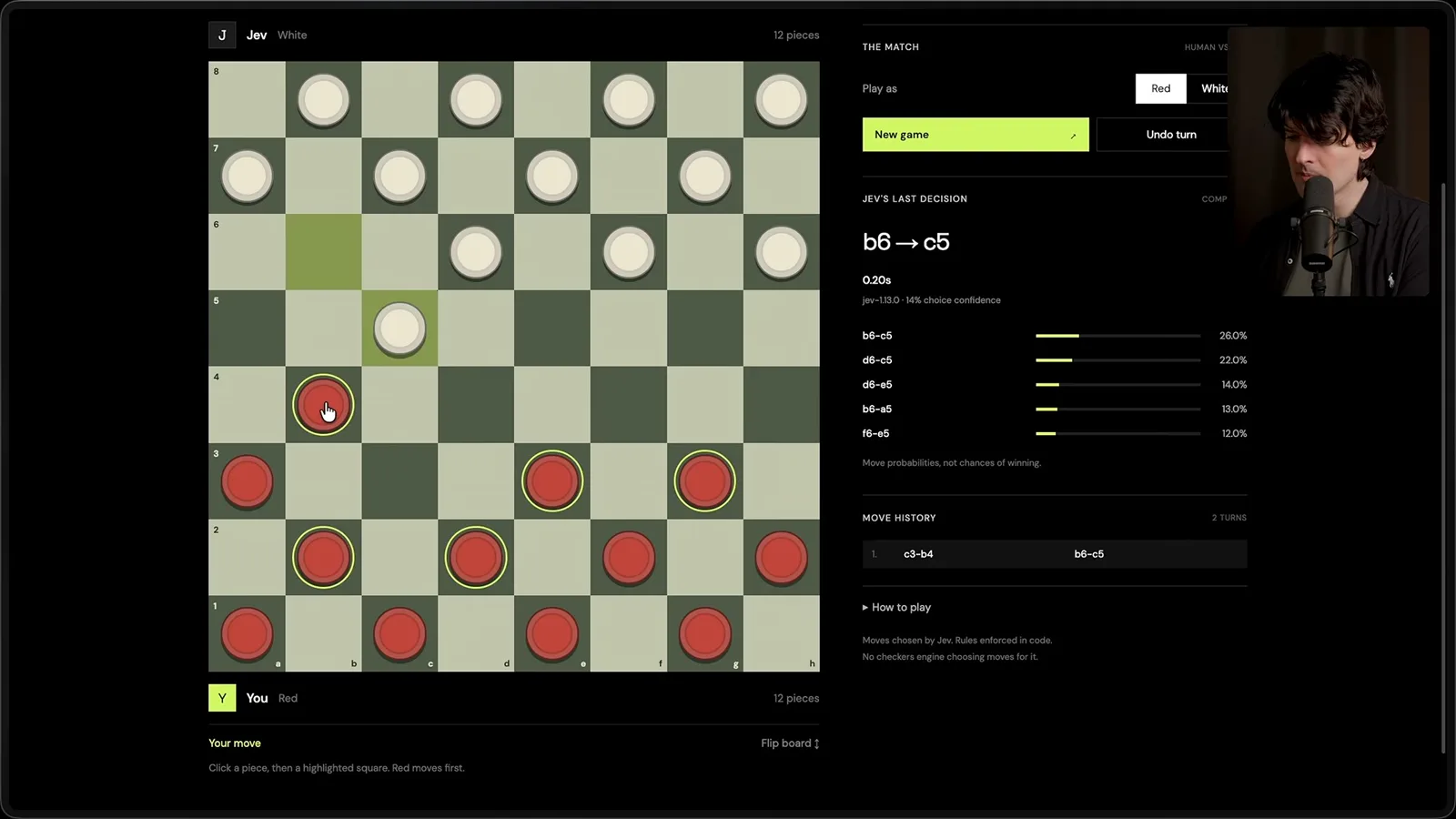
Examples include categorizing videos, triaging email and classifying moderation cases. I demonstrate checkers by passing the board as structured state, not an image, because the model does not have vision in this version. Its moves arrive almost instantly, but its strategy is poor: speed is not the same thing as strong game reasoning.
Structured outputs and integration
He compares Jev with tools that make language-model outputs conform to software types. He distinguishes guaranteed shape from probabilistic content.
Typesafe presents Jev as a component that software calls with data and a requested output structure. The company describes specialized architecture, parallel sampling and training for calibrated decisions, and says the first version is in early access. Availability and supported features may change.
Other tools also help connect models to typed code. BAML, for example, lets a developer define a function with a structured response, such as a sentiment label and confidence, and use it from an application. I found it helpful when an underlying model sometimes produced malformed JSON; its runtime can repair outputs.
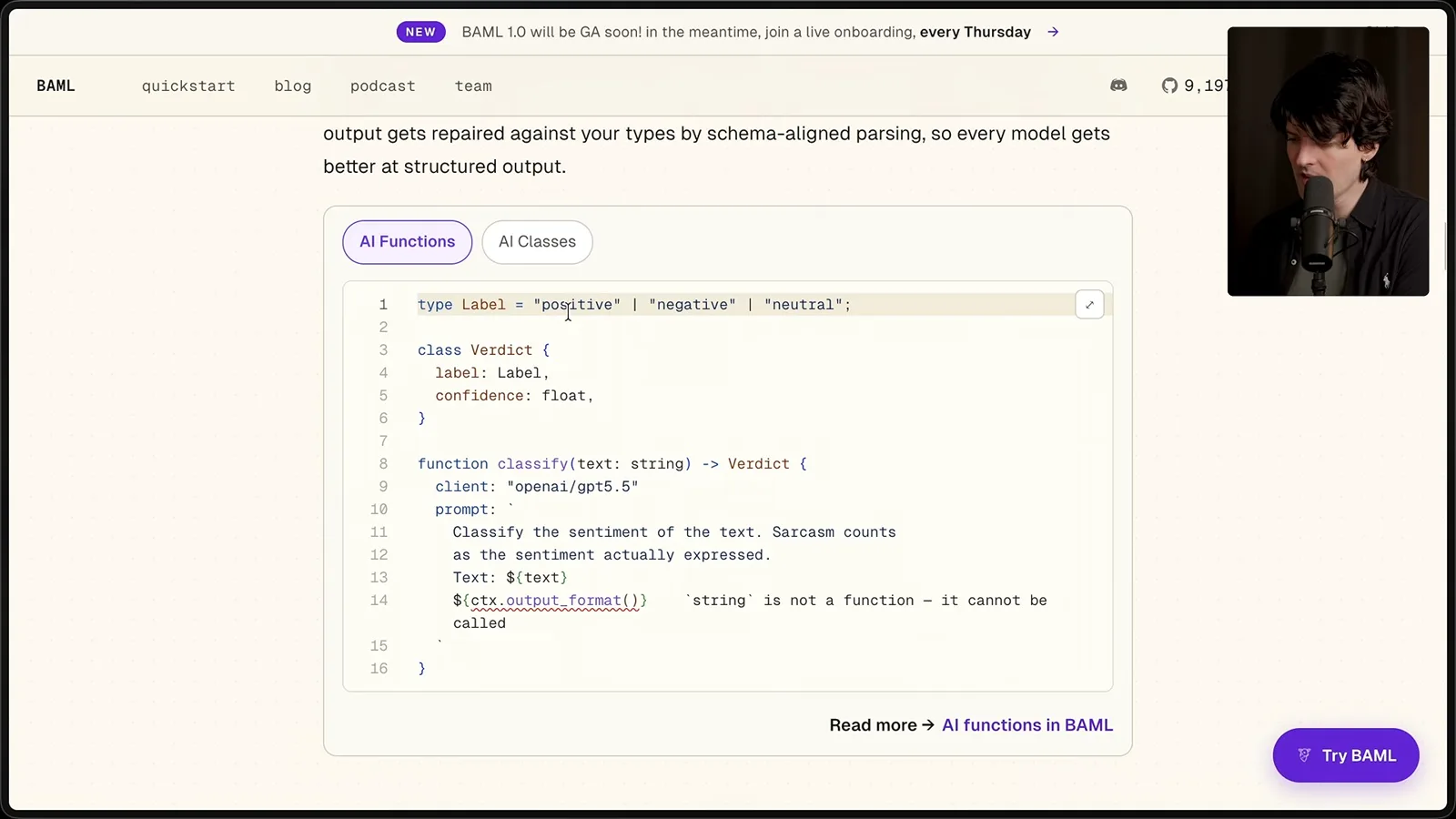
The purpose is to bridge nondeterministic model behavior and software that expects a particular structure. Theo says Jev is designed to honor the requested format, while the actual classification remains probabilistic. A schema-valid result can still contain a wrong label or an unreliable confidence score.
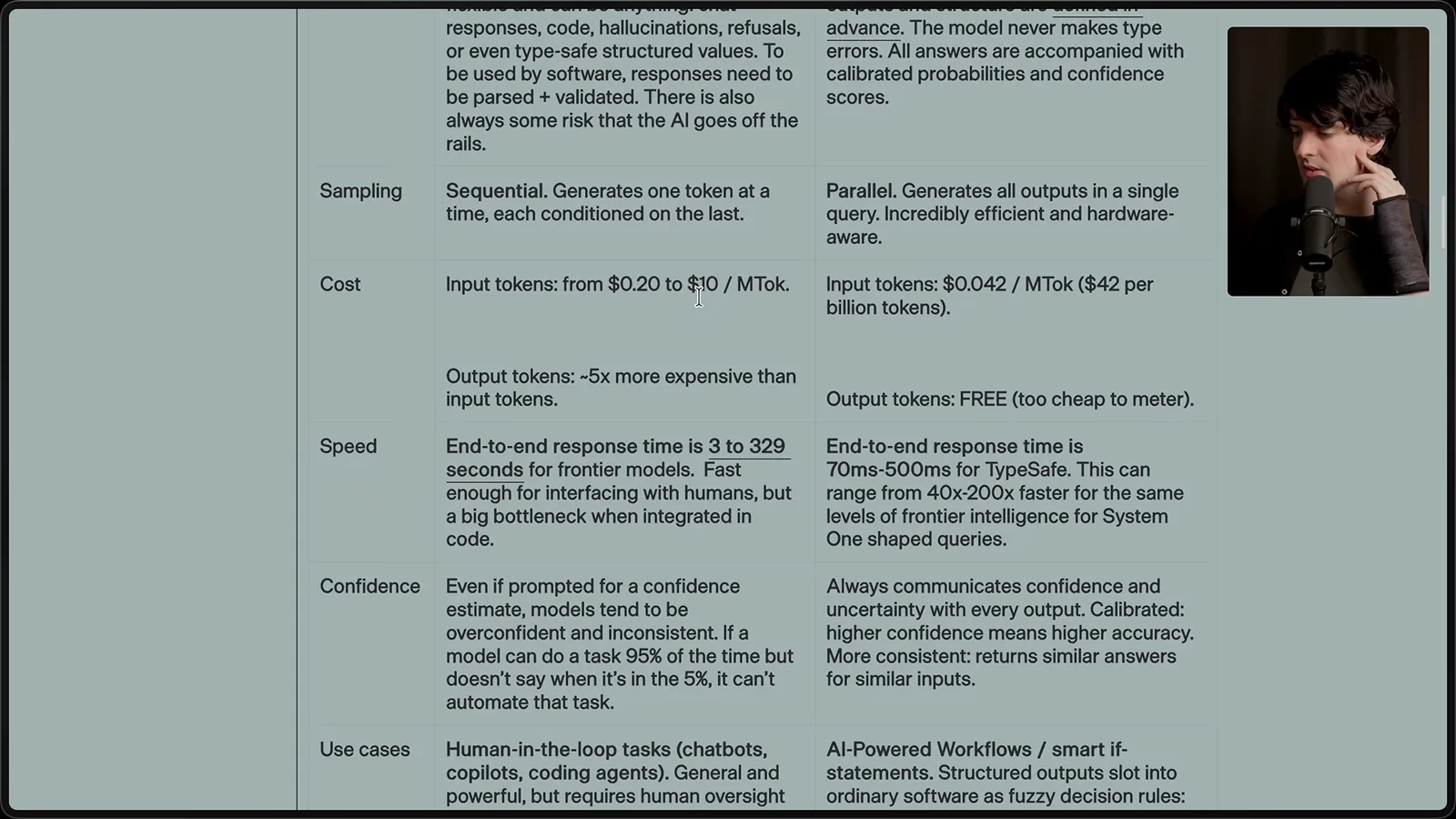
At the time of filming, I cite about four cents per million input tokens and free output tokens, compared with a much higher input price for Fable. Those are quoted prices for different products and capabilities, not a like-for-like measure of total task cost. I also cite the company’s low-latency comparison, which is specific to its measured workflows.
Performance, demos and limitations
Theo discusses the company’s reported latency, cost and benchmarks, along with examples involving games and user interfaces. The numbers describe particular demonstrations and configurations.
The company says the model supplies confidence or uncertainty with each decision. That can help build thresholds, but confidence only becomes useful for automation when it is checked and calibrated on real cases. I like the analogy of a smart if statement: pass data in and use the classification to choose a workflow.
Low latency makes interactive uses attractive. I show a palette demo that responds to a term and changes colors quickly. But a fast classifier is not automatically a good judge of several complex code implementations: that job may require repository context, investigation and reasoning the classifier does not have.
I describe the version’s 32,000-token context limit and compare it to a switch statement as a mental model. That is an analogy, not an exact measure of intelligence. A task that needs the agent to inspect a codebase and reason over alternatives is very different from choosing among labels for supplied data.
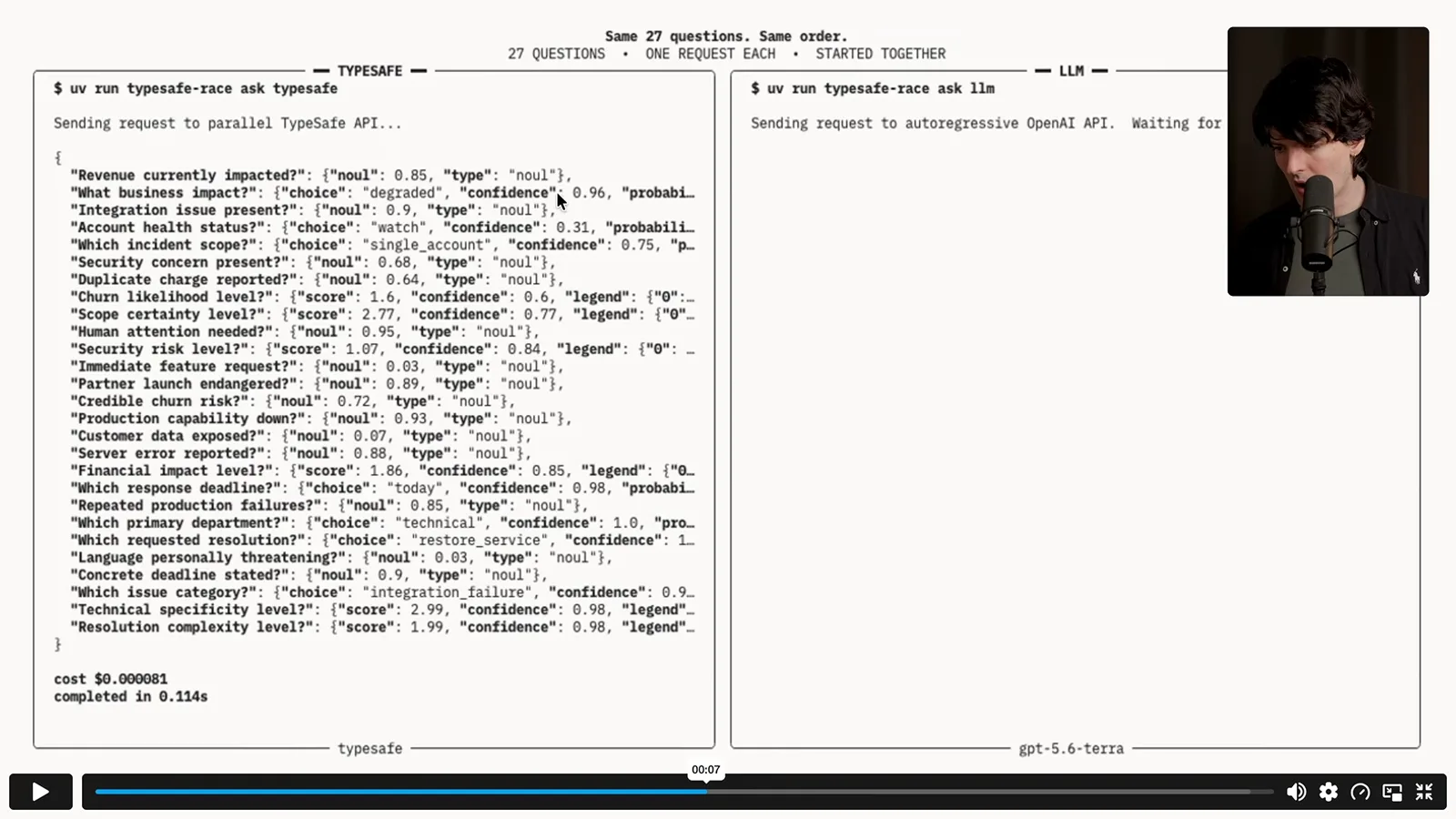
One company demo asks 27 questions over a dataset. I report that Jev finishes in about 0.114 seconds, while the comparison model takes around nine seconds. These numbers describe that demonstration, not the latency a user should expect across all inputs, services or workloads.
The company also shows selected classification workflows and large reported gains in speed and cost. It says the headline figures may be at the high end of real-world gains. The comparison uses particular wrappers and configurations; the evaluation itself was not fully published, so the results have limits.
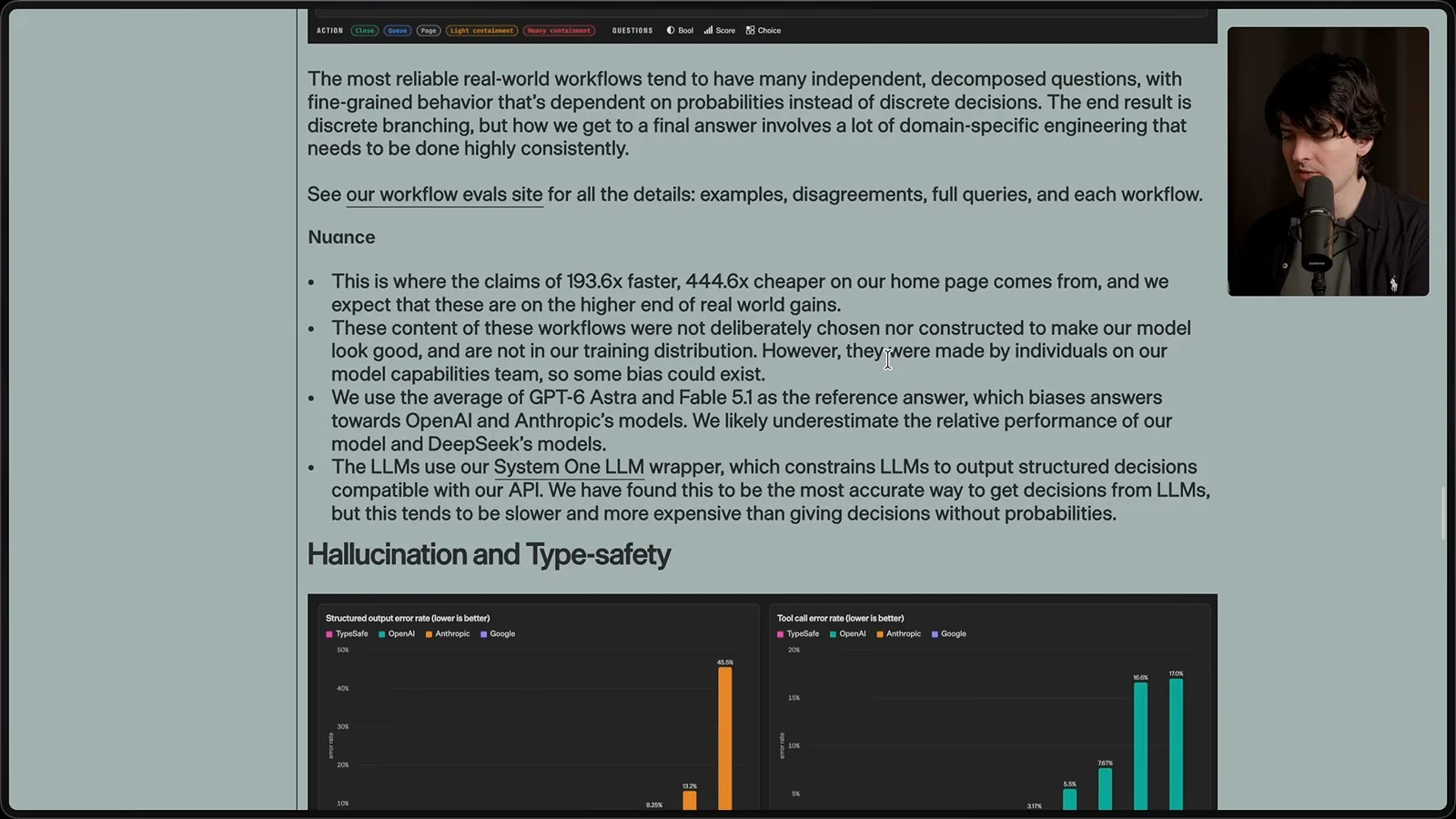
The reference answers are derived from an average of Astra and Fable 5.1, rather than an infallible ground truth. Those models can also be wrong. Typesafe’s wrapper asks comparison models for structured decisions and probabilities, which it says is accurate but can be slower and more expensive than returning decisions without probabilities.
Typesafe emphasizes format safety and describes hallucinated fields as a problem. I agree that invalid structured output can break downstream systems, especially with latency guarantees or deep dependencies. But hallucination also includes incorrect content: following a schema is not a guarantee that a decision is true.
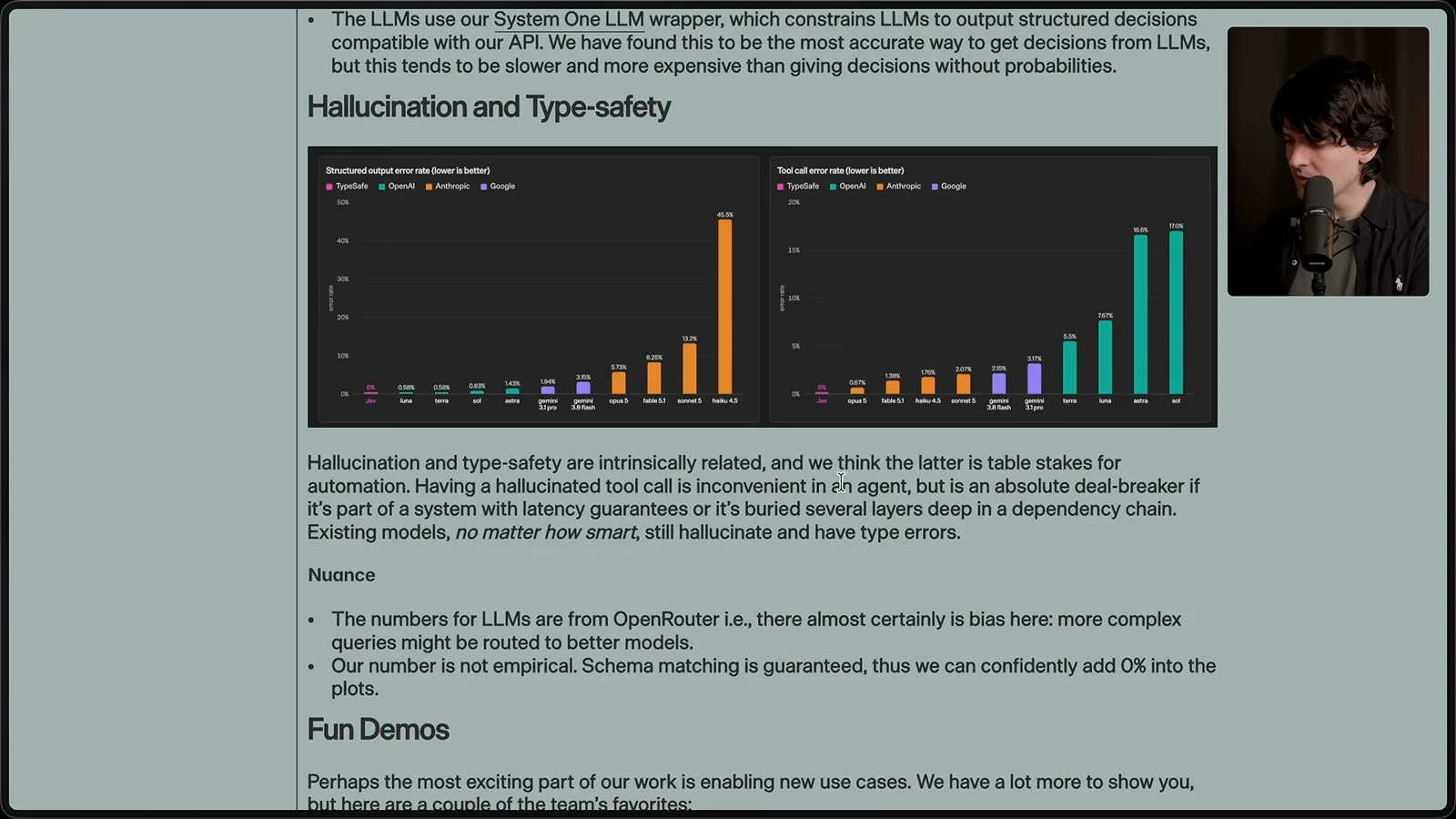
The presented charts compare structured-output and tool-call errors across models and show zero for Jev. The company says its zero is not an empirical result: it asserts schema matching is guaranteed. It also notes possible bias in the other models’ OpenRouter data. Neither figure establishes that a classification is correct.
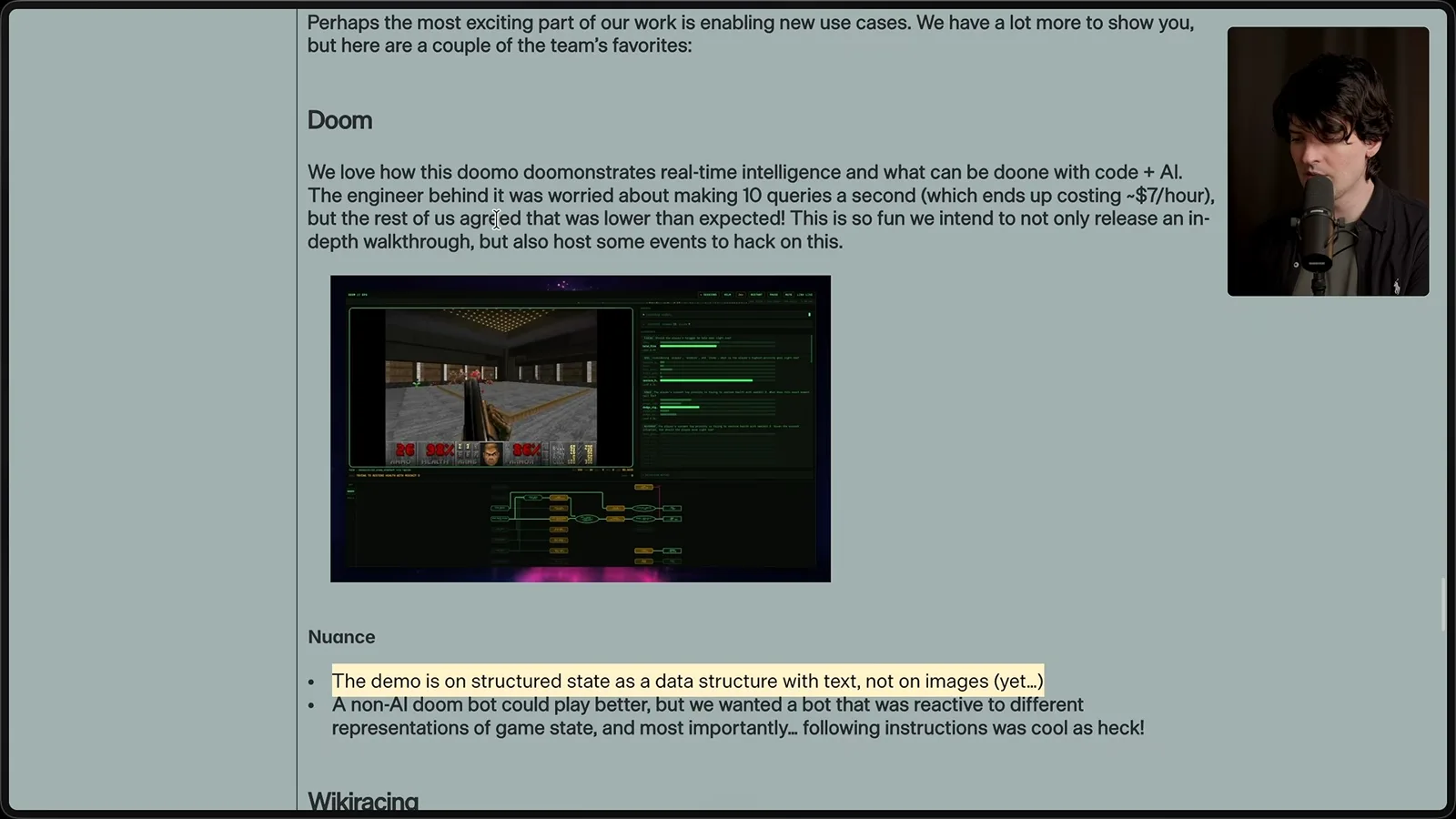
A Doom demonstration makes decisions repeatedly from structured game state, not images. The developer estimated less than seven dollars an hour at ten calls a second for that setup. The character sometimes turns erratically because each decision may lack useful information about the previous one; the demo illustrates both speed and the importance of state.
A wiki-racing example chooses links from page content quickly. Another demo uses structured JSON to update a user interface without waiting for a long text stream. These examples illustrate possible integration patterns; their speed does not by itself establish reliability on every site or task.
In an email example, a developer runs 100 emails through eight workers and reports roughly 200 milliseconds average latency, 240 milliseconds at the 95th percentile and 38 emails per second. I see this as a useful first pass for simple triage. The figures come from that specific batch, not an independent general benchmark.
If image support becomes available, I would like to classify video frames for sensitive information before publication. That is a prospective application, not a feature demonstrated by the version in this video. The same principle can apply to website navigation when the model receives relevant HTML rather than pixels.
Judging and context compaction
He questions using a classifier for complex model judging or context compaction, citing missing context, synthesis and cache considerations.
I worry that excitement about speed will lead people to substitute the classifier for a reasoning model everywhere. In particular, I disagree with using it uncritically as a judge of complex agent responses. Whether any judge is useful depends on the evidence and evaluation task, not just how fast it returns a score.
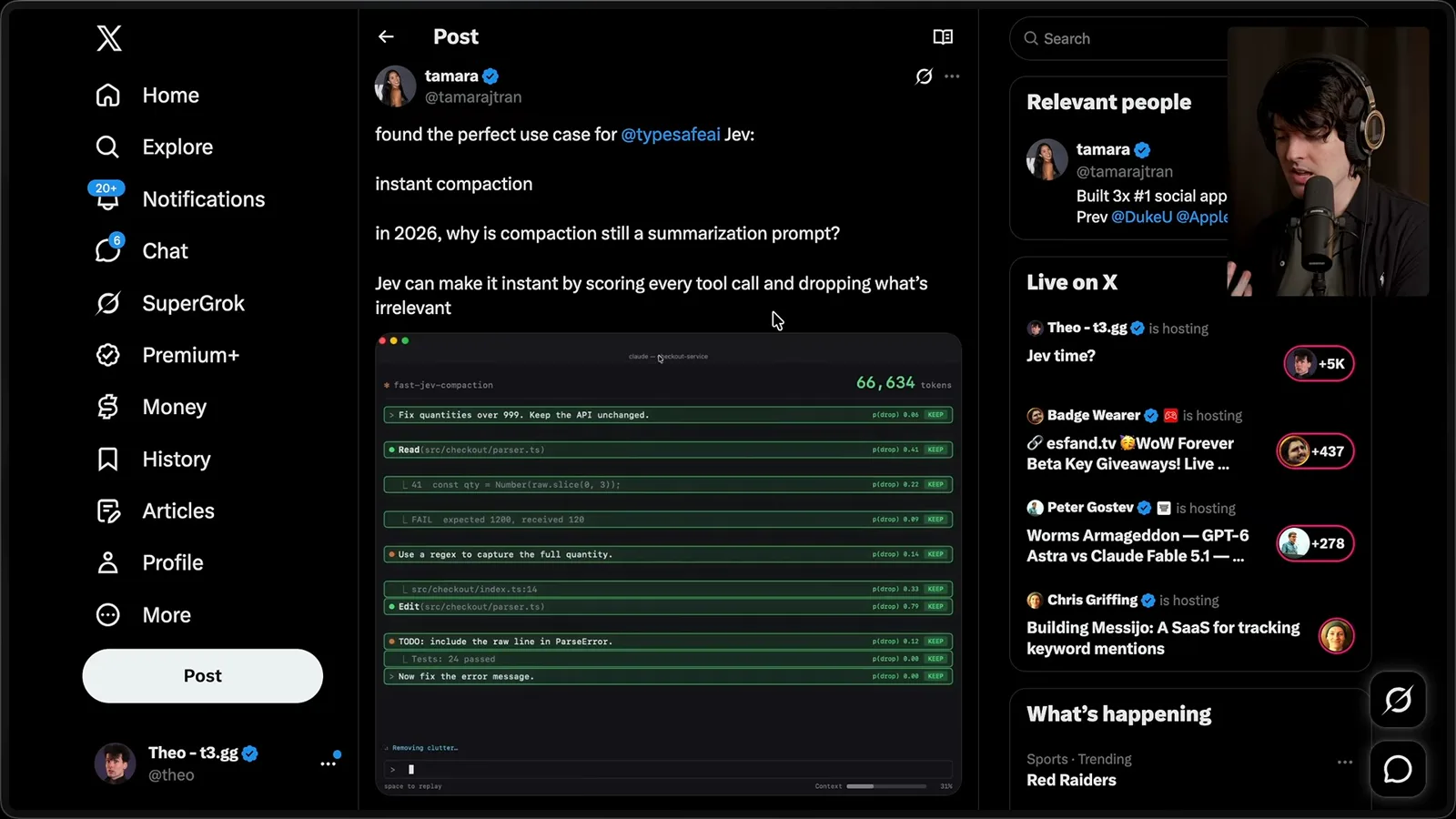
I also criticize a demo that uses classification to compact an agent’s context. A useful compaction summary synthesizes what happened, decisions, constraints and unresolved work; it is not simply a filter that discards individual messages. In the example I saw, the classifier also had limited context and did not have all tool outputs.
Reasoning traces are not necessarily exposed to an outside tool, and editing conversation history can affect what a provider preserves. I also note that models and their harnesses may be trained or designed around specific compaction behavior. These implementation details vary by provider and should be verified for the system in use.
There is a cost issue too: changing early parts of a conversation can invalidate cached prefixes and lead to more cache writes. Re-running a discarded tool call is not always harmless, since some tools have side effects. I mention reported poor results from others’ tests of the demo, without treating them as a comprehensive benchmark.
Analyzing agent history
He classifies his own T3 Code chats and shows how confidence thresholds affect the result. He concludes by positioning the model as a component in software rather than a replacement for a general reasoning model.
A more promising use for me is analysis of large amounts of existing data. I used Jev to classify 32,311 messages across 1,118 T3 Code threads on one machine. I report that the run cost 37 cents and that bug fixes and PR review or management accounted for substantial portions of the work.
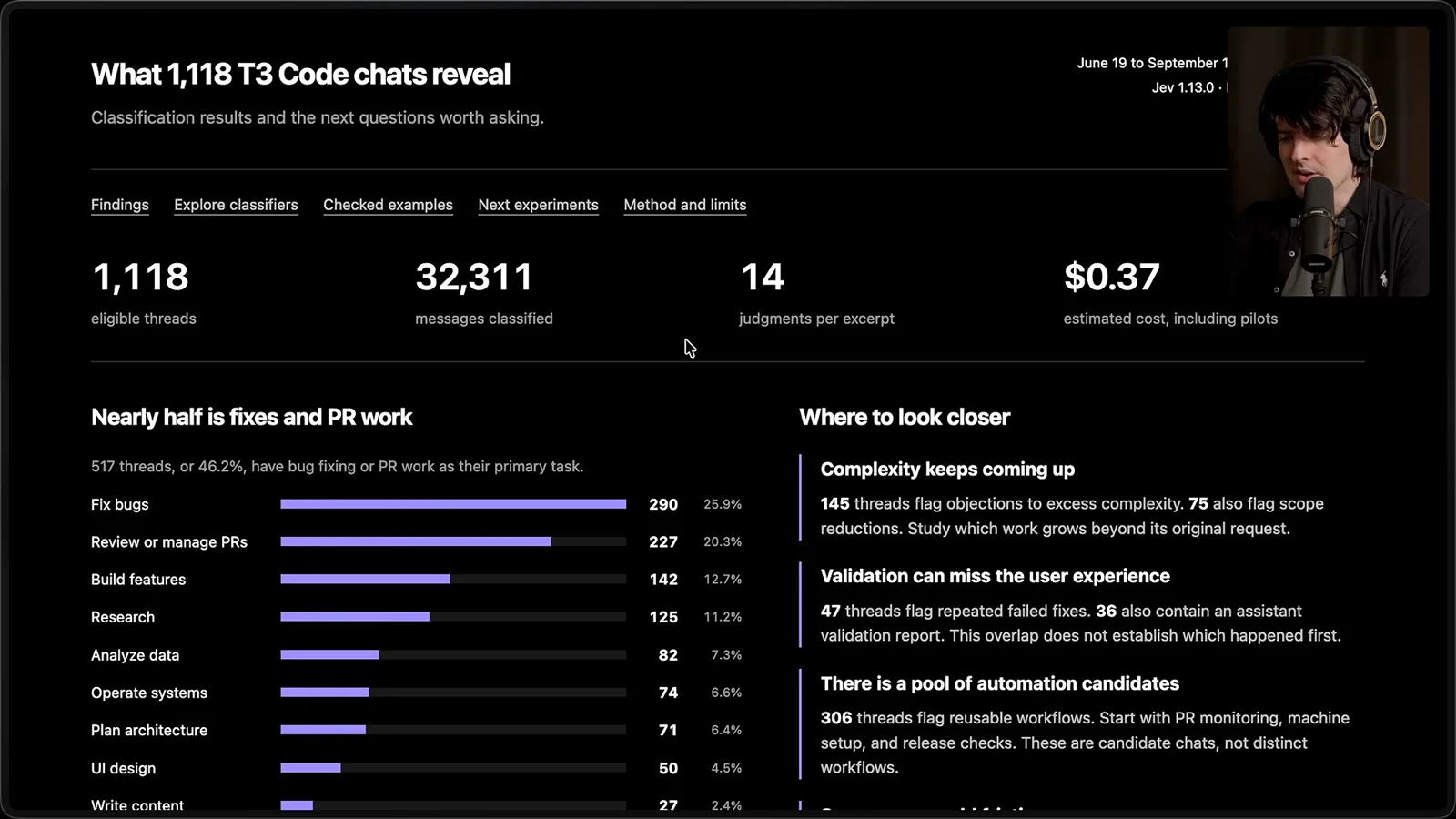
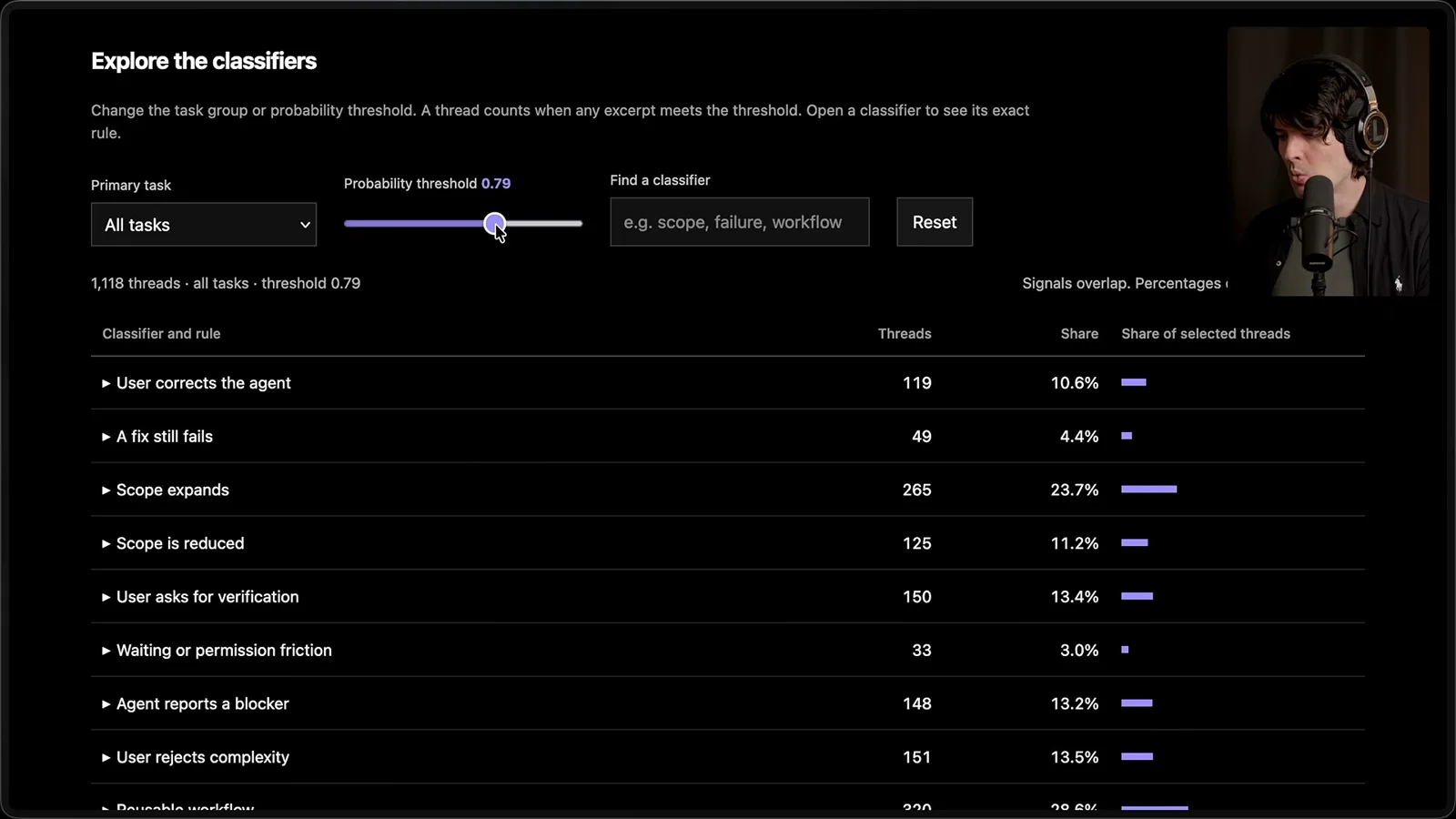
The model provides scores for categories rather than simply producing a list of tags. In my interface, changing the threshold for scope expansion from 80% to 90% changes the proportion of threads counted from 22% to 6.8%. A score threshold is not automatically a calibrated probability or a verified ground-truth label.
Astra also tried to identify threads that would make good video material, revising the prompt several times, but the result still marked about half the threads as worthwhile. I did not find that useful. Some classifications require judgment that the model and available context may not supply.
My rough heuristic is to consider how quickly someone could answer after seeing all the relevant information: quick categorization may fit, while work requiring sustained thought may not. This is a rule of thumb, not a validated boundary, and performance should be tested on the actual task.
The main distinction is between fast structured decisions and extended reasoning. I see Jev as a function or library integrated into an application, not as a direct replacement for Fable or a tool for generating code and prose. Use it where its particular tradeoffs are useful, and verify the outcomes that matter.
Mehr aus diesem Kanal
 36:07EN
 Theo - t3․gg· 27. Okt. 2026Theo on Token Costs, Coding Agents, and the Price of AI CapabilityTheo Browne · Ping LabsA viral estimate of Lauren's AI spending prompts a closer look at cache pricing, benchmarks, and the changing work of coding agents.
 30:37ENTheo - t3․gg· 26. Okt. 2026Theo’s Three Skills for Reviewing and Shipping with Coding AgentsTheo Browne · Ping LabsHow sol-loop, full-send and full-stop encode review, verification and different levels of merge authority.
 0:43ENTheo - t3․gg· 23. Okt. 2026Theo Distinguishes Security Vulnerabilities from Active AttacksTheo Browne · Ping LabsA short explanation of why disclosed software flaws and reported attacks are different kinds of security news.
 29:22ENTheo - t3․gg· 22. Okt. 2026Theo on Security Vulnerabilities, Stolen API Keys and AITheo Browne · Ping LabsA look at the gap between vulnerability disclosure and patching, and a speculative account of why stolen inference keys may be valuable.
 31:13ENTheo - t3․gg· 20. Okt. 2026Theo on Why Smarter Models Help More Than DevelopersTheo Browne · Ping LabsFrom game modifications to compiler experiments, Theo revisits his assumptions about who benefits from more capable AI.
 31:47ENTheo - t3․gg· 18. Okt. 2026Theo on Asking Agents for Outcomes and Building the Tools They NeedTheo Browne · Ping LabsA tool-call report, a troubleshooting playbook and connected data show how prompting can reshape product engineering.