








Ergebnisse
20 ArtikelSortieren
 51:55EN
 3Blue1Brown· 18. Sept. 2026The last IMO problem AI could not solveGrant Sanderson · 3Blue1BrownGrant Sanderson walks through IMO 2025 Problem 6 — a tiling puzzle that frontier models missed — and the visual patience it takes to prove a construction is optimal.
 3:52:17EN
 Lex Fridman· 31. Dez. 2025PodcastSome Infinities Are Larger Than OthersModeration: Lex FridmanJoel David Hamkins walks Lex Fridman from Hilbert's Hotel through Gödel, the continuum hypothesis, and a set-theoretic multiverse where truth is not the same as proof.
 3:23EN
Nitya on Training and Working as a Quantitative Trader at Jane StreetNitya · Jane StreetA trader on the New York international ETF desk describes the skills, training and collaboration involved in her work.
 11:41EN
Five Ways to Calculate the Wait for a Successful ShotSawyer · Jane StreetA 20% success rate leads to an expected wait of five attempts—but two consecutive successes take 30. Explore the reasoning through series, recursion and a long-run argument.
 10:32EN
Real Numbers: Expected Time Between Exams and a Half-Court Shot ChallengeSawyer · Jane StreetSawyer solves an exam-scheduling problem in several ways, then asks how many basketball attempts it takes to make one shot or two in a row.
 6:04EN
Finals Week and the Expected Number of Snowboards UsedSawyer · Jane StreetSawyer poses a new exam-scheduling puzzle and uses indicator variables in two ways to solve the previous snowboard problem.
 6:16EN
Indicator Variables: Marching Bands and SnowboardsSawyer · Jane StreetSawyer uses linearity of expectation to count in-step rows, then poses a six-snowboard challenge.
 9:40EN
Real Numbers: A Marching Band Challenge, Expected Damage, and Bayes’ RuleSawyer · Jane StreetSawyer introduces a marching-band expected-value puzzle and uses linearity and Bayesian updating to solve a monster-attack problem.
 10:08EN
Expected Damage and a Golden-Ratio Window PuzzleSawyer · Jane StreetSawyer introduces expected value with an unknown video-game monster, then uses geometry to solve a painting-through-a-window problem.
 5:38EN
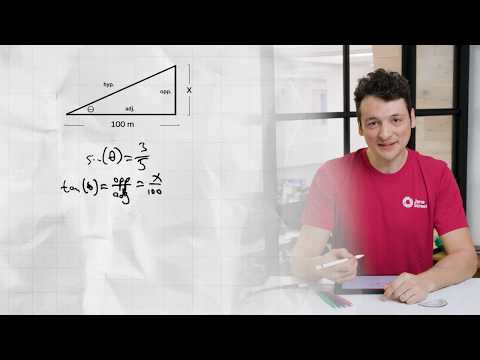
Wavey’s Return: Solving a River-Crossing PuzzleSawyer · Jane StreetSawyer solves the first toy-boat crossing with a 5:3 speed ratio, then asks how the answer changes when the return journey starts 60 meters downstream.
 6:37EN
Crossing the River: A Toy Boat Puzzle and a Snow-Cone SolutionSawyer · Jane StreetA toy boat drifts downstream in a steady current. Sawyer poses a navigation puzzle and solves the previous episode’s cone-and-hemisphere problem.
 3:35EN
Snow Cones and Spheres: A Volume Solution and a New Geometry PuzzleSawyer · Jane StreetSawyer derives the height of a cone with the same volume as a hemisphere, then asks how to reshape the ice with minimal movement.
 7:03EN
Grandma’s Secret College Fund: A Bayes’ Theorem PuzzleSawyer · Jane StreetA random $20 bill reveals information about a hidden deposit. Sawyer poses the new puzzle and solves a DMV probability problem three ways.
 7:23EN
Bayes' Theorem and a Driver's Test Probability PuzzleSawyer · Jane StreetSawyer derives Bayes' theorem, poses a question about test-takers who studied, and solves an earlier card-game probability puzzle.
 8:03EN
Real Numbers: A Taxi Challenge and Two Ways to Calculate a Sleep ProbabilitySawyer · Jane StreetSawyer poses a consecutive-taxi puzzle and solves a five-night dog-sitting problem with a probability table and a counting argument.
 7:15EN
A Balanced Game of War and the Probability of Three TaxisSawyer · Jane StreetSawyer introduces conditional probability through a card-game challenge, then solves an earlier six-car puzzle in two ways.
 56:12EN
Echoes of Fourier: From Sound Waves to Fast ConvolutionChristopher HardinA practical introduction to Fourier transforms, convolution, and the mathematics of placing a recording in real or imagined acoustic spaces.
 54:58ENLex FridmanPodcastEric Weinstein on Geometric Unity: One Canvas, Fourteen Dimensions and a Theory of EverythingModeration: Lex FridmanEric Weinstein talks with Lex Fridman about releasing his Oxford lecture, why academia resists his ideas, and how Geometric Unity tries to derive matter from the geometry of spacetime.
 21:52ENLex FridmanPodcastThe Secret Seminar: Eric Weinstein on What Happens When Academia Meets Someone It Can't CategorizeModeration: Lex FridmanIn a clip from the Lex Fridman Podcast, mathematician Eric Weinstein recounts discovering a hidden seminar at Harvard and explains why he thinks institutions fail on novel cases.
 11:34ENLex FridmanPodcastNeither Discovered Nor Invented: Grant Sanderson on the Cycle Between Math and the WorldModeration: Lex Fridman3Blue1Brown's Grant Sanderson tells Lex Fridman that mathematics feeds on a loop of discovery and invention, and wonders why the universe's laws are so compressible.