









筛选结果
101 篇排序
 1:47:38EN
 Cognitive Revolution "How AI Changes Everything"· 2026年7月4日播客19 Neurons Can Drive a Car. Liquid AI Wants Foundation Models on Every Chip主持 Nathan LabenzRamin Hasani traces liquid neural networks from a worm's 300-cell brain to a 600-megabyte model that will talk from inside a Mercedes, and explains why architecture search now beats architecture avengers.
 2:59:44ENCognitive Revolution "How AI Changes Everything"· 2026年6月3日播客Two Endangered Languages Broke Transformers. Nested Learning Gave Models a Sleep Button.主持 Nathan LabenzGoogle researcher Ali Behrouz tells Nathan Labenz how stacking update frequencies — not just layers — and an offline sleep phase could give language models genuine continual learning.
 1:21:56EN → 简体中文
 Unsupervised Learning: With Jacob Effron· 2026年5月15日播客Yann LeCun 离开 Meta:大语言模型通向不了智能主持 Jacob Effron这位图灵奖得主对 Jacob Effron 讲述了他为何从 Meta 分拆出 AMI Labs,为何类 JEPA 的世界模型胜过像素生成器,以及他为何认为 Hinton 在 2023 年改变了看法。
 41:36EN
 Sequoia Capital· 2025年11月18日播客Four Months to Drive Tokyo: How Wayve Bet the Company on One End-to-End NetworkWayve CEO Alex Kendall tells Sequoia’s Training Data why AV 2.0 ditches HD maps and hand-written stacks for a foundation model that can adapt to a new car and a new country in weeks.
 2:02:17ENCognitive Revolution "How AI Changes Everything"· 2025年8月27日播客SAEs Find the Nouns. Parameter Decomposition Looks for the Verbs主持 Nathan LabenzGoodfire's Lee Sharkey argues that sparse autoencoders recover a network's variables, not the algorithms those variables run, and shows how stochastic parameter decomposition tries to recover the computations themselves.
 1:54:08ENCognitive Revolution "How AI Changes Everything"· 2025年5月29日播客Why Anthropic's first check went to a company building microscopes for neural nets主持 Nathan LabenzGoodfire's Dan Balsam and Tom McGrath argue that mechanistic interpretability now has a proto-paradigm, two stubborn gaps, and three products worth shipping today.
 1:43:54ENCognitive Revolution "How AI Changes Everything"· 2025年3月23日播客A Year to Grow a Brain Organoid, an Hour to Simulate It主持 Nathan LabenzStanford postdoc Siyu He tells Nathan Labenz how Squidiff and CORAL move single-cell and spatial experiments into the computer — and where the models still cannot go.
 1:40:22ENCognitive Revolution "How AI Changes Everything"· 2025年1月22日播客Twenty-atom crystals taught an AI the physics of a heartbeat主持 Nathan LabenzOrbital Materials' Jonathan Godwin and Tim Duignan tell Nathan Labenz how a neural network trained on tiny crystals simulated a potassium ion channel on a single 2017 GPU.
 41:42ENSequoia Capital· 2024年10月22日播客Neural Networks Are Still Waiting for Their ThermodynamicsOpenAI researcher Dan Roberts on why physicists keep migrating into AI, and why the field still lacks the equivalent of the ideal gas law.
 1:42:16ENCognitive Revolution "How AI Changes Everything"· 2024年7月4日播客267 Papers in Seven Months: Albert Gu Explains the State Space Model Revolution主持 Nathan LabenzThe Mamba co-author walks through five years of recurrent-model work, why selective compression beats a growing KV cache, and what Mamba 2 trades away to train faster.
 1:54:01ENCognitive Revolution "How AI Changes Everything"· 2024年6月26日播客A Tiny Network Grew a Salt Crystal the Training Data Never Showed主持 Nathan LabenzTim Duignan trained tens of thousands of parameters on salt water. The model invented a crystal — and a continuum solvent theory he had spent a PhD failing to write by hand.
 1:52:18ENCognitive Revolution "How AI Changes Everything"· 2024年5月6日播客Two Weeks, Thirty Compiles: How Adam Majmudar Wrote a GPU From Scratch主持 Nathan LabenzA Cognitive Revolution walkthrough of TinyGPU, from SIMD kernels and memory latency to an open-source chip flow that runs on a laptop.
 1:19:24ENCognitive Revolution "How AI Changes Everything"· 2024年4月5日播客A Gibberish Prompt Unlocks What GPT-J Plans Three Tokens Ahead主持 Nathan LabenzNortheastern’s Bau Lab shows that a 40,000-parameter soft prompt can read a model’s future words, and that about ten attention heads carry the task itself.
 2:30:06ENCognitive Revolution "How AI Changes Everything"· 2023年12月22日播客Trained on a Thirtieth of GPT-4's Tokens, Mamba Beat Transformers on Home Turf主持 Nathan LabenzIn a solo emergency episode, Nathan Labenz argues that Albert Gu and Tri Dao's selective state space model is the first architecture since 2017 that deserves to share the Transformer’s throne.
 35:24EN
 No Priors: AI, Machine Learning, Tech, & Startups· 2023年8月24日播客 · 2 人对谈The Author of Attention Is All You Need Now Compiles mRNA Like Bytecode主持 Sarah Guo, Elad GilJakob Uszkoreit on why Transformers won, why models spend compute on the wrong things, and why drug discovery has to become generation rather than screening.
 1:40:07ENCognitive Revolution "How AI Changes Everything"· 2023年7月4日播客Thirty thousand voltage updates a second: inside Skydio’s autonomy stack主持 Nathan LabenzHayk Martiros walks Nathan Labenz through a two-pound drone that sees in every direction, runs more than ten neural nets on board, and will not be weaponized.
 1:52:46ENCognitive Revolution "How AI Changes Everything"· 2023年6月27日播客Charge Neural Nets by Connection Length, and the Black Box Splits Into Modules You Can See主持 Nathan LabenzMIT physicist Ziming Liu walks Nathan Labenz through BIMT, a brain-inspired training trick that sparsifies networks until you can read them by looking.
 1:21:20ENCognitive Revolution "How AI Changes Everything"· 2023年3月9日播客Freeze the eyes and the brain. Train only the optic nerve.主持 Nathan LabenzJunnan Li and Dongxu Li tell Nathan Labenz how BLIP cleaned noisy web captions, and how BLIP-2 connected a frozen vision model to a frozen language model in under ten days on one A100.
 3:28:47EN
 Lex Fridman· 2022年10月29日播客 · 2 人对谈Karpathy Calls Trained Neural Nets Complicated Alien Artifacts嘉宾 Andrej Karpathy · 主持 Lex FridmanOn Lex Fridman's podcast, Andrej Karpathy refuses the brain analogy, walks the Fermi paradox through Nick Lane's chemistry, and treats the Transformer as a general-purpose differentiable computer.
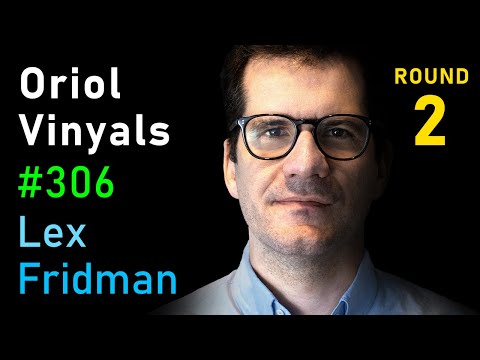 2:10:08EN → 简体中文Lex Fridman· 2022年7月26日播客 · 2 人对谈Gato 只是开始嘉宾 Oriol Vinyals · 主持 Lex FridmanDeepMind 的 Oriol Vinyals 与 Lex Fridman 聊通用智能体、被丢掉的权重,以及人类水平的通用人工智能(AGI)能否在他有生之年到来。
 2:45:10EN → 简体中文Lex Fridman· 2022年1月22日播客 · 2 人对谈青少年二十小时学会开车,汽车却还学不会嘉宾 Yann Lecun · 主持 Lex FridmanYann LeCun 在 Lex Fridman 的播客里讲明白:自监督世界模型(self-supervised world models)为什么是智能缺失的“暗物质”,以及机器为什么还没到家猫的水平。
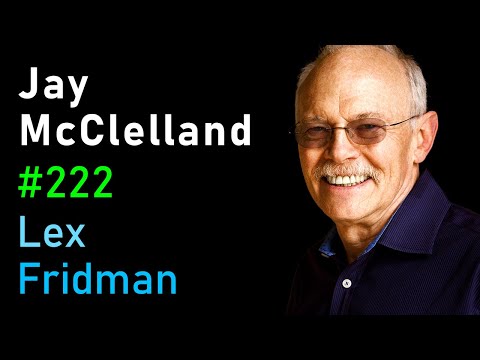 2:31:57EN → 简体中文Lex Fridman· 2021年9月20日播客 · 2 人对谈Jay McClelland 谈思维如何从神经网络中涌现嘉宾 Jay McClelland · 主持 Lex Fridman这位斯坦福大学的认知科学家,与 Lex Fridman 聊了联结主义(connectionism)、反向传播(backpropagation)、David Rumelhart,以及为什么直觉会先发现某些东西,之后逻辑才去证明它。
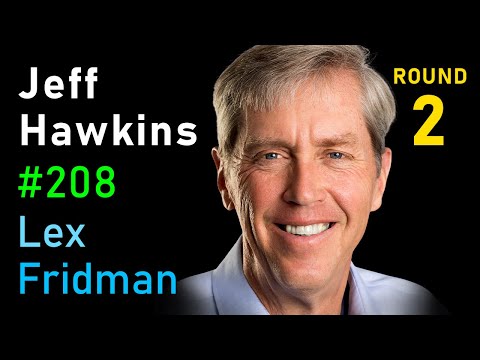 2:18:29EN → 简体中文Lex Fridman· 2021年8月8日播客 · 2 人对谈你的大脑皮层,是 15 万个模型在给一只咖啡杯投票嘉宾 Jeff Hawkins · 主持 Lex FridmanJeff Hawkins 对 Lex Fridman 说:智能是学习世界模型的能力,新皮层是成千上万张相互独立的地图在投票,而通往机器智能最快的路径,是对这层皮质做逆向工程。
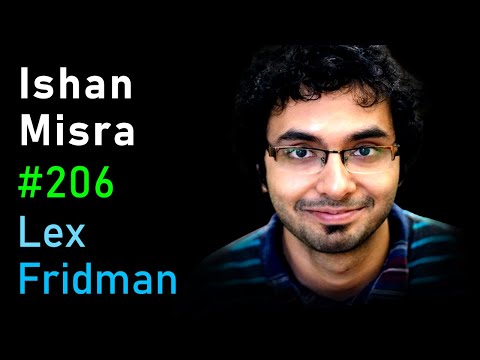 2:30:30EN → 简体中文Lex Fridman· 2021年7月31日播客 · 2 人对谈成功第一步的谬误嘉宾 Ishan Misra · 主持 Lex Fridman伯克利的 Jitendra Malik 解释了计算机视觉为何仍然看起来很简单、全自动驾驶为何还遥遥无期,以及孩子知道而今天的网络不知道的是什么。
加载更多已显示 24 篇,共 101 篇