







筛选结果
51 篇排序
 1:13:33EN → 简体中文
 Unsupervised Learning: With Jacob Effron· 2026年6月3日播客一万亿个 Token 之后,概念终于落地:Łukasz Kaiser 谈 Transformer 仍然缺什么主持 Jacob Effron《Attention Is All You Need》合著者在 Unsupervised Learning 节目中表示,Transformer 大概率会继续胜出,但它们学习的方式仍然与人不同。
 2:02:17EN → 简体中文
 Cognitive Revolution "How AI Changes Everything"· 2025年8月27日播客稀疏自编码器找名词,参数分解找动词主持 Nathan LabenzGoodfire 的 Lee Sharkey 认为,稀疏自编码器(SAE)还原的是网络里的变量,却还原不了这些变量运行的算法。他还介绍了随机参数分解(SPD)如何尝试还原计算本身。
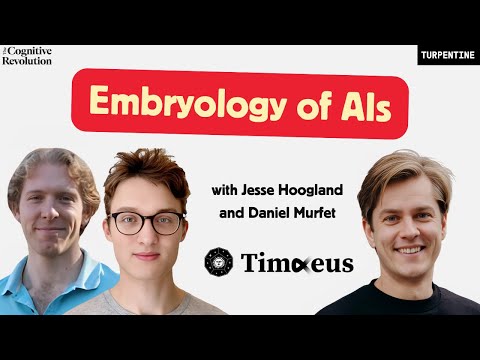 1:37:05EN → 简体中文Cognitive Revolution "How AI Changes Everything"· 2025年6月19日播客一位代数几何学家辞去终身教职,因为碗形的损失曲线图是假的主持 Nathan LabenzTimaeus 的 Jesse Hoogland 和 Daniel Murfet 认为,真正决定神经网络如何学习、如何泛化、又如何出错的,是损失景观中的奇点,而不是每份幻灯片里那些平滑的山谷。
 2:12:00EN → 简体中文Cognitive Revolution "How AI Changes Everything"· 2025年5月15日播客测试时的梯度下降:Titans 把大语言模型(LLM)的上下文推到 1000 万个 Token主持 Nathan Labenz在 GPT-4 的成绩断崖式下跌的地方,这位康奈尔大学博士生的神经记忆模块仍能保持约 70% 的准确率。
 2:33:39EN → 简体中文Cognitive Revolution "How AI Changes Everything"· 2025年2月27日播客攻击者后出手:Nicholas Carlini 为什么总能攻破 AI 防御主持 Nathan Labenz谷歌 DeepMind 安全研究员谈简单的损失函数、70% 的稳健准确率,以及为什么修复必须落在系统层面,单靠模型本身不够。
 1:40:22EN → 简体中文Cognitive Revolution "How AI Changes Everything"· 2025年1月22日播客20 原子晶体教会 AI 心跳的物理学主持 Nathan LabenzOrbital Materials 的 Jonathan Godwin 和 Tim Duignan 向 Nathan Labenz 讲述,一个在微小晶体上训练的神经网络,如何在一块 2017 年款 GPU 上模拟了钾离子通道。
 1:42:16EN → 简体中文Cognitive Revolution "How AI Changes Everything"· 2024年7月4日播客七个月里 267 篇后续论文:Albert Gu 讲述状态空间模型的革命主持 Nathan LabenzMamba 合著者回顾了五年来的循环模型研究,讲选择性压缩为什么比不断增长的 KV 缓存(KV cache)更有效,以及 Mamba 2 为了让训练更快放弃了什么。
 1:54:01EN → 简体中文Cognitive Revolution "How AI Changes Everything"· 2024年6月26日播客一个小网络长出了盐晶体,而训练数据里从来没有它主持 Nathan LabenzTim Duignan 用盐水训练了数万个参数。模型“发明”了一种晶体,还推出了一套连续介质溶剂理论(continuum solvent theory);而他读博期间花了整整一个博士阶段,也没能手工把这套理论写出来。
 1:58:43EN → 简体中文Cognitive Revolution "How AI Changes Everything"· 2024年2月7日播客一条只有 302 个神经元的线虫已经会权衡取舍,AI 仍停在同一座梯子上主持 Nathan LabenzMax Bennett 把 6 亿年的大脑演化对应到五次突破上,并追问今天的模型究竟爬上了哪几级台阶。
 1:19:24EN → 简体中文Cognitive Revolution "How AI Changes Everything"· 2023年11月17日播客一篇玩具论文没有证明大语言模型不能泛化,舆论却照样跟着跑主持 Nathan LabenzNathan Labenz 和 Erik Torenberg 拆解了一条在网上疯传的 DeepMind 结果、一次周末复现,以及一场针对自愿性 AI 承诺、来得太早的骂战。
 1:33:56EN → 简体中文Cognitive Revolution "How AI Changes Everything"· 2023年7月6日播客AI 侦察报告:90 分钟从 GPT-4 的考试成绩讲到模型是否真的理解主持 Nathan LabenzNathan Labenz 独自主持一期节目,梳理通用模型能做什么、怎样训练、能力如何被解锁,以及它们究竟理不理解任何东西。
 1:32:22EN → 简体中文Cognitive Revolution "How AI Changes Everything"· 2023年6月29日播客一百万字节与 256 个符号:Meta 的 MEGABYTE 想扔掉分词器主持 Nathan LabenzMeta AI 的 Lili Yu 讲解一种多尺度 Transformer:它能预测百万字节的序列,不做分词,目标是把任何文件都当作原始字节来建模。
 1:52:46EN → 简体中文Cognitive Revolution "How AI Changes Everything"· 2023年6月27日播客给神经网络的连接按长度收费,黑箱就拆成了看得见的模块主持 Nathan LabenzMIT 物理学家 Ziming Liu 向 Nathan Labenz 讲解 BIMT,这是一种受大脑启发的训练技巧,能把网络稀疏到用眼睛就能读懂的程度。
 1:25:50EN → 简体中文Cognitive Revolution "How AI Changes Everything"· 2023年4月18日播客提示词工程(prompt engineering)变成了编程,Riley Goodside 对此并不介意主持 Nathan LabenzScale AI 首位资深提示词工程师谈工具调用(tool use)、不失忆的微调(fine-tuning)、先生成再排序,以及 2023 年“未来工作”的故事为什么没有成真。
 2:02:45EN → 简体中文
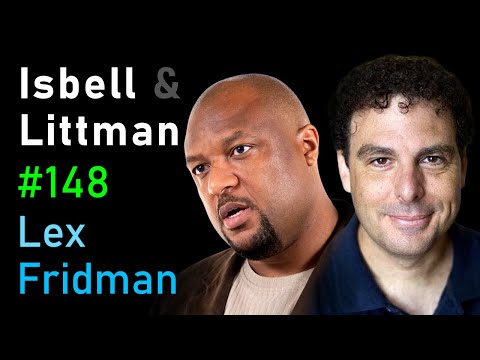
 Lex Fridman· 2020年12月26日播客偷代码:让算法跑起来本身一分不给主持 Lex FridmanCharles Isbell 和 Michael Littman 与 Lex Fridman 聊了为什么机器学习不只是统计,为什么挣扎必须保有希望,以及 6600 美元的在线硕士到底卖的是什么。
 45:31ENLex Fridman· 2020年7月1日播客You Are Your Own Existence Proof: Karl Friston on Free Energy, Life, and Self-Awareness主持 Lex FridmanKarl Friston explains how the free energy principle reframes existence, life, planning, and self-awareness as inference problems.
 26:02ENLex Fridman· 2020年2月9日播客Moore’s Law Is Not Dead—It Is a Cascade of S-Curves主持 Lex FridmanJim Keller explains why transistor scaling keeps outrunning its obituary, and how exponential hardware changes the mathematics AI can attempt.
 46:25ENLex Fridman· 2019年1月17日播客Deep Learning at the Edge of 2019: BERT, Autopilot, and the Ideas That Broke Through主持 Lex FridmanA tour of the architectural, applied, and automation breakthroughs that defined deep learning in 2018 and set up 2019.
 1:29:03ENLex Fridman· 2016年9月27日播客From Word Vectors to Memory Networks: The Building Blocks of Deep NLP主持 Lex FridmanRichard Socher explains how word embeddings, recurrent models, GRUs, pointer mixtures, and dynamic memory networks turn language tasks into trainable end-to-end systems.
 1:00:51ENLex Fridman播客Deep Learning From the Ground Up: Hugo Larochelle's One-Hour Tour of Neural Network Foundations主持 Lex FridmanA fast, equation-level walk through feed-forward networks, backpropagation, practical training tricks, dropout and batch normalization, from the 2016 Deep Learning School.
 1:07:29ENLex Fridman播客Deep Reinforcement Learning from First Principles: Rewards, Q-Learning, Policy Gradients and AlphaZero主持 Lex FridmanLex Fridman's MIT 6.S091 opening lecture walks from the basic RL framework through DQN, actor-critic methods and AlphaZero to the unsolved problem of moving from simulation to the real world.
 9:59ENLex Fridman播客Is Language or Vision Harder? Ilya Sutskever on the Unity of Machine Learning主持 Lex FridmanIn a short clip from his 2020 conversation with Lex Fridman, Ilya Sutskever explains why vision, language and reinforcement learning share the same few principles, and why asking which problem is harder is the wrong question.
 1:25:16ENLex Fridman播客From Hand-Built Features to ResNets: Andrej Karpathy's Crash Course in Convolutional Networks主持 Lex FridmanA 2016 Deep Learning School talk covering how convnets work, how the ImageNet winners evolved, and how to apply them without being a hero.
 1:24:43ENLex Fridman播客From Sparse Coding to GANs: A Tour of Unsupervised Deep Learning in 2016主持 Lex FridmanRuslan Salakhutdinov walks through autoencoders, Boltzmann machines, variational autoencoders and adversarial networks at the Deep Learning School, with candid notes on what did and did not work.
加载更多已显示 24 篇,共 51 篇