









筛选结果
18 篇排序
 11:26EN → 简体中文
 Lex Fridman· 2020年4月11日播客 · 2 人对谈道金斯谈模因、互联网,以及错误的观念为什么也能传开嘉宾 Richard Dawkins · 主持 Lex Fridman“模因”一词的创造者向 Lex Fridman 解释:模因为什么不只是比喻,互联网为什么让观念的传播有了质的飞跃,以及观念为什么和孔雀尾巴一样,不必正确、也不必有用就能传开。
 12:42ENLex Fridman· 2020年3月28日播客 · 2 人对谈The Experience Machine: What Our Refusal to Plug In Says About What We Value嘉宾 Nick Bostrom · 主持 Lex FridmanNick Bostrom unpacks Robert Nozick's experience machine, the status quo effect behind our answers, and whether a simulation convincing enough to feel real would have to contain real minds.
 14:55ENLex Fridman· 2019年10月29日播客 · 2 人对谈Kasparov on Deep Blue, AlphaZero, and Why Machines Win Closed Systems but Humans Still Choose the Questions嘉宾 Garry Kasparov · 主持 Lex FridmanGarry Kasparov revisits the 1997 loss to Deep Blue, explains why machines beat humans in closed systems, and argues that the human role is to pick the right questions and not interfere with superior machine knowledge.
 10:20ENLex Fridman播客 · 2 人对谈How C++ Is Standardized: Votes, Consensus and the Move to a Three-Year Release Cycle嘉宾 Bjarne Stroustrup · 主持 Lex FridmanBjarne Stroustrup explains how the ISO committee works, why C++0x slipped to C++11, and how shorter cycles made C++14, C++17 and C++20 arrive on time.
 11:11ENLex Fridman播客 · 2 人对谈Yann LeCun on Benchmarks, Interactive Environments, and Why Human Intelligence Is Not General嘉宾 Yann Lecun · 主持 Lex FridmanIn a 2019 clip, LeCun defends benchmarks as a test of AI claims, explains why interactive environments break the usual train-test protocol, and argues that "general intelligence" is a misnomer.
 14:41ENLex Fridman播客 · 2 人对谈Talking for 20 Minutes: How the Alexa Prize Turns Real Customers into a Testbed for Conversational AI嘉宾 Rohit Prasad · 主持 Lex FridmanRohit Prasad, head scientist of Amazon Alexa, explains the Alexa Prize grand challenge, how it is judged and why true conversation still needs reasoning.
 11:41ENLex Fridman播客 · 2 人对谈Teaching Machines Humility: Stuart Russell on Escaping the King Midas Problem嘉宾 Stuart Russell · 主持 Lex FridmanIn a short clip from a 2018 conversation, Berkeley's Stuart Russell explains why fixed objectives make superintelligent AI dangerous and why uncertainty about our goals is the fix.
 10:16ENLex Fridman播客 · 2 人对谈Reasoning Without Logic: Yann LeCun on Teaching Neural Networks to Think嘉宾 Yann Lecun · 主持 Lex FridmanYann LeCun explains why he believes neural networks can reason, and what memory, recurrence and continuous representations would need to look like.
 11:19ENLex Fridman播客 · 2 人对谈Why Donald Knuth Thinks P = NP and Why It Might Not Matter嘉宾 Donald Knuth · 主持 Lex FridmanKnuth explains how an algorithm can provably exist without anyone being able to write it down, and why that shapes his view of P versus NP.
 12:53ENLex Fridman播客 · 2 人对谈Principles, Not Black Boxes: Ray Dalio on When to Trust AI嘉宾 Ray Dalio · 主持 Lex FridmanRay Dalio explains how Bridgewater turns human thinking into algorithms, why machine learning is risky when the future differs from the past, and why writing down principles is the route to better decisions.
 12:01ENLex Fridman播客 · 2 人对谈The Big Nap: Why Eric Weinstein Thinks the Pandemic Ends 75 Quiet Years嘉宾 The Big Nap · 主持 Lex FridmanIn an April 2020 conversation, Eric Weinstein and Lex Fridman discuss what a global crisis reveals about collective action, fragility, and the institutions we treat as museum pieces.
 10:24ENLex Fridman播客 · 2 人对谈Concepts: How C++ Finally Got Compile-Time Constraints on Templates嘉宾 Bjarne Stroustrup · 主持 Lex FridmanBjarne Stroustrup explains what C++ concepts are, why they are real and shippable today, and why it took decades to get them right.
 11:11ENLex Fridman播客 · 2 人对谈Filling the Empty Quadrants: Jim Gates on Supersymmetry and the Beauty of Broken Symmetry嘉宾 Jim Gates · 主持 Lex FridmanTheoretical physicist Jim Gates explains supersymmetry with a four-slice pie, recalls how he chose it for his thesis in the 1970s, and connects it to the way physics moves from mathematics to experiment.
 12:52ENLex Fridman播客 · 2 人对谈Roger Penrose on a Universe That Restarts: When the Far Future Becomes the Next Big Bang嘉宾 Roger Penrose · 主持 Lex FridmanPenrose explains conformal cyclic cosmology, in which the remote future of one cosmic eon is mathematically the same as the Big Bang of the next.
 14:47ENLex Fridman播客 · 2 人对谈Build Your Own Types: What Bjarne Stroustrup Learned from Simula, Fortran and Lisp嘉宾 Bjarne Stroustrup · 主持 Lex FridmanThe creator of C++ traces how Simula's user-defined types shaped his language, and why he builds for constrained, long-lived systems.
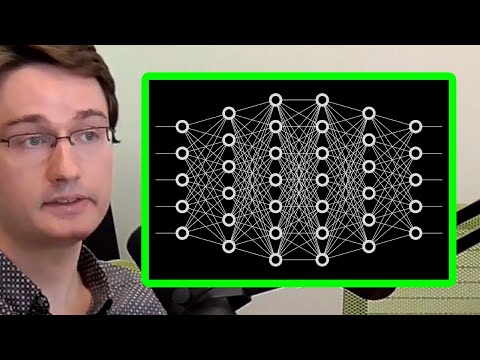 10:34ENLex Fridman播客 · 2 人对谈Why Deep Learning Needs Rules: Chollet on Interpolation, Abstraction and Hybrid AI嘉宾 François Chollet · 主持 Lex FridmanFrançois Chollet explains why neural networks only interpolate between points they have seen, and why the best AI systems pair them with symbolic rules.
 11:59ENLex Fridman播客 · 2 人对谈From a Side Project to TensorFlow's Core: François Chollet on How Keras Came to Be嘉宾 François Chollet · 主持 Lex FridmanThe creator of Keras recalls why he built it in 2015 around recurrent networks, how it moved onto TensorFlow, and what TensorFlow 2.0 means for its design.
 11:23ENLex Fridman播客 · 2 人对谈Science Is a Self-Improving System That Isn't Exploding: Chollet on the Limits of an Intelligence Explosion嘉宾 François Chollet · 主持 Lex FridmanFrançois Chollet uses the history of science to argue that recursive self-improvement meets exponential friction and yields linear, not explosive, progress.