









筛选结果
45 篇排序
 1:47:38EN
 Cognitive Revolution "How AI Changes Everything"· 2026年7月4日播客19 Neurons Can Drive a Car. Liquid AI Wants Foundation Models on Every Chip主持 Nathan LabenzRamin Hasani traces liquid neural networks from a worm's 300-cell brain to a 600-megabyte model that will talk from inside a Mercedes, and explains why architecture search now beats architecture avengers.
 2:59:44EN → 简体中文Cognitive Revolution "How AI Changes Everything"· 2026年6月3日播客两门濒危语言难倒了 Transformer,嵌套学习给模型加上“睡眠”按钮主持 Nathan LabenzGoogle 研究员 Ali Behrouz 向 Nathan Labenz 讲解,语言模型要获得真正的持续学习,不能只堆叠层数,还要堆叠更新频率,并加入一个离线的睡眠阶段。
 1:21:56EN → 简体中文
 Unsupervised Learning: With Jacob Effron· 2026年5月15日播客Yann LeCun 离开 Meta:大语言模型通向不了智能主持 Jacob Effron这位图灵奖得主对 Jacob Effron 讲述了他为何从 Meta 分拆出 AMI Labs,为何类 JEPA 的世界模型胜过像素生成器,以及他为何认为 Hinton 在 2023 年改变了看法。
 2:02:17ENCognitive Revolution "How AI Changes Everything"· 2025年8月27日播客SAEs Find the Nouns. Parameter Decomposition Looks for the Verbs主持 Nathan LabenzGoodfire's Lee Sharkey argues that sparse autoencoders recover a network's variables, not the algorithms those variables run, and shows how stochastic parameter decomposition tries to recover the computations themselves.
 1:54:08EN → 简体中文Cognitive Revolution "How AI Changes Everything"· 2025年5月29日播客为什么 Anthropic 的第一笔投资给了一家为神经网络造显微镜的公司主持 Nathan LabenzGoodfire 的 Dan Balsam 和 Tom McGrath 认为,机制可解释性(mechanistic interpretability)如今已经有了一个准范式,留着两道顽固的缺口,还有三款今天就值得推出的产品。
 1:43:54ENCognitive Revolution "How AI Changes Everything"· 2025年3月23日播客A Year to Grow a Brain Organoid, an Hour to Simulate It主持 Nathan LabenzStanford postdoc Siyu He tells Nathan Labenz how Squidiff and CORAL move single-cell and spatial experiments into the computer — and where the models still cannot go.
 1:40:22ENCognitive Revolution "How AI Changes Everything"· 2025年1月22日播客Twenty-atom crystals taught an AI the physics of a heartbeat主持 Nathan LabenzOrbital Materials' Jonathan Godwin and Tim Duignan tell Nathan Labenz how a neural network trained on tiny crystals simulated a potassium ion channel on a single 2017 GPU.
 1:42:16ENCognitive Revolution "How AI Changes Everything"· 2024年7月4日播客267 Papers in Seven Months: Albert Gu Explains the State Space Model Revolution主持 Nathan LabenzThe Mamba co-author walks through five years of recurrent-model work, why selective compression beats a growing KV cache, and what Mamba 2 trades away to train faster.
 1:54:01ENCognitive Revolution "How AI Changes Everything"· 2024年6月26日播客A Tiny Network Grew a Salt Crystal the Training Data Never Showed主持 Nathan LabenzTim Duignan trained tens of thousands of parameters on salt water. The model invented a crystal — and a continuum solvent theory he had spent a PhD failing to write by hand.
 1:52:18ENCognitive Revolution "How AI Changes Everything"· 2024年5月6日播客Two Weeks, Thirty Compiles: How Adam Majmudar Wrote a GPU From Scratch主持 Nathan LabenzA Cognitive Revolution walkthrough of TinyGPU, from SIMD kernels and memory latency to an open-source chip flow that runs on a laptop.
 1:19:24ENCognitive Revolution "How AI Changes Everything"· 2024年4月5日播客A Gibberish Prompt Unlocks What GPT-J Plans Three Tokens Ahead主持 Nathan LabenzNortheastern’s Bau Lab shows that a 40,000-parameter soft prompt can read a model’s future words, and that about ten attention heads carry the task itself.
 2:30:06EN → 简体中文Cognitive Revolution "How AI Changes Everything"· 2023年12月22日播客训练 token 只有 GPT-4 的三十分之一,Mamba 在 Transformer 的主场赢了主持 Nathan Labenz在一期单人紧急节目中,Nathan Labenz 认为,Albert Gu 和 Tri Dao 提出的选择性状态空间模型,是 2017 年以来第一个有资格与 Transformer 分享王座的架构。
 1:40:07ENCognitive Revolution "How AI Changes Everything"· 2023年7月4日播客Thirty thousand voltage updates a second: inside Skydio’s autonomy stack主持 Nathan LabenzHayk Martiros walks Nathan Labenz through a two-pound drone that sees in every direction, runs more than ten neural nets on board, and will not be weaponized.
 1:52:46ENCognitive Revolution "How AI Changes Everything"· 2023年6月27日播客Charge Neural Nets by Connection Length, and the Black Box Splits Into Modules You Can See主持 Nathan LabenzMIT physicist Ziming Liu walks Nathan Labenz through BIMT, a brain-inspired training trick that sparsifies networks until you can read them by looking.
 1:21:20ENCognitive Revolution "How AI Changes Everything"· 2023年3月9日播客Freeze the eyes and the brain. Train only the optic nerve.主持 Nathan LabenzJunnan Li and Dongxu Li tell Nathan Labenz how BLIP cleaned noisy web captions, and how BLIP-2 connected a frozen vision model to a frozen language model in under ten days on one A100.
 46:25EN
 Lex Fridman· 2019年1月17日播客Deep Learning at the Edge of 2019: BERT, Autopilot, and the Ideas That Broke Through主持 Lex FridmanA tour of the architectural, applied, and automation breakthroughs that defined deep learning in 2018 and set up 2019.
 1:29:03ENLex Fridman· 2016年9月27日播客From Word Vectors to Memory Networks: The Building Blocks of Deep NLP主持 Lex FridmanRichard Socher explains how word embeddings, recurrent models, GRUs, pointer mixtures, and dynamic memory networks turn language tasks into trainable end-to-end systems.
 1:00:51ENLex Fridman播客Deep Learning From the Ground Up: Hugo Larochelle's One-Hour Tour of Neural Network Foundations主持 Lex FridmanA fast, equation-level walk through feed-forward networks, backpropagation, practical training tricks, dropout and batch normalization, from the 2016 Deep Learning School.
 1:07:29ENLex Fridman播客Deep Reinforcement Learning from First Principles: Rewards, Q-Learning, Policy Gradients and AlphaZero主持 Lex FridmanLex Fridman's MIT 6.S091 opening lecture walks from the basic RL framework through DQN, actor-critic methods and AlphaZero to the unsolved problem of moving from simulation to the real world.
 1:25:16ENLex Fridman播客From Hand-Built Features to ResNets: Andrej Karpathy's Crash Course in Convolutional Networks主持 Lex FridmanA 2016 Deep Learning School talk covering how convnets work, how the ImageNet winners evolved, and how to apply them without being a hero.
 1:24:43ENLex Fridman播客From Sparse Coding to GANs: A Tour of Unsupervised Deep Learning in 2016主持 Lex FridmanRuslan Salakhutdinov walks through autoencoders, Boltzmann machines, variational autoencoders and adversarial networks at the Deep Learning School, with candid notes on what did and did not work.
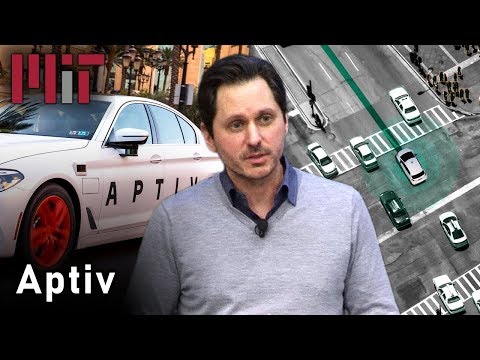 58:46ENLex Fridman播客Caging the Neural Network: How Aptiv Thinks About Safe Self-Driving主持 Lex FridmanAptiv Autonomous Mobility's Karl Iagnemma and Oscar Beijbom explain why end-to-end learning is hard to trust in cars, and show how PointPillars and nuScenes push lidar perception forward.
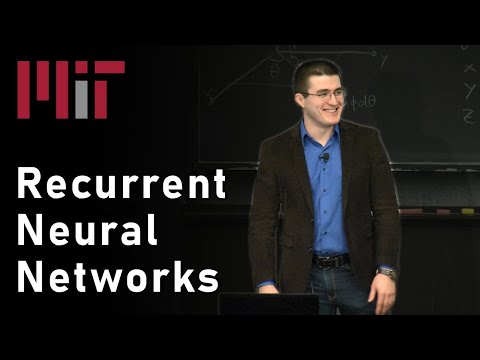 1:15:59ENLex Fridman播客Steering Through Time: How Recurrent Networks and LSTMs Learn from Sequences主持 Lex FridmanLex Fridman's MIT 6.S094 lecture walks from backpropagation basics to LSTMs and the way they are used to predict steering in self-driving cars.
 1:31:52ENLex Fridman播客From Phonemes to CTC: How Deep Learning Rebuilt Speech Recognition主持 Lex FridmanBaidu's Adam Coates walks through the traditional speech pipeline, the CTC-based end-to-end engine that replaced much of it, and what it takes to scale and deploy it.
加载更多已显示 24 篇,共 45 篇