









筛选结果
58 篇排序
 1:23:09EN
 Cognitive Revolution "How AI Changes Everything"· 2024年4月3日播客The Right Size of an AI Task Is Whatever You Can Check主持 Nathan LabenzElicit founders Andreas Stuhlmüller and Jungwon Byun walk through how a twelve-person research assistant cut summary hallucinations from 1.5 to 0.5, ships about every week and a half, and treats task decomposition as the way to spend more compute without a black box.
 27:32EN
 No Priors: AI, Machine Learning, Tech, & Startups· 2024年3月28日播客 · 2 人对谈From a side project to 700 integrations: Harrison Chase on what still blocks agents主持 Sarah Guo, Elad GilThe LangChain CEO walks through a two-year churn of patterns, and why memory, planning, and few-shot data still matter more than swapping models.
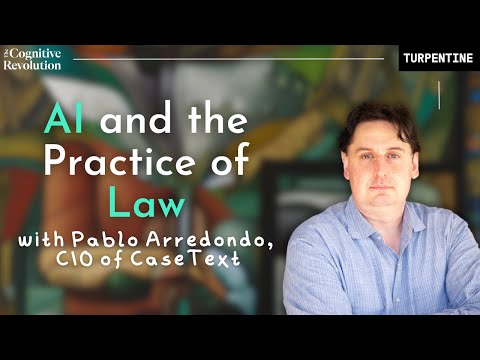 1:28:37ENCognitive Revolution "How AI Changes Everything"· 2024年3月14日播客Twelve Hours After a GPT-4 Demo, He Turned a Decade-Old Legal Startup Around主持 Nathan LabenzPablo Arredondo, co-founder of CaseText and now VP of CoCounsel at Thomson Reuters, traces legal research from 19th-century citators to a retrieval-anchored GPT-4 product that law firms treat more like a colleague than a search box.
 42:14ENNo Priors: AI, Machine Learning, Tech, & Startups· 2024年3月7日播客 · 2 人对谈Meta’s $197 Billion Day Was a Partial Answer to AI’s $200 Billion Question主持 Sarah Guo, Elad GilSarah Guo and Elad Gil walk through Gemini, Mistral, NVIDIA’s upgrade cycle, Klarna’s support bot, and why the real AI spend still sits with the hyperscalers.
 1:06:54ENCognitive Revolution "How AI Changes Everything"· 2024年3月5日播客Google Gives You 33 Million Results. Exa Wants 54.主持 Nathan LabenzWill Bryk, CEO of Exa, tells Nathan Labenz why search and research are different jobs, and why an AI librarian for the web has to be neural from the first filter.
 1:32:19ENCognitive Revolution "How AI Changes Everything"· 2024年2月29日播客His 2018 Prompting Paper Was Rejected. His Search API Now Beats Google主持 Nathan LabenzRichard Socher traces You.com from a rejected unified NLP model to an LLM-native web index, three assistant modes, and a very low P(doom).
 31:28ENNo Priors: AI, Machine Learning, Tech, & Startups· 2024年2月22日播客 · 2 人对谈Bolt Memory onto GPT-4 and Cut Hallucinations by up to 50%主持 Sarah Guo, Elad GilPinecone CEO Edo Liberty tells Sarah Guo and Elad Gil how RAG, serverless vectors, and keeping knowledge outside the model make LLMs more reliable.
 42:07ENNo Priors: AI, Machine Learning, Tech, & Startups· 2024年2月15日播客 · 2 人对谈Notion’s Ivan Zhao: RAG Will Make Organizing Optional主持 Sarah Guo, Elad GilThe Notion CEO tells No Priors why he bet the company on GPT-4, why embeddings matter as much as agents, and why software is entering a bundling cycle.
 46:36ENNo Priors: AI, Machine Learning, Tech, & Startups· 2024年1月18日播客 · 2 人对谈After a decade of code search, Sourcegraph’s CTO says the coding-AI fight is outside the model主持 Sarah Guo, Elad GilBeyang Liu on Cody, why keyword search still does most of RAG, and why CS fundamentals get more valuable as AI compresses the middleware.
 1:53:08ENCognitive Revolution "How AI Changes Everything"· 2024年1月18日播客When GPT-4 Writes SQL, Four Tables Is the Breaking Point主持 Nathan LabenzJuan Sequeda on why a knowledge graph is the accurate, explainable brain that foundation models do not have.
 1:50:57ENCognitive Revolution "How AI Changes Everything"· 2024年1月12日播客Twenty-Eight Days After GPT-4, an AI Designed and Ran a Chemistry Experiment主持 Nathan LabenzGabe Gomes and his Carnegie Mellon students built Coscientist, a language-model agent that plans, codes, and executes real experiments on a remote cloud lab.
 27:14ENNo Priors: AI, Machine Learning, Tech, & Startups· 2023年12月7日播客 · 2 人对谈Seven People Did the Work of 700. Salesforce's AI Chief Says Enterprise AI Is Still in the Second Inning主持 Sarah Guo, Elad GilClara Shih tells Sarah Guo and Elad Gil why Salesforce built a shared LLM platform, why data cleanup beats model shopping, and why AI is becoming the enterprise UI.
 1:32:40ENCognitive Revolution "How AI Changes Everything"· 2023年10月31日播客The Historian Who Taught GPT-3.5 to Beat GPT-4主持 Nathan LabenzMark Humphries on a kilometer of unread paper, fur-trade jargon that embeddings cannot see, and why cheap processing will force history to be rewritten.
 1:26:30ENCognitive Revolution "How AI Changes Everything"· 2023年10月24日播客Most of this data has never been in a database: Chroma's wartime CTO on RAG主持 Nathan LabenzAnton Troynikov returns to The Cognitive Revolution to argue that retrieval quality is mostly the embedding, that Chroma should own the RAG loop, and that GPT still fails a basic Game of Life test of reasoning.
 1:19:52ENCognitive Revolution "How AI Changes Everything"· 2023年10月18日播客1,000 H100s Take 115 Days; 22,000 Take Five主持 Nathan LabenzNathan Labenz and Trey Kollmer walk through cluster math that turns GPT-4-scale training into a weekly experiment, then four papers on search-augmented models, recursive code improvers, spatial maps inside Llama 2, and what networks do when they have no idea.
 1:23:10ENCognitive Revolution "How AI Changes Everything"· 2023年9月19日播客Luxury Purses Under $500 Beat a Bank's Fraud Model主持 Nathan LabenzArthur.ai CEO Adam Wenchel on boundary attacks, LLM firewalls, and why a model that eats raw text cannot be secured from the inside.
 1:40:44ENCognitive Revolution "How AI Changes Everything"· 2023年7月19日播客Give the Model Time, Memory, and Tools: Nathan Labenz’s 2023 Field Guide to Using GPT-4主持 Nathan LabenzPart two of the AI Scouting Report walks from H100 clusters and RLHF through chain-of-thought, retrieval, agents, and mixture-of-experts.
 37:18ENNo Priors: AI, Machine Learning, Tech, & Startups· 2023年5月4日播客 · 2 人对谈Use Retrieval for a Wi-Fi Password. Use Experts for a Company's Private Language.主持 Sarah Guo, Elad GilGoogle Brain's Kelvin Guu on REALM, FLAN, model surgery, and why personalizing large models is still an unsolved interface problem.
 1:56:16ENCognitive Revolution "How AI Changes Everything"· 2023年4月6日播客They Used Humans as Stand-In AIs. Now 250,000 People Run Elicit.主持 Nathan LabenzOught's founders tell Nathan Labenz why open-ended reasoning has to be decomposed, supervised, and grounded—not scaled until it merely looks persuasive.
 35:36ENNo Priors: AI, Machine Learning, Tech, & Startups· 2023年3月16日播客 · 2 人对谈Featured snippets stalled at 7%. A Google veteran used language models to hit 70%主持 Sarah Guo, Elad GilNeeva founder Sridhar Ramaswamy tells No Priors why answers always beat links, why privacy never sold the switch, and why most queries do not need the biggest model.
 1:44:19ENCognitive Revolution "How AI Changes Everything"· 2023年3月14日播客Ten People Versus Google’s $282 Billion Search Machine主持 Nathan LabenzPerplexity founder Aravind Srinivas tells Nathan Labenz why citations, speed, and value per minute — not chat bubbles — are how a tiny team competes with Google.
 1:26:20ENCognitive Revolution "How AI Changes Everything"· 2023年3月2日播客Forty Dollars to Index Joe Rogan: Chroma, Shovels, and the Wright Flyer Era of ML主持 Nathan LabenzChroma co-founder Anton Troynikov on embeddings as the storage layer for language-model apps, Stable Attribution, and why machine learning is still flying on intuition.
 2:24:31EN
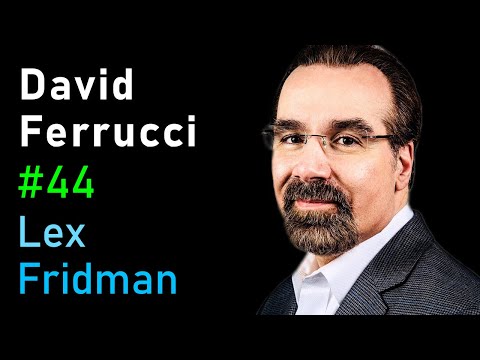
 Lex Fridman· 2019年10月11日播客 · 2 人对谈Watson Won Jeopardy Without Understanding. Ferrucci Wants AI That Can Explain Itself嘉宾 David Ferrucci · 主持 Lex FridmanLex Fridman talks with David Ferrucci about IBM Watson, why prediction is not understanding, and why high-stakes decisions need machines that can reason with us.
 1:22:36EN → 简体中文
 Lenny's Podcast播客 · 2 人对谈别追 AI 新闻了:Chip Huyen 谈真正让 AI 产品变好的事嘉宾 Chip Huyen · 主持 Lenny Rachitsky《AI Engineering》作者从预训练、后训练、强化学习、评估和 RAG 讲起,说明真正拉开产品差距的,是用户、数据和可靠的工作流。
加载更多已显示 24 篇,共 58 篇