30초 요약
Cybertruck’s flat, angular surfaces follow a manufacturing choice: thick stainless steel is difficult to form into compound curves, Tesla chief designer Franz von Holzhausen said in 2022. He also explained how battery placement frees interior space and how Tesla approached its first Semi from the driver’s perspective. Looking ahead, he expected autonomous driving to reshape vehicles, a prediction distinct from today’s driver-assistance features that require supervision.
- 1Stainless steel shaped Cybertruck’s flat surfacesVon Holzhausen says the chosen material and thickness made simple bends practical and compound curves difficult.
- 2The shattered window was an unexpected demonstration failureHe recalls repeated backstage throws that had not broken the glass before the 2019 unveiling.
- 3The Semi began with a study of the driver’s workspaceHe highlights cabin room, visibility and a clean-sheet design enabled by the electric layout.
- 4An electric powertrain gives designers room to redistributeBatteries under the floor and drive units between wheels can free space used by a conventional engine and transmission.
- 5Autonomy could change interiors, in his future visionHe expects driverless vehicles to reshape use and ownership; current driver-assistance features require supervision.
핵심 정리
- Von Holzhausen says the Cybertruck’s stainless-steel exterior led the team toward flat surfaces and bends.
- He recalls that its window broke unexpectedly during the 2019 demonstration despite earlier backstage tests.
- Battery packs under the floor and compact drive units can free space for passengers and storage.
- Tesla’s Semi design put the driver forward and toward the center, with attention to visibility and cabin space.
- His comments about driverless vehicles describe a future vision; Tesla says its enabled Autopilot features require active supervision.
챕터별로 다듬은 전문 읽기
From Mazda to Tesla
Von Holzhausen explains his path to electric vehicles and working with Musk.
Franz von Holzhausen, Tesla’s chief designer, says his father introduced him to design. He studied at ArtCenter in Los Angeles and worked at Volkswagen, Audi and other carmakers before joining Mazda.
Interested in battery-powered cars and sustainability, he met Elon Musk at SpaceX in 2008. He says Tesla’s commitment to building only electric vehicles persuaded him to join.
Asked about working for Musk, von Holzhausen describes a demanding boss who pushes the team to challenge assumptions and focus on customers’ experience. He says they sometimes disagree but Musk makes the final decision.
Why Cybertruck looks different
He connects the design to stainless-steel forming, discusses the window demonstration and describes the 2022 development stage.
Von Holzhausen says Cybertruck’s angular form grew from the decision to use a tough stainless-steel exterior. He explains that the material and thickness constrained shaping, favoring flat planes and bends over compound curves.
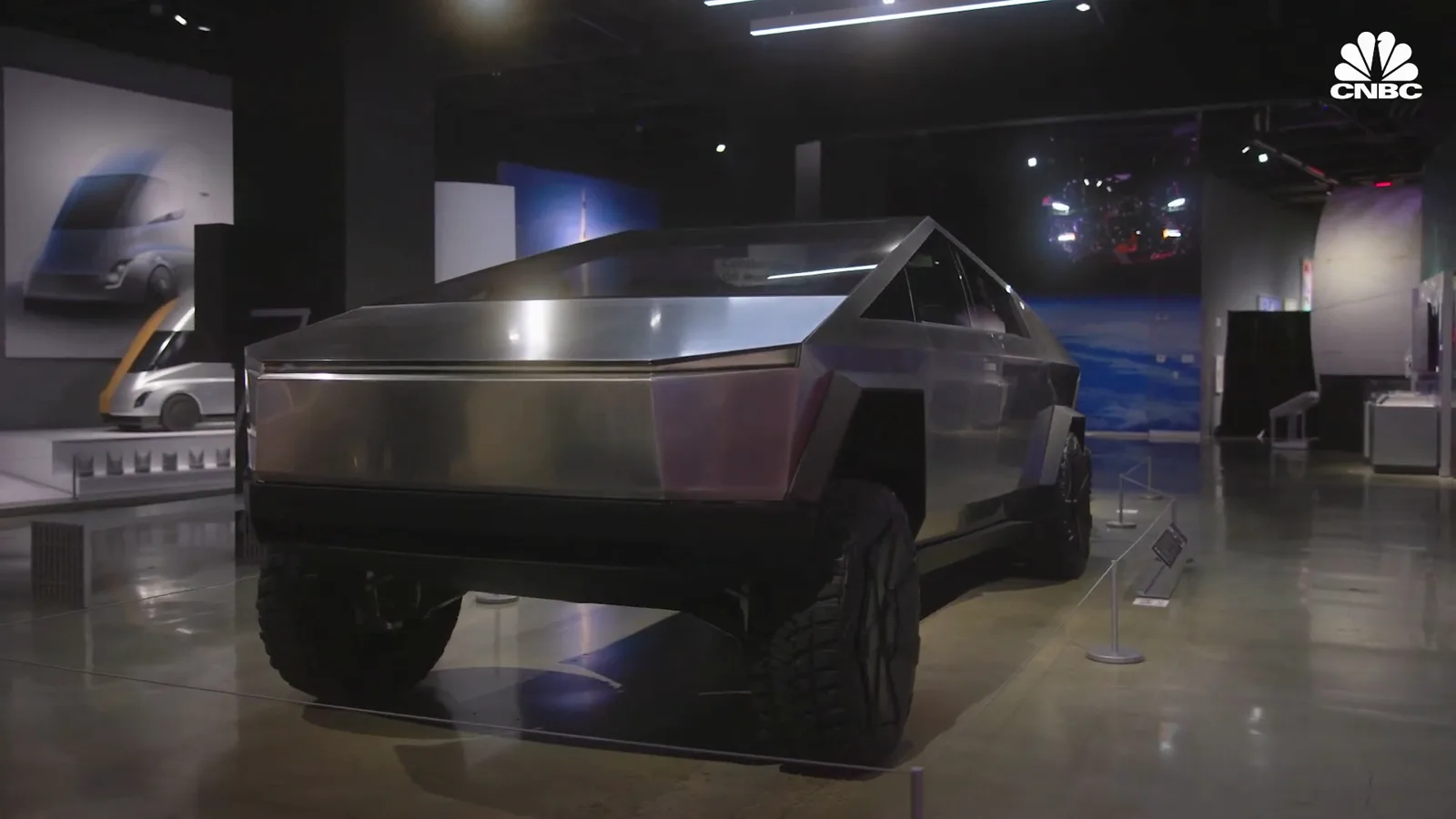
He says the sloping roof and covered bed were also intended to improve aerodynamics. In this 2022 interview, before Cybertruck deliveries began, he describes his hopes for a truck that is both distinctive and functional.
Asked about the window that shattered at the 2019 unveiling, he says the ball had been thrown against the glass repeatedly backstage without breaking it. The unexpected failure became a widely shared moment, he recalls.
He says the team was using development time to validate its proposed exterior structure and expected the production truck to resemble the prototype, possibly slightly smaller. This was his expectation in 2022; Tesla’s [investor materials](https://ir.tesla.com/_flysystem/s3/sec/000110465924070473/tm2413800d25_defa14a-gen.pdf) identify first deliveries in 2023.
Asked about the polarized response to Cybertruck, von Holzhausen says provoking division was not the objective. His aim was to make a bold, different design that still met the practical and safety needs of a pickup.
Human details and a new truck workspace
He describes door handles, the Semi cabin and the sources of his inspiration.
He describes a retracting door handle as an early point of contact that can make a car feel welcoming, while also reducing protrusions that disturb airflow.
For the Tesla Semi, he says the team studied drivers and routes and approached truck design with a clean sheet. He highlights cabin room, visibility, reduced vibration and the electric vehicle’s lack of tailpipe fumes.
He mentions Autopilot among the proposed safety systems. Driver-assistance capability should not be confused with driverless operation: [Tesla’s guidance](https://www.tesla.com/en_sa/support/autopilot) says enabled Autopilot features require active driver supervision and do not make a vehicle autonomous; availability varies by vehicle.
Inspiration, he says, can come from looking out of an aircraft window, cycling or spending time with his children. His favorite classic is the 1962 Ferrari 250 GTO, and he also admires wedge-shaped sports cars.
He praises the Model S Plaid he drives for combining performance and family practicality, and says the design remains fresh years after work on it began.
Electric architecture and the future of design
Von Holzhausen explains packaging choices, design timelines and his expectations for autonomy.
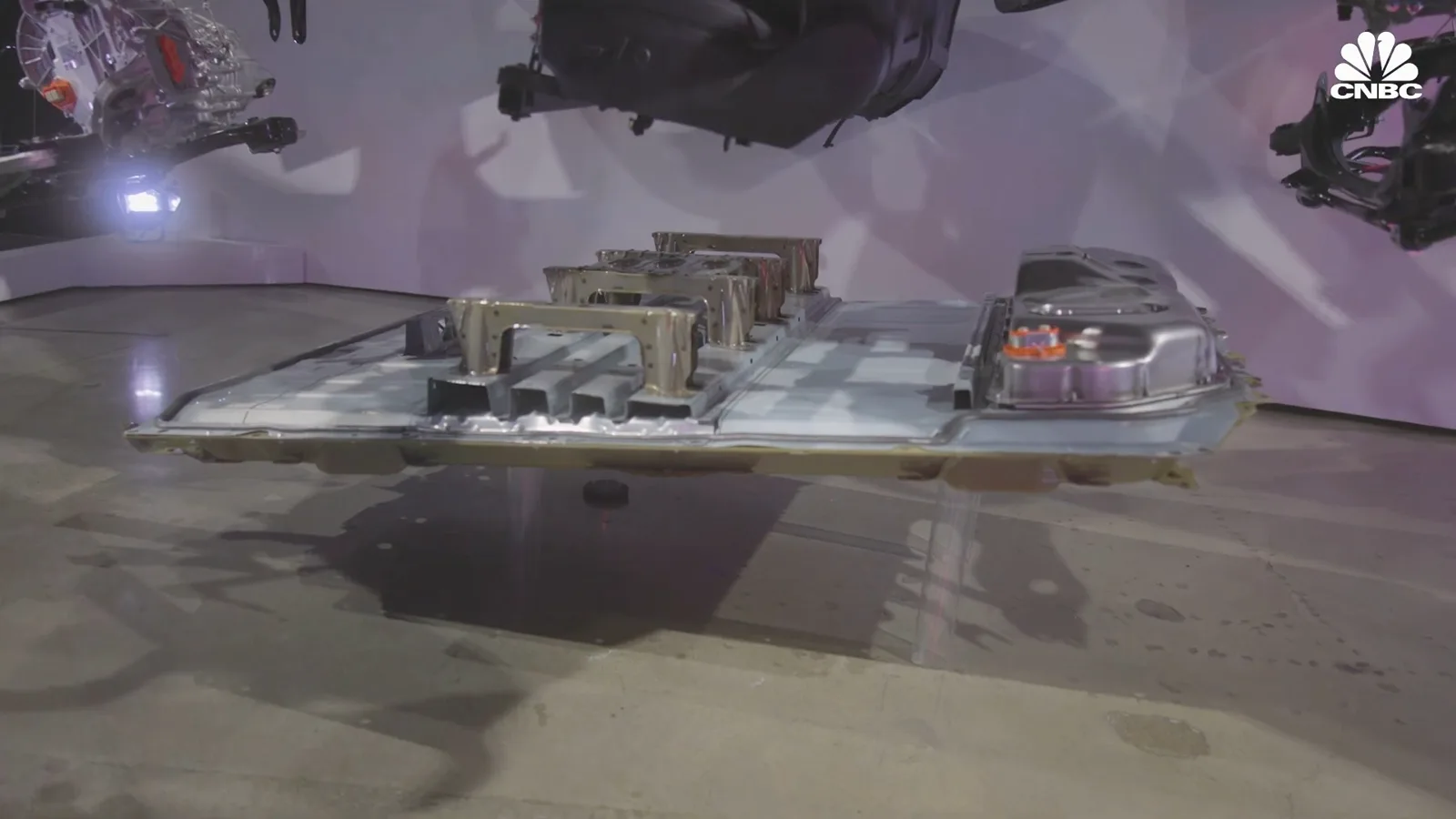
He explains that placing batteries in the floor and drive units between the wheels frees space that a combustion engine, transmission tunnel and exhaust would otherwise occupy. Designers can use it for passengers or storage.
For the Semi, he says moving the driver forward and toward the center enabled a better view and a tapered cab. He adds that safety rules, four wheels and the need to carry people still constrain automotive design.
He contrasts Cybertruck’s quick initial sketch with the longer evolution of Model S and Model 3. Translating a concept into a production vehicle takes longer; in 2022, the team was aiming to reduce that process to two years.
Von Holzhausen anticipates that autonomous vehicles could eventually change interiors, use and ownership. This is his future-facing view, not evidence that cars no longer require a driver today.
A team exhibition and advice for designers
He credits the broader Tesla team and encourages young designers to develop their craft.
He says Tesla’s electric-only mission motivates the team and sees the company’s influence on the industry as rewarding. At the Petersen Automotive Museum, he emphasizes that the exhibit represents the work of designers, engineers and manufacturing teams together.
For young designers, his advice is to learn the craft, seek out schools and opportunities, and pursue the work if it excites them. He says seeing people enjoy something the team created is especially rewarding.