30초 요약
In a short set to music, Shira Lazar presents on-screen claims about gratitude, thinking, brain chemicals and feelings of connection. The video does not cite evidence for the biological claims.
- 1A change in thinkingThe text says thinking shifts from negative to positive.
- 2Claims about brain chemicalsThe video claims a surge of dopamine, serotonin and oxytocin but cites no research.
- 3Connection and happinessThe final claim links this to feelings of closeness, connection and happiness.
핵심 정리
- The video links gratitude with a shift toward positive thinking.
- Its text claims an increase in dopamine, serotonin and oxytocin.
- The short also associates gratitude with connection and happiness, without explaining the evidence.
챕터별로 다듬은 전문 읽기
Gratitude and its claimed effects
The video presents three claims about gratitude in text over music and asks viewers how they practice gratitude. It does not provide evidence for the biological explanation.
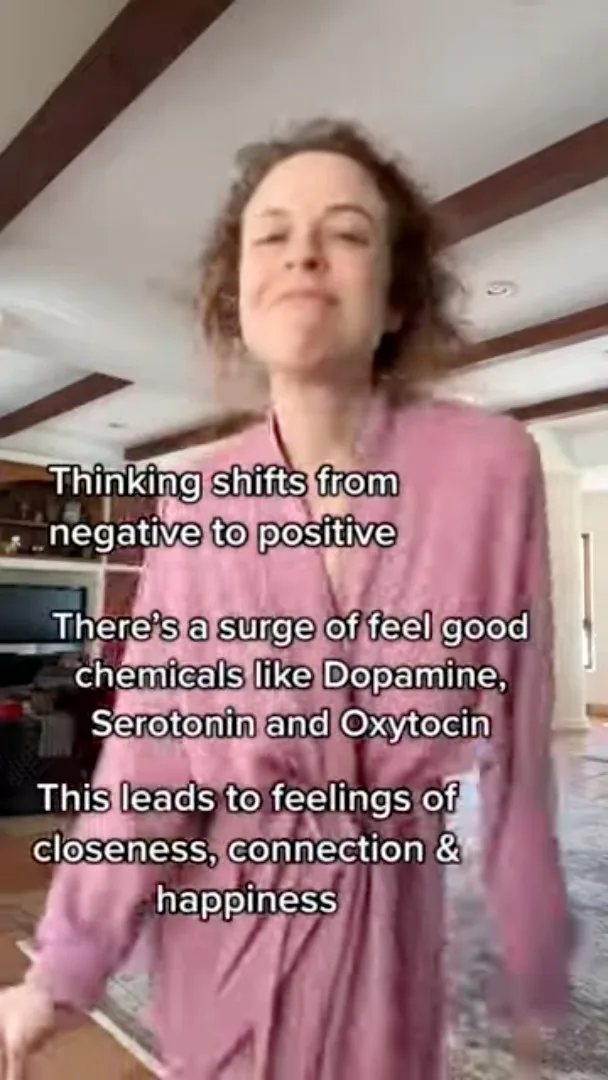
In a short video set to music, Shira Lazar presents three on-screen claims about how practicing gratitude can change the brain. The first is that thinking shifts from negative to positive.
The text also claims a surge of dopamine, serotonin and oxytocin, leading to feelings of closeness, connection and happiness. The video does not cite evidence for these biological claims. It ends by asking viewers how they practice gratitude daily.
같은 채널의 다른 글
 0:45EN
 Shira Lazar· 2026년 10월 21일팟캐스트A Visit to Paris Hilton’s Private SpaA visitor describes a pink spa, sensory treatments and a chilly cryotherapy session.
 0:55ENShira Lazar· 2026년 10월 19일팟캐스트Tyler Denk on Building a Creator Business Across Formats게스트 Tyler DenkThe Beehiiv founder describes creators combining channels, revenue models, and in-person events.
 0:48ENShira Lazar· 2026년 10월 12일팟캐스트A Second Map of the Creator Economy진행자 Shira LazarShira Lazar introduces an updated ecosystem map with a section for independent creators.
 0:54ENShira Lazar· 2026년 10월 3일팟캐스트 · 2명Chelsea Clinton on AI Anxiety, Health and Governance게스트 Chelsea Clinton · 진행자 Shira LazarClinton discusses examples that give her hope and argues for treating AI as a collection of different technologies.
 0:38ENShira Lazar· 2026년 9월 21일팟캐스트A Creator’s Visit to an LTK Event in DallasA short event recap highlights programming, brand displays, and conversations with women building creator businesses.
 1:01ENShira Lazar· 2026년 9월 19일팟캐스트Affinity 100: A Creator Ranking Focused on Audience ConnectionA co-creator explains why the list emphasizes fandom, trust, and engagement instead of follower counts alone.