30초 요약
At Tesla’s May 2023 shareholder meeting, investors raised concerns about key-person risk and potential forced and child labor in supply chains; the board opposed both proposals. Elon Musk promised a third-party audit, discussed the Cybertruck and energy storage, and predicted major gains from autonomous driving and Optimus. Those projections were forward-looking: Tesla says its enabled Full Self-Driving features require active driver supervision, and its manual warns against leaving children or pets unattended even with cabin overheat protection.
- 1Shareholders ask the board to address key-person riskThe proposal seeks a report on succession risks; management recommends voting against it.
- 2Investors seek an independent supply-chain labor reportA representative raises concerns about cobalt and forced labor; Tesla’s board opposes the proposal.
- 3Musk promises a third-party cobalt auditResponding to concerns raised during the formal meeting, he says Tesla will conduct an audit.
- 4Autonomy’s projected value depends on capabilities not yet demonstratedMusk predicts large utilization and safety gains, while enabled Tesla Full Self-Driving features require active supervision.
- 5Cabin overheat protection is not a safety guaranteeMusk describes the feature; Tesla’s owner manual warns never to leave children or pets unattended in a vehicle.
- 6Musk agrees to try advertisingA shareholder argues that more people should know about Tesla’s features; Musk says the company will experiment.
핵심 정리
- Shareholders proposed reports on key-person risk and supply-chain labor risks; Tesla’s board opposed them and preliminary results favored the board’s positions.
- Musk promised a third-party cobalt audit and outlined battery, lithium-refining and energy-storage investments.
- He said Cybertruck deliveries were planned for later in 2023 and described Optimus as a longer-term opportunity.
- Musk’s autonomy and safety projections were forecasts; enabled Tesla Full Self-Driving features require active driver supervision.
- A shareholder urged Tesla to advertise its features, and Musk said the company would try some advertising.
챕터별로 다듬은 전문 읽기
Opening remarks and the shareholder vote
Tesla’s chair reviews operations; shareholders propose reports on succession and supply-chain labor, and preliminary results are announced.
Investor relations vice president Martin Viecha opens Tesla’s 2023 annual meeting in Austin and explains that formal voting will be followed by Elon Musk’s presentation.
Board chair Robyn Denholm says the Texas factory had reached 5,000 vehicles in a week, up from roughly 1,600 at the prior year’s meeting. She says Cybertruck deliveries were being prepared.
Denholm reports that 2022 deliveries increased 40% year over year and credits employees. She refers to the company’s Investor Day and its leadership teams in engineering, design, manufacturing and energy.
Denholm recounts the Roadster, Model S and X, and Model 3 and Y, and describes the company’s ambition to advance sustainable energy. She cites strong Model Y sales in Europe and the United States in early 2023.
She cites Tesla’s estimate that customers avoided 13.4 million metric tons of greenhouse-gas emissions in 2022, up from 8.4 million in 2021. These are company estimates based on its comparison and assumptions.
Denholm says the company plans investments in batteries, vehicles, lithium refining, storage, service and charging. She thanks outgoing director Hiro Mizuno and welcomes the prospect of JB Straubel joining the board.
Viecha opens voting, confirms a quorum, and explains that most proxies were already submitted. He lists director elections, executive-compensation votes, the auditor appointment and shareholder proposals.
The board recommends the director nominees and auditor, a favorable advisory vote on compensation and a three-year frequency for that vote. It opposes a shareholder proposal seeking a report on key-person risk.
A shareholder representative explains the key-person proposal: she wants the board to report how it would reduce the impact of losing key people. She argues that Tesla’s identity is too closely tied to its CEO and urges visible succession development.
Viecha states that the board opposes the proposal. He then introduces a separate proposal from the floor seeking a third-party report on child and forced labor risks in Tesla’s supply chain.
Courtney Wicks, representing Investor Advocates for Social Justice, cites concerns about cobalt mining in the Democratic Republic of the Congo and forced labor in Xinjiang. She questions whether existing audits adequately show how risks are addressed and asks for independent reporting.
Viecha closes voting and announces preliminary results: shareholders supported the board’s recommendations on the agenda except that they favored annual, rather than three-year, advisory votes on executive-compensation frequency. He announces JB Straubel’s election to the board.
Viecha says final vote tallies will be filed with the SEC. The [company’s 8-K](https://ir.tesla.com/_flysystem/s3/sec/000156459023007379/tsla-8k_20230516-gen.pdf) reports certified results for the six proposals. He closes the formal meeting and introduces Musk.
Sustainability, batteries and Tesla’s business
Musk reviews the company’s transition model, a promised cobalt audit, financial conditions and product strategy.
Musk thanks employees and introduces a recap of Tesla’s Master Plan Part 3, presenting it as a technical scenario for a sustainable global energy system.
He argues that a sustainable system could use less total energy and require less mining than the existing fossil-fuel system. These are conclusions of Tesla’s modeled scenario, dependent on its assumptions.
Responding to the earlier cobalt question, Musk says Tesla will conduct a third-party audit. He says many Tesla batteries use iron-based chemistry and that the company intends to prevent child labor in its supply chain.
Musk says global production of wind, solar and batteries must expand substantially. He identifies battery production as a constraint on the rate of transition.
He invites criticism of the plan’s assumptions, then cites Tesla’s scenario of 240 terawatt-hours of batteries and about $10 trillion of manufacturing investment. These are scenario estimates, not completed investment.
Musk argues that electric vehicles can have lower lifetime emissions even when their manufacture initially produces more emissions. He reports company estimates for avoided emissions and manufacturing improvements.
He discusses Tesla’s workforce and says manufacturing supports jobs through supply chains and local services. He also cites job-application figures as evidence of interest in the company.
Musk introduces a planned next-generation drive unit with reduced silicon carbide and no rare-earth elements, and discusses a move from 12-volt to 48-volt low-voltage architecture to reduce wiring needs.
Turning to Full Self-Driving beta, Musk says the company plans to replace the remaining planning and control component with a neural network. He predicts a large future improvement in driving safety and vehicle utilization.
Musk speculates that cars operating as robotaxis could be used for many more hours per week and rise sharply in value. These are projections, not a demonstrated return or a guarantee of autonomous operation.
He says Tesla’s electric-vehicle manufacturing is profitable and credits the team for scaling production. He notes that manufacturing at scale while generating cash is difficult.
Musk says higher interest rates affect monthly car payments and forecasts a difficult global economic period of about a year. He says Tesla is not immune to that environment; the forecast reflects his view in May 2023.
He praises Tesla’s internal software teams for systems supporting customers, factories, insurance and supply chains, describing the in-house capability as a company strength.
Musk predicts Model Y will be the world’s best-selling car in 2023 and cites early regional sales. The statement was a forecast at this meeting.
He describes vehicle safety work, including automatic emergency braking, airbag deployment and seatbelt systems, and says software can be updated after vehicles are sold.
Safety, energy storage and future products
Musk discusses safety features, Megapack, lithium refining, Cybertruck and Optimus.
Musk discusses cabin overheat protection and suggests it can prevent lethal cabin temperatures. Tesla’s [owner manual](https://www.tesla.com/ownersmanual/model3/en_us/Owners_Manual.pdf) warns that a cabin can become dangerously hot even with this feature enabled and says never to leave children or pets unattended in a vehicle.
He cites Tesla’s safety scores and compares the estimated ownership cost of a Model 3 with a Toyota Corolla. These are company-presented comparisons whose results depend on the assumptions used.
Musk discusses Supercharger availability and says Megapack demand is strong. He expects stationary storage to expand faster than the vehicle business.
He describes expansion plans for Nevada battery and Semi production, Megapack factories and a lithium refinery in Texas, framing refining as a supply-chain bottleneck.
Musk discusses a planned Mexico factory and a long-term goal of 20 million vehicles per year. Both the factory plans and output number are forward-looking statements from 2023.
He says Cybertruck requires new manufacturing techniques and expects production deliveries later in 2023. Tesla’s [investor materials](https://ir.tesla.com/_flysystem/s3/sec/000110465924070473/tm2413800d25_defa14a-gen.pdf) list first Cybertruck deliveries in 2023.
Musk says Tesla is designing two additional products and guesses they could eventually produce more than five million units a year combined. He explicitly characterizes the number as a guess.
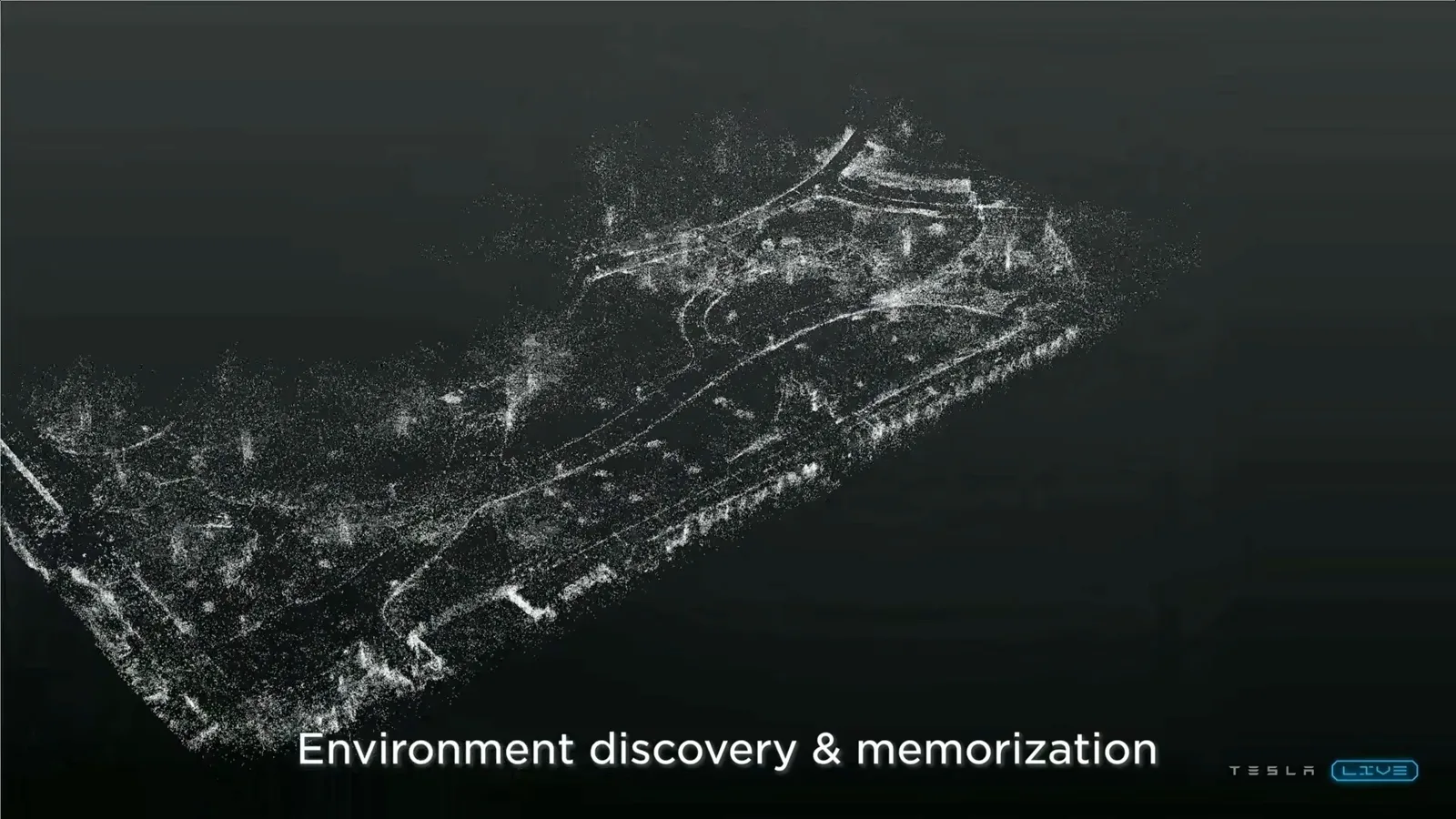
A video shows Optimus development, including a visualization of the environment. Musk thanks the robotics team and says it designed actuators, controllers and electronics for the humanoid robot.
Musk believes some driving software could transfer to robots. He speculates that demand for humanoid robots could eventually exceed demand for cars and that Optimus might account for much of Tesla’s future value.
He encourages retail shareholders to vote and moves to audience questions. His business and robot forecasts are presented as possibilities rather than achieved results.
Shareholder questions on energy and business
The audience asks about backup power, financing, advertising, software and battery supply.
Asked about a camper or recreational vehicle, Musk says Tesla has no immediate RV plan but expects Cybertruck attachment points to let third parties develop accessories.
A shareholder suggests an Optimus podcast. Musk says the company could add a discussion after an earnings call for interested listeners.
Asked how to encourage solar and backup storage, Musk says Powerwall backup requires a switch that isolates a house from the grid. He thanks PG&E for helping secure approval for a backup switch in California.
A shareholder asks how Musk is doing. He describes a difficult period and says he expects Twitter to take less of his time after Linda Yaccarino joins as CEO; that was his expectation at the time.
Asked whether longer auto-loan terms could lower monthly payments, Musk says most vehicle financing comes from banks and depends on their willingness to lend. He describes a weak market for securitizing loans.
Musk returns to his expectation of a difficult year followed by recovery and offers his personal investment views. His comments are speculative, not a reliable prediction of market returns.
A shareholder argues that Tesla should advertise features and affordability to people who do not follow its accounts. Musk agrees the suggestion has merit and says Tesla will try some advertising.
Asked about third-party apps, Musk says entertainment and productivity could matter more if cars eventually become autonomous. He notes that, at the time, games and videos should be used when the vehicle is stationary.
A shareholder asks what remains after a planned Full Self-Driving software transition. Musk describes a continuing effort to reduce the probability of injury and agrees in principle to a later interview.
A questioner asks about lithium mining and long-term battery supply. Musk argues that refining, rather than the amount of ore in the ground, is the main bottleneck and says Tesla is focusing on processing battery-grade lithium.
A shareholder thanks the team after a serious crash, saying a Tesla occupant in the family survived. This is an individual account rather than a comparative safety study.
Asked about the next-generation Roadster, Musk hopes to complete engineering in 2023 and start production in 2024, while explicitly saying the latter is not a commitment. These were plans at the time.
Production, security and driving forecasts
Questions cover Roadster, Cybertruck, staffing, security and pricing; Musk discusses the uncertainty of autonomy timelines.
A shareholder asks about Tesla insurance in Florida. Musk says the company hopes to expand but that state-by-state insurance rules complicate rollout; the timetable he gives is a 2023 expectation.
Asked to estimate peak margins, Musk speculates that a truly autonomous vehicle used more often could dramatically increase revenue and margin. He acknowledges that the discussion is highly speculative; no such margin is established by the meeting.
On 4680 battery cells, Musk says increasing energy density and reducing cost are difficult but believes Tesla has a path to progress. He does not provide a specific completed performance result.
Musk rejects a rumor that he will step down as Tesla CEO. Asked about Cybertruck, he estimates eventual production could be around 250,000 units a year or more, depending on demand and manufacturing costs; this is a forecast.
A shareholder asks about education and apprenticeships. Musk says Tesla works with local high schools, community colleges and universities to develop a skilled workforce.
Asked about Optimus and Mars, Musk says the robot was still learning basic tasks and could not yet cook eggs. He describes repetitive work and a local shutoff mechanism as goals, not completed capabilities.
A question covers cybersecurity and navigation. Musk says Tesla uses third-party hacking contests to test vehicles and wants to improve navigation; his broad description of hacking results is not independently verified in the meeting.
Musk says execution and profitable production at scale are harder than generating product ideas. He compares the difference to proposing a moon landing versus achieving one.
A shareholder asks for ride-sharing and Model X Plaid features. Musk says track mode may be possible and returns to his expectation that autonomous operation could change ride-sharing.
Musk reports his personal experience with test drives and again predicts progress toward full autonomy. A limited personal experience does not establish comparative safety for the fleet.
Asked about Model Y pricing, Musk says Tesla adjusts prices with demand and that its direct-sales model makes changes more visible than dealer-level changes at other carmakers.
A shareholder asks for a public Full Self-Driving timeline. Musk says progress has repeatedly reached plateaus requiring software redesign, making linear forecasts unreliable.
Musk predicts substantial safety improvements and possible unsupervised capability, while admitting past optimism. [Tesla’s current guidance](https://www.tesla.com/support/fsd) states that enabled Full Self-Driving features require active driver supervision and do not make the vehicle autonomous.
Musk thanks shareholders for their support and closes the meeting.
같은 채널의 다른 글
 24:44EN
 Tesla· 2026년 11월 6일Elon Musk Unveils the Cybertruck: Steel Body, Cracked Glass and a New Pickup DesignElon Musk · TeslaAt Tesla’s 2019 event, Musk introduced the electric pickup and demonstrated its body, glass, suspension and cargo bed.
 59:56ENTesla· 2026년 10월 21일Tesla Q3 2026: Cash Flow, FSD Demand and the Cost of Scaling RobotsElon Musk, Vaibhav Taneja, Travis Axelrod · TeslaExecutives discuss quarterly margins, capital spending and plans for Cybercab, Optimus and chip production.
 23:21ENTesla· 2026년 10월 16일Tesla’s Roadster Event: A Ramp Stunt, Aerodynamics and a 2028 Production TargetElon Musk, Franz von Holzhausen, Lars Moravy · TeslaElon Musk, Franz von Holzhausen and Lars Moravy demonstrate a prototype developed with SpaceX engineering.
 1:09:55ENTesla· 2026년 7월 22일Tesla’s Q2: Margins Narrow as Spending on Robots and AI RisesTravis Axelrod, Elon Musk, Vaibhav Taneja, Ashok Elluswamy, Lars Moravy · TeslaTesla reported higher energy deployment and negative free cash flow while executives outlined Robotaxi and Optimus plans.
 27:27ENTesla· 2026년 5월 21일Tesla’s Final Model S and X Deliveries: How the Cars EvolvedElon Musk, Franz von Holzhausen, Lars Moravy · TeslaElon Musk and Tesla’s team recall a tent-based design studio, years of changes, and plans for the former production line.
 1:05:20ENTesla· 2026년 4월 22일Tesla Plans a $25 Billion Investment Year as It Prepares OptimusTravis Axelrod, Elon Musk, Vaibhav Taneja, Lars Moravy · TeslaOn Tesla’s Q1 2026 call, executives detail one-time margin gains, battery constraints and plans for robots and driving software.