30초 요약
Tesla’s 2023 energy model estimates that a fully electrified economy could use roughly half as much energy as the fossil-fuel system it replaces, because electric end uses waste less energy as heat. At Investor Day, Elon Musk and Drew Baglino outline a scenario involving 240 terawatt-hours of storage and $10 trillion in manufacturing investment. They argue the transition is achievable and discuss land and materials; the figures depend on the assumptions in Tesla’s subsequent [Master Plan Part 3](https://www.tesla.com/ns_videos/Tesla-Master-Plan-Part-3.pdf).
- 1The starting problem is energy lost before useful workBaglino says most primary energy comes from fossil fuels and only a portion becomes useful work or heat. Musk uses a gasoline car to illustrate conversion and fuel-supply losses.
- 2Tesla estimates electrification could halve energy requirementsThe speakers argue electric end uses and supply chains can be more efficient than combustion, reducing the energy the proposed system must generate.
- 3The plan includes 240 TWh of storageMusk and Baglino describe a combination of vehicle batteries and stationary storage to support wind and solar when generation varies.
- 4The model rounds manufacturing investment up to $10 trillionBaglino says the team’s calculation was closer to $6 trillion but uses $10 trillion across mining, refining, factories and recycling.
- 5The speakers estimate land and materials neededThey say wind and solar would use a small share of global land and argue that the transition’s material requirements can be met.
핵심 정리
- Tesla’s model estimates about half the energy use for an electrified economy because of efficiency gains.
- The proposed scenario includes 240 TWh of storage for vehicles and stationary applications.
- The speakers present $10 trillion as a rounded manufacturing-investment estimate, not a completed expenditure.
- Musk and Baglino argue that renewable power and storage can be built with a relatively small share of Earth’s land area.
챕터별로 다듬은 전문 읽기
A proposed path to sustainable energy
Musk presents Tesla’s plan as a way to support an abundant energy economy. Baglino introduces the inefficiency of the existing fossil-fuel system.
Elon Musk introduces Tesla’s Master Plan Part 3 by arguing that a sustainable energy system is possible without giving up abundant electricity or damaging natural habitats. He says Tesla intends to publish its assumptions and calculations.
Musk argues that such a system could support the existing global population and potentially a larger one. He says the presentation will walk through the calculations behind that claim.
Tesla executive Drew Baglino describes the current energy economy as wasteful, saying more than 80% of global primary energy comes from fossil fuels and only a portion becomes useful work or heat. He frames the proposed plan as a response to those losses.
Why electrification changes the energy calculation
Musk explains how combustion and fuel supply lose energy. The speakers estimate that electrification could roughly halve total energy needs.
Musk uses a gasoline car as an example: only part of the fuel’s energy becomes motion, while much is lost as heat. He adds that extracting oil, refining it and transporting gasoline also require energy.
He argues that calculations for an electrified economy should not assume the same primary-energy demand as a combustion economy. With greater efficiency at the point of use and throughout the supply chain, the speakers estimate that total energy use could be roughly halved.
Musk and Baglino describe that estimate as deliberately conservative within their model. In their framing, lower energy requirements make the scale of a sustainable supply system easier to manage.
Storage and manufacturing investment
The plan includes 240 TWh of storage and a rounded $10 trillion manufacturing investment. The speakers explain how they compare this sum with the global economy.
The speakers estimate that the proposed system would need about 240 terawatt-hours of battery storage across electric vehicles and stationary installations. Storage, they say, can help supply energy when solar and wind output is unavailable.
They describe a relationship between storage capacity and renewable power in the model. Tesla’s later published plan states estimates of 240 TWh of storage and 30 terawatts of renewable generation capacity.
Baglino says the team calculated roughly $6 trillion in manufacturing capital expenditure but rounded the working figure up to $10 trillion. He says it covers mining, refining, battery and vehicle factories, recycling and related manufacturing.
Musk compares that investment with a global economy he places just under $100 trillion. Spread over a decade or two, he argues, the yearly investment would be a relatively small fraction of economic output.
Land and material requirements
Musk and Baglino discuss how much land wind and solar might require and their assessment of the materials needed for the transition.
The speakers estimate that wind and solar would occupy less than 0.2% of Earth’s land area in their presentation. Musk notes that solar and wind can sometimes share land and that wind can also be placed offshore.
Baglino and Musk say they do not see an insurmountable raw-material obstacle in their model. They argue that, once established, an electrified economy could require less ore extraction than the fossil-fuel system, and say the broader presentation will explain their calculations.
같은 채널의 다른 글
 3:35:00EN
 CNET Highlights· 2023년 3월 2일Tesla’s 2023 Investor Day: the plan to scale clean energy and carsElon Musk, Zach Kirkhorn, Drew Baglino, Franz von Holzhausen, Lars Moravy, Colin Campbell, Pete Bannon, David Lau, Ashok Elluswamy, Rebecca Tinucci, Karn Budhiraj, Roshan Thomas, Tom Zhu, Mike Snyder, Laurie Shelby, Brandon Ehrhart · TeslaTesla leaders outline a global electrification scenario, a lower-cost vehicle platform and the factories and supply chains needed to scale.
 41:04ENCNET Highlights· 2023년 3월 2일Tesla’s 2023 investor Q&A puts battery supply and costs in focusElon Musk · TeslaExecutives explain refining, factory localization and dry-electrode scaling, while Musk discusses affordability and a future autonomous fleet.
 53:25ENCNET Highlights· 2022년 12월 1일Neuralink researchers on implant durability, safety and wireless dataElon Musk · NeuralinkAt a 2022 Q&A, the team explained animal results, device-removal concerns and ways to compress brain signals.
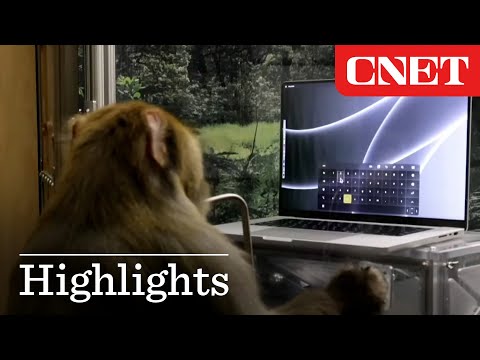 7:20ENCNET Highlights· 2022년 12월 1일Neuralink’s 2022 monkey demo selected highlighted keysElon Musk · NeuralinkMusk showed cursor control with an implant, while stressing the monkey was following prompts rather than spelling independently.
 3:39:05ENCNET Highlights· 2022년 12월 1일Neuralink’s 2022 update: from neural signals to a working interfaceElon Musk, DJ Seo · NeuralinkEngineers explain cursor decoding, implants and robot-assisted insertion, while separating animal demonstrations from clinical ambitions.
 55:08ENCNET Highlights· 2022년 10월 1일Tesla engineers explain robot hands and driving-model testsElon Musk · TeslaAt AI Day 2022, the panel described Optimus design trade-offs, curated failure cases and offline models that label driving data.