30초 요약
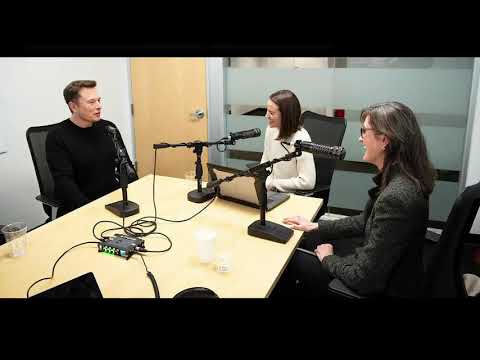
Elon Musk tells Lex Fridman how Tesla visualizes vehicle perception, uses fleet data and builds specialized computing hardware. Their 2019 discussion turns on how to measure safety and whether drivers should supervise automated systems, before moving to adversarial examples and general AI. Musk’s timelines and safety claims are predictions, not evidence that supervision is unnecessary: Tesla’s current FSD (Supervised) instructions require an attentive driver ready to take over.
- 1The display gives drivers a simplified view of perceptionMusk says detected objects are rendered for a quick check, while detailed debug views are aimed at engineers.
- 2Driver takeovers can flag situations for reviewThe discussion distinguishes interventions caused by system limitations from those made for convenience.
- 3Fridman asks how long supervision will remain necessaryMusk offers an optimistic 2019 forecast and discusses the statistical evidence regulators might require.
- 4Driver vigilance becomes a central safety questionFridman describes a small research sample; Musk predicts that advancing automation will eventually reduce the value of human monitoring.
- 5Musk questions the lasting need for driver monitoringHe says monitoring is useful below human-level reliability, while predicting rapid progress beyond that point.
- 6The pair distinguish narrow driving AI from general intelligenceThey end by discussing missing AI ideas, machine love and the possibility of a simulated world.
핵심 정리
- The vehicle display was designed as a simplified check of what the system perceives, Musk says, while engineers use more detailed debugging views.
- He describes fleet data, driver takeovers and a dedicated computer as parts of Tesla’s development process.
- Fridman raises the problem of maintaining driver vigilance; Musk predicts automation will eventually be safe enough to make supervision unnecessary.
- Musk’s near-term 2019 predictions should not be treated as current capability: Tesla says FSD (Supervised) requires active supervision.
- The conversation ends with the distinction between narrow and general AI and whether a machine could convincingly express love.
챕터별로 다듬은 전문 읽기
Perception, sensors and computing
Musk explains the Autopilot display, fleet data and Tesla’s driving computer.
Lex Fridman asks Elon Musk about the original vision for Tesla Autopilot. Musk identifies electrification and autonomy as two major changes in the auto industry and predicts that fully autonomous cars will eventually make conventional cars much less useful.
The instrument display, Musk says, is meant to let a driver check the vehicle’s perception. Sensor inputs are represented as objects such as lanes and nearby cars, then rendered in a simplified form that a driver can compare with the road.
Fridman asks whether displaying uncertainty could help people understand computer vision. Musk describes internal debug views that show recognized objects and a combined vector representation, but says those details would be confusing to most drivers.
The conversation turns to allocating resources among algorithms, data and hardware. Musk says Tesla’s cars collect sensor data from cameras, radar, ultrasonics and other sources, and describes the size of the fleet available to the company in 2019.
Musk introduces Tesla’s custom driving computer, claiming more processing capacity than the prior system. He describes two redundant systems on a chip and says the company had not yet reached the limits of their performance.
Interventions and automation milestones
The pair discuss edge cases, driver takeovers, navigation and Musk’s hardware claims.
Fridman asks how to find valuable edge cases. Musk says a driver taking over can trigger review: the team needs to distinguish a convenience intervention from one caused by the system not working properly.
He also describes using examples from ordinary driving to improve how a car travels through an intersection. Fridman notes that a driver may intervene because a navigation feature has not yet been designed to handle the desired maneuver.
Musk points to Navigate on Autopilot as an important step, describing lane changes, overtaking and highway interchanges. He also discusses traffic-light recognition and stopping in a development version.
Asked about remaining obstacles, Musk says Tesla’s newly produced hardware is capable of eventual full self-driving as software improves and regulatory approval is obtained. He predicts that cars bought then would gain value; this is his 2019 forecast.
He describes future goals such as navigating city streets, complex intersections and parking lots, including a car finding its owner or a parking space. Fridman asks how long such systems would still need human supervision.
Safety and human supervision
Fridman asks about evidence, driver vigilance and monitoring; Musk gives his 2019 predictions.
Musk predicts the hands-on-wheel requirement could last at least six months and says regulators would need convincing safety evidence. He discusses comparing crash, injury and fatality risks with human driving and the difficulty of obtaining statistically useful data.
He also argues that Tesla crashes receive disproportionate publicity. Fridman then describes his team’s research on driver vigilance, based on video and observed Autopilot disengagements, and asks whether results from the sample would generalize.
Musk predicts that rapid improvements will soon make driver vigilance a less significant issue and eventually make human intervention counterproductive. This was a prediction in 2019, not a finding established by the study Fridman describes.
Fridman asks whether cameras should monitor drivers. Musk says monitoring makes sense when a system is less reliable than a human, but argues it would be less useful if automation became much safer; he compares the transition to automated elevators.
Operating limits, adversarial examples and AI
They discuss where assistance operates, adversarial inputs, general AI and simulation.
Fridman contrasts Tesla’s broad operating domain with a more geographically constrained assistance system. He asks about the tradeoff: a wide domain lets drivers encounter more situations, but also lets them use the system in many different conditions.
Musk predicts that manual driving will eventually seem unusual. Fridman then raises adversarial examples—inputs designed to confuse neural networks—and asks whether the system can defend against them.
Musk suggests training a system to recognize both valid objects and adversarial patterns. His confidence that such attacks are easy to block is his assessment in the interview, rather than a demonstrated general solution.
The discussion moves from driving to artificial general intelligence. Musk says narrow driving systems and general intelligence are different, and believes important ideas are still missing even as he predicts rapid progress.
Asked whether an AI could love someone, Musk says it might convincingly create that impression. He considers a physics-oriented view in which, if no observation can distinguish the behavior from love, the distinction becomes difficult to establish.
They relate that question to whether a simulated world could be distinguished from reality. Asked what he would ask an artificial general intelligence, Musk replies: “What’s outside the simulation?”
For present-day use, Tesla’s [FSD (Supervised) instructions](https://www.tesla.com/support/fsd) state that the driver must remain attentive and ready to take over; the enabled features do not make the car autonomous.