30초 요약
At Grok 3’s February 2025 launch, xAI showed an AI-generated Mars-orbit animation and a Tetris–Bejeweled game, then introduced DeepSearch for multi-step research. The presenters cautioned that the animation still needed a closer correctness check. They also described training on a large Memphis GPU cluster, reported their own benchmark comparisons and outlined a staged rollout and future voice and API features.
- 1xAI reports its own benchmark comparisonsThe team presents selected math, science and coding results and blind user comparisons; the results are specific to those tests.
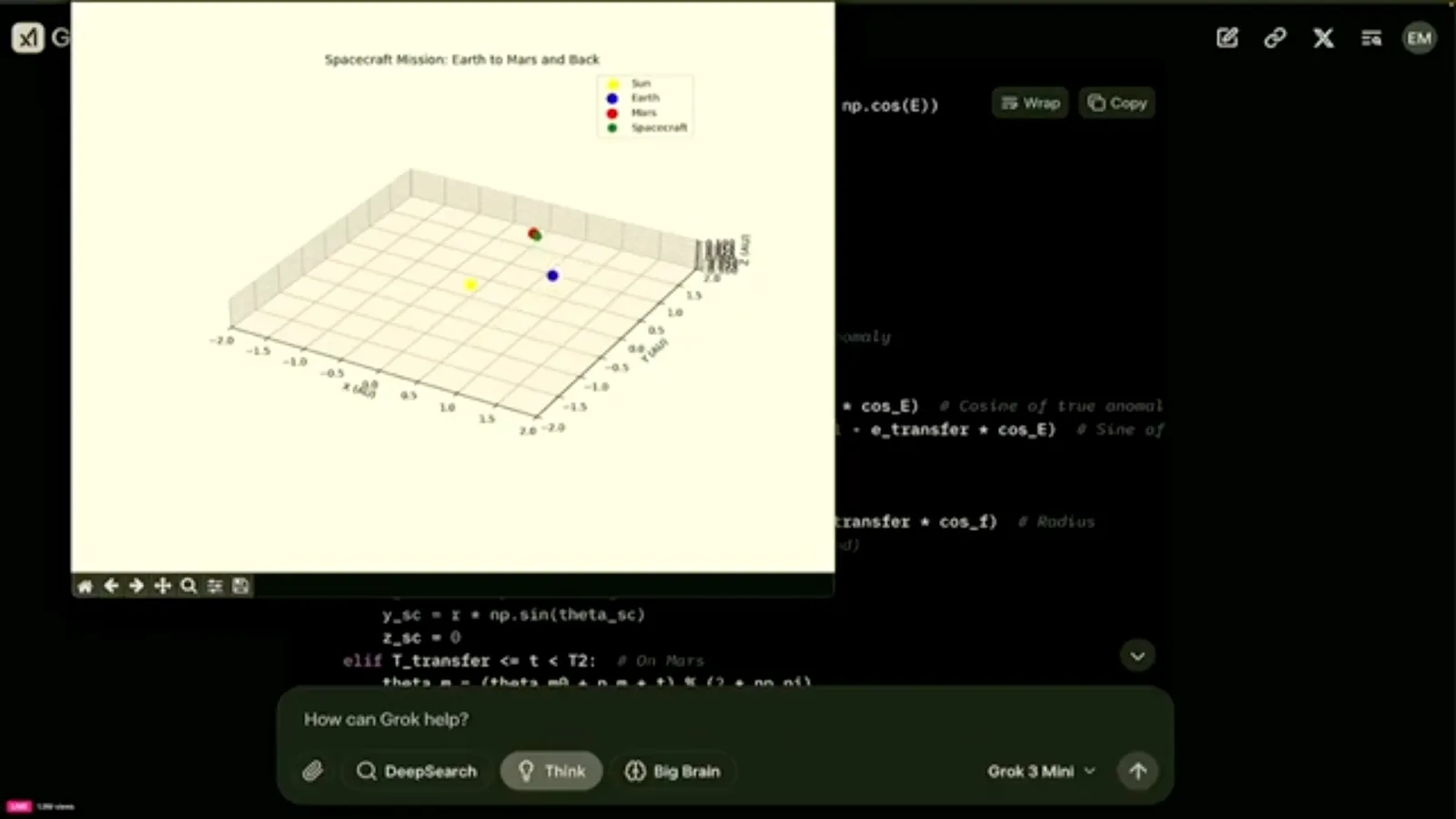
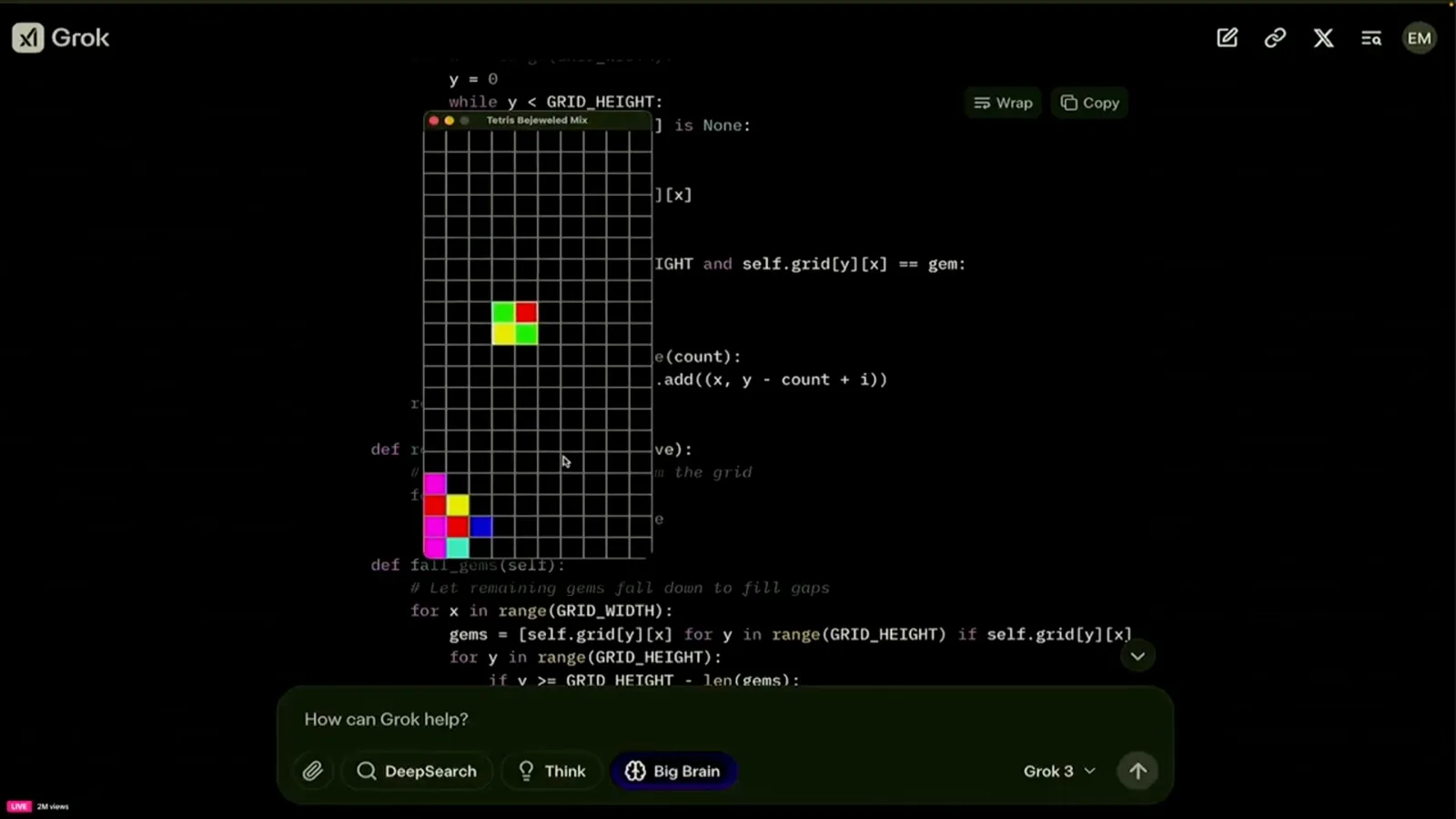
- 2Two live prompts generate a space animation and a gameThe presenters run multiple attempts and later say the trajectory needs closer verification.
- 3DeepSearch breaks research questions into subtasksThe team demonstrates web retrieval, source inspection and a summary for questions such as a launch date.
- 4The initial beta rollout targeted paid subscribersxAI announced Premium+ access and SuperGrok, while describing voice and API access as forthcoming.
- 5Temporary power and cooling helped start the clusterMusk describes generators, mobile cooling and batteries used to manage power fluctuations.
핵심 정리
- The Mars animation demonstrated code generation; the presenters said its trajectory still needed verification.
- DeepSearch was introduced as a tool that combines multi-step reasoning with web retrieval and source inspection.
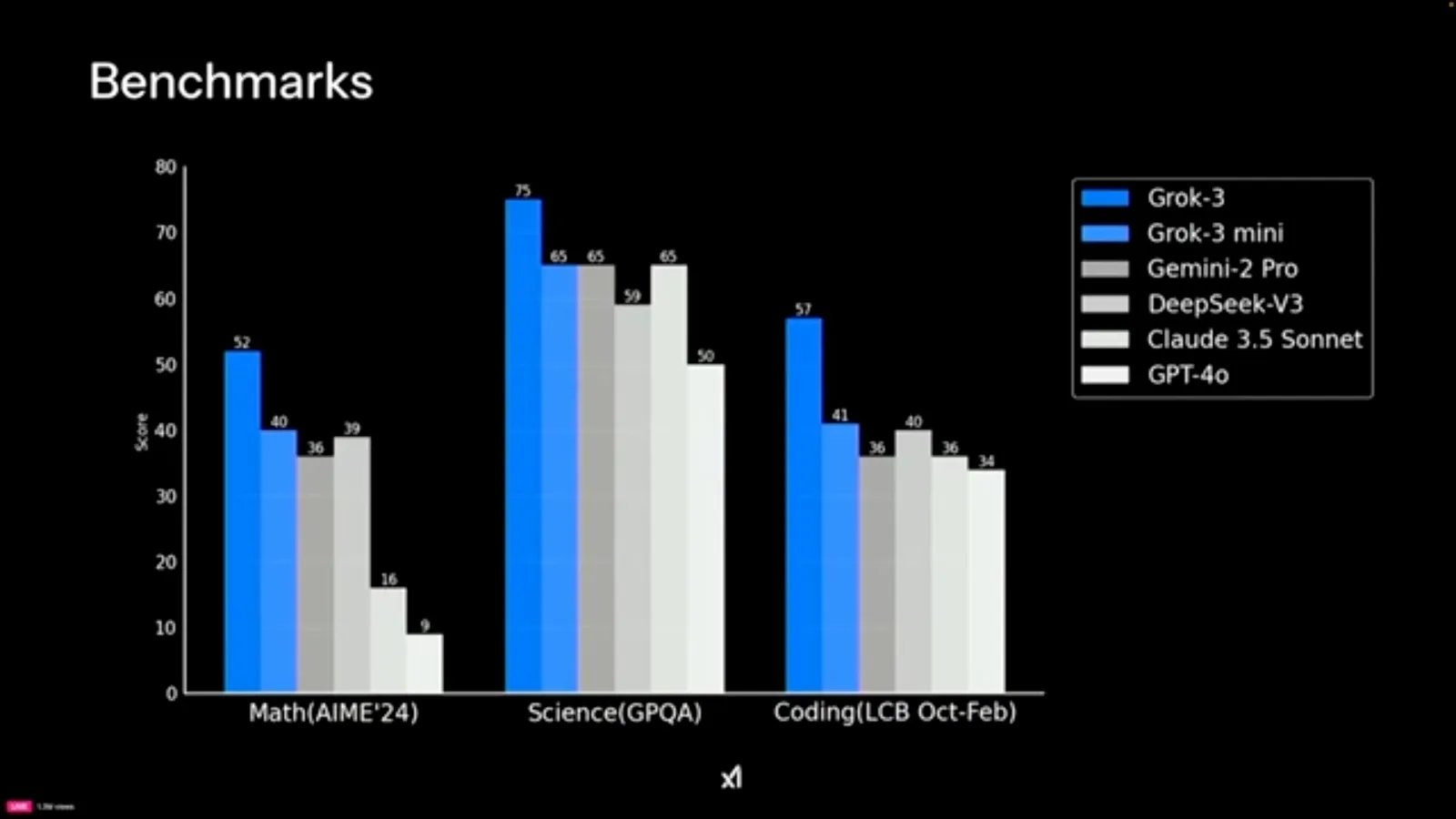
- xAI’s benchmark chart compared selected models and test settings at launch, not every possible task.
- The team attributed the Memphis cluster’s rapid build to reused premises, temporary power and cooling, batteries and extensive debugging.
챕터별로 다듬은 전문 읽기
Grok 3 and the training cluster
The team introduces the model, describes its computing resources and presents selected benchmark results.
Elon Musk opens the February 2025 presentation by describing xAI’s aim as understanding the universe and pursuing truth. He introduces Grok 3 as a large improvement over Grok 2, then joins engineers Igor Babuschkin, Jimmy Ba and Yuhuai “Tony” Wu.
The team introduces Grok as xAI’s assistant and traces its name to a word for deep understanding in Robert Heinlein’s novel Stranger in a Strange Land. They say they have spent the preceding months improving the model.
Ba connects model progress with the amount of computing used in training. The team recalls that Grok 2 training was limited by the number of GPUs that could run together and by cooling and power problems.
Babuschkin says xAI built its own data center in Memphis, bringing 100,000 GPUs online in 122 days and then expanding capacity. The speakers say Grok 3 used substantially more training compute than its predecessor; these figures are the company’s account.
The team presents its own results on mathematics, science and coding tests and points to blind user comparisons in Chatbot Arena. The chart compares selected models and settings, so its ranking describes that presentation’s tests rather than a permanent ranking across all tasks.
Reasoning and code-generation demos
The presenters explain extra computation at answer time and test a space animation and a game.
Ba says xAI used reinforcement learning to improve reasoning after pretraining. The team describes allowing a model more computation at answer time to explore alternatives, check work and revise a solution; more time does not by itself guarantee a correct answer.
Babuschkin launches a coding demonstration: generate an animated Earth-to-Mars round trip. He also asks for a game combining Tetris and Bejeweled, using the higher-compute Big Brain mode and starting multiple attempts in case one fails.
Wu explains the company’s reasoning benchmarks and says longer or multiple attempts improved some results. He discusses a newly held AIME mathematics competition as one check against merely fitting older tests; the presentation provides the company’s reported comparison.
The team says reasoning training focused on mathematics and coding but seemed to transfer to other tasks. They describe the model trying alternatives and correcting mistakes, and speculate about using larger computing clusters on individual problems.
The speakers return to the demos. The generated Python code produces a moving plot of Earth, Mars and a spacecraft. Babuschkin says the animation alone does not establish that the trajectory is correct and suggests a closer review; Musk says real orbits have more complexities.
The generated game displays falling colored blocks and a matching mechanic. The team experiments with it and notes uncertainty about whether every original Tetris rule is present. They also announce an xAI game-studio initiative.
DeepSearch and the initial rollout
xAI demonstrates multi-step search, announces early access and discusses planned voice and API capabilities.
Wu introduces DeepSearch as an early agent that combines reasoning with web search and other tools. He says it can break a question into subtasks, inspect sources and return a researched answer, rather than only issue a single search.
The live questions include the next Starship launch, a game build and a basketball-tournament prediction. For the launch question, the system shows a then-current “no earlier than” date and references it consulted; the team scrolls through its summary.
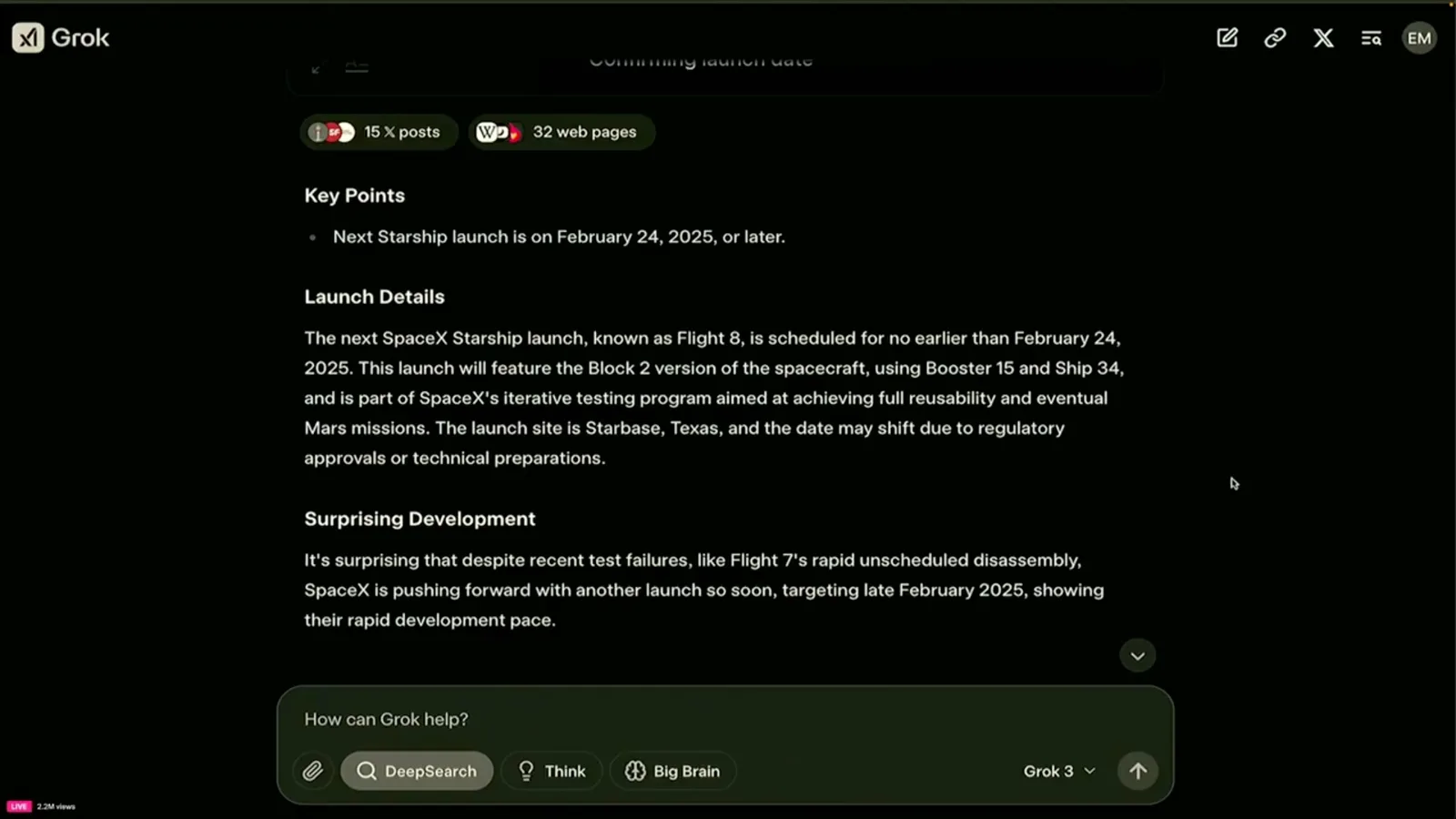
The presenters show a panel listing subtasks and sources and say users can direct the search, for example toward X posts. They argue that the tool may save research time, while its results still depend on sources and the model’s interpretation.
The team announces an initial rollout of Grok 3, reasoning and DeepSearch to X Premium+ subscribers, and a separate SuperGrok subscription for the dedicated app and website. Musk calls the release a beta and says users should expect imperfections. These were the terms and plans announced at launch.
They say conversational voice, API access, audio transcription and conversation memory are planned for later releases. They describe voice as an audio-capable model and say the precise experience will continue to change.
Open-source plans and building the cluster
The team discusses a future open-source approach and explains power, cooling, networking and training challenges.
Asked about open sourcing, Musk says the intended approach is to release a previous generation after its successor is mature. He presents open sourcing Grok 2 as a future plan, not something accomplished during the presentation.
The final question turns to the difficulty of training a model across a huge cluster. Wu describes coordinating many machines despite failures; Musk explains that ordinary data-center delivery schedules led xAI to retrofit a former Memphis factory.
Musk says the team rented generators and mobile cooling while waiting for utility power, installed liquid cooling and used Tesla Megapack batteries to smooth large swings in electricity demand. He describes those as steps needed to make the cluster operate coherently.
The engineers describe debugging network cables, configuration differences and reliability after the cluster came online. Musk says building the hardware was only part of the challenge: the team also had to keep training stable and get the model’s details right.
The team says it has begun work on a larger future cluster and expects reasoning and tool use to improve. They close by inviting feedback and demonstrating a short voice interaction.