




필터 결과
12개정렬
 1:50:48EN
 Y Combinator· 2026년 10월 24일Why Inference Matters 12× More Than TrainingFrançois Chaubard, Dan Fu, Jeff Morgan, Joe Fioti, Liangsheng Yin · Y CombinatorYC Paper Club walks the inference stack from an API request down to GPU kernels. Four talks from Together AI, Ollama, Luminal, and SGLang argue that serving quality, not just training FLOPs, is where most of the compute and the money now sit.
 21:52EN
 PragerU· 2026년 10월 24일Josef Witt-Doerring on Gen Z Mental Health, Isolation, and Psychiatric PrescribingShabbos Kestenbaum, Josef Witt-Doerring, Scott Galloway · PragerUOn The Brief, Shabbos Kestenbaum and psychiatrist Josef Witt-Doerring discuss why young adults are struggling, how prescribing incentives shape care, and the place of relationships and daily habits in treatment.
 34:35EN
 SemiAnalysis· 2026년 10월 23일팟캐스트 · 3명SemiAnalysis on ASML's Hybrid-Bonding Patents, HBM Economics and the Next Tool Ecosystem게스트 Sherry Zhang, Howie · 진행자 Jordan NanosJordan Nanos, Sherry Zhang and Howie examine a track-based bonding design that brings the wafer to the die, then explain why adoption depends on precision, cleanliness, economics and a changing supply chain.
 1:00:39EN
 a16z· 2026년 10월 23일팟캐스트 · 3명Amazon CEO Andy Jassy on the $220 Billion AI Buildout게스트 Andy Jassy · 진행자 Ben Horowitz, Erik TorenbergEven at roughly $220 billion of 2026 CapEx, Jassy says Amazon is still turning away AI demand. He tells Ben Horowitz and Erik Torenberg why AWS could become a trillion-dollar run-rate business, and why inference cost, custom chips, and smaller teams matter more than squeezing old customers.
 1:09:00EN
 Dwarkesh Patel· 2026년 10월 22일팟캐스트 · 9명Dwarkesh Patel: What will computer chips look like in 2045?게스트 Chris Auth, Kevin Fischer, Jack Kavalieros, Tyler Osborn, Pushkar Ranade, Gary Dickerson, Peter Wennink, Elon Musk · 진행자 Dwarkesh PatelAfter two days inside Intel’s most advanced fab, Dwarkesh Patel walks through gate-all-around, backside power, High-NA EUV, ruthenium, CFET, and hybrid bonding — and asks Intel’s leadership how the industry can possibly meet AI’s 3×-a-year compute demand when the world’s chipmaking tools cannot.
 56:49EN
 Stanford AI Club· 2026년 10월 15일Alfred Lin on Building in the AI Era: The Diffusion Gap, Founder Conviction, and Fire and IceAlfred Lin, Jason Zhang, Tanvir Bhathal · Sequoia CapitalAt Stanford AI Club, Sequoia’s Alfred Lin explains where he sees opportunity in AI and why learning, human understanding, and operating discipline still shape enduring companies.
 31:00EN
 AI Explained· 2026년 10월 12일Why AI Labs Keep Racing Despite Their Own Warnings of a Major BreachSam Altman, John Schulman · OpenAIAI Explained examines weakening safeguards, the incentives behind the frontier race, and why research breakthroughs make the next 18 months difficult to forecast.
 38:10EN
 Google DeepMind· 2026년 10월 1일From deepfakes to DNA: how SynthID watermarks AIHannah Fry, Pushmeet Kohli, Jeremy Ratcliffe · Google DeepMindHannah Fry sits down with Pushmeet Kohli and Jeremy Ratcliffe to explain SynthID: a mathematical watermark now used on text, images and video, and being extended to protein sequences so DNA synthesis companies can tell AI-designed molecules from nature.
 34:07EN
 Zhang Xiaojun Podcast· 2025년 4월 26일팟캐스트 · 3명Ola Källenius on Mercedes-Benz’s Next Transformation: EVs, AI, and Modern Luxury게스트 Ola Källenius · 진행자 张小珺Mercedes-Benz CEO Ola Källenius describes a century-scale shift driven by zero-emission powertrains, software, and AI. He explains why the company is expanding electric models while protecting the craftsmanship, safety, and desirability that define its luxury position.
 1:35:39EN
 Lenny's Podcast팟캐스트 · 3명Make Time: Pick a Daily Highlight and Build Barriers Against Distraction게스트 Jake Knapp, John Zeratsky · 진행자 Lenny RachitskyJake Knapp and John Zeratsky walk through their four-step Make Time framework (highlight, laser, energize, reflect) and close with a short look at the design sprint.
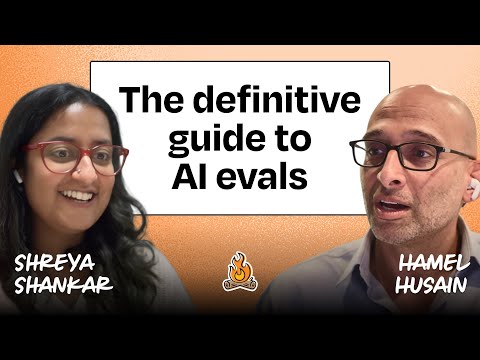 1:46:33ENLenny's Podcast팟캐스트 · 3명From Chaos to a Failure Map: A Hands-On Primer on AI Evals게스트 Hamel Husain, Shreya Shankar · 진행자 Lenny RachitskyHamel Husain and Shreya Shankar walk Lenny Rachitsky through a real error-analysis workflow, from reading traces to building a trustworthy LLM judge.
 1:47:58ENLenny's Podcast팟캐스트 · 3명Bridging the Divide: How Community Notes Built a Trusted Fact-Checking System on Disagreement게스트 Keith Coleman, Jay Baxter · 진행자 Lenny RachitskyKeith Coleman and Jay Baxter, the team behind Community Notes, explain how the algorithm works, how a tiny team built it, and why it survived four leaders at Twitter and X.